Start with people and access
Water inside a home may come from a plumbing failure, a sewer backup, storm runoff or another source. The first decision is whether the affected space is safe to approach. Stay out of water near energized equipment, avoid unstable slopes and follow any evacuation or road-closure instructions. If someone faces immediate danger, call 911.
From a safe place, describe where the water is visible and whether it is still rising or flowing. A wet floor does not necessarily reveal the entry point: water can travel through a wall, along a foundation or across a lower room. If a supply line is the likely source, a qualified person can determine how to shut it off safely. Do not enter an unsafe space to find a valve.
Water Damage Guard serves Los Altos Hills from San Carlos. Call (650) 550-0619, 24/7, to discuss affected rooms, access and the current situation. Tell us if the property is inaccessible, emergency personnel are present, or another contractor is already working on the source. The response must fit the conditions actually found.
Identify the right water provider
Los Altos Hills lists different water-main-break contacts for Purissima Hills Water District and California Water Service. The provider depends on the property. A leak in a public main and a leak in private plumbing may need different parties, so give the dispatcher the precise address and location rather than assuming one number applies throughout the Town.
If the leak appears close to electrical equipment, do not operate wet controls. Keep people clear, report the location and follow the utility’s instructions. A utility investigation can address its system, while interior cleanup addresses water that has already entered building materials. The sequence depends on safe access and control of continuing water.
For an interior loss, record when the water was first observed and which fixtures were in use. These observations can help a plumber or utility investigate but do not establish a diagnosis. Share any later change in the flow or affected area with the people coordinating the work.
Sewer service and onsite systems
The Town directs septic-system permitting to the Santa Clara County Department of Environmental Health. Some properties use an onsite wastewater treatment system while others connect to a public sewer. A wastewater problem therefore begins with identifying the system serving the parcel. Do not infer the system from a neighboring property or the age of a home.
The Town says new residences and major additions on properties with existing septic systems may require abandonment of the septic system and a public sewer connection. This is a project-specific development question, not a claim that every backup or ordinary cleanup requires conversion. Consult Town and County staff about the actual work.
If sewage backs up indoors, stop using connected fixtures and keep occupants away from the affected area. A plumber or onsite-system professional can investigate and control the source. Cleaning and drying a contaminated room is a separate task, and any needed system repair should be coordinated with the responsible agency and qualified trade.
Lateral maintenance and reporting an overflow
Los Altos Hills states that the owner maintains, repairs and replaces the sewer lateral from the building to its connection with the main, including the Y connection and backflow preventer. The wording concerns the Town’s sewer system and does not determine whether a particular property is connected to it or uses an onsite system. Ask the Town when the system or work location is uncertain.
The Town lists 408-299-3233 for after-hours sewer and storm drain overflows. Give the location, describe what is visible and follow the dispatcher’s directions. Do not open a manhole or enter a confined space to investigate. A public response to an overflow and removal of contamination from a home are distinct activities.
Inside, keep wastewater away from unaffected rooms when safe to do so, without walking through it. Document visible damage from a safe position. The team assessing the property can explain how the water traveled, which materials may require removal and what additional plumbing work must be completed before reconstruction.
Hillside drainage after rain
The Town says owners maintain private stormwater drainage on their property, including inlets, ditches, swales and culverts. This responsibility does not imply that every drainage feature is privately owned, or that a particular blocked feature caused a loss. Identify the feature and its location before arranging work or making changes.
After heavy rain, observe water and soil movement only from a safe position. A clogged inlet, a saturated slope and an overflowing channel can each require a different response. Stay away from fresh movement, damaged walls and steep ground. Ask a qualified professional to assess unstable conditions rather than digging at the base of a wall or redirecting water toward another property.
Photographs, dates and a description of the path of runoff can help with a site assessment. A drainage repair may involve more than removing water from a room. Distinguish immediate cleanup from grading, drainage alterations and reconstruction, and ask the Town which approvals apply to the proposed site work.
Storm history and current conditions
The Town activated its emergency operations center and proclaimed a local emergency on January 4, 2023 during the winter storms. That is a dated event, not evidence that a particular property flooded or that the same road conditions are present today. Use current Town and emergency notices for closures and access instructions.
If a route is closed, do not bypass a barrier to inspect property. Make a list of known occupants, pets and access needs and share it with responders when relevant. Once access is permitted, distinguish what can be seen from what still requires evaluation. A property may need separate reviews for the slope, drainage system and interior materials.
Weather may delay equipment access or a permanent repair. Ask the parties involved how they will secure the site during the delay and how they will communicate changes. A safe temporary measure is specific to the conditions; it should not divert a hazard to a neighboring parcel.
Before excavation or buried repairs
The Town explains that, for Underground Service Alert requests, it marks public sanitary sewer force mains and traffic signal conduits but does not mark gravity-flow facilities. That distinction matters when planning excavation: a Town mark is not a complete map of all buried utilities, private lines or gravity sewers.
Arrange the required utility notification and use a qualified contractor for excavation. Provide any available site plans and explain where prior work occurred. Existing drawings and surface features may help identify questions, but their accuracy for a particular parcel must be checked. Do not dig simply because no mark is visible.
If an interior leak leads to an outside repair, coordinate excavation and restoration schedules. A pipe must be repaired and any applicable inspections completed before concealed work is closed; drying and cleaning inside also need time and safe access. Confirm the actual permit and inspection requirements with the relevant authority.
Assessment, drying and repair
A restoration assessment considers the water source, material type and extent of moisture in the rooms reached. Water can move beneath flooring or behind a wall, so a surface that looks dry is not by itself proof that the assembly is ready to close. The appropriate investigation and removal depend on the condition of the material and how it was exposed.
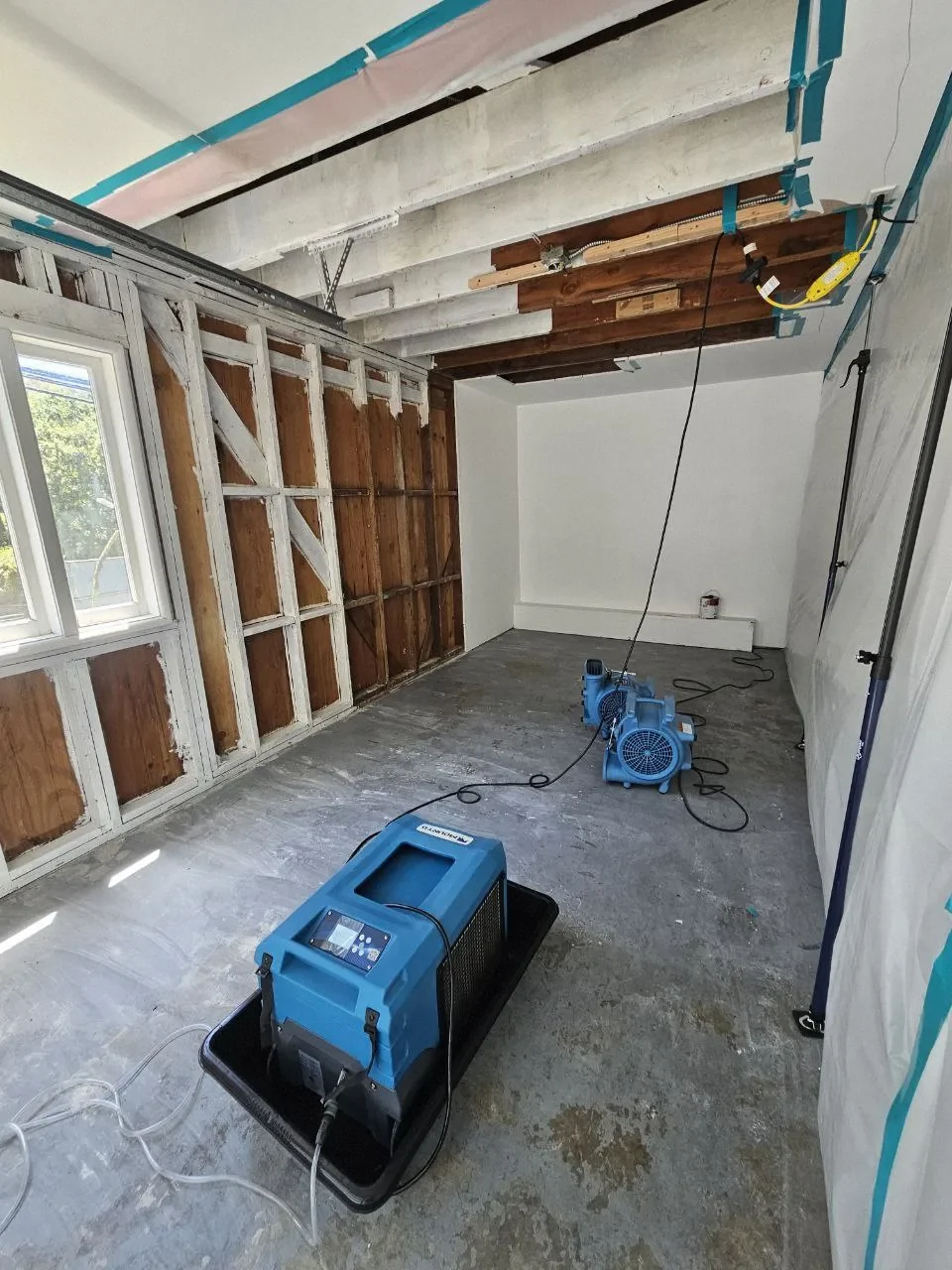
For contaminated water, appropriate containment and removal may be needed before drying. Materials that cannot be adequately cleaned may require replacement. Drying equipment and follow-up measurements are selected for the space and the circumstances; equipment alone does not repair a leaking pipe, stabilize a slope or clean a sewer line.
Discuss what is included in the scope, where equipment will be placed and how progress will be documented. If concealed damage changes the work, request a clear explanation before proceeding. Keep photographs, records and communications for the owner, insurer and repair trades as applicable.
A useful work record identifies the affected rooms, access limitations and any materials removed. Ask how and when measurements will be taken and what information will be provided to the person coordinating repairs. If a room contains items that require specialized handling, discuss those items before they are moved. Keeping the scope and observations together helps later trades understand what has already been examined and what still needs attention.
Plan the return to use
Before replacing finishes, confirm that the source has been addressed and that applicable inspections and drying steps are complete. A reconstruction contractor needs to know which materials were removed and which spaces remain open. Plumbing, electrical, structural and site work may involve different trades and separate approvals.
If the property is occupied, discuss access, temporary containment and the areas that can remain in use. For a rental or shared building, coordinate with the person authorized to approve work and communicate the schedule to affected occupants. Decisions about insurance or responsibility depend on the facts and any relevant agreement, not simply the name of the service.
Call Water Damage Guard at (650) 550-0619 any time to discuss a Los Altos Hills property. Explain the suspected source, current hazards, any agency instructions and the work already underway. A clear handoff helps the people involved address immediate safety, cleanup and the later repairs in the right order.
Related local information and guides
Read more about hillside drainage, storm preparation and repair decisions in these related resources.
- Preparing a Santa Clara County home for the rainy season
- Santa Clara County sandbags: finding supplies and protecting a home
- Wildfire smoke in Santa Clara County homes: cleanup after a smoke event
- Santa Clara County septic systems: permits, pumping and backup cleanup
- Atmospheric river damage
- Water damage after fire
- Hillside drainage in Los Altos Hills: runoff, retaining walls and mud after heavy rain
- Building permits for water damage repairs in Los Altos Hills
- Los Altos Hills wildfire zone and defensible space rules: what they mean for fire repairs
- Septic alarm going off
- Foundation drainage and grading after repeated water entry
- Wildfire smoke damage in house
- What to do after storm damage
- How often to pump septic tank
- French drain basement water explained
- Wildfire preparedness california
- Tree or storm damage to roof
Mold after water damage
If damp materials show signs of mold after a leak, discuss assessment and appropriate cleanup before closing the affected area. Conditions and material choices vary by property.
Common questions
Who handles septic permits in Los Altos Hills?
The Town directs septic-system permitting to Santa Clara County Environmental Health. Confirm the system and proposed work before making changes.
Who maintains a connected sewer lateral?
The Town says the owner maintains, repairs and replaces the lateral from the building to the main connection, including the Y connection and backflow preventer.
How do I report an after-hours sewer or storm drain overflow?
The Town lists 408-299-3233 for after-hours overflows. Give the location and follow the dispatcher’s directions.
Who maintains a private drainage ditch or culvert?
The Town says owners maintain private drainage on their property, including ditches, swales, inlets and culverts. Verify ownership of a particular feature.
Does the Town mark every buried sewer facility before digging?
No. For Underground Service Alert requests the Town describes marking public force mains and traffic signal conduits, but not gravity-flow facilities.
Sources
- Los Altos Hills emergency contacts Checked
- Los Altos Hills septic system information Checked
- Los Altos Hills sewer lateral responsibility Checked
- Los Altos Hills storm drainage preparedness Checked
- Los Altos Hills January 2023 storm update Checked
- Los Altos Hills Public Works utility marking Checked