Start with the source and a safe route
A wet floor can be the visible end of a supply leak, an overflowing fixture, sewage in a drain or stormwater moving across a site. The first decision is whether the source is still active and whether anyone can reach its control without entering an unsafe area. Move people and animals away from the affected space. Close an accessible fixture valve only if it can be reached safely, and call emergency services for an immediate threat to life.
Do not step into water to operate an electrical panel, handle a wet appliance or inspect an outlet. A sagging ceiling may conceal water and can fall. Stay out from underneath it. If water has reached electrical equipment, arrange for a qualified person to make the area safe before work proceeds. A photograph from a dry, safe position may help document the starting condition, but it is not worth entering an unsafe room.
When you call Water Damage Guard, describe the source if known, the rooms involved, any continuing leak and restrictions on access. A restoration assessment can then separate urgent source control from the work needed to remove water, dry building materials and plan repairs. A supply valve, a sewer obstruction and runoff against a foundation require different first calls.
Understand which wastewater system serves the property
Portola Valley properties do not all use the same wastewater arrangement. A San Mateo Local Agency Formation Commission review reported that West Bay Sanitary District served 889 town parcels, approximately 49% of the 1,815 total parcels, as of December 2025. That figure is a dated parcel count, not a determination for a particular home. Check the property’s records or ask the district before assuming that a backing-up fixture connects to a public sewer.
West Bay says it maintains sewer mains in portions of Portola Valley. If its customer has a sewer problem, the district checks the main and may attempt to clear the line from a conforming cleanout. Those steps help identify where a blockage lies; they do not replace cleanup inside a building. Stop using connected fixtures while the cause is being investigated and keep people and animals away from wastewater.
The district says property owners are responsible for blockages in the private lateral from the building to the connection with the public main. Its response can help distinguish a public main issue from a private line problem. Ask what the agency found before arranging invasive work, and keep the findings with any plumber’s observations. Wastewater collected by West Bay is conveyed for treatment at Silicon Valley Clean Water in Redwood City.
Septic systems need a different investigation
A property with an onsite wastewater system has a tank and dispersal area rather than the same connection to a public sewer main. A slow fixture alone does not prove that the entire system has failed. A blockage inside the building, a full tank, an equipment issue or saturated ground may call for different professional evaluation. If sewage is backing up, reduce water use and avoid contact with the affected area until the system can be assessed.
Locating the tank, access covers and dispersal area before work begins helps a professional understand what can be reached without disturbing underground components. Keep vehicles and equipment away from a suspected system area when its location or condition is uncertain. Standing water or an odor near a system should be reported to an appropriate qualified professional; opening a tank is not a homeowner inspection step.
The LAFCo review describes annexation to West Bay as a property-owner application with the owner responsible for the cost of extending sewer infrastructure. It reported no comprehensive town-initiated annexation plan at the time of that review. A wastewater emergency does not itself establish that an individual parcel can connect, what work would be needed or what it would cost. Confirm jurisdiction and any proposed work with the responsible agencies.
Rainwater on a hillside
Water entering after a storm may travel across the surface, through a drainage opening or along a concealed path before appearing in a room below. Look from a safe location for the direction of runoff, blocked surface inlets and signs that a downspout is discharging close to the building. A wet foundation surface is a reason to investigate, not proof that a particular drain or wall has failed.
Portola Valley adopted its Geologic Map and Ground Movement Potential Map and associated land-use policies in 2017. These are planning resources; they do not replace a site-specific evaluation. If soil has moved, a retaining wall is leaning or a new crack is growing, keep clear of the area and consult a qualified professional and the Town before digging, changing drainage or loading the ground with equipment.
A county LAFCo review recommended coordination between the Town and Los Trancos County Maintenance District on stormwater that may originate in unincorporated Los Trancos Woods. This is a documented interagency concern, not a conclusion about the cause of water on any individual lot. The important practical distinction is between water crossing property, a public drainage facility and water from plumbing inside the building.
What the inspection should establish
A useful inspection starts with a sequence: where water was first noticed, whether it returned after a fixture was used or a storm began, and what was wet before anyone moved materials. The answers can guide moisture checks in adjacent areas and lower floors. The visible stain does not set the boundary of the affected area, particularly when water can travel behind a finish or underneath a floor.
Ask the people assessing the property to explain what they observed, which materials are wet and how they will check progress. Some materials can be dried in place when conditions allow; others may need to be removed to expose concealed moisture or because they cannot be cleaned appropriately. The decision depends on the source and condition of the material. Sewage or floodwater requires a different contamination assessment from a clean supply leak.
Document the affected rooms and retain relevant photographs and communications. If an insurer is involved, ask about documentation and approval requirements before discarding non-emergency items. If the building is unsafe, follow the authority’s directions first. Restoration work should be coordinated with the person stopping the leak so the area is not repeatedly wetted while drying is under way.
Drying and repair are connected decisions
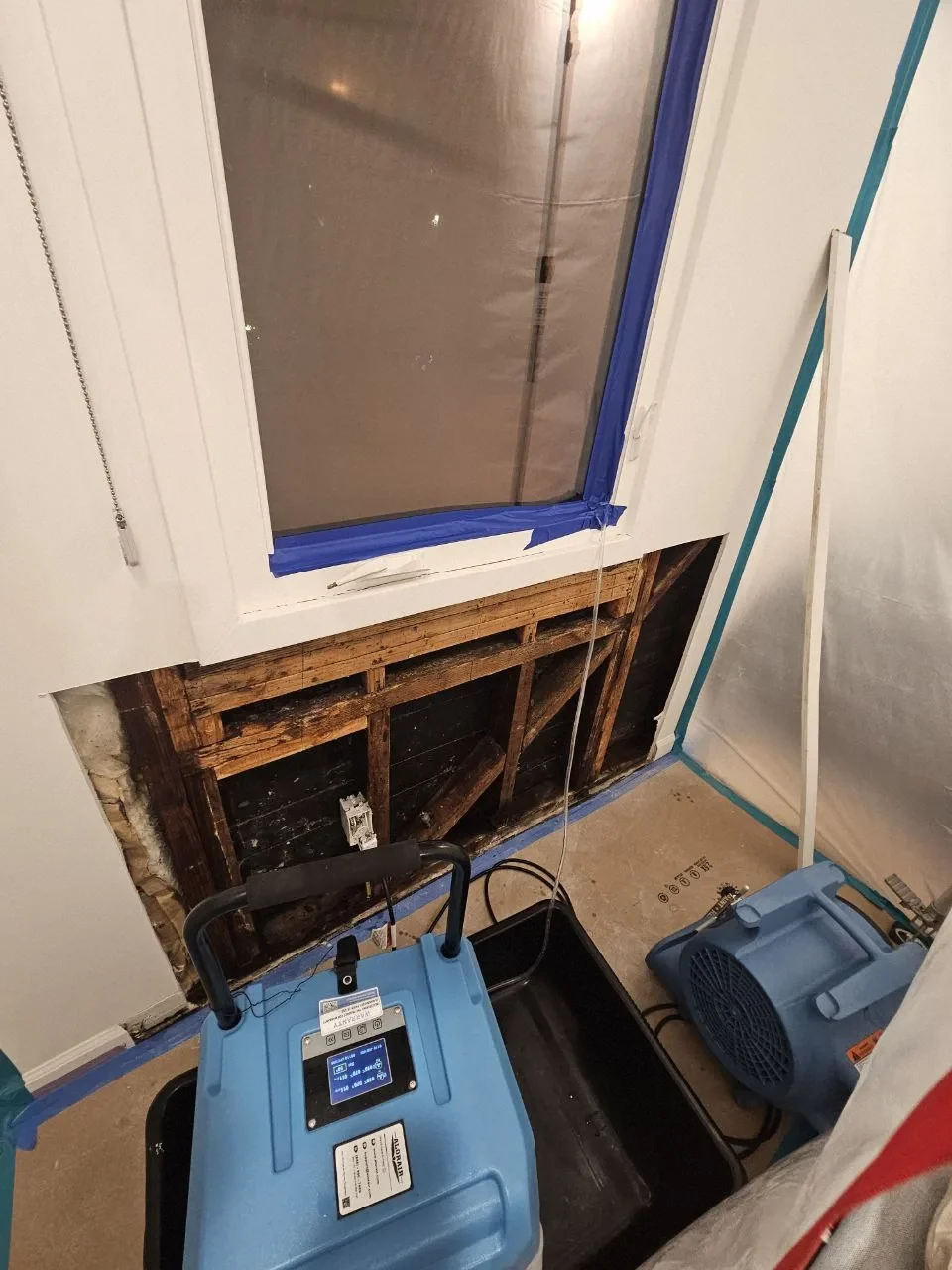
Water extraction removes liquid that can be reached. Drying addresses moisture remaining in materials and the air. Placement of equipment and monitoring depend on the layout, the materials affected and whether openings are needed to reach hidden cavities. A room that feels dry at the surface may still need further evaluation. Ask how progress will be measured and what conditions must be met before a finish is closed.
Repair can include replacing a damaged finish, restoring a portion of a wall or coordinating with a tradesperson on the original leak. The amount of work is determined by what is damaged and what inspections or approvals apply, not by the size of the visible stain alone. Keep a record of the source repair and moisture findings so that the parties planning reconstruction know what has been addressed.
If a project involves drainage, grading or structural components, discuss that work with the Town and the appropriate design professional rather than assuming it is covered by the cleanup. Temporary drying and permanent changes to a hillside or utility line are different scopes. A plan for both helps prevent the finish work from hiding an unresolved source.
Neighborhood and property boundaries
The Town’s road-safety document identifies Westridge and Portola Valley Ranch as areas of Portola Valley. The same document describes Los Trancos Woods and Ladera as adjacent unincorporated communities. An address or community name alone should not be used to assign a property to the Town or to a particular sewer service. Confirm the parcel and service territory when reporting an issue or asking about approvals.
The access route matters when planning a site visit. Let the team know about narrow drives, gates, steep approaches, steps or a room that cannot be reached without crossing wet ground. Describe any restrictions accurately rather than trying to move damaged material through an unsafe space. Equipment placement should leave residents an accessible way out and should not obstruct emergency access.
For a shared driveway or a multi-residence property, identify who can authorize access to common areas and who is responsible for contacting the utility or property manager. A neighbor’s dry room does not establish the condition of a shared wall or floor assembly. Conversely, a problem observed outside one home does not establish that every nearby property was affected.
Keep decisions clear as work progresses
At the outset, ask for a description of the proposed scope: water removal, cleaning, moisture monitoring, removal of materials if necessary, and any repairs that will be handled separately. Discuss whether the area is safe to occupy and what access is needed. For a rented home, notify the owner or manager promptly and keep a copy of the notice; responsibilities and access depend on the tenancy and the actual conditions.
If an item is important to preserve, identify it before moving or discarding it. A professional can assess its condition and whether cleaning is practical. Keep electrical devices, medications and documents away from additional water only when that can be done safely. A record of what was moved and where it was stored is useful when several people are helping with the response.
If new water appears after work begins, tell the people managing the source and the drying work. Repeated entry can change the scope and make earlier readings less informative. The goal is a documented handoff from stopping the water to assessing and drying affected materials, followed by an informed repair decision.
Call Water Damage Guard
Water Damage Guard provides water damage restoration in Portola Valley from San Carlos, California. Call (650) 550-0619, 24/7, to discuss the property and the situation. Share whether water is still entering, whether the source may involve sewage or outdoor flooding, and whether a utility, plumber or emergency responder is already involved.
You do not need to determine the construction of a concealed floor or the material of a buried pipe before calling. Describe what can be observed safely. The response can be planned around the conditions that are actually found, the authority responsible for the source and any access or repair decisions that remain open.
Related local information
These local articles and guides provide more detail on preparedness and repair decisions.
- Wildfire smoke in San Mateo County homes: cleanup after a smoke event
- San Mateo County septic systems: permits, pumping and backup cleanup
- Water damage after fire
- Hillside drainage in Portola Valley: runoff, retaining walls and mud after heavy rain
- Building permits for water damage repairs in Portola Valley
- Portola Valley wildfire zone and defensible space rules: what they mean for fire repairs
Common questions
Does West Bay Sanitary District serve every Portola Valley parcel?
No. A January 2026 LAFCo review reported West Bay service for 889 town parcels, approximately 49% of the town total as of December 2025. Confirm the service for the specific property.
Who checks the sewer main after a backup in West Bay’s service area?
West Bay says its emergency crews check the main and may attempt clearing from a conforming cleanout. That assessment is separate from cleanup of sewage inside a building.
Who is responsible for a blockage in a West Bay private lateral?
West Bay says the property owner is responsible for blockages in the private lateral from the building to the public main connection. Ask the district or a plumber to establish where the blockage is located.
Do Portola Valley’s geologic maps determine the condition of my slope?
No. The Town adopted geologic and ground-movement maps in 2017 as planning resources. A damaged retaining wall or moving soil requires a property-specific professional assessment.
Are Los Trancos Woods and Ladera inside the Town?
The Town’s road-safety document describes Los Trancos Woods and Ladera as adjacent unincorporated communities. Check the parcel jurisdiction and utility service for the address.
Sources
- San Mateo LAFCo Portola Valley sewer service review Checked
- West Bay Sanitary District services Checked
- West Bay Sanitary District sewer FAQ Checked
- Portola Valley 2017 geologic maps and policies Checked
- San Mateo LAFCo stormwater coordination review Checked
- Portola Valley road safety report Checked