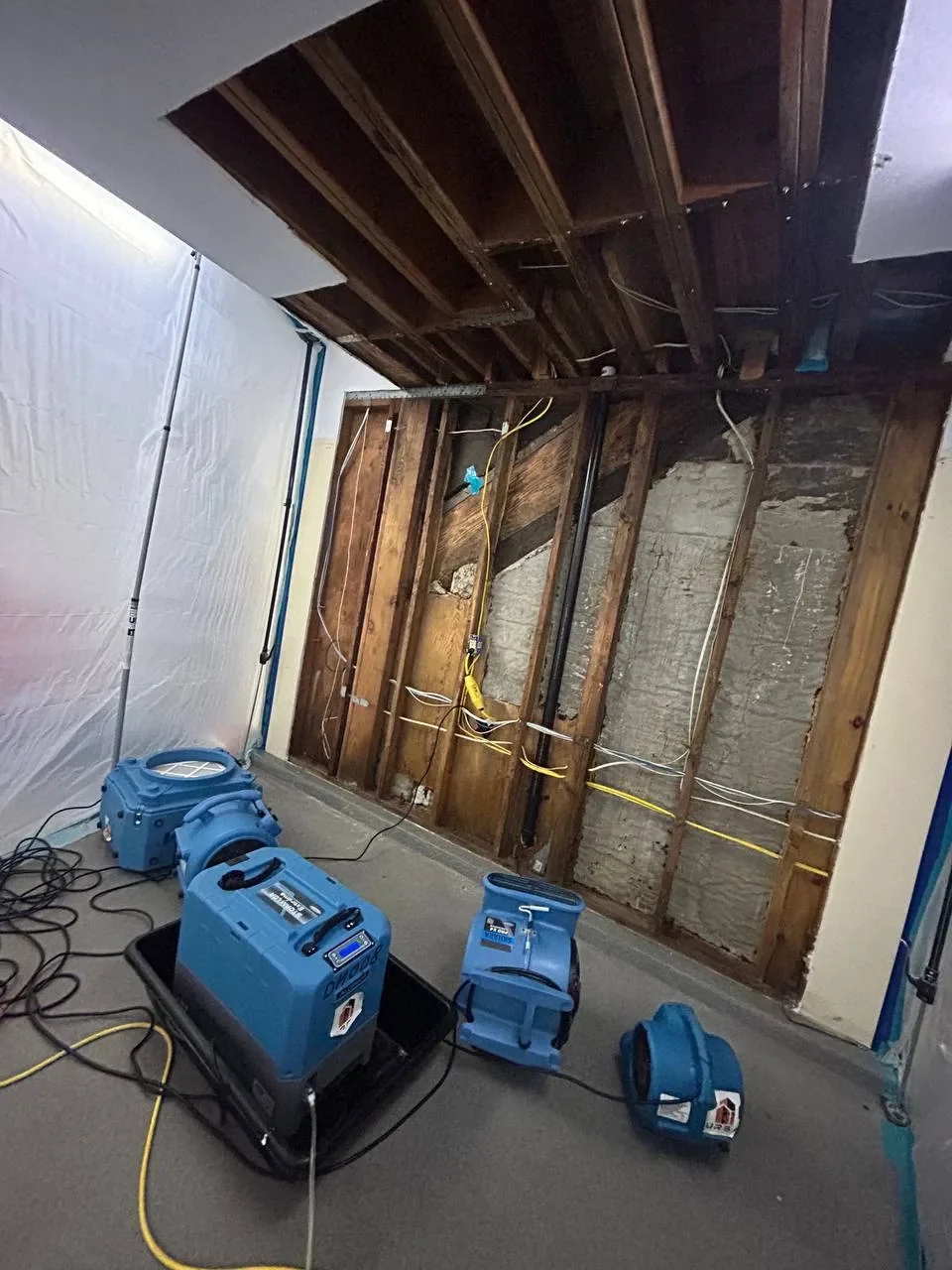
Water damage restoration in Menlo Park: first decisions
A washing-machine leak, sewage backup and creek flood require different precautions. When you call, describe the water source, the rooms affected and any immediate access restrictions. The first useful detail is what the water may have touched before it reached the room.
If a plumbing fixture is still releasing water and its shutoff can be reached safely, close that valve. The household main valve may be appropriate when the source cannot be isolated, but do not enter standing water or a damaged area to reach it. If water is near electrical equipment, leave it alone and arrange for a qualified electrician or the utility to make the area safe. Never operate a wet switch or appliance, or stand in water to reach a panel.
Once you are in a safe place, photograph the affected rooms and belongings before moving items when possible. Note the approximate time you discovered the water, any steps already taken and whether water is still entering. Tell your insurer about the loss and ask what documentation it needs. These records help distinguish the original damage from later work, but coverage depends on the policy and the insurer’s investigation.
Where the water came from changes the response
A supply line can release comparatively clean water at first, but its path may carry debris from cavities or flooring. A failed drain or backed-up toilet can bring wastewater into the home. Outside water can carry mud and other contaminants, even when it looks clear. Avoid touching suspect water, keep children and pets away and tell the restoration team what you know about the source.
Try to identify the first visible point of entry without opening walls or lifting heavy materials. Water in a hallway may have traveled under a partition from a bathroom, while a stain on a ceiling may be below a supply line, roof opening or overflowing fixture. A visible stain alone does not identify the cause. Stopping the source and assessing the full path are separate steps; drying a surface without addressing the source can leave the problem active.
If rain is still entering through a roof or opening, stay away from unstable ceilings and do not climb onto a wet roof. Discuss temporary protection with a qualified roofer when conditions permit. Keep photographs of the opening and the rooms below, and let the insurer know before permanent repairs begin when practical.
Creek and Bay conditions in Menlo Park
The City of Menlo Park warns that heavy rain can raise San Francisquito Creek quickly and that high Bay water levels can slow drainage near the shoreline. These conditions can coincide, but they do not establish the flood risk for a particular property. Check the applicable address and current official alerts rather than relying on the name of a neighborhood or a past event.
A city staff report describes road closures, urban flooding and high creek flows during the December 31, 2022 storm. A separate city document says the 1998 San Francisquito Creek flood damaged approximately 1,700 properties across the watershed. Those figures describe historical events, not a prediction of water depth or future damage at a home. Access routes and official instructions can change during each storm.
The city describes the SAFER Bay project as a proposed flood-risk reduction effort that may benefit the Bayfront and Belle Haven areas. Its anticipated benefits are not a substitute for checking today’s flood map, maintaining an evacuation plan and following public alerts. Even away from a mapped creek corridor, blocked drainage or a plumbing failure can send water into a building.
Sandbags and storm preparation
Menlo Park lists Burgess Park and Fire Station 77 as year-round self-fill sandbag locations. The Pope Street location is temporary and opens when activated for significant storms; confirm its status before traveling. The city advises bringing a shovel and notes that sandbags can redirect water but do not make a watertight barrier. Place them before conditions become hazardous, not after a route has flooded.
Before a forecast storm, check that private gutters and accessible drains are clear when it is safe to do so. Decide where household members and pets would go if authorities recommend leaving, and charge necessary devices. Keep medicines and important records accessible. Review your insurance documents ahead of time, including the distinction between ordinary water damage and flooding, and ask the insurer about the coverages that apply.
After a storm, return only when authorities allow it and look for damaged trees, unstable building materials and downed lines from a safe distance. If a route is blocked by water, choose another route. A restoration visit begins after safe access is possible; a damaged structure or active utility hazard may need a separate inspection first.
Water service depends on the address
The city says Menlo Park Municipal Water serves the Sharon Heights upper zone and areas east of El Camino Real in its lower zone. Its urgent water number is (650) 330-6750; after hours and on weekends the city directs customers to police non-emergency at (650) 330-6300. Other water providers operate in the city, so check the account or the city’s provider information before reporting a main or service-line problem.
When you call the provider, distinguish a leak at a fixture inside the home from water surfacing near the meter, sidewalk or street. Give the location and whether the flow is ongoing. The provider can determine what it controls and what further steps apply. Do not dig around a suspected underground utility or assume that water at the curb identifies the precise point of failure.
If the water has already been shut off, tell the restoration team whether the source was repaired or merely isolated. Drying cannot substitute for plumbing repairs. Before water is restored, coordinate with the person repairing the line so the system can be checked safely and another release does not wet the materials again.
Sewer backups and the private lateral
Menlo Park lists West Bay Sanitary District at (650) 321-0384 for sewer problems. Tell the district what is backing up, when it began and whether wastewater is visible inside or outside. The agency can advise on the next step for the address.
Keep people and animals away from the affected space and avoid using fixtures that add wastewater to a backed-up line. Do not attempt to diagnose the blockage by opening a cleanout or entering a contaminated area. A plumbing contractor may be needed for private work, while the responsible agency handles its own system.
If work extends into the public right of way, Menlo Park lists sewer lateral repair and replacement among activities requiring an encroachment permit. Confirm the actual work area and permit sequence with the city and the responsible sewer agency before excavation.
How restoration is planned
The first assessment looks at the affected materials, the water source and whether the area can be entered safely. Water can travel beneath flooring, behind baseboards or into a wall cavity. Measurements and inspection help establish where moisture remains and which areas need further attention. The findings should be discussed with you before work proceeds, including any need to open an assembly to see what is behind it.
Extraction and drying are then matched to the materials and conditions. Equipment placement depends on access, electrical safety and the type of water. Some porous items may need removal when they cannot be adequately cleaned and dried; other materials may be suitable for drying in place. A decision about an individual item depends on contamination, its condition and the ability to reach all affected surfaces.
Drying is monitored over time rather than judged solely by whether a floor feels dry. Keep an agreed path open to equipment and explain any household needs that affect access. When the drying assessment is complete, document the condition and discuss repair needs. The restoration work and any separate plumbing, electrical, roofing or building work should be coordinated so that one contractor’s work does not undermine another’s.
Repairs, permits and older materials
A repair plan should identify which finishes were removed and whether plumbing, electrical or structural work is expected. Menlo Park provides building permit information for repairs to existing structures, and the applicable requirements depend on the work. Ask the Building Division before reconstruction when the scope is uncertain, particularly when work alters a system or reaches the public right of way.
An older finish or pipe should not automatically be assumed to contain a particular material. Before disturbing suspect paint, insulation or other building products, ask qualified professionals how the materials will be evaluated and handled. The age of a home can help frame questions but cannot identify what is installed behind a particular wall. Leave suspect material undisturbed until the appropriate assessment has been made.
For a condominium, check the governing documents and contact the association promptly. A pipe, exterior wall or common area may fall under a different maintenance arrangement from finishes inside a unit. Preserve the record of notices and coordinate access through the association rather than assuming that the visible location of water settles responsibility.
Renters and temporary housing
Tell the landlord or property manager promptly about a leak, the rooms affected and any condition that makes the space unsafe to use. Follow a phone call with a written notice and retain copies, photographs and repair communications. If another unit may be involved, ask management to coordinate access and investigation; do not make assumptions about fault from the direction of a stain.
Menlo Park adopted a tenant relocation assistance ordinance in 2019. The city explains that assistance can apply to qualifying no-fault terminations and that the amount depends on eligibility. Water damage alone does not establish that a particular household qualifies. Ask the city Housing Division at (650) 330-6732 about the relevant facts and seek advice before relying on a general description of the ordinance.
If you need a temporary place to stay, ask your insurer or housing adviser which expenses may be considered and what records are needed. Keep receipts and a simple account of dates and additional costs. A landlord’s repair obligations, a tenant’s belongings and insurance coverage can involve different questions; document each separately and preserve any written decisions.
Areas and nearby communities
The city identifies Belle Haven and The Willows as Menlo Park neighborhoods. The right agency and response depend on the address and the type of problem, not just a neighborhood label. Share the location when you call so the appropriate water, sewer or storm-drain contact can be identified. We also serve neighboring communities from San Carlos.
For a water emergency, explain whether the issue appears to be inside the building, at a utility connection or outside in the street. For a storm, follow the city’s current public information and evacuation instructions. For a sewer backup, call the responsible district before arranging work on a public line. These steps can happen alongside a call to discuss cleanup and drying.
Common questions
Who should I call for a sewer backup in Menlo Park?
Menlo Park lists West Bay Sanitary District at (650) 321-0384 for sewer problems. Keep away from wastewater and explain which fixtures are affected.
Does high tide cause every Menlo Park flood?
No. The city explains that high Bay levels can slow drainage near the shoreline and heavy rain can raise San Francisquito Creek. Check the particular address and current official alerts.
Where can I find sandbags?
The city lists self-fill supplies at Burgess Park and Fire Station 77 year-round. Its Pope Street location is temporary; confirm activation before going.
Which water utility should I call?
The provider depends on the address. Menlo Park Municipal Water serves its Sharon Heights upper zone and areas east of El Camino Real in its lower zone; check the city’s provider information or your bill.
Does water damage automatically qualify a renter for relocation assistance?
No. Menlo Park’s ordinance applies under specified conditions. Contact the city Housing Division at (650) 330-6732 with the details of your tenancy and notice.
When do sewer repairs need a city permit?
Menlo Park lists lateral work in the public right of way as encroachment work. Confirm the work area and required permits with the city and the sewer agency.
Sources
- Official local information Checked
- Official local information Checked
- Official local information Checked
- Official local information Checked
- Official local information Checked
- Official local information Checked
- Official local information Checked
- Official local information Checked
- Official local information Checked
- Official local information Checked
- Menlo Park neighborhood key map Checked