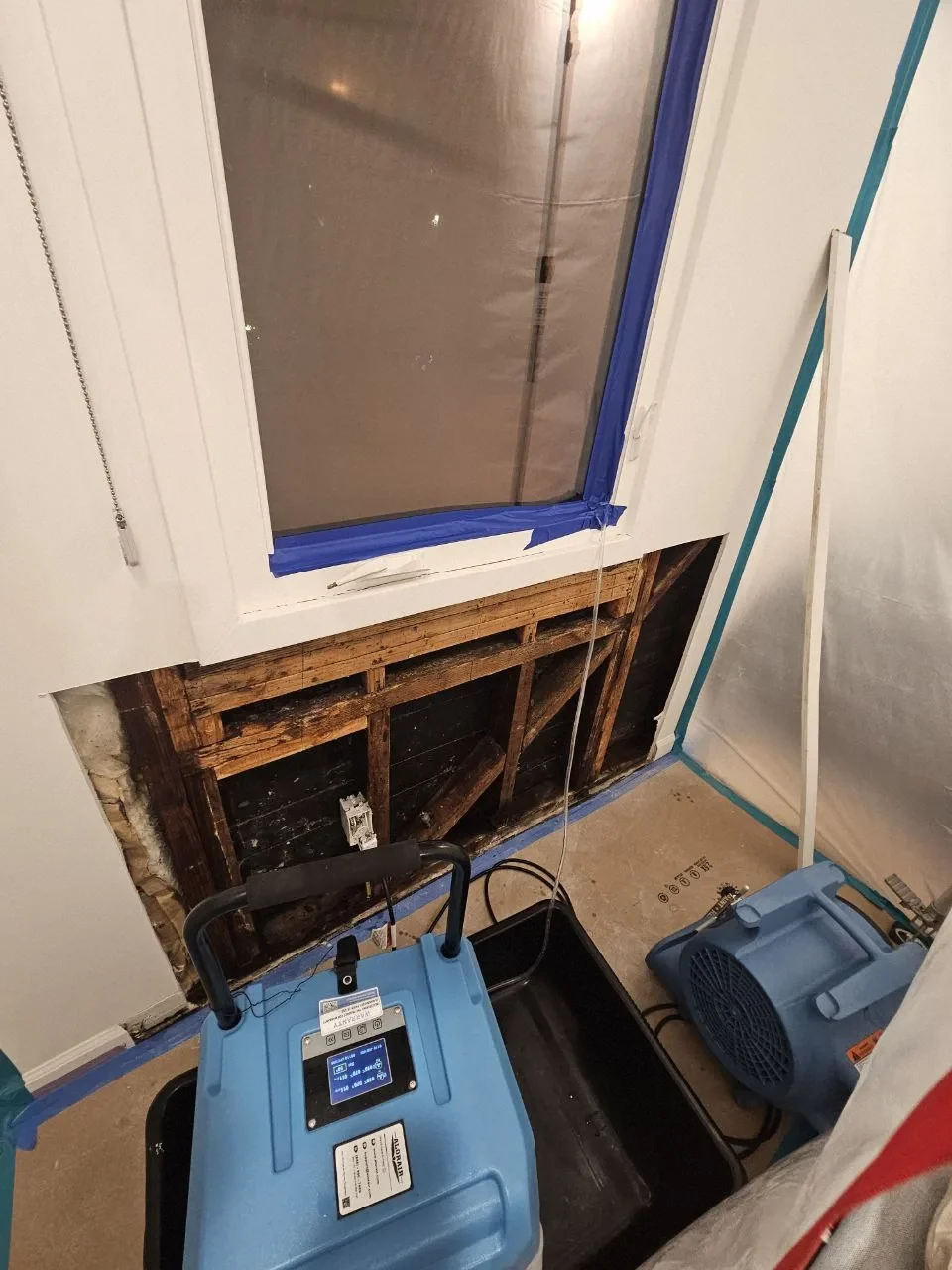
What to do when water enters
The first question is whether water is still entering and whether the building can be approached safely. A broken supply line, a septic backup and runoff following heavy rain call for different source repairs. Describe where the water appeared, any affected fixtures and whether someone has already isolated a leak.
Close a fixture valve only if you can reach it safely. Never walk into standing water to reach a panel, switch or appliance, and leave wet electrical equipment alone. Ask the utility or a qualified electrician to make the area safe. Stay clear of damaged walls, sagging ceilings, unstable ground and downed lines; contact emergency responders from a safe place if life is in danger.
When it is safe, photograph affected rooms and belongings and note the discovery time. Tell your insurer about the loss and ask what documentation is needed before disposal or permanent repairs. A photo can show the visible extent at one moment, but water may have traveled under flooring or behind a finish.
Sewer or septic: identify the system
Woodside says piped sewer service is provided in the Town Center, Fair Oaks and Redwood Creek districts and directs owners of parcels outside its sewer-area map to septic systems. Check the property and the town map before calling an agency. The presence of a sewer line on a nearby road does not by itself establish how a particular parcel is served.
The town’s 2012 general plan reported that about 28% of developed parcels were served by public sewer at that time. This is a historical planning figure, not a current percentage or a diagnosis of any property. The same plan described private on-site systems as maintained by individual property owners. System records and current conditions should be checked for the actual address.
For a backup, keep people and animals away from wastewater and reduce use of fixtures connected to the affected system. Do not open a tank or cleanout yourself. A sewer district or qualified septic professional can investigate the source; cleanup of affected rooms is a separate task that should follow source control and safe access.
Who to call for a backup
Woodside lists (650) 851-6790 for Town Center Sewer District problems during business hours and West Bay Sanitary District at (650) 321-0384 after hours. For the Fair Oaks or Redwood Creek districts, the town lists (650) 363-4100 at any hour, with after-hours calls connected through county dispatch. Give the address and explain whether sewage is visible inside, outside or at a fixture.
For a septic concern, the responsible response depends on the system and the condition. San Mateo County Environmental Health lists (650) 372-6200 for sewage leaks. The town’s septic handout identifies both the town and county in its permit process. Ask the appropriate agency about a suspected system failure and the steps before repair; do not treat a general contact number as a promise of emergency pumping.
If a professional recommends a camera inspection or septic service, ask what will be inspected, what the findings show and whether a permit or additional evaluation is needed. Keep the written findings with photographs and cleanup records. The apparent point of backup may be some distance from the blockage or failing component.
Septic permits and percolation tests
Woodside’s handout says permits from both the town and San Mateo County Environmental Health are required for new septic systems and for expansion or repair of existing systems. It also identifies town and county permits for percolation testing. The appropriate sequence and documentation depend on the project, so contact both offices before altering a system.
A cleanup plan does not replace a septic repair permit. The professional evaluating a failure should explain whether the proposed action is maintenance, repair, expansion or testing and identify the agency decisions still needed. Avoid adding water to a system that is backing up while waiting for assessment.
For households on a private well, keep potentially contaminated water separate from drinking water and seek agency advice after flooding. Do not operate a submerged pump. A flooded well or septic system can involve hazards beyond the water visible inside a building, and an appropriate specialist should assess it before use.
Storms, slopes and drainage
Water moving across a site can enter a crawl space, a garage or the lower level of a home. Look for changes in the route of runoff, blocked inlets or water collecting near a foundation from a safe location. A retaining wall, driveway or drain can affect where water travels, but a visual observation alone does not establish whether a structure is stable.
Caltrans reported that a 250-foot-wide landslide closed State Route 84 at Portola Road near Woodside in March 2023. That is a historical event near the town, not evidence that any individual parcel is unstable. After heavy rain, respect road closures and keep away from fresh cracks, moving soil and damaged trees. Have a qualified professional evaluate suspected slope movement.
Before changing a drainage path or disturbing a slope, discuss the property and proposed work with the town and an appropriate engineer. A solution suitable for one site may divert water onto another or fail under different conditions. Document the observations and ask how the proposed work will be maintained.
Fire, smoke and water damage
The Woodside Fire Protection District adopted a fuel mitigation ordinance in 2024 requiring defensible space for covered properties. Check the district’s current requirements and the conditions at the actual address. Defensible space and home hardening can be part of preparation, but neither eliminates every fire risk.
After a fire, do not enter until officials say it is safe. Smoke residue can affect materials away from the burned area, and suppression water may reach floors, walls or contents. The response depends on the source and the condition of the building. Damaged electrical or gas systems need qualified attention before cleanup equipment is used.
If an incident affects a home, coordinate access, temporary protection and documentation with officials and the insurer. Ask which items can be assessed safely and what must be preserved for a claim. A restoration scope and a separate rebuilding or utility repair may involve different professionals and approvals.
Assessment and drying
Once the source is controlled and entry is safe, the assessment identifies the route water took, the materials affected and any locations that still need access. A moisture reading is one piece of information, interpreted alongside the material and its exposure. Ask what the team can see, what remains uncertain and whether an assembly needs to be opened.
The source matters to cleaning decisions. Sewage or water from outside may carry contaminants into porous materials; a supply leak can also pick up debris as it moves through a building. Some items can be cleaned and dried, while others may require removal when they cannot be treated effectively. Discuss the proposed decisions before work proceeds.
Drying equipment must use a safe power supply and be positioned for the actual building. Monitoring helps determine when materials are ready for repair; a dry-looking surface alone does not establish the condition beneath it. If the source remains active, coordinate its repair before installing replacement finishes.
Building work and utilities
Woodside lists residential remodels among common building permit applications. For a water-damage repair, explain whether the scope includes a wall, plumbing system, electrical work, grading or a septic component and ask the town which approvals apply. The Building, Planning and Public Works/Engineering contact is (650) 851-6796.
Cal Water lists Woodside among its Bear Gulch district communities and gives (650) 561-9709 for both main and after-hours contact. Confirm the water provider for the individual address rather than assuming all parcels have the same supplier. Give the provider the location of a suspected main or service problem and whether water remains active.
Before opening older finishes or insulation, ask qualified professionals how suspect materials will be evaluated. A home’s age alone does not establish what is installed. Keep permits, photographs and the findings of the plumber or other contractor so the people handling reconstruction can coordinate inspections and avoid covering unresolved damage.
Woodside’s 2012 general plan reported that private water wells existed in town and that the town and county did not then have a complete record of their number or location. This historic statement does not establish today’s well inventory. If a private well may have been affected by floodwater, ask the county and a qualified well professional how to evaluate the system and drinking water before use. Keep electrical equipment off when it is wet or submerged, and do not approach it through standing water.
Local area and neighboring communities
The town’s general plan discusses Woodside Glens in the history of the Redwood Creek sewer system. The correct utility or sewer district must still be checked by address. A neighborhood name cannot identify a septic system, water supplier or flood risk for a particular property.
Water Damage Guard serves Woodside from San Carlos. Call (650) 550-0619, 24/7, to discuss water damage and safe access. We also serve nearby communities, where a different town, county or special district may handle public utilities and permits.
Common questions
How do I know whether my Woodside property uses septic?
Review the town sewer-area map and the property’s records. The town directs parcels outside its mapped sewer areas to septic systems.
Who handles a Town Center sewer backup?
The town lists (650) 851-6790 during business hours and West Bay at (650) 321-0384 after hours.
Does a septic repair need a permit?
The town handout identifies permits from Woodside and San Mateo County Environmental Health for repairs and expansions. Confirm the work and process with both.
Does the 2012 sewer percentage describe my property?
No. It is a historical town-wide planning figure. The actual system should be verified for the address.
What should I do after a hillside movement?
Stay away from unstable ground and damaged structures, follow closures and arrange a qualified site assessment.
Who should I call about a Bear Gulch water issue?
Cal Water lists (650) 561-9709 for main and after-hours contact. Confirm that Bear Gulch serves the property.
Sources
- Woodside or public agency source Checked
- Woodside or public agency source Checked
- Woodside or public agency source Checked
- Woodside or public agency source Checked
- Woodside or public agency source Checked
- Woodside or public agency source Checked
- Woodside or public agency source Checked
- San Mateo County sewage leak contact Checked
- Woodside online services and contact information Checked