Stay out of floodwater
Floodwater can cover debris, an open drain, contamination or an electrical hazard. Do not walk or drive through it. Follow local warnings and wait for officials to permit access after an evacuation. A flooded building may also have unstable floors, damaged trees or moving soil around it.
If a basement, garage or crawl space is wet, do not enter standing water to reach a breaker or pump. Leave wet electrical equipment alone and request a qualified electrician or the utility to make the power supply safe. A suspected gas leak requires leaving the area and contacting emergency responders from a safe location.
After safe access is established, photograph the entry point and affected rooms where possible. Tell your insurer what you observed and ask about documentation before disposal or permanent repairs. Call Water Damage Guard at (650) 550-0619, 24/7, to discuss the source, affected spaces and access status.
Watercourses and drainage on the property
Woodside asks property owners to maintain watercourses on their property and keep driveway culverts clear of debris. The town says it relies on natural creeks and earthen channels as well as publicly and privately maintained drainage facilities. Determine which part of a system is on the property before arranging maintenance, and avoid working near flowing water or unstable banks.
The town cautions that work beyond maintenance that alters drainage patterns, including diverting flows or installing pipes, may require a site development permit. Contact the town and a qualified drainage professional before changing the route of water. An improvised diversion can affect a neighboring property or create a different problem downstream.
An observation of water near a foundation does not establish whether a culvert, drain, roof or plumbing line is responsible. Record when and where water appears, but leave any inspection of unstable slopes or buried utilities to qualified professionals. A site-specific assessment is needed before deciding on a permanent drainage repair.
Temporary sandbags and disposal
Woodside lists sand and sandbags at Town Hall for residents and businesses for storm response. Check availability before traveling and prepare while access is safe. Sandbags can redirect some water; their placement depends on the opening and the flow path and they are not a substitute for evacuation or a permanent drainage design.
The town notes that bags used in floodwater may have contacted sewage, petroleum or other chemicals and that proper disposal remains the user’s responsibility. Do not assume that wet bags are clean or place them in the normal curbside collection without checking the town’s instructions. Wear appropriate protection and follow current local disposal guidance.
Keep a record of the areas where water entered and any temporary measures installed. A contractor evaluating permanent work can use that information along with a site inspection. Do not move heavy bags or clear a drainage channel during dangerous flows merely to document conditions.
Basements, crawl spaces and pressure
Water below grade can come from outside runoff, a plumbing failure or seepage. If it remains after a storm, the surrounding soil may still be saturated. The amount and timing of pumping should be assessed in relation to the outside water and structural conditions; removing water without a plan can change pressure on basement walls.
Keep clear of a flooded crawl space and do not energize a submerged pump. A professional can assess safe access, the electrical supply and the destination of extracted water. Explain whether the level is rising or falling, whether the space has a sump and whether the water may have passed through a sewer or septic system.
After water is removed, moisture can remain beneath a floor or behind a wall. An assessment may use measurements and, where justified, limited access to concealed areas. Ask what is known and what may change when a finish is opened. The visible edge of water is not always the boundary of the affected material.
Sewer and septic concerns
Water from a storm can enter a property that uses a public sewer or an on-site septic system. If wastewater is backing up, avoid contact and stop using connected fixtures until the responsible agency or professional has assessed it. Check the town sewer-area map and property records to identify the system serving the address.
A flooded septic area may not accept wastewater normally. Do not open a tank or travel through contaminated ground to diagnose it. Contact San Mateo County Environmental Health or an appropriate septic professional for advice on the actual system. A private well affected by floodwater also needs assessment before the water is used.
The cleanup plan should reflect whether outside water passed through soil or sewage before entering the building. Some porous materials may not be suitable for effective cleaning and drying. Discuss proposed removal, contents protection and documentation with the team once the source and access hazards are controlled.
Drying and repair decisions
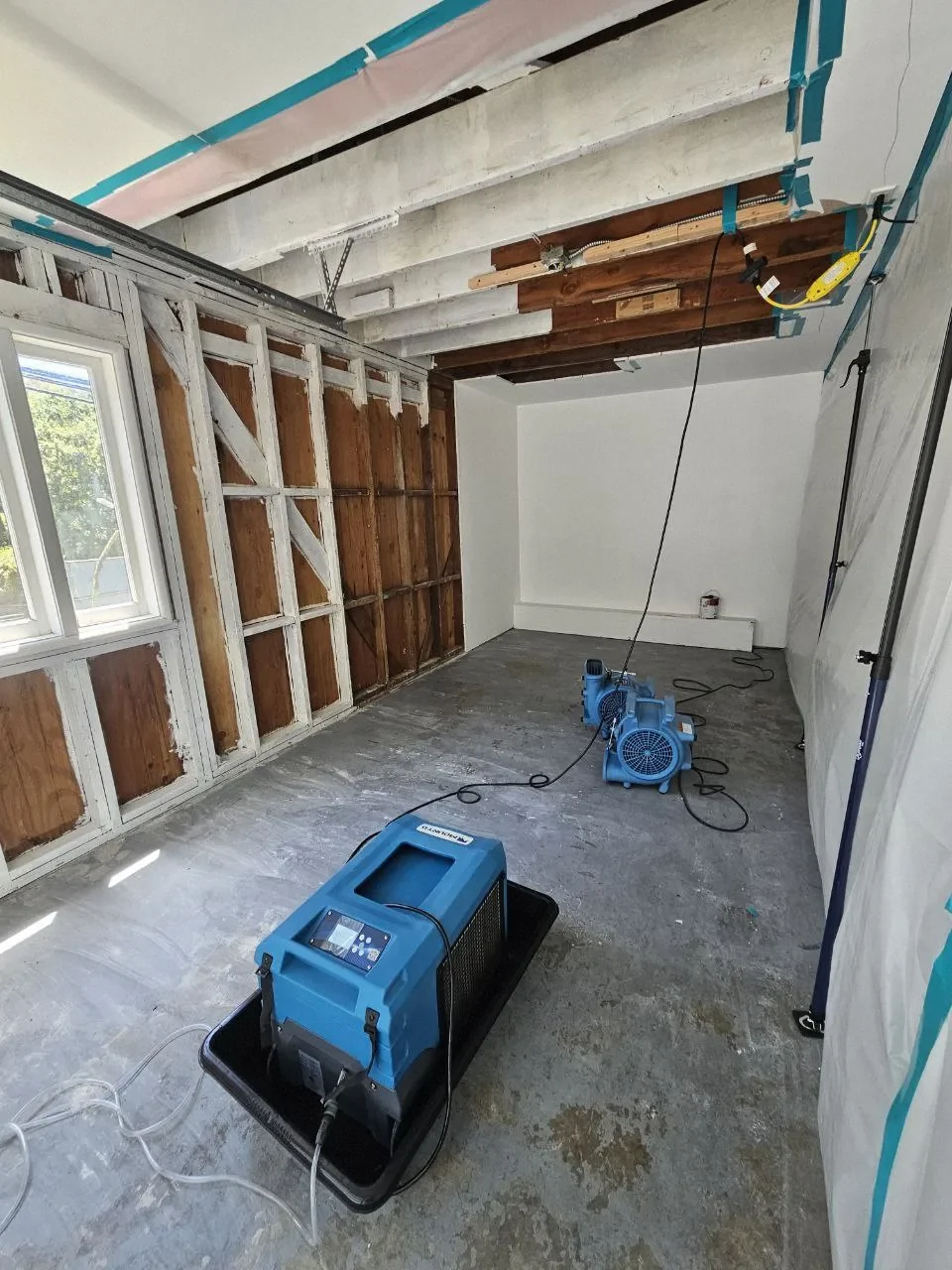
Extraction is followed by an assessment of what remains wet and what needs cleaning or removal. Equipment should be placed with safe power and access in mind. Measurements help track conditions, while a surface that looks dry may conceal wet material behind it. Ask how adjacent rooms and enclosed assemblies will be evaluated.
If a roof, window or wall opening still admits rain, arrange temporary protection through an appropriate contractor when conditions are safe. Do not climb onto a damaged roof. Source correction and drying must be coordinated so a later storm does not wet new finishes.
Before rebuilding, ask Woodside about the proposed scope, especially if it involves grading, drainage, plumbing or electrical systems. A cleanup estimate does not replace any required permit or inspection. Keep the reports, photographs and approval records together so each contractor can understand the sequence.
Claims and household coordination
Ask your insurer what the policy covers and which records are needed. Outside flooding may be treated differently from a supply-line leak, and coverage depends on the policy and the cause. Retain photographs, an inventory, invoices and any report describing the entry path. Record temporary-housing expenses if the insurer or adviser requests them.
Tenants should notify the owner or manager promptly, describe unusable rooms and follow up in writing. If a common wall or shared drainage system is involved, the association or owner may need to arrange access. The person responsible for a component cannot be determined solely from where water appeared.
For the restoration proposal, ask which rooms and materials are included, who addresses the source and how unexpected concealed damage will be reported. Review remaining tasks before closing an assembly. A final walkthrough helps identify the work still assigned to the plumber, drainage professional or building contractor.
If a room must remain closed during work, agree on a safe route through the rest of the property and tell the team about pets, medical equipment or other access needs. These arrangements can be revised if conditions change. They should not require occupants to pass through a contaminated or electrically hazardous space.
Common questions
Can I drive through water on a road if it looks shallow?
No. Floodwater can conceal road damage and stronger flow; obey closures and use a safe route.
Who maintains a driveway culvert?
Woodside says driveway culverts are the homeowner’s responsibility and should be kept clear. Do not attempt maintenance during unsafe flows.
Can I change a drainage path after a storm?
Woodside says work beyond maintenance that alters drainage patterns may require a site development permit. Check with the town before changes.
Where are town sandbags listed?
Woodside lists sand and bags at Town Hall for residents and businesses. Check current availability before going.
What should I do with used sandbags?
The town says used bags may be contaminated and their proper disposal remains the user’s responsibility. Follow its current disposal guidance.