Wait for safe access
An overflowing channel, surface runoff and a basement leak can leave similar damage but may require different source repairs. During an active storm, follow town and county warnings and leave if directed. Never walk or drive through floodwater. It can hide moving water, debris, contamination and electrical hazards.
Do not enter standing water to reach a panel, pump or appliance. Leave wet electrical equipment alone and arrange for the utility or a qualified electrician to make the area safe. Stay away from downed lines, unstable trees and damaged structures. If an immediate threat to life exists, call emergency responders from a safe place.
After officials allow access, photograph damage when it is safe. Record the water entry point if known, the rooms affected and whether water is still arriving. Contact the insurer about documentation and the applicable policy. Outside flooding, a pipe leak and sewer backup may be treated differently, so describe the observed source without guessing.
Water below grade
Atherton’s grading and drainage checklist lists a blocked drainage way or a change to its capacity or characteristics among conditions requiring a grading and drainage permit. Ask the town how this applies before altering a drainage route. The same checklist allows a sump pump inside the basement shell for incidental water or leaks; that does not establish that any particular installation is compliant.
The town drainage criteria distinguish groundwater pumping from seepage, direct rainfall and nuisance flows. The criteria do not accept groundwater pumping after construction is completed and describe elevation limits for other pumped water. Ask the town and a qualified drainage professional how the criteria apply before changing a pump or discharge arrangement.
Water in a basement can also come from a plumbing system or surface runoff. Notice whether it returns during rain or when a fixture is used, but do not decide the source from timing alone. An assessment of the building and the surrounding drainage path may be needed. Keep away from standing water and any energized equipment while that assessment is arranged.
Why pumping needs a plan
Water remaining outside a basement can press against the walls and floor. Removing interior water too quickly while the surrounding soil remains saturated can change the pressure balance. Have a qualified professional assess the structure, outside conditions and removal method instead of starting a pump simply because it is available.
Electrical safety comes before extraction. If the only path to a disconnect or pump control crosses standing water, do not enter it. Request help from the utility or an electrician. A damaged cord, submerged outlet or generator used in an enclosed space can create another emergency during cleanup.
Ask where extracted water will go and whether any discharge approval or environmental restriction applies. Water that has passed through a sewer or another contaminated area may require different handling from ordinary rainwater. The responsible professional should coordinate the plan with applicable town and regional requirements.
Town storm preparation
Atherton lists a self-service sandbag station in the rear parking lot at Holbrook-Palmer Park, with a limit of five bags per residence. Availability can change during an event, so check current town information before traveling. Prepare before roads or access routes become unsafe; a sandbag is a temporary measure, not proof that an opening is watertight.
Keep a way to receive San Mateo County emergency notifications and know the household’s evacuation arrangements. Review the needs of children, pets, medications and anyone who requires assistance. Move important records to a safer location while conditions are calm. These preparations help with many kinds of storms without assuming that a particular parcel will flood.
After severe weather, look for damaged trees, blocked roads and signs of unstable ground from a safe location. Obey barricades and do not return to a restricted property because the rain has stopped. If a drain or utility is damaged, report it to the agency responsible for that location; cleanup of private rooms and public infrastructure are separate responsibilities.
What the assessment covers
Once access is authorized, identify the route water took and the materials it reached. A visible line on a wall is a starting point, not a complete map of concealed moisture. Water can move beneath flooring, into cabinets or along a partition. Provide photographs and a timeline if available, including any prior work done to control the source.
Contents and finishes are evaluated according to their condition, the water source and whether they can be adequately cleaned and dried. Some porous materials may require removal. Other components may be suitable for treatment in place. Ask for the proposed work by room and material, including protection of spaces that were not affected.
If water has entered a crawl space or another confined area, leave entry to someone equipped to assess the hazards. The plan should account for access, ventilation and electrical safety. Notify the team about unusual odors, prior sewage problems or materials that may need special handling before surfaces are opened.
Drying and documentation
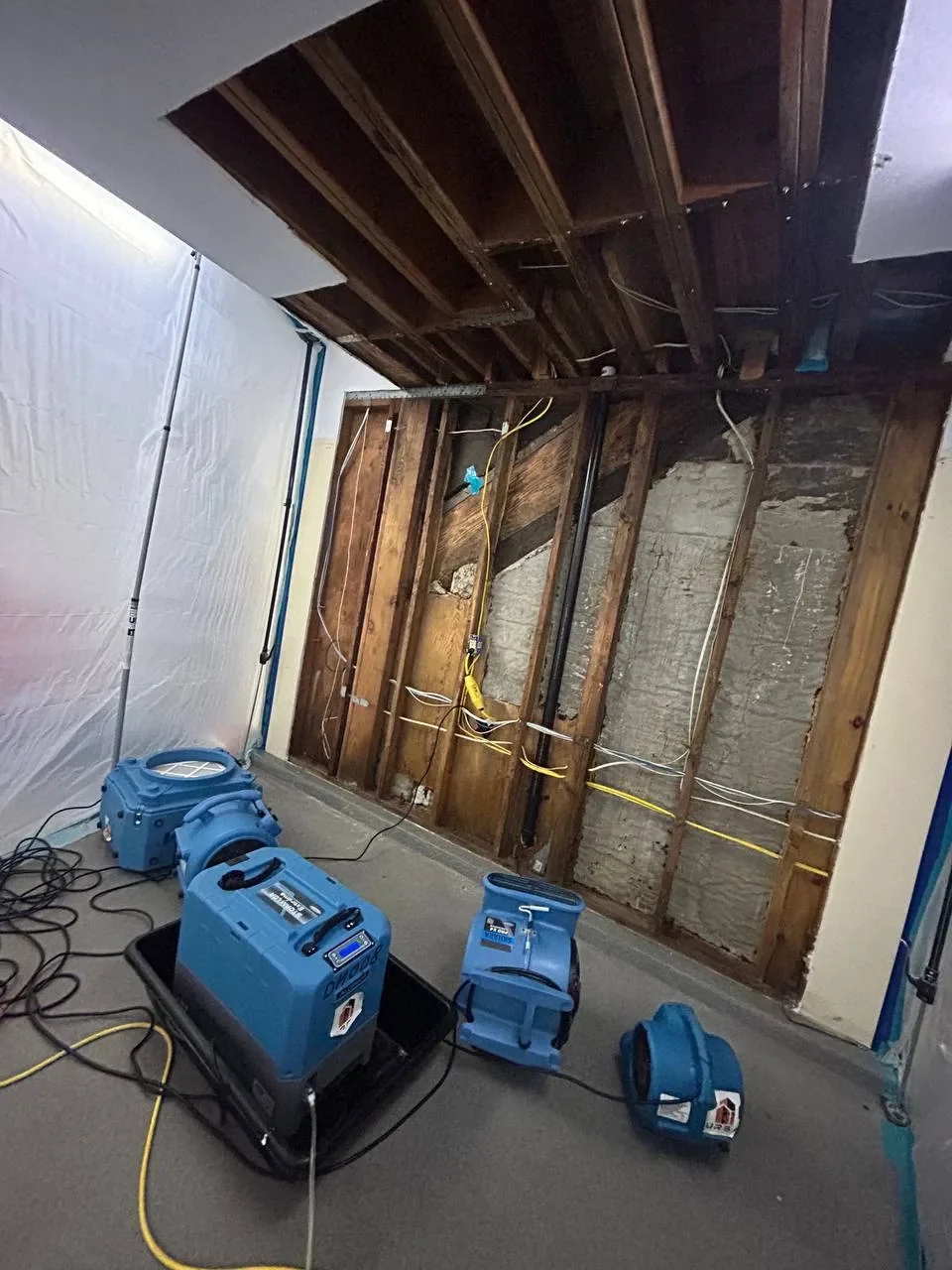
After the source is controlled and standing water is addressed, drying equipment can be placed where it is safe and effective. Readings help track conditions, but a single reading does not describe every part of an assembly. Ask how adjacent areas will be checked and how changes to the work will be communicated if concealed damage is found.
Keep photographs, written findings, receipts and correspondence with the insurer. If a temporary move is needed, record the dates and ask which additional expenses may be considered. Coverage depends on the policy, the cause and the insurer’s decision. A cleanup plan or general flood map does not determine coverage.
For a rented or shared home, notify the owner, manager or association promptly. Access to a common drain, wall or neighboring unit may require coordination. Keep a record of the notice and avoid assuming that the visible point of entry determines legal or financial responsibility.
Reconstruction after cleanup
Before replacing finishes, identify the party responsible for correcting the source and any work that needs review by the town. Drainage, plumbing, structural and electrical repairs can involve different professionals. A clear sequence helps prevent a wall from being closed before an inspection or a new finish from being installed over unresolved moisture.
Ask the Building Department about the specific repair scope, including below-grade work or changes to drainage. Existing conditions, the applicable code and the extent of work affect what is required. Keep the permit documents and inspection records with the restoration report so future decisions are based on the work actually completed.
Water Damage Guard serves Atherton from San Carlos. Call (650) 550-0619, 24/7, to discuss a flood cleanup. Explain whether officials have cleared access, where the water entered and whether it remains present. If the property is still unsafe, assessment must wait until the relevant hazards are addressed.
Common questions
Can I pump a flooded basement immediately?
Have the structural, outside water and electrical conditions assessed first. Removing water without a plan can create a pressure difference on basement walls.
Does Atherton allow all groundwater pumping after construction?
The town drainage criteria say groundwater pumping is not acceptable after completion and separately describe conditions for seepage and rainfall. Ask the town about the particular system.
Are sump pumps allowed for incidental basement water?
The town checklist allows a pump within the basement shell for incidental water or leaks. That does not authorize pumping groundwater contrary to the drainage criteria.
Where does the town list sandbags?
Atherton lists a self-service station at Holbrook-Palmer Park’s rear parking lot and a five-bag limit per residence. Verify availability before traveling.
Does a flood map determine insurance coverage?
No. Ask the insurer and any lender about the policy, the cause of loss and applicable flood coverage for the property.