Avoid floodwater and electrical hazards
Keep people and pets out of floodwater. It can conceal debris, open drains and electrical hazards and may contain waste or chemicals. Do not walk or drive across a flooded road. If water has reached electrical equipment, do not enter it to reach a switch. Ask the utility or a qualified electrician for help. Call 911 if anyone faces an immediate danger.
Follow official evacuation and reentry instructions. A building that appears intact can have unsafe utilities, damaged flooring or unstable material. Once in a safe place, notify the owner or manager and report a public hazard to the appropriate agency. Give the location and describe whether the water is still entering or rising. Photograph only from a safe position.
Water Damage Guard serves Redwood City from San Carlos, CA 94070 and accepts calls at (650) 550-0619, 24/7. Tell us the apparent source, affected spaces and any posted restrictions. An inspection after safe access is established determines the actual work required.
Bayfront Canal and Atherton Channel
Bayfront Canal and Atherton Channel collect stormwater from Redwood City and neighboring jurisdictions. OneShoreline describes a project using two underground culverts to divert excess flow to the managed Ravenswood ponds; it reports full project completion in December 2023. A regional project addresses a defined drainage system, not every way water can enter a particular building.
OneShoreline reported flooding of a mobile home community along the canal during the December 31, 2022 storm. This is a documented event at a particular location and time, not proof that every nearby property flooded or will flood. Use current official information for the address and follow emergency alerts during a storm.
At the property, distinguish what you observed from what remains unknown. Water may enter at a low opening, from a private drain, a roof or a plumbing system. From a safe location, note where it first appeared and whether it continued after rainfall. This helps the owner and appropriate drainage or plumbing professional investigate without assuming the cause.
Determine who controls the source
Water removal inside a building and correction of an outside source may involve different people. A public agency may investigate a street or public system, while a plumber, drainage professional or property owner addresses private components. Identify a contact for each part and record the report or work order number. If water is still entering, tell the restoration team before equipment is placed.
Floodwater can carry contaminants that cannot be identified reliably by its appearance. Describe whether it came from outside, a sewer or an unknown route and what it contacted. Avoid moving affected belongings through clean areas without a plan. If the property is posted unsafe, do not enter to retrieve items or inspect a suspected source.
If a retaining structure, foundation or floor appears unstable, keep clear and arrange a professional evaluation. Interior drying does not establish structural safety. Ask the responsible party when the source will be corrected and how the repair will be checked before rebuilding begins.
Assess materials and remove water
The assessment should trace water through accessible rooms and materials. A waterline may show where water reached, but it does not establish the condition beneath flooring, behind a cabinet or in a wall cavity. Record observations and identify areas that cannot yet be inspected. Obtain authorization before opening a shared assembly or entering another unit.
Extraction removes standing water. Cleaning and drying are separate steps that depend on the water source, the materials and the duration of exposure. Porous items can be difficult to clean after contaminated water; hard surfaces may be handled differently. Ask the team to explain why material is proposed for cleaning, removal or further evaluation.
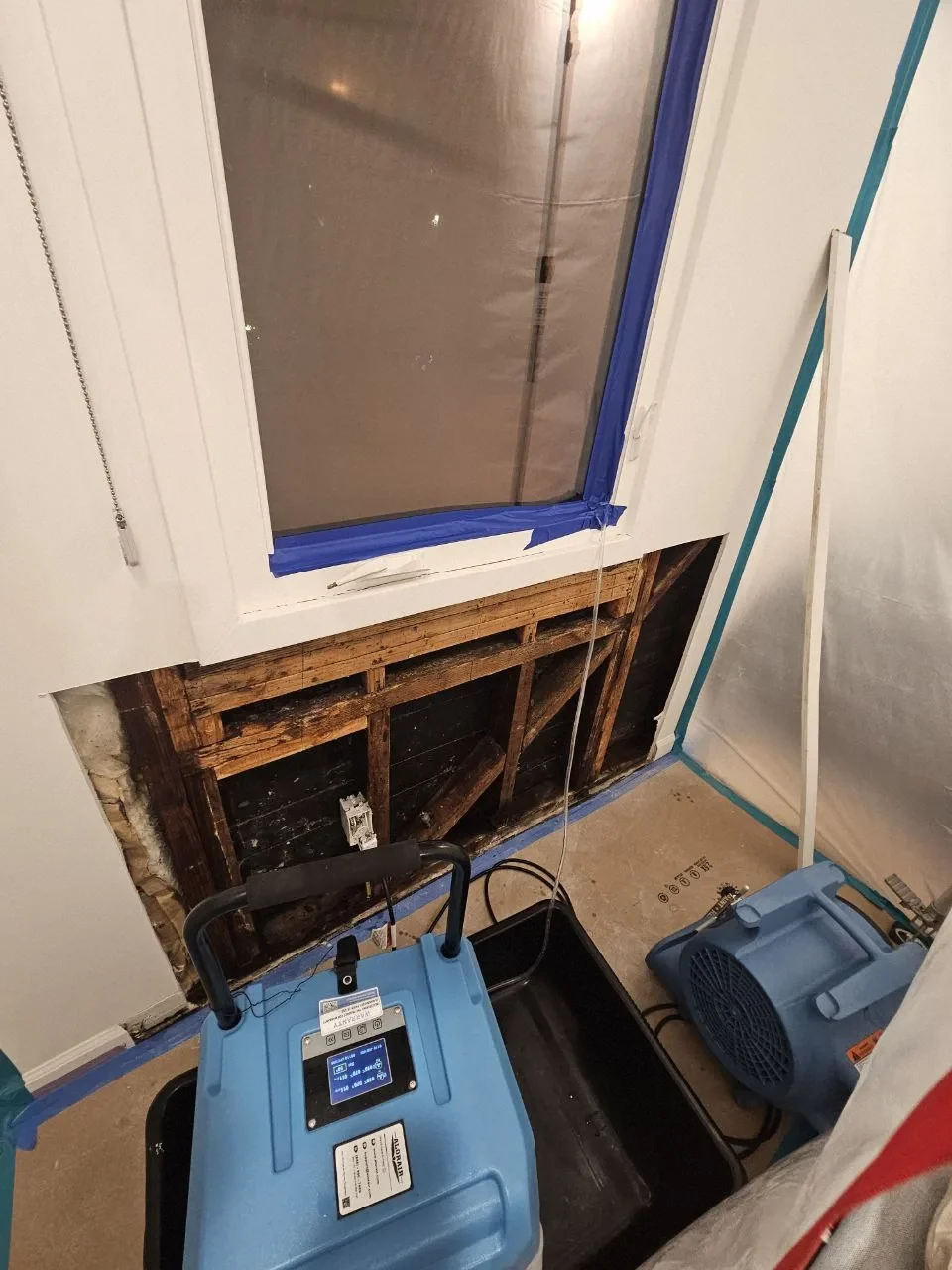
Drying equipment must be positioned for the property and its electrical condition. Monitoring can show whether moisture is declining and whether concealed areas need additional attention. A fixed drying period cannot be established accurately for every loss before inspection. Have flooded electrical, gas or mechanical equipment assessed by the appropriate qualified trade before using it.
Before contents are moved, identify a route through the property that avoids spreading residue into unaffected rooms. The owner or manager can help arrange a dry holding area and access to shared hallways or storage. If an item is too heavy, unstable or in contact with electrical equipment, leave it in place until the appropriate professional can evaluate it. Record important items and their condition when that can be done safely.
Ask how the team will communicate if inspection reveals water behind a finish or in an adjoining space. The person authorized to approve work may need to arrange access, consult the insurer or involve another trade. A written record should identify the additional area, what was observed and any remaining limits. These steps help the parties make decisions without treating the first visual inspection as a complete diagnosis.
Contents, occupancy and insurance
When safe, make a room-by-room inventory and photograph important belongings. Record exposure to floodwater and any items that cannot be accessed. Paper, electronics, furniture and textiles need different decisions. Ask the insurer about documentation and approvals before disposal where practical, and keep receipts and correspondence. A restoration estimate does not decide coverage.
Tenants should notify the owner or manager in writing and retain a copy. If a unit is unusable, ask the relevant parties about access, scheduling and temporary arrangements. Redwood City’s tenant ordinance has specific rules for covered substantial-remodel terminations; not every flood cleanup qualifies. Review the actual circumstances and current city information.
In a shared building, the manager or association can coordinate access to common spaces and other units. The place where water appears does not by itself establish where it started or who is responsible. Keep a timeline of notices and inspections and identify who can authorize the work.
If the building has a shared service room, ask the manager who may enter it and who will receive inspection updates. Keep access routes clear and let other occupants know of any approved restrictions. These arrangements help coordinate the work without assuming that every affected unit has the same source or repair scope.
Complete repairs in sequence
Before finishes are replaced, ask what was cleaned, which materials were removed and how remaining moisture was evaluated. Confirm that the source repair is complete or that an interim plan is in place. Keep the assessment and photographs with the building records. If the area becomes wet again, report the location and conditions promptly.
For work involving plumbing, electrical or structural components, ask the Redwood City Building Division about permits and inspections for the actual scope. Coordinate the relevant trades before concealing work. If hidden damage changes the scope, review the new proposal and authorizations with the owner and other responsible parties.
Call Water Damage Guard at (650) 550-0619 for a Redwood City flood-damage assessment. Calls are accepted 24/7. Public emergency response, utility safety and private restoration have different roles, and a contractor must follow any official access restriction.
Common questions
Does the completed canal project eliminate all flood risk?
No. It addresses a defined drainage system. The current risk and possible water pathways at an individual property need separate evaluation.
Can I enter standing water to reach a breaker?
No. Contact the utility or a qualified electrician instead of entering standing water near electrical equipment.
Does clear-looking floodwater need special care?
Yes. Appearance does not establish that floodwater is free of contaminants. Avoid contact and describe the source to the cleanup team.
Does extraction finish the work?
Not necessarily. Cleaning, assessment and drying of affected materials may still be needed.
Who should a tenant notify?
Notify the owner or manager in writing and keep a copy. Call emergency services for an immediate threat to life.
Sources
- OneShoreline project source Checked
- OneShoreline project source (archived copy) Checked
- CDC electrical hazards Checked
- CDC floodwater safety Checked