Safety before reentry
Leave flooded spaces and keep others away from water that may contain waste, chemicals or hidden debris. Never enter standing water to reach a breaker, plug or appliance. If electrical equipment has been wet or is near water, contact the utility or a qualified electrician. Call 911 for an immediate threat to life and follow evacuation and reentry instructions from local officials.
From a safe place, report public flooding to the appropriate agency and notify the owner or manager. Give the address and describe whether water is still rising or entering the building. Do not attempt to clear a blocked drain next to moving water, traffic or a fallen power line. A photograph taken safely can help preserve the initial conditions without putting anyone at risk.
Water Damage Guard is based in San Carlos and accepts calls at (650) 550-0619, 24/7. Tell us what areas are affected, the apparent source and whether the building has been cleared for access. The actual cleanup scope depends on the condition of the site and the materials exposed.
Creek and warning information
Belmont Creek runs through San Carlos and Belmont in open and culverted sections before reaching the bay through Belmont Slough. A 2024 OneShoreline study describes a double box culvert under Highway 101 and reports that the nearby maintenance reach flooded during the 2023 storms. These observations concern a particular section of the creek; they do not establish flooding at every San Carlos address.
OneShoreline also publishes a Belmont Creek dashboard as part of its countywide early-warning system. It can provide information about monitored conditions, but it is not a guarantee of safety at a particular property. Follow official alerts and the directions of emergency responders. Check the relevant map and local information for the address rather than relying on the conditions observed elsewhere.
Water on a site may have entered from a roof, a low opening, a private drain, a street or another source. Its path should be evaluated for the individual property. If a slope or structure appears unstable, stay away and arrange the appropriate professional evaluation. A restoration crew can assess affected materials after safe access is established, but it cannot determine structural safety from a phone call.
Separate source correction from cleanup
Flood cleanup is most effective when the source is identified and controlled. If water keeps flowing through an opening or from a damaged line, extraction alone will not prevent the area from becoming wet again. Depending on the source and location, the owner may need a plumber, drainage professional, utility or public agency as well as a restoration team. Ask who will handle each part of the response.
Tell the assessor if the water came from outside, a sewer or an unknown source, and whether it reached stored chemicals, building insulation or mechanical equipment. These details affect the cleaning plan. Floodwater may carry contaminants that cannot be identified by sight. Keep affected items separate from unaffected spaces and avoid spreading residue while access and handling are arranged.
If the building is posted unsafe, do not go inside to retrieve belongings. Coordinate entry with the responsible authority. Once access is permitted, record the apparent waterline and the rooms involved. Also note areas that are inaccessible, such as a locked neighboring unit or a concealed cavity. The assessment should distinguish those unknowns from confirmed damage.
Materials and drying
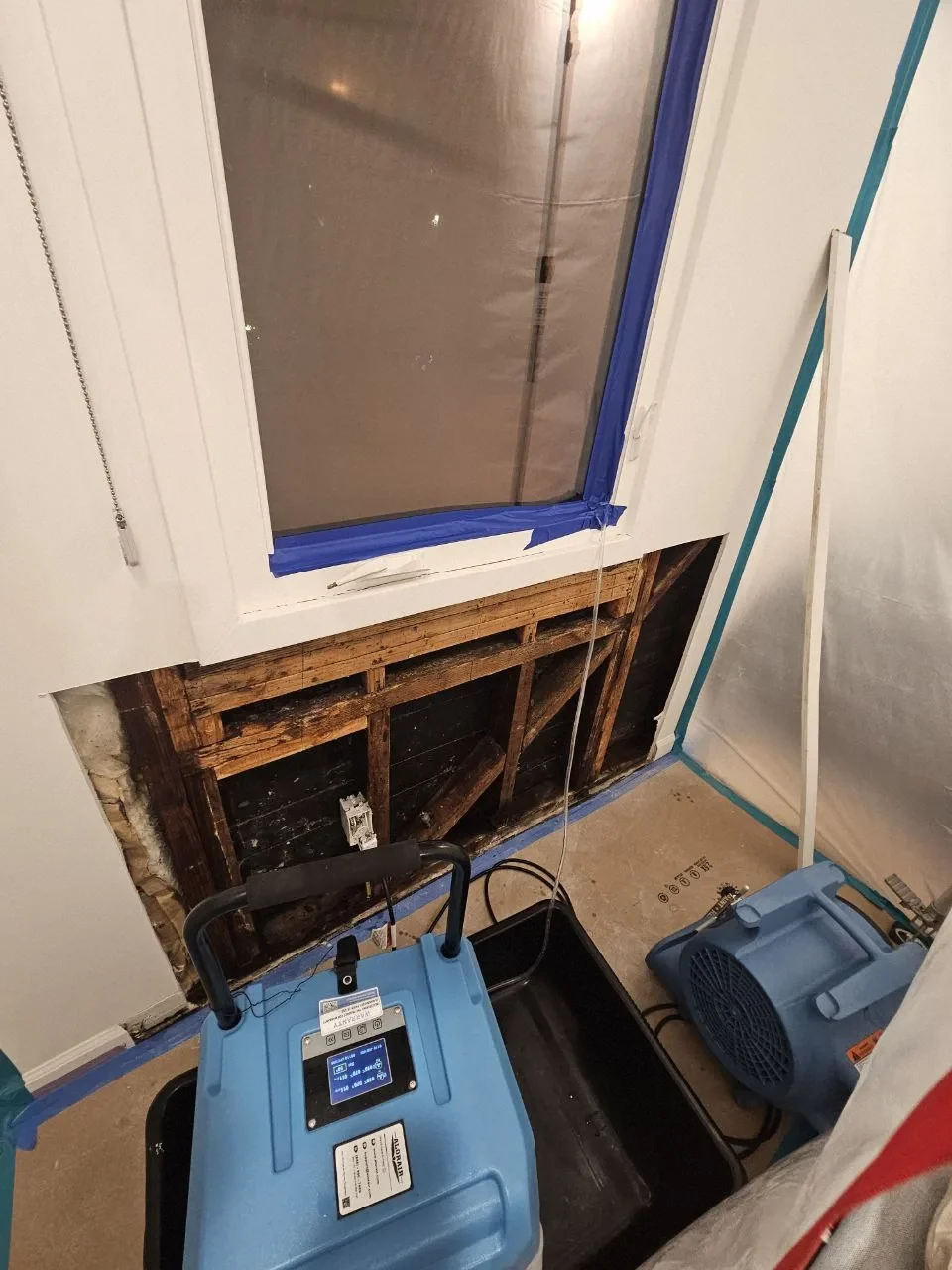
Standing water can be removed, but moisture and residue can remain beneath a floor finish or behind a wall. A plan should explain which surfaces will be cleaned, which materials may need removal and how the remaining assembly will be dried. Decisions depend on the source, the duration of exposure and whether a material can be adequately cleaned.
Drying equipment must be selected and positioned for the actual building and its electrical condition. Monitoring can show whether moisture is declining and whether an additional inspection is needed. A fixed period cannot be promised before the affected materials are assessed. If an active exterior route remains, coordinate that repair so the same area is not repeatedly wetted.
Have electrical, gas or mechanical equipment that has been flooded evaluated by an appropriate qualified professional before use. A dry-looking exterior does not establish the condition of internal components. If damage to framing, a retaining structure or the foundation is suspected, keep clear and obtain the appropriate evaluation before reconstruction.
Discuss access to the work area before equipment is delivered. A shared hallway, parking area or service room may require the manager’s permission, and residents may need a safe route through unaffected parts of the building. Identify the person who can approve these arrangements and the best way to receive updates. Ask how contents will be protected during movement and where they can be held without further exposure. If the inspection reveals a larger area than expected, review the additional work and its authorization before proceeding. Keep a record of any areas that could not be reached.
Record belongings and coordinate access
Prepare an inventory by room when it is safe. Photograph important objects and note whether they were exposed to floodwater, soot or another source. Paper records, furniture, textiles and electronics may require different decisions. Ask the insurer what evidence is required and keep receipts. The terms of the policy, not a restoration estimate, determine coverage.
A tenant should notify the owner or manager in writing and retain a copy. For a condominium or shared building, identify who can authorize access to common areas and neighboring units. Water can cross a shared wall or floor; the location where it appears does not establish who caused the problem. Agree how the inspection findings and proposed work will be communicated.
If part of the home cannot be occupied, ask the relevant parties about temporary arrangements and how to document expenses. Keep personal belongings separate from the building repair list. If an item cannot be safely inspected immediately, record the access limitation rather than entering the space against official instructions.
Before repairs are finished
After cleaning and drying, ask for the findings and the remaining repair plan. Identify which materials were removed or retained, whether inaccessible areas were opened and what source repair was completed. Keep photos and any monitoring records with the claim and building documents. If water returns, a record of the earlier work helps the next investigation.
If reconstruction affects plumbing, electrical or structural components, ask the San Carlos Building Division which permits and inspections apply. Work in the public right-of-way or an easement can have separate Public Works requirements. Confirm the actual scope before changed work is covered and coordinate the relevant trades and owner approvals.
Call Water Damage Guard at (650) 550-0619 to discuss a San Carlos flood-damage assessment. Calls are accepted 24/7. Emergency officials and utilities determine their own access and safety requirements; restoration work must follow those decisions.
Common questions
Can a creek dashboard guarantee my property is safe?
No. It provides monitored information; follow official alerts and arrange a property-specific assessment when safe.
Should I turn off power from a flooded room?
Do not enter standing water to reach electrical equipment. Contact the utility or a qualified electrician.
Is floodwater safe if it looks clear?
Appearance does not establish that floodwater is clean. Avoid contact and tell the cleanup team what is known about the source.
Does extraction dry the wall cavity?
Removing standing water is one step. Concealed materials may need inspection and drying based on their condition.
Who should coordinate a shared building?
Notify the owner, manager or association and ask who can authorize access to each affected area.
Sources
- OneShoreline official source (archived copy) Checked
- OneShoreline official source Checked
- CDC electrical hazards Checked
- CDC floodwater safety Checked