Protect people before property
Keep out of floodwater and do not drive across a flooded road. Water can conceal debris, open drains and electrical hazards, and its depth or current may not be obvious. Move children and pets away. If the water reaches electrical equipment, do not enter it to reach a switch. Contact the utility or a qualified electrician for help. If someone is in immediate danger, call 911.
Once you are in a safe location, report a public hazard to the appropriate agency and notify the property owner or manager. Give the location and describe whether water is rising or still entering. Do not attempt to clear a drain near moving water, traffic or a fallen line. Wait for officials to say that returning is safe, and be alert to damage that still requires a professional inspection.
Water Damage Guard serves Belmont and accepts calls at (650) 550-0619 around the clock. Explain the apparent source, the affected spaces and any posted access restrictions. A safe inspection can establish the scope; no one can determine the full condition of a wall or floor solely from the waterline.
Belmont Creek and local storm information
Belmont Creek reaches San Francisco Bay through Belmont Slough. A 2024 district study described a concrete double box culvert carrying the creek beneath Highway 101 and reported flooding in the maintenance reach near the highway during the 2023 storms. That event concerns a particular reach; it does not establish the flood history of every home nearby.
OneShoreline publishes a Belmont Creek dashboard as part of its countywide flood early-warning system. Use the dashboard and official alerts as sources of current information, and follow instructions from emergency officials. A gauge or map does not replace a site-specific assessment and should not be used to justify entering a hazardous area.
Water on a property can have more than one pathway. Surface runoff, a blocked drain and water moving through an opening may need different responses. From a safe place, note where water first appeared and whether it continues after the rain stops. Those observations can help a drainage professional or the responsible public agency investigate, without assuming that the creek caused the problem.
For an address-specific question, consult the current official map and contact the responsible agency. A creek study describes a system and historical events; it does not replace an assessment of the route water took at a particular home or the safety of access after a storm.
Separate the source from the cleanup
Before drying starts, the entry route needs to be understood and corrected or controlled. If water continues to enter through a door, a wall or a damaged supply line, the affected area can become wet again. A plumber, property manager, drainage professional or public agency may need to address a different part of the problem. Ask who is responsible for each decision and when the condition will be checked again.
Floodwater and sewage require special care because their contents are not reliably identified by appearance. Avoid contact and keep the affected area separate from clean spaces. Tell the restoration team whether water came from a street, yard, drain or plumbing system, and whether it touched chemicals or waste. Do not move contaminated belongings through the home without a plan.
If a retaining wall, slope or foundation is damaged or appears unstable, stay away. Interior extraction cannot establish structural safety. An appropriately qualified professional should evaluate the condition and any necessary stabilization. Record what is visible from a safe place and pass that information to the property owner and the people responsible for the assessment.
Assess the affected building
An inspection should trace water through the spaces it could have reached. Flooring edges, baseboards, cabinets and wall cavities may need closer attention when the waterline is visible nearby. The exact extent depends on the entry route, materials and duration. Distinguish observations from inaccessible areas instead of assuming either that the damage stops at the visible edge or that the entire building must be opened.
Ask how the team will handle contents and which materials can be evaluated in place. Wet cardboard, textiles, insulation and finishes do not all respond in the same way. The source of the water and whether a surface can be cleaned affect the decision. Photograph and list valuable or important items before disposal if this can be done safely, and ask the insurer what records are needed.
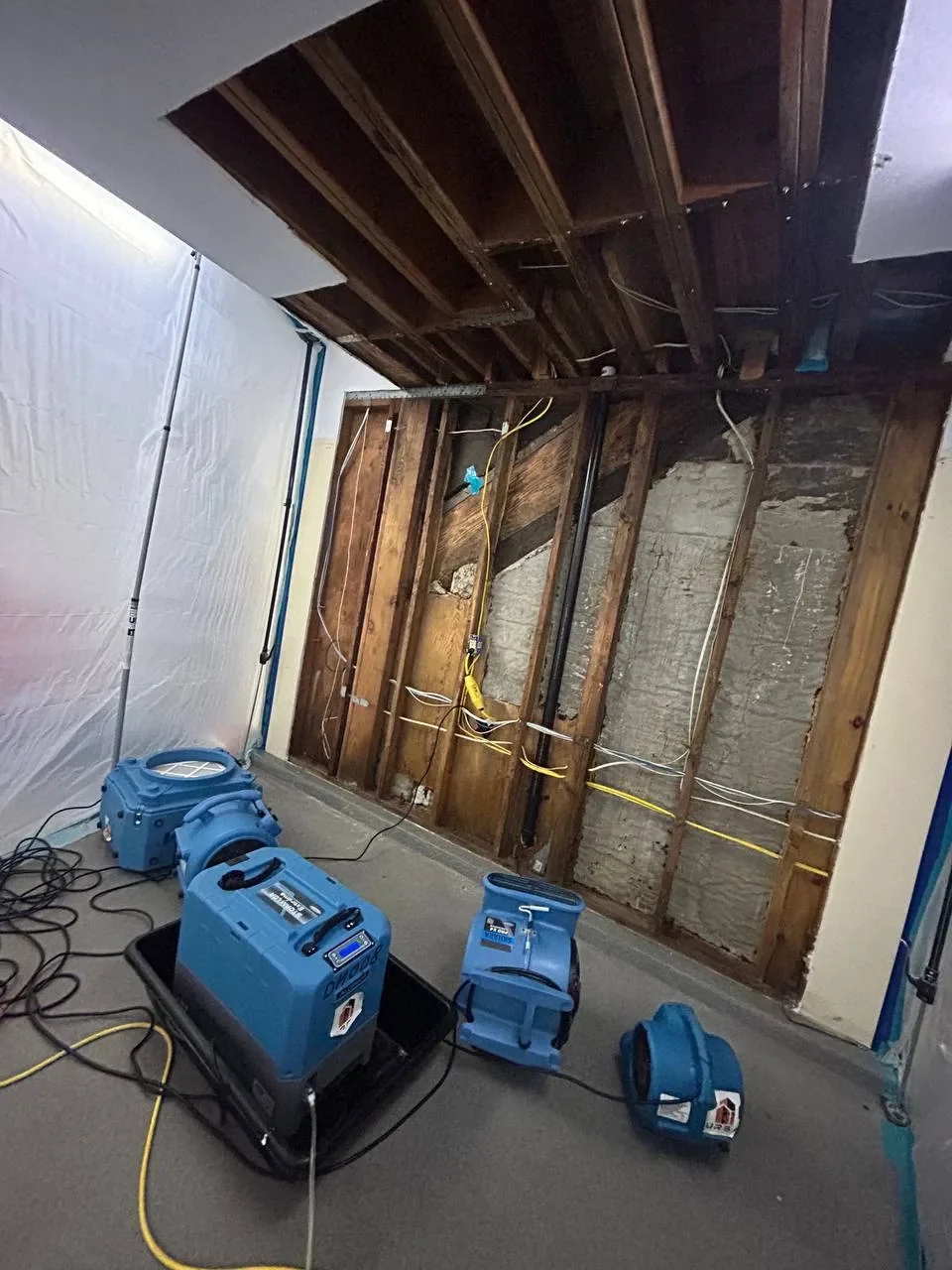
Water removal is followed by cleaning and drying appropriate to the source and materials. Equipment must be placed with electrical safety in mind. Monitoring provides information about progress and may reveal that a concealed area needs further attention. A fixed drying period cannot be promised before the property has been inspected.
When discussing the work, ask who will check the source repair and who will monitor the affected rooms. If a wall or floor cannot be inspected without opening it, note the limitation and decide with the property owner how and when that access will be arranged.
A plan for belongings and shared spaces
If you rent, provide written notice to the owner or manager and keep a copy. Describe the affected rooms, the time you first saw water and any areas that cannot be used. The owner or manager may need to arrange access to another unit or a common area. Do not enter another residence without authorization, even if you believe the source is there.
For a condominium, keep communications with the association and affected neighbors organized. Ask who can authorize inspection of shared assemblies and how findings will be distributed. The location of a wet ceiling or floor does not decide responsibility. Governing documents, the source and insurance terms should be considered by the appropriate parties.
If the property is not usable, ask the insurer and owner or manager how to document temporary arrangements. Keep receipts and an inventory of affected items. Restoration work, an insurance claim and any housing decision are related but separate processes; a contractor cannot determine policy coverage or a legal outcome.
After the water is removed
Before repair work is closed up, ask what areas were inspected, how moisture was evaluated and which materials were cleaned or removed. Keep photographs and any assessment records. If the cause was outside the building, confirm that the source repair is complete or that an interim plan is in place. Rebuilding before an active entry point is addressed can lead to a repeat loss.
Ask the Belmont Permit Center about the actual reconstruction scope. Changes to a roof, wall, plumbing or electrical system can require review or inspection. The appropriate requirements depend on the project, so check before concealing changed work. Coordinate the sequence among the owner, restoration team and the trades involved.
For an assessment of flood damage in Belmont, call Water Damage Guard at (650) 550-0619. Calls are accepted 24/7. Tell us what remains wet and whether emergency officials or the owner have placed any restrictions on access.
Common questions
Can a creek dashboard tell me whether my home is safe?
No. It provides information about monitored conditions. Follow official alerts and have the property assessed when it is safe to do so.
Should I enter a flooded room to turn off electricity?
No. Do not enter standing water to reach electrical equipment. Contact the utility or a qualified electrician.
Does removing water finish the cleanup?
Not necessarily. Cleaning and drying depend on the source, the materials and the extent found during inspection.
Who should a tenant notify?
Notify the owner or manager in writing and save a copy. Contact emergency services for an immediate danger.
Can a slope problem be solved by drying the interior?
Interior drying does not determine or correct an unstable slope. A qualified professional may need to evaluate the exterior cause.
Sources
- OneShoreline official source (archived copy) Checked
- OneShoreline official source Checked
- CDC electrical hazards Checked
- CDC floodwater safety Checked