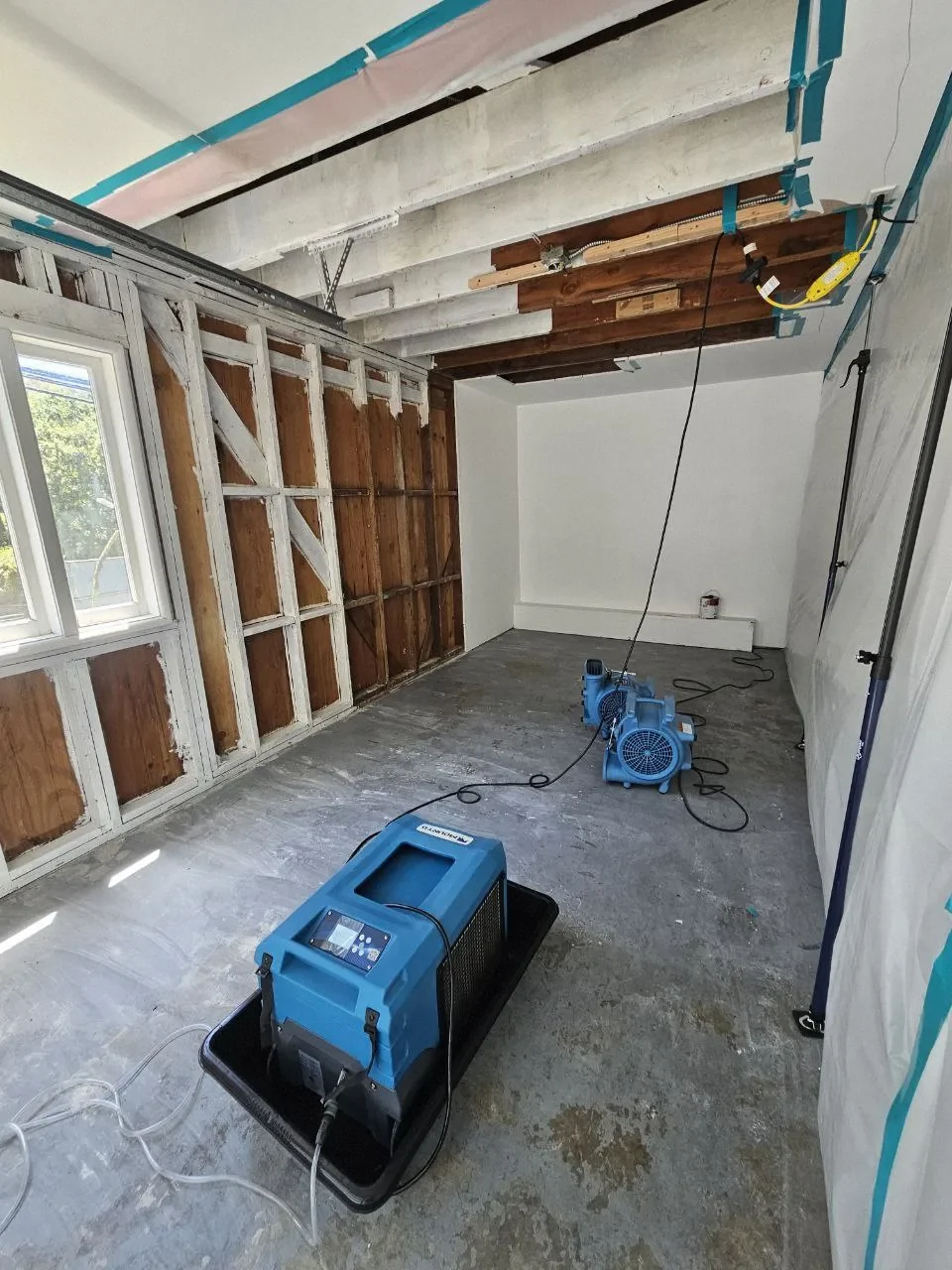
First steps after water enters
Keep people away from water that may be in contact with electrical equipment. Do not cross a flooded room to reach a breaker or touch a wet appliance. If electricity is involved, ask the utility or a qualified electrician to make the area safe. Leave if conditions are unsafe and call 911 for an immediate threat to life. Stop the water at an accessible fixture valve only if you can reach it without entering a hazardous space.
Notice whether the water is still arriving, which rooms are affected and whether it appears to come from a fixture, roof, drainage area or another space. A suspected source is useful information, but it is not a diagnosis. Contact the owner or building manager promptly if you rent or live in a shared property. Photograph the damage from a safe position and keep a record of when you discovered it and whom you notified.
Water Damage Guard serves Belmont and accepts calls 24/7 at (650) 550-0619. Tell us what is wet, whether the source has been stopped and whether sewage or damaged electrical equipment may be involved. We can discuss an assessment and a practical sequence. The extent of hidden moisture, cleaning or repairs must be determined at the property.
Belmont Creek and drainage
Belmont Creek is a major storm drainage collector for Belmont, San Carlos and portions of San Mateo County. A 2021 proposal for creek restoration sought to stabilize banks and reduce sediment and debris moving downstream. The proposal described a channel that includes vegetated banks, lined portions and concrete culverts. These details describe the creek system, not the condition or flood risk of a particular parcel.
OneShoreline reports permits for targeted sediment removal at locations on Belmont Creek. A planned or permitted action should not be confused with a guarantee about future flooding or an assertion that work has been completed at every location. If water is moving across a yard or toward a building, document its path from a safe place and ask the appropriate agency or a qualified professional which drainage features are public and which are private.
For the winter 2026–27 season, the county lists three self-fill sandbag sites in Belmont, with a limit of ten per residence. Check the current supply and operating arrangements before going. Sandbags may be useful preparation for an identified pathway, but they do not make it safe to enter floodwater and cannot correct every drainage or plumbing problem.
- OneShoreline reports permits for targeted sediment removal at locations on Belmont Creek.
- The Belmont Creek project proposal describes the creek channel as including vegetated banks, lined portions and concrete culverts. (archived copy)
- The county’s winter 2026–27 list identifies three Belmont self-fill sandbag locations with a ten-per-residence limit.
- Hillside drainage in Belmont
- Flood cleanup in Belmont
Water service and public reports
The Mid-Peninsula Water District serves Belmont and portions of San Carlos. If a supply problem involves the district’s system or an unsafe meter, contact the district for guidance instead of attempting work on equipment you do not control. Inside the building, a plumber can help identify a failed fixture or pipe and isolate the affected section when it is safe.
In a 2024 winter storm bulletin, Belmont described crews clearing blocked drains and fallen branches during storms. Public crews and private property owners may have different responsibilities. Report a public hazard to the city using its current reporting channel and describe the location. Do not enter a flooded roadway or move debris where there is traffic, unstable material or a downed line.
For an interior backup, keep people and pets away from affected water and avoid spreading it into clean rooms. A restoration assessment can consider what the water contacted, whether materials can be cleaned and where moisture may have traveled. A public report may be needed separately to investigate the condition of a street or public system.
Where moisture can travel
The first visible mark may not be the point where water entered. A roof leak can show at a ceiling below; water from a fixture can run under a cabinet or floor finish. Assessing the affected area means looking at the source, the materials, the time involved and places that cannot be inspected without opening an assembly. It is more useful to describe what is known and unknown than to promise a predetermined drying time.
Extraction addresses standing water, while drying addresses moisture that remains in materials and air. Depending on the property, a plan may include moving contents, using drying equipment and monitoring progress. Equipment placement must account for electrical safety and the type of water involved. A plan should also identify areas that are inaccessible and explain when further inspection is needed.
Not every wet material has the same response. Some can be cleaned and dried, while others may require removal depending on the source, damage and condition. An assessment should explain the reason for proposed removal or retention. Photograph important belongings and keep a separate list of personal contents and building components for the owner or insurer.
Hillsides, foundations and safe access
A sloping property can have several possible routes for surface water, including a driveway, a retaining area, a drain or a point where the ground meets the building. The relevant route depends on the parcel and the storm. Do not assume that a hillside address means the home has a particular drainage defect. Observe water movement only from a safe location and describe where it first appeared.
If a slope, retaining structure or foundation appears unstable, keep away and contact the appropriate professional or public authority. Moving soil and debris can obscure the source and introduce additional hazards. A drainage or structural design question may require an engineer; drying interior materials does not replace evaluation of the exterior cause.
Once the source has been identified, coordinate its repair with the interior drying plan. For example, opening an interior finish without correcting water entry can allow the same area to become wet again. Ask what temporary protection is needed, who will repair the source and when the affected area can be inspected again. Keep photos of the route and the corrective work.
Rentals, condominiums and contents
The Census Bureau estimates that 54.8% of occupied Belmont housing units were owner occupied in 2020–2024. This is a citywide estimate for that period, not information about a particular building. In any shared building, a leak can require access to more than one space, so it helps to identify the manager or owner and provide notice promptly.
If a ceiling stain may be connected to another unit, ask the manager to coordinate access. Do not enter a neighboring unit or open a shared wall without permission. Keep the messages and dates in one place. A visible stain does not settle where the failure occurred or who pays. The governing documents, insurance and actual circumstances may all matter.
For a rental, describe the condition in writing and request a plan for access and repair. Keep copies and photograph affected belongings from a safe place. If the room cannot be used, ask the owner and insurer how to document temporary arrangements. Insurance coverage is determined by the policy; a restoration inspection is not a coverage decision.
Mold, fire and repair decisions
If a damp area develops visible growth or a persistent odor, correct the moisture source and avoid disturbing the material while its extent is assessed. Painting a stain does not repair a leak behind it. The right cleaning or removal method depends on the material and condition; ask for an explanation of the proposed work and any areas that could not be inspected.
Fire and smoke damage can also be accompanied by water used during suppression. Follow the fire authority’s direction on safe entry, and do not operate damaged utilities. The assessment may need to consider soot, moisture and contents together. A local hazard map describes an area’s mapped conditions; it does not determine the cause or extent of a particular building fire.
Before reconstruction, ask Belmont’s Permit Center about the specific work, especially if it changes a roof, wall, plumbing or electrical system. Arrange any required inspections before work is concealed. Keep the assessment, permit documents and photographs together, and confirm who will coordinate the trades and any necessary access.
Preparing for an assessment
Write down the rooms affected, the apparent source, when it stopped and any work already performed. Note restrictions such as a posted unsafe notice, a shared shutoff or an area only the manager can open. A clear account helps the people attending understand the situation while leaving room for findings that differ from the initial assumption.
Ask for the proposed sequence in plain language: inspection, source correction, extraction or cleaning, drying, monitoring and repairs as appropriate. Discuss where belongings can be moved and what happens if more damage is found. If insurance is involved, contact the carrier and ask what documentation it needs before disposal or repair decisions where practical.
Water Damage Guard is based in San Carlos, CA 94070 and serves Belmont. Call (650) 550-0619 any time to discuss the affected property and the next step. A restoration service does not replace emergency responders, the water district or a public agency responsible for a public system.
Common questions
What should I do first after a leak?
Keep away from electrical hazards, stop the source only if it is safely accessible, and notify the owner or manager. Record what you see from a safe place.
What role does Belmont Creek play in local drainage?
Belmont Creek is a major storm drainage collector for Belmont, San Carlos and parts of San Mateo County. Conditions at an individual property still need separate evaluation.
Who supplies Belmont water?
The Mid-Peninsula Water District serves Belmont. Contact the district about its equipment or public supply concerns.
Where did the county list Belmont sandbags for winter 2026–27?
The county listed three self-fill sites with a ten-per-residence limit. Check the current location, hours and supply before going.
Should a tenant notify the owner?
Yes. Describe the condition in writing, keep a copy and ask the owner or manager to coordinate access and repairs.
When can I call Water Damage Guard?
Calls are accepted 24/7 at (650) 550-0619. Describe the source and any safety concerns when you call.
Sources
- Belmont, county or utility source (archived copy) Checked
- Belmont, county or utility source Checked
- Belmont, county or utility source Checked
- Belmont, county or utility source Checked
- Belmont, county or utility source Checked
- Belmont, county or utility source Checked
- CDC electrical hazards Checked
- EPA mold cleanup Checked