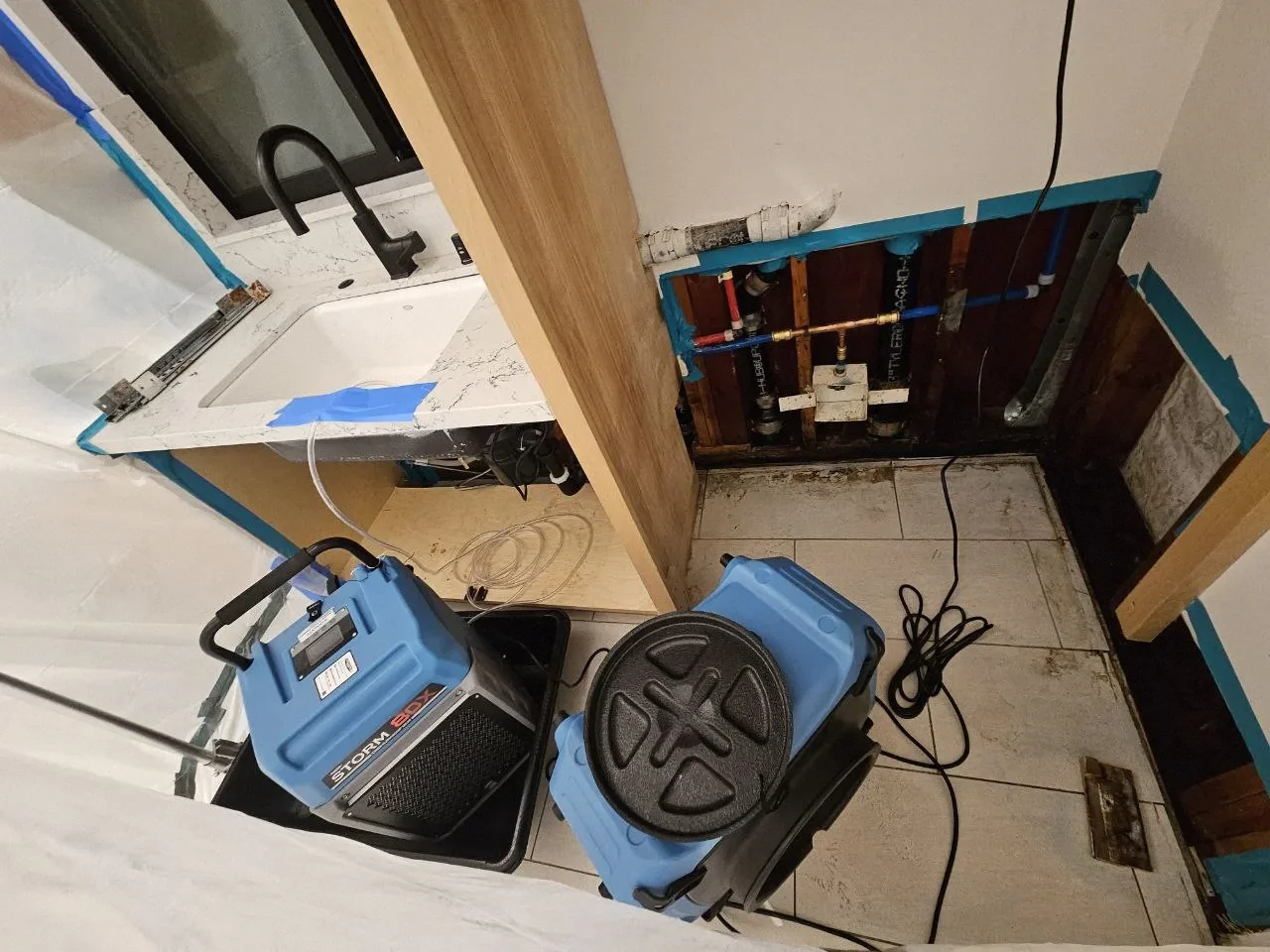
What to do when water enters
Move people and pets away from the affected area. If the source is a fixture and its shutoff is safely accessible, close it; otherwise call the appropriate utility or a plumber. Do not enter standing water to reach a switch, touch wet electrical equipment or stand beneath a sagging ceiling. If there is an immediate threat to life, call 911.
Water Damage Guard provides restoration in San Mateo from its San Carlos base. Call (650) 550-0619, 24/7, to discuss what happened. Describe the source if known, the affected rooms and whether the building can be entered safely. A supply leak, a sewer backup and outdoor floodwater present different questions, so do not describe an unknown source as clean water just because it looks clear.
Take photographs from a safe position if that does not delay urgent action. Record when the problem was noticed and whether water is continuing to rise or spread. A picture of a wet floor is useful, but it does not establish the source or the condition beneath the floor. The utility, plumber, restoration provider and building official each address a different part of the response.
Local contacts for water, drains and repairs
For sewer overflow and backups, San Mateo lists Public Works at (650) 522-7300. The city's FAQ directs emergency sewer calls after business hours to Police Dispatch at (650) 522-7700. Report a clogged public storm drain or flooding to Public Works and explain the location. If wastewater has entered a building, avoid using connected fixtures while the blockage is being investigated.
California Water Service lists (650) 558-7800 as both the main and after-hours contact for its Bayshore District. Check which water provider serves the actual address before assuming the district covers it. The water utility can address its system; a private plumbing professional may be needed to investigate a line or fixture within the property.
For building permits and inspections, the city lists (650) 522-7172. Explain what will be removed, replaced or altered; an initial cleanup description may change if concealed damage is found. Keep the source repair, restoration and inspection records together. If you are unsure which agency is responsible for an urgent condition, report the facts rather than guessing where the fault lies.
Flood maps and the North Shoreview project
The city says its North Shoreview Flood Improvement Project was completed in 2023. It included improvements to the Coyote Point and Poplar Avenue pump stations and a raised 1,300-foot levee segment. FEMA issued a Letter of Map Revision effective October 11, 2024, and the city reports that approximately 1,600 addresses were removed from flood zones as a result.
That history is helpful when reviewing a property, but it is not a determination for every home in a neighborhood. Use the current official flood map and the address, and ask the city or a qualified adviser about the designation and applicable insurance requirements. A change to a map does not mean that a property can never experience water entry or that a particular insurance policy covers a loss.
After a storm, distinguish what you observed from the possible source. Water entering at a door, a sewer backup and ponding outside a foundation can require different investigations. Do not walk or drive through floodwater. Wait for any access restrictions to be lifted, and keep away from wet electrical equipment. When safe, record the location and approximate high-water mark so the affected areas can be assessed.
Sandbags and drainage before a storm
The county's winter 2026–27 list identifies self-fill sandbag locations at the San Mateo Corporation Yard, Beresford Park and the Anchor Road and Bay Trail parking lot. The list shows a ten-bag limit. Availability, hours and supplies can change, so check with the city before visiting. A sandbag station is for preparation and is not a reason to stay in an area when officials direct an evacuation.
Protecting an individual property also requires understanding where water can enter and where it can drain. A city pump station or levee protects a broader system; it cannot tell an owner whether a particular window well, door or private drain is functioning. Ask the appropriate professional to investigate a recurring entry path and discuss permanent work with the city before altering drainage.
If water has already reached a room, keep the storm response separate from the interior repair. A public drain report can help the city investigate the street, while the building's wet materials still require their own assessment. Document conditions only when safe, and make a note of what happened before and after the rain stopped.
Private sewer lateral inspections
San Mateo lists four triggers for inspection under its private sewer lateral ordinance. They include sale of real property and building permits for additions, alterations or remodels valued at $90,000 or more, subject to stated exceptions. The city lists additional triggers and exceptions. Ask Public Works how the ordinance applies to the actual property and planned work.
The city lists building permits for emergency repairs or restoration as an exception to those inspection triggers. That is an exception to a lateral inspection trigger; it does not mean every emergency repair is exempt from all building permits or other requirements. The person arranging repairs should confirm the scope with the city and retain any permit, inspection and plumbing records.
If sewage backs up, the immediate decisions are to limit additional water use, keep people away and report the problem. A lateral inspection or repair and the cleanup of contaminated areas address different issues. Clearing a line does not automatically clean or dry the floor and wall materials it contacted. Ask who is responsible for each step and when normal use of fixtures can resume.
Renters, owners and habitability
Notify the owner or manager promptly when water enters a rental. Describe the location, whether the leak continues and any affected essential service. Written notice and a safe photograph can help preserve the date and condition. If a shared wall or pipe may be involved, management may need to coordinate access to another unit. The visible location alone does not determine private responsibility.
San Mateo County Environmental Health says it does not handle housing complaints within the City of San Mateo and directs those complaints to local code enforcement. Ask the city about the right complaint process for the property and the nature of the problem. A complaint does not stop an active leak; arrange the urgent utility or plumbing response at the same time when needed.
If a unit cannot be occupied, ask the city or a qualified housing adviser how the applicable relocation rules and exceptions affect the particular household. Do not assume that every water event creates the same entitlement. Keep written notices, inspection findings, communications and receipts; the governing rule depends on the reason for displacement and the circumstances.
Assess and repair the actual materials
A damp baseboard, a wet carpet pad and a stained ceiling can involve different conditions behind their visible surfaces. Once the source is controlled and the building is safe to access, ask how the affected materials will be assessed and which spaces remain concealed. Cleaning, drying and replacing finishes are separate decisions; their sequence depends on the water source and condition of the materials.
If the water came from outside or a sewer, tell the restoration provider before moving belongings. Contaminated water may call for different handling from a supply-line leak. Keep children and pets away from the affected route and ask how the work area will be separated from the rest of the property. Do not use an appliance or switch that may be wet.
Older coatings and insulation may need evaluation before demolition. A home's age alone does not establish whether a particular material contains lead or asbestos. Discuss the scope with the people responsible for the repair, and arrange any required inspections before concealed work is closed. Keep an inventory of affected contents and ask the insurer what documentation it needs.
Fire hazard information and neighboring areas
San Mateo Consolidated Fire says the City of San Mateo is designated Moderate only on its local fire hazard severity zone information page. A local hazard map is a planning tool, not a description of fire damage at a particular address. If fire, smoke and water are involved, follow the fire authority's safety instructions and obtain the relevant property-specific guidance before repairs.
San Mateo's planning materials identify neighborhoods including North Shoreview, North Central, Hayward Park, Baywood, Laurelwood, San Mateo Park, Bay Meadows and Fiesta Gardens. The city notes that neighborhood and homeowners' association boundaries are self-reported and not guaranteed for accuracy. The address, rather than the neighborhood label, determines the correct utility and official records.
Water Damage Guard also serves neighboring communities. Keep the location and source clear when calling, particularly near a municipal boundary. For an insurance claim, ask the insurer about the actual policy and retain the communication. A restoration provider can describe the work it assesses, but cannot promise coverage or determine the cause of a fire.
- City or county source
- City neighborhood map information
- Burlingame
- Hillsborough
- Belmont
- City draft neighborhood mapping
- San Mateo County king tides and bay flooding: protecting a shoreline home
- San Mateo County flood zones and creek flooding: check your address
- Preparing a San Mateo County home for the rainy season
- San Mateo County sandbags: where to get them and how to place them
- Tenant rights water leak california
- Mold in rental california
- Repair and deduct california
- Atmospheric river damage
- Flood damage restoration process
- Sewer camera inspection
- Additional living expenses water damage
- Flash flood facts and safety
- Exterior flood resilience upgrades choose for the actual hazard
- Building permits for water damage repairs in San Mateo
Common questions
Who handles a San Mateo sewer emergency?
The city lists Public Works at (650) 522-7300 during business hours and Police Dispatch at (650) 522-7700 after hours.
Did the 2024 map revision remove every San Mateo property from flood zones?
No. The city reports approximately 1,600 addresses were removed. Check the current map for the actual address.
Does an emergency restoration permit trigger a lateral inspection?
The city lists building permits for emergency repairs or restoration as an exception to the inspection triggers. Other permit requirements may still apply.
Where should a San Mateo tenant report a housing complaint?
County Environmental Health directs City of San Mateo complaints to local code enforcement. Report an active leak to the owner or manager promptly as well.
Where are city sandbags available?
The county winter 2026–27 list names the Corporation Yard, Beresford Park and Anchor Road/Bay Trail parking lot, with a ten-bag limit. Check current supplies and hours.
Can an insurer decide coverage from a photograph?
A photograph is useful evidence, but coverage depends on the policy and facts. Ask the insurer what information and inspections it requires.
Sources
- City or county official source Checked
- City or county official source Checked
- City or county official source Checked
- City or county official source Checked
- City or county official source Checked
- Official agency information Checked
- Official agency information Checked
- Official agency information Checked
- Official agency information Checked
- City draft neighborhood mapping Checked