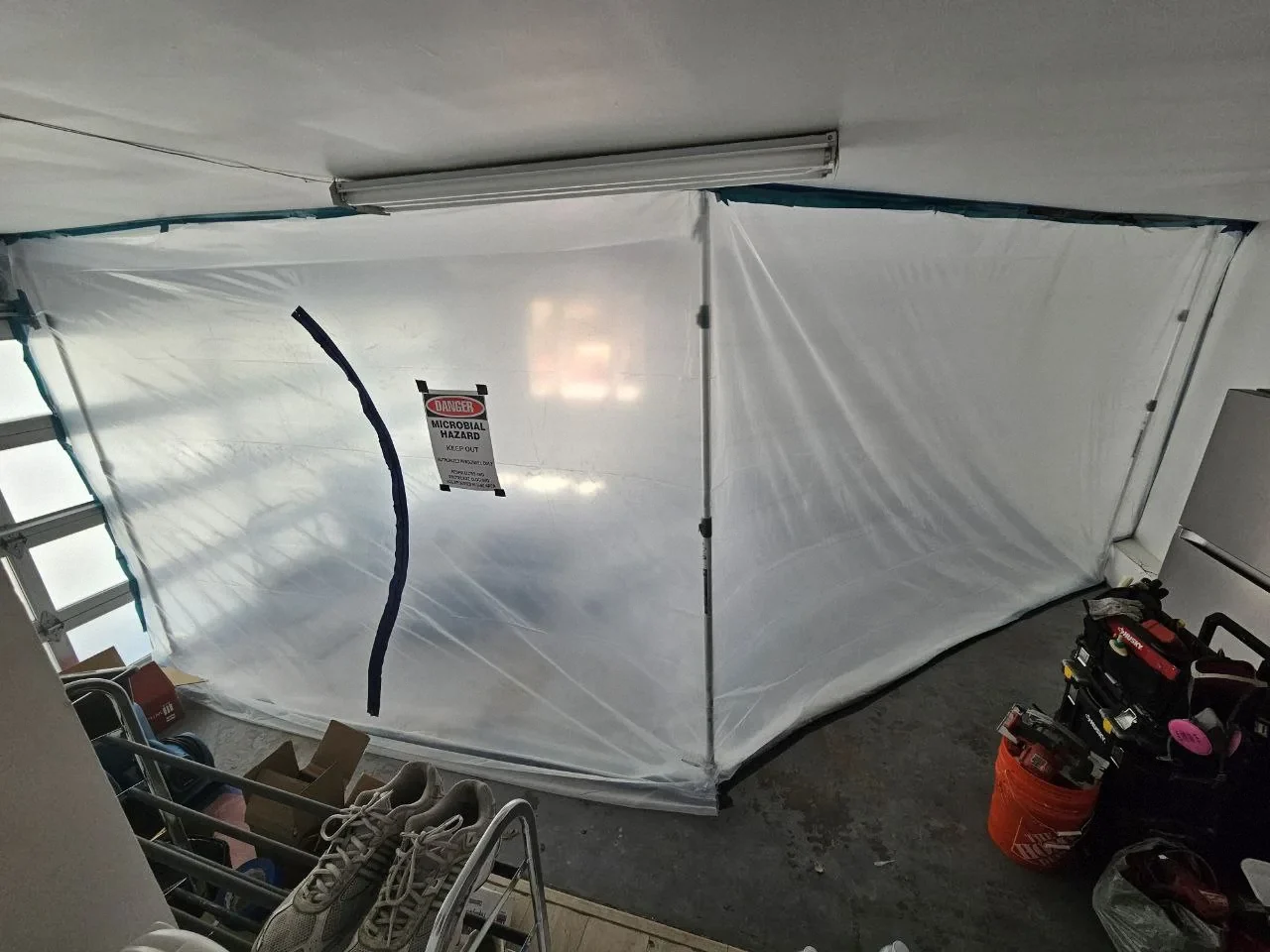
Address moisture along with visible growth
A musty smell or a spot on a wall can be a reason to investigate, but it does not show how far moisture has traveled. Start by identifying when the surface became damp and whether the condition changes during rain, after using a fixture or when a building system operates. Avoid disturbing the material simply to determine its appearance behind the surface.
If water is still entering, arrange to stop the source. Close a fixture valve only when it can be reached safely; never enter standing water to reach an electrical switch or handle a wet appliance. A plumber, utility or other specialist may be needed to locate and repair the source. Water Damage Guard accepts calls at (650) 550-0619, 24/7, to discuss mold remediation in San Mateo.
The U.S. Environmental Protection Agency explains that cleaning mold without correcting the water problem can allow it to return. Ask how the moisture source will be resolved and how the affected materials will be assessed. Cleanup, source repair and replacing a finish are related tasks, but they are not interchangeable.
What the city handles
San Mateo Code Enforcement says it addresses visible mold and does not use mold testing reports. Its role is different from that of a restoration provider assessing what materials have been affected and how they can be cleaned or removed. If a housing condition is not being corrected, ask Code Enforcement how to make a complaint about the property and what information is needed.
The city lists mold among health and safety issues that can be reported to its Code Enforcement office at (650) 522-7150. Identify the address, the location of the problem and any prior notice to the owner or manager. A complaint is not a substitute for the urgent action required to stop an active leak or address a life-threatening condition.
A sample or a visible patch should not be used as a medical diagnosis. If an occupant has health concerns, consult a health professional. For the building, establish what is wet, why and what material is affected. The city's decision to address visible mold does not mean every stain is mold, and it does not remove the need to address the moisture source.
Repairs can involve different permits
San Mateo says a building permit is required to build, enlarge, alter, remove, demolish or repair a structure. It separately identifies plumbing permits for installation, removal, alteration or replacement of plumbing or drainage piping and fixtures. Describe the actual proposed work to the Building Division; a general discussion of mold does not establish that every cleaning task needs a permit.
For example, a cleanup may lead to discovery of a damaged pipe or structural component. The person repairing it should ask which approval applies and arrange required inspections before the work is concealed. If a leak can be stopped without opening an assembly, the next decision may be different from a project that replaces pipe and wall framing.
Keep the source-repair record, any permit and the restoration scope together. They answer different questions. A plumbing invoice may show what was changed, while an assessment of the wall or floor describes the material affected by moisture. Ask who will coordinate inspection and when new finishes can be installed.
A local repair-assistance option
The city lists repairs addressing mold and water damage among eligible work for its Housing Rehabilitation Loan Program. Its flyer says applicants must be low-income homeowners and the San Mateo property must be their principal residence. This is an eligibility-based loan program, not automatic payment for any restoration project.
Ask the program administrator about current availability, qualification and the work that can be considered before relying on the program. A homeowner should understand any loan conditions and whether the proposed scope qualifies. The city's home repair page also describes other assistance programs; their eligibility and funding can differ.
If the moisture problem requires an immediate response, discuss safe source control separately from the assistance application. Document the observed condition and keep estimates and communications. Applying for a program does not itself stop water entering the building, and approval should not be assumed.
Inspect the affected assembly
A wall can be damp because of a supply pipe, a drain, rain entering at a window or roof, or another condition. Ask the person investigating to explain the likely route and what evidence supports it. The room where moisture is visible may not be where the water entered. If a cavity cannot be seen without opening it, agree on how the opening and any protective measures will be handled.
The material matters. A hard, accessible surface can be approached differently from carpet padding, insulation or paper-faced board. EPA notes that moldy absorbent material may need to be discarded. Ask for a clear inventory of what will be cleaned or removed, what remains inaccessible and how the adjacent area will be protected while work proceeds.
Do not run a heating or ventilation system known or suspected to be contaminated with mold. EPA advises seeking appropriate professional guidance because operating it can spread mold through the building. Do not apply paint over an unresolved moisture problem as a substitute for correcting the source and addressing the affected material.
Tenants and shared property
Tell the owner or manager promptly about a leak or suspected mold in a rental. Give the location and date, and retain a written notice when practical. If the source may involve a common pipe or a neighboring unit, ask management who will arrange access. A stain in one room does not establish private responsibility for the source.
If the issue remains unresolved, San Mateo Code Enforcement can explain its complaint process. Keep safe photographs and records of communications, but do not enter a hazardous space or open a wall to collect evidence. Where a building is shared, other occupants may need notice or access arrangements before the source and affected materials can be assessed.
If repairs make a unit unsafe to occupy, ask the city or a qualified adviser how local rules apply to that household. Eligibility and exceptions depend on the circumstances. Record any written instructions, temporary arrangements and receipts; an inspection and an insurance claim are separate processes.
Questions before closing the work
Ask what source was corrected and how the person doing the work determined the remaining material was ready for repair. If the source has not been confirmed, record that openly. A permanent finish can conceal a continuing leak, so coordinate the plumber, restoration provider and any required city inspection before closing a wall or floor.
If an insurance claim is involved, contact the insurer for its documentation and coverage requirements. Coverage depends on the policy, cause and facts; the presence of mold does not by itself answer the question. Keep safe photographs, the restoration scope, permit information and repair records rather than relying on a single summary.
Water Damage Guard can discuss assessment and remediation of the affected space. The city determines its permit and enforcement requirements, the plumber addresses a plumbing defect, and an insurer makes its own coverage decision. A clear handoff among those roles helps prevent a repaired pipe from being mistaken for a completed cleanup, or a cleaned surface from being mistaken for a repaired leak.
Common questions
Does San Mateo Code Enforcement use mold test reports?
The city says it addresses visible mold but does not use mold testing reports. Ask the office about its complaint process.
Does mold cleanup always need a permit?
No general answer fits every project. San Mateo lists building and plumbing permit requirements for specified repair work; ask the Building Division about the proposed scope.
Can the city help a homeowner pay for repairs?
The city describes a Housing Rehabilitation Loan Program with income and principal-residence eligibility requirements; ask about current availability and the proposed work.
Should a suspected contaminated ventilation system be run?
EPA advises against running a system known or suspected to be contaminated with mold until it has been assessed.
Does cleaning a visible spot fix a leak?
No. The moisture source needs its own investigation and repair, followed by appropriate cleaning and drying of affected materials.
Sources
- City of San Mateo Checked
- City of San Mateo Checked
- City of San Mateo Checked
- EPA mold and moisture Checked
- City home repair programs Checked