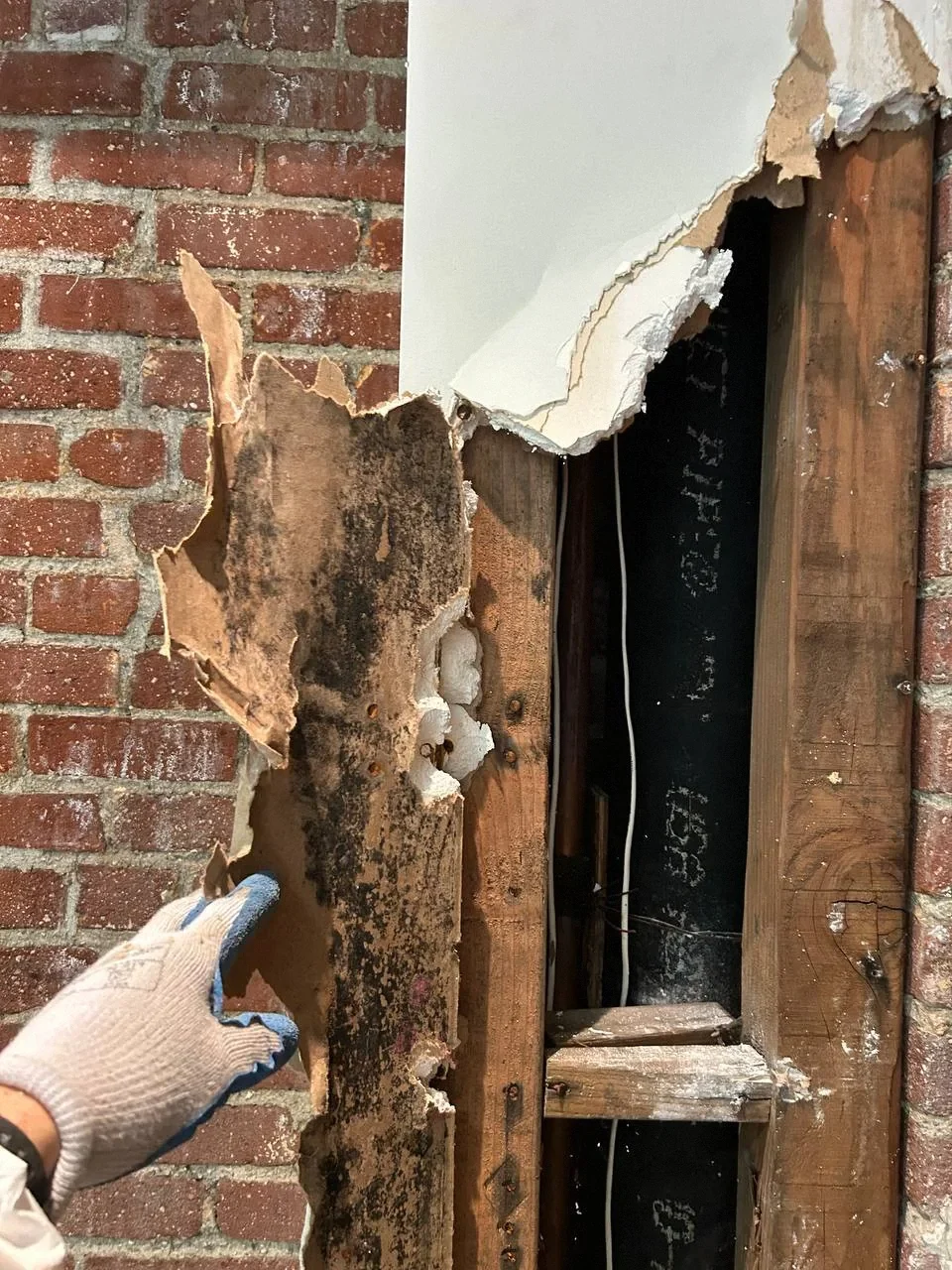
Look for the water problem first
A mold concern often starts with a stain, odor or damp material, but those signs do not identify the whole water path. Think about when the area became wet and whether it changes when it rains, a fixture runs or the heating system operates. Do not cut into a wall simply to confirm a suspicion. Ask someone qualified to investigate the source and assess the materials that may have been affected.
Keep away from unsafe areas. Do not step into standing water to operate an electrical switch or touch wet equipment. If an accessible fixture valve can safely stop an active leak, close it; otherwise seek appropriate help. Water Damage Guard accepts calls at (650) 550-0619, 24/7, to discuss mold remediation and water damage in Hillsborough.
The U.S. Environmental Protection Agency advises addressing both the mold and its moisture source. A visible patch can be cleaned and then return if water continues to enter. A useful scope therefore identifies who is finding and repairing the source, what material is being assessed, and how the area will be checked before finishes are replaced.
Town water alerts and a lateral leak
Hillsborough's WaterSmart service lets registered water customers set leak alerts by email or text. An alert can prompt an investigation of unusual use, but it does not establish where a leak is located or whether mold is present. A homeowner can compare the alert with what is observed at the property and ask the town or a plumber how to investigate further.
The town FAQ says that if a water lateral breaks, the water needs to be shut off at the street and directs residents to a plumber or Public Works. Call Public Works at (650) 375-7444, or its after-hours number, (650) 375-7470. Do not confuse a water service lateral carrying supply water with a sewer lateral carrying wastewater; the source affects the response and the cleanup plan.
If the water supply is stopped but a wall or floor remains wet, the plumbing repair and drying still need coordination. Ask the plumber which section was repaired and whether water service can be resumed. Tell the restoration provider how long the leak may have continued and which spaces were accessible. An estimated duration is useful context, not proof that all concealed material is dry or damaged.
Repair permits and inspections
Hillsborough says separate permits are normally required for plumbing, electrical and heating or air-conditioning work. If a moisture problem has led to replacement or alteration of those systems, explain the proposed work to the town Building Division and ask which permit applies. This does not mean that every mold cleanup by itself requires a permit.
The town requires inspections for permitted work and asks for requests at least 48 hours ahead. When a repair will be covered by a wall or floor, arrange the required inspection before concealing it. A restoration assessment, a plumbing repair and a building inspection are different steps. Keeping their records separate makes it easier to understand what was checked and what still needs attention.
If the work changes after an area is opened, discuss the revised scope with the responsible contractor and the town. A small visible stain may reveal a longer section of wet material, but it is not a reason to assume damage everywhere. Ask what has actually been observed, what remains concealed and why a change to the plan is recommended.
Assess rooms and concealed assemblies
Start with the rooms where moisture is known to have appeared. A damp cabinet may involve a supply connection, a drain fitting or water entering from the wall behind it. A ceiling stain can result from a fixture above, a roof issue or another path. The building's layout and the timing of the wetting help narrow the investigation; the visible location alone may not identify the source.
Ask which materials have been examined, what measurements or observations support the proposed work, and which areas cannot be inspected without opening them. A professional should explain any proposed opening and the precautions needed. Do not assume the same treatment is suitable for wood, carpet pad, plaster, insulation and a hard finished surface.
A smell is a reason to investigate, not a reliable way to identify mold species or determine what a resident's symptoms mean. If you have a health concern, seek medical advice. If the ventilation system may be contaminated, EPA advises against running it until it has been evaluated because it can spread material to other areas.
Cleaning and drying before new finishes
EPA explains that mold on hard surfaces can be cleaned with detergent and water and the surface dried, while moldy absorbent materials may need to be discarded. The appropriate scope depends on the extent, material and water source. Wastewater or extensive damage requires particular care; a restoration provider should explain how affected belongings and building materials will be handled.
Protecting the rest of the home is part of planning the work. Ask how the affected area will be separated, how items will be moved and whether the heating or cooling system can be used. Keep children and pets out of the work area. Avoid painting over a stain as a substitute for addressing the moisture and cleaning the affected material.
Drying must be evaluated before the wall or floor is closed. A surface can look dry while material behind it remains wet. Ask how the remaining structure will be assessed and when the repair contractor can install new finishes. Retain the plumbing repair and inspection information so that a future owner or manager can understand what was done.
Rainwater and the exterior
Not all moisture comes from a pipe. Water may enter near a foundation, window or roof during a storm. Note where and when it appears, but do not enter a flooded crawl space or approach an unstable slope to investigate. A person assessing drainage should consider the actual site, the direction of runoff and where water is meant to go.
If the proposed remedy includes grading, retaining work or new drainage, ask Hillsborough Engineering which approvals apply to the planned project. A temporary cleanup inside the building does not by itself resolve an exterior entry path. Equally, an exterior repair does not establish that material already wet indoors has been cleaned and dried.
Ask the professionals involved to distinguish what they observed from what remains a possibility. A record of the first wet location, weather conditions and any earlier repairs can help direct the investigation. Avoid selecting a permanent drainage product based solely on a generic recommendation before the site's actual conditions are understood.
Document decisions and coordinate access
For rented or shared property, tell the person who can authorize entry and repair as soon as possible. Written notice can help preserve the date and location of the concern. If water may have crossed a shared wall or pipe, management and the relevant occupants may need to coordinate access. The location of a stain does not settle private responsibility.
Keep the utility communication, plumbing findings, any town permit and the restoration scope in one place. If an insurer is involved, ask what it needs before affected belongings are discarded or finishes are removed. Coverage is a policy question and depends on the cause and circumstances; a mold assessment does not itself establish coverage.
Before the work ends, ask what moisture source was addressed, what areas were treated and what remains inaccessible. If the cause is still uncertain, record that rather than turning an assumption into a finding. The next step may be monitoring, another specialist's investigation or a repair to a component outside the cleanup area.
Common questions
Can a water alert prove there is mold?
No. Hillsborough WaterSmart leak alerts can prompt a water-use investigation; the source and any mold concern need their own assessment.
Who handles a broken water lateral?
The town FAQ directs residents to a plumber or Public Works and says water for a lateral break needs to be shut off at the street.
Does mold remediation always need a permit?
Permit requirements depend on the work. Hillsborough says separate permits are normally needed for plumbing, electrical and heating or air-conditioning work; ask the town about the actual scope.
Should I run a potentially contaminated ventilation system?
EPA advises against running a system known or suspected to be contaminated with mold until it has been assessed.
Can I paint over a damp stain?
First identify and correct the moisture source and assess the affected material. A finish alone does not solve an ongoing leak.
Sources
- Town of Hillsborough Checked
- Town of Hillsborough Checked
- Town of Hillsborough Checked
- Town of Hillsborough Checked
- EPA mold and moisture Checked