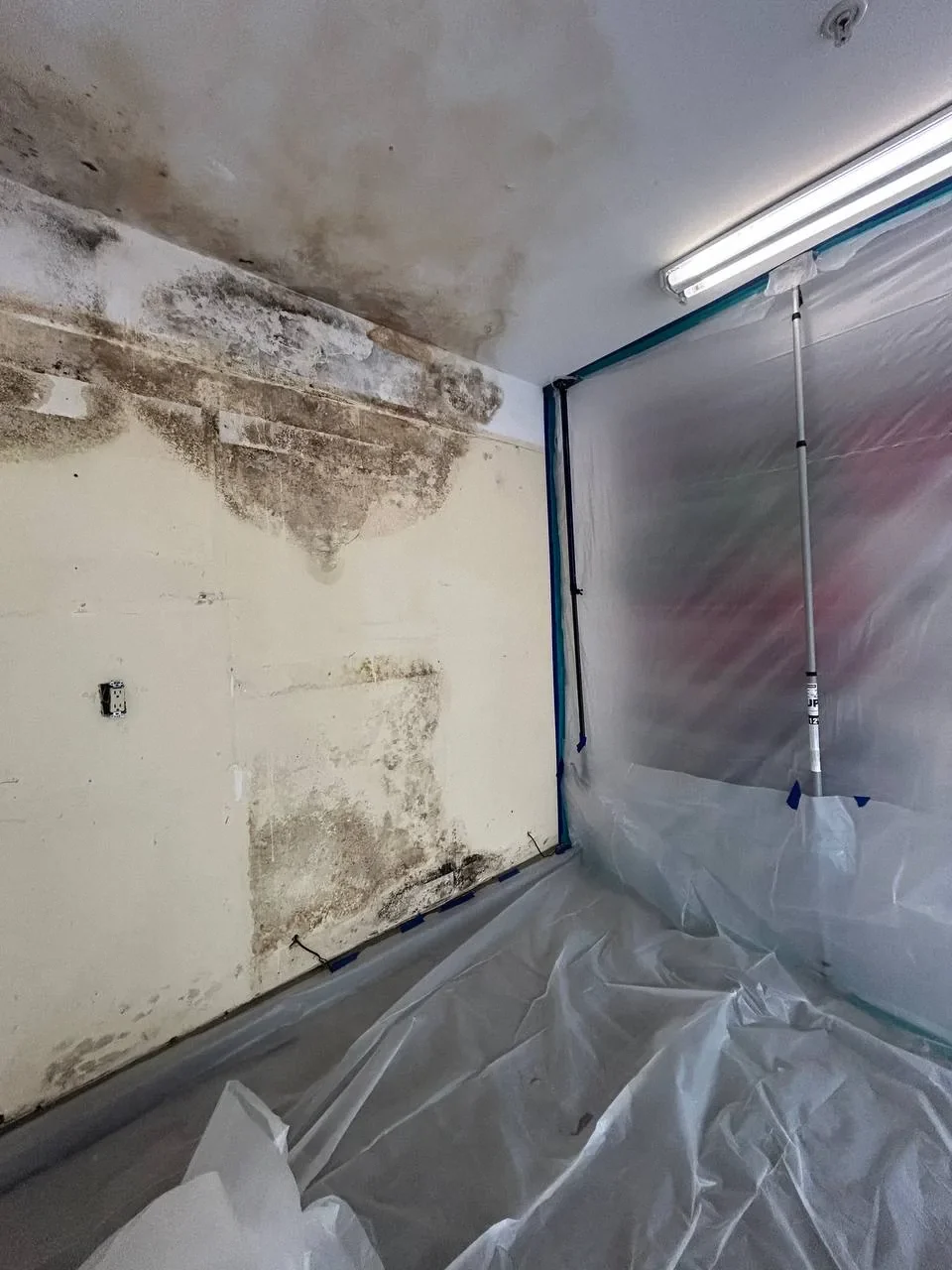
Start with the moisture source
A dark patch or persistent damp smell deserves attention, but appearance alone cannot identify the entire affected area. A roof leak, a supply pipe, a drain, condensation and water entering from outside each require a different correction. Record where you first noticed the problem and whether it changes during rain or when a fixture is used. Avoid disturbing a suspect area while the source and extent are being assessed.
If an active leak can be stopped at a safely accessible fixture shutoff, close it. Do not enter standing water or touch wet electrical equipment. Notify the owner or building manager if you rent, and contact a plumber, utility or other appropriate professional for the source. For substantial water damage or suspected mold, call Water Damage Guard at (650) 550-0619; calls are accepted 24/7.
The U.S. Environmental Protection Agency advises fixing the water problem as well as cleaning mold. Cleaning a visible patch without addressing an ongoing leak leaves the underlying condition in place. The investigation and repair of the moisture source should therefore be coordinated with the assessment and cleanup, rather than treated as an optional step after new finishes are installed.
A suspected leak and the city water service
Burlingame Utility Billing says customers who suspect a leak or unusually high water consumption may call to arrange a possible inspection. This can help identify a water-use concern, but high use alone does not establish that a wall contains mold, and mold can also occur without an unusual water bill. Describe what you have observed and ask the office what it can investigate at the property.
The city's utility FAQ says that repairs of leaks on the property are the customer's responsibility. That does not decide responsibility between an owner, tenant, association or contractor in every private arrangement. In a shared building, notify management and identify who can authorize access before someone opens a common wall or changes a supply line. Keep the utility's findings and the plumber's findings with your own notes.
A meter check is one part of locating a source. Water may enter from a window, a roof or a bathroom assembly without a supply line running continuously. If the meter does not explain a wet surface, continue the investigation of the actual moisture path. The useful question is what is wet, where the water originates and whether the condition remains active.
When a plumbing repair needs a permit
The city Building Division's exempt-work bulletin distinguishes stopping a leak without exposing concealed waste or vent pipe from replacing pipe. Its bulletin says pipe replacement is new work requiring a permit and inspection. The actual work can be more complicated than the first visible symptom, so describe the proposed repair to the Building Division before relying on a general exemption.
This is a rule about the plumbing scope described by the city; it is not a claim that every mold cleanup needs a building permit. Other work may involve structural, electrical or mechanical elements, and the appropriate requirements depend on what is being altered. A plumber can explain the repair, while the city determines the applicable permit and inspection requirements.
Keep the permit and inspection documentation alongside records of moisture assessment and restoration. If the affected wall will be closed after a line is replaced, coordinate the plumbing inspection, cleaning and drying sequence. Closing a wall before the source is repaired or before required inspections can create unnecessary reopening and uncertainty about what remains wet.
How the affected area is assessed
An assessment starts with the known water path and the materials it touched. Look at the stained surface, adjacent trim and any accessible area below or behind it. A wet patch around a sink may involve a cabinet base, floor covering or the wall behind the plumbing. A ceiling stain may have a source above and a separate area of damp material below. Those relationships matter when deciding where further inspection is needed.
Ask the person assessing the site what areas were accessible, what remains concealed and how they will decide whether limited opening is warranted. The presence of a smell is useful information to report, but it does not identify the species of mold or the health effect for a particular person. If anyone has symptoms or a health concern, consult a medical professional rather than using a restoration assessment as medical advice.
If the affected area is large, if sewage or other contaminated water is involved, or if a heating and ventilation system may have been affected, EPA recommends additional professional attention. Do not run a system known or suspected to be contaminated, because it can spread material through the building. The assessment should identify both the source correction and how the affected contents and building materials will be handled.
Cleaning, removal and drying are separate decisions
Hard surfaces and absorbent materials do not always respond alike. EPA says hard surfaces can be cleaned with detergent and water and dried completely; moldy porous materials may need to be discarded because growth can extend into them. A contractor should explain which materials are proposed for cleaning or removal, why that choice fits the water source and condition, and how surrounding spaces will be protected during the work.
Drying is not simply a matter of hiding a stain. If moisture remains inside a wall or beneath a floor, replacing a finish does not resolve the cause. Ask how the remaining structure will be evaluated before it is covered and what information will be recorded. The repair plan can then distinguish the source correction, the cleaning work and the replacement of finishes.
Do not mix cleaning chemicals or apply paint over a problem as a substitute for resolving it. In a building where older coatings or insulation will be disturbed, discuss whether further evaluation for lead or asbestos is appropriate before demolition. Building age is a reason to ask, not proof that any particular material contains a hazard.
Rental homes and shared walls
Tell your landlord or manager promptly about the location, when the problem began and any continuing leak. Written notice provides a useful record of what was reported and when. Ask who will arrange access and repair, especially where the source could be in a neighboring unit or a shared pipe. Avoid reaching behind appliances or opening a wall yourself to prove where the water originated.
San Mateo County Environmental Health says it accepts certain housing complaints, including mold and faulty plumbing, for rental apartment buildings of four or more units. County jurisdiction has specific property-type exclusions, so ask whether the agency handles the particular building. A complaint is distinct from arranging urgent help to stop an active leak.
In a condominium, notify the association or manager as well as the unit owner. Keep photographs taken safely, the date of each notice and any written findings. The governing documents, the actual source and the circumstances determine private responsibility; a stain on one side of a wall does not settle who must pay for work on the other side.
Questions to ask before work starts
Ask the restoration provider to describe the areas being assessed and what assumptions remain open. Which leak or moisture path is being addressed? Does another professional need to repair the source? Is a concealed area involved, and what will trigger opening it? These questions give everyone a shared understanding without assuming that a visible patch represents the full extent of the problem.
Ask how occupants, pets and belongings will be kept separate from the work and whether the heating system needs to remain off. If the scope includes removing finishes, find out who will inspect the remaining material and when rebuilding can begin. Request a clear record of the work performed and any areas that could not be accessed.
For insurance or temporary accommodation questions, contact the relevant insurer or adviser. Coverage depends on the policy and cause. Water Damage Guard can discuss the restoration scope; the utility, plumber, building department and insurer make their own determinations. Keep their communications in one place so a later repair decision is based on the same sequence of events.
Common questions
Does mold cleanup fix a leaking pipe?
The leak must be located and repaired as a separate part of the response. Cleanup without correcting the moisture source can leave the conditions for mold to return.
Does a Burlingame pipe repair require a permit?
The city exempts certain leak-stopping work but says pipe replacement requires a permit and inspection. Ask the Building Division about the actual work.
Who handles rental mold complaints?
San Mateo County Environmental Health accepts certain mold complaints for rental apartment buildings of four or more units; ask about the jurisdiction for the particular property.
Should I run a damp ventilation system?
EPA advises against running a system known or suspected to be contaminated with mold. Have an appropriate professional evaluate it.
Can all moldy materials be cleaned?
The decision depends on the material and extent of damage. EPA notes that moldy porous materials may need to be discarded; assess the actual item and source of water.
Sources
- City of Burlingame Checked
- City of Burlingame Checked
- City of Burlingame Checked
- EPA mold and moisture guide Checked
- County housing complaints Checked