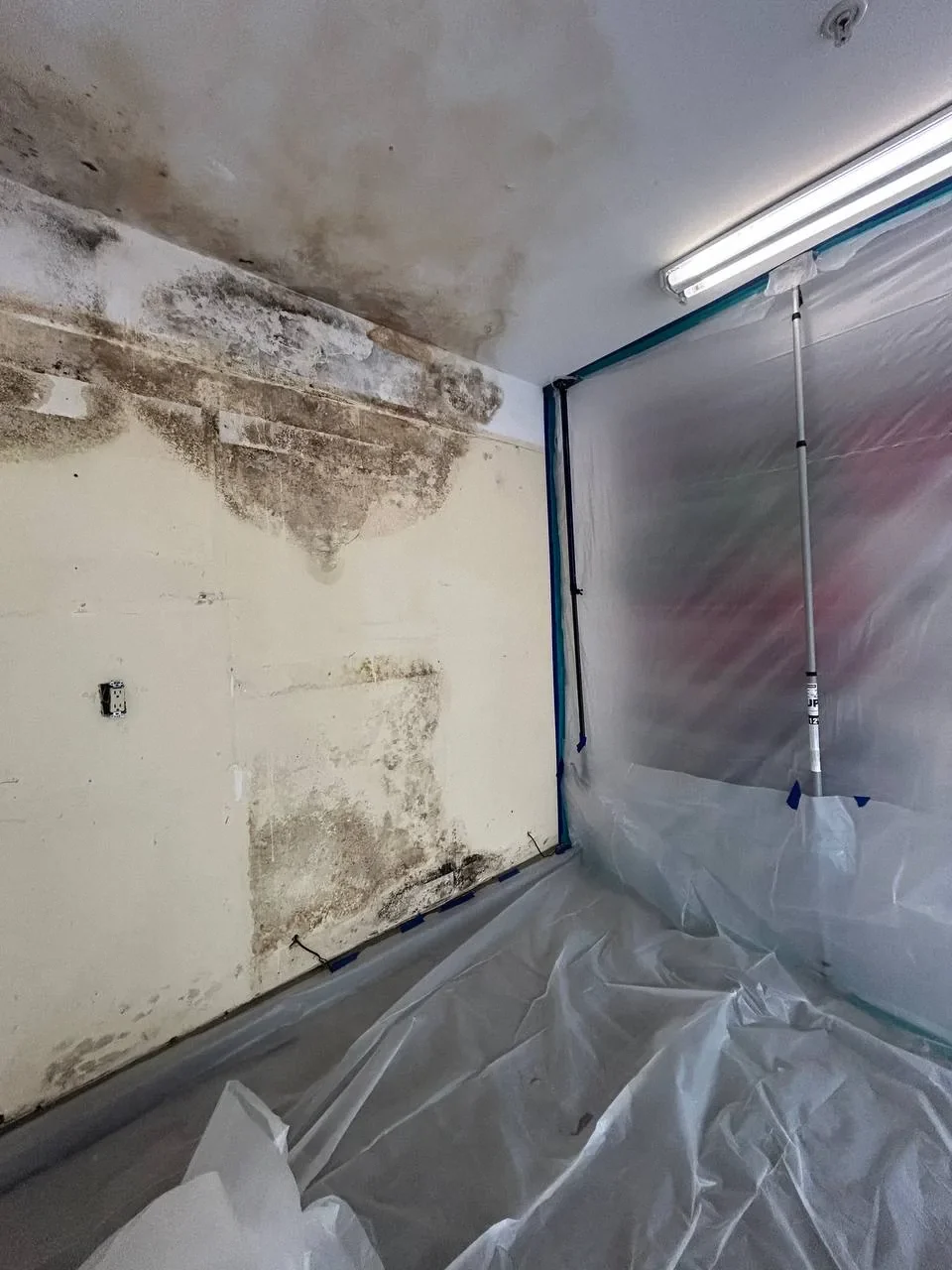
Locate moisture as well as visible growth
A discoloration or musty odor is a reason to investigate, not proof of the full extent or a diagnosis. Describe where the condition appeared, whether a leak is active and whether the area becomes wet after rain or use of a fixture. A surface can show the effect of water entering elsewhere.
The U.S. Environmental Protection Agency advises correcting moisture as well as cleaning mold. Depending on the source, a plumbing, roofing or building-envelope professional may be needed. Replacing a damp finish without addressing continued water entry leaves the underlying question unresolved.
Keep away from wet electrical equipment and unstable materials. Avoid disturbing a large or concealed suspect area just to trace its edge. Questions about individual health belong with a qualified health professional rather than an interpretation of a stain.
Scope the accessible areas
An assessment should explain what was observed, which materials are wet and where access was limited. Moisture can pass below a floor or behind a cabinet. A person evaluating the property should distinguish measured or visible conditions from assumptions about a wall that has not been opened.
Provide safe photographs and the sequence of events, including previous source repairs. Do not infer an installed pipe material from a house’s age. A qualified trade can examine the actual line and explain whether a leak or another moisture path needs repair.
Before material is removed, discuss the work boundary, protection of contents, and how additional discoveries will be reported. The owner or manager should know who may approve a change. Treatment choices depend on the materials and their condition rather than a fixed sequence for every room.
A clear access plan matters when a condition is inside an occupied property. Identify who can enter the affected room, where belongings may be moved and how occupants will be notified if another space needs inspection. A stain in one unit does not establish the condition of the adjoining unit or assign responsibility to its occupant. If permission is needed to examine a shared wall, arrange it through the person responsible for the building. Ask the assessor to record any location that could not be reached and what additional access would be needed to complete the evaluation.
A housing concern in Millbrae
The city’s Code Enforcement Division handles building and housing code enforcement and says it investigates complaints for possible violations. Ask whether the address and reported condition fall within its authority. A complaint is not a mold test and does not replace work to stop an active leak.
A resident can notify the housing provider in writing, describing the location and timing of moisture and arranging access. Keep copies of the request and responses. When the source might lie in a shared area or another unit, the owner or manager may need to coordinate access for more than one occupant.
Report what is observed without assigning a cause or responsibility before the investigation. The city says its process initially seeks compliance through a visit or telephone discussion. The result depends on the facts and the city’s assessment, not merely on a complaint being filed.
A concealed pipe repair is a different scope
Millbrae’s January 2023 permit handout distinguishes stopping a leak from replacing defective concealed piping with new material, which it says requires a permit and inspection. Ask the Building Division about the current rule and the actual proposed work. This is a repair distinction, not a claim that every mold cleanup needs a plumbing permit.
If a plumber must replace a concealed line, coordinate access to the affected assembly with the assessment and cleaning work. Ask who obtains the permit and when the work may be covered. The location of the stain alone does not establish which pipe failed or whether another moisture source exists.
Keep the description of the source repair with the cleanup record. If an additional wet area appears after the first opening, the authorized contact should receive an updated scope. An initial estimate may not cover a condition that could not be seen at the first visit.
A source repair can take place on a different schedule from the treatment of affected finishes. Ask whether the line can be isolated safely, who will confirm the repair, and when the affected assembly can be assessed again. The trades should communicate directly about the location to be opened and any inspection required before it is closed. If the plumber finds that the original suspected line is not leaking, ask what further investigation is appropriate. The next step should follow the evidence at the property rather than the name of an earlier repair.
Ordinary repair and inspection boundaries
The same city handout excludes cutting structural supports and changing plumbing or wiring from the ordinary repairs for which it says notice is not required. These are limits on that exemption, not a blanket conclusion about every damaged surface. Provide the proposed reconstruction details to the city before relying on an exemption.
Millbrae’s Building Division says the proper inspection must occur before the next phase of permitted work. If a project requires a permit, the responsible party should schedule the applicable inspection before concealing the work. Cleaning a surface, repairing a source and building an assembly can involve different professionals.
If the scope changes, ask the permit holder and city whether the approved project needs revision. Retain the permit and inspection record along with the source-repair information. A mold assessment is not a substitute for a required building inspection.
Return the space to use with a clear record
Ask for a handoff that identifies what was treated, which moisture source was repaired, and any area that could not be examined. Note remaining repairs assigned to a separate trade. A written result should not claim certainty about hidden material that was inaccessible.
If moisture returns, record where and when it appeared and arrange another investigation. It may be related to the earlier problem or a different path. Keep the photographs, scope, source repair and applicable permit records together for the person investigating the later condition.
If an insurer is involved, ask about documentation and disposal. Coverage depends on the policy and claim. A municipal inspection and an insurance decision have different purposes; neither determines the other automatically.
To discuss a Millbrae property, call (650) 550-0619. Describe the affected room, any active water, access limitations and who can authorize work. The assessment and proposed scope depend on the conditions found.
Contents also need their own decisions. Ask whether documents, furnishings or equipment were exposed and how each item will be identified if it is moved for assessment. A safe photograph records appearance at one moment; it cannot show the condition inside an electrical device or establish whether an item can be restored. A qualified specialist may be appropriate for sensitive belongings. When multiple trades are involved, keep their work descriptions and contact details with the property record. An owner can then direct a later question about plumbing, reconstruction or material treatment to the responsible party without assuming that one provider performed every task.
Common questions
Does an odor establish the extent of mold?
No. It can prompt an investigation, but the extent and moisture source need to be assessed.
Can Millbrae investigate a housing-code complaint?
The city says Code Enforcement investigates complaints for possible building or housing-code violations. Ask whether the address and condition fall within its authority.
Does every mold cleaning project require a permit?
Permit requirements depend on the work. Millbrae distinguishes stopping a leak from replacing concealed defective piping; ask the city about the proposed repair.
When must permitted work be inspected?
The Building Division says the proper inspection must occur before the next phase of permitted work.
What records should I retain?
Keep the assessment, source-repair record, safe photographs and any applicable permit and inspection information.