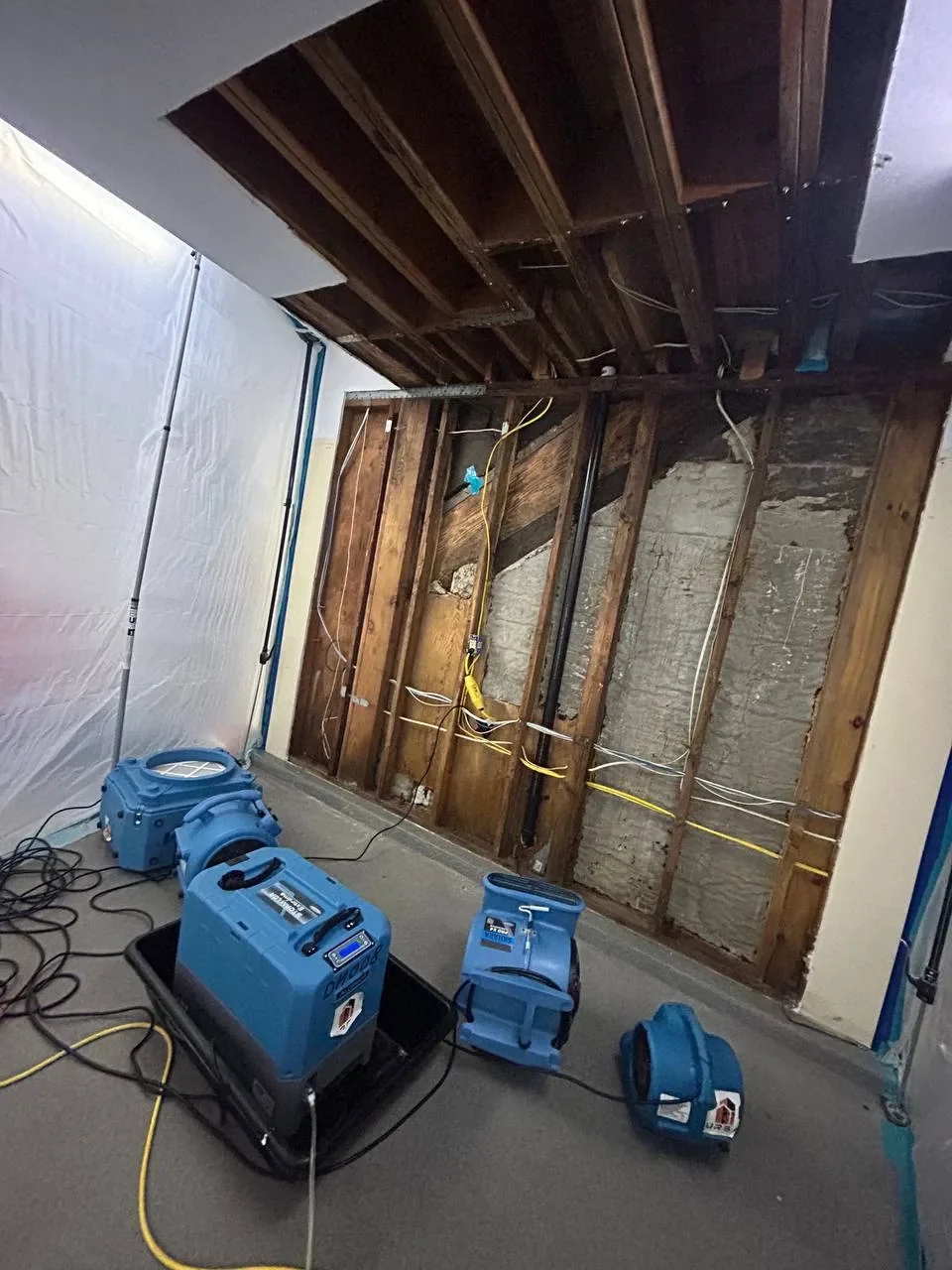
When standing water needs attention
Standing water can damage flooring, contents, and building materials, and it can hide electrical, structural, or contamination hazards. Water Damage Guard provides emergency water removal and is available 24/7 at (650) 550-0619. Tell us where the water is, whether it is still rising, and what you know about its source so the situation can be assessed.
Removal is an early step in a larger response. Clearing liquid water from an accessible surface does not establish that a wall cavity, subfloor, or belongings are dry. The source also needs to be stopped, and the affected materials may need cleaning, drying, or repair. The appropriate sequence depends on safe access and the nature of the water.
What to do before help arrives
Keep people and pets away from the wet area. Do not step into standing water to reach a switch, appliance, or electrical panel. If water is near electrical equipment or you suspect a shock hazard, leave the area and contact the utility or a qualified electrician. If a ceiling is sagging or a floor appears unstable, stay clear and let a qualified professional assess it.
If the source is a plumbing leak and a valve is safely accessible, shutting it off may limit additional water. Do not take risks to reach it. A plumber may be needed to stop or repair the source. If water comes from outside, sewage, or an unknown source, avoid contact and explain what you observed. CDC warns that floodwater can contain sewage, chemicals, and other hazards.
From a safe position, note the affected rooms, the approximate depth, whether the water is moving, and any information about the source. Photograph the conditions if possible. Do not attempt to lift heavy wet furniture or retrieve items from an unsafe area. For a rental or shared building, notify the owner or manager promptly so the source and access can be coordinated.
Different sources call for different responses
A broken supply line, an overflowing appliance, a backed-up drain, and water entering during a storm can all leave standing water indoors. They do not necessarily present the same contamination or repair questions. Water that was clean at its source can pick up material from floors and contents, while floodwater or sewage may be hazardous from the outset. Do not judge safety by color or odor.
If a drain or toilet is backing up, stop using fixtures that may add water to the affected system and inform other occupants. A plumber or wastewater agency may need to investigate the blockage. If water is entering from outdoors, follow emergency instructions and do not drive or walk through flooded areas. EPA advises waiting to reenter a flooded home until professionals say it is safe.
Provide accurate details rather than trying to classify the water yourself. Mention cleaning chemicals, stored materials, sewage, or other substances that may have mixed with it. This information helps the response team evaluate precautions and identify when another specialist is needed. The plan can change if inspection reveals a different source or a wider affected area.
Assessing access and the path of water
Before removal begins, the property must be assessed for safe access, the active source, and the likely extent of the water. The visible puddle may be one part of the problem. Water can move below a floor covering, into a cabinet toe space, along a wall base, or through an opening to a lower room. The assessment should include accessible adjoining areas and identify spaces that could not be examined.
The depth and location of water affect the method used to remove it. A low area with restricted access presents different practical questions from a shallow layer on an open floor. Safe electrical power, nearby contents, the construction of the floor, and contamination also affect the plan. Ask what work can start immediately and what depends on another party making the area safe.
If the source is still flowing, water removal alone will not resolve the incident. The person responsible for the property should coordinate the plumbing, drainage, or other source repair. In a building with multiple occupants, that may require access to a neighboring unit or a common room. A manager can help arrange that access without requiring you to enter someone else's space.
Removing water and handling contents
Once conditions permit, the removal method is selected for the amount and location of water. The aim is to remove accessible liquid water and limit further contact with materials. A surface that no longer has a visible puddle may still contain moisture. A follow-up inspection can identify where drying or additional access is needed.
Discuss furnishings and belongings before moving them. Wet items can be heavy, fragile, or contaminated, and moving them through clean rooms may spread water or debris. Photograph and inventory affected property when it is safe. Identify documents, photographs, electronics, and sentimental items that need special consideration; their condition and exposure determine the available options.
Some materials cannot be adequately cleaned or dried after contaminated water contacts them. The scope should explain what is proposed for removal and why. Before opening an older assembly, address suspected lead or asbestos with an appropriately qualified professional. Do not assume a material is safe to disturb simply because the affected area is small.
What follows extraction
After water is removed, the assessment turns to moisture held in materials and the air. Drying may involve equipment and repeated measurements when power and access are safe. Water trapped below a finish may require a different approach from water on an exposed hard surface. Discuss any proposed opening, the reason for it, and responsibility for repair before work proceeds.
Cleaning also depends on the source and what the water contacted. Outside floodwater and sewage can carry harmful material, so extraction should not be treated as proof that the affected area is clean. EPA warns against mixing cleaning products or adding bleach to other chemicals. Ask for an explanation of how surfaces and contents will be evaluated and handled.
If visible mold is present, avoid disturbing it or aiming fans at it. EPA cautions that fans can spread mold. A separate mold assessment or remediation plan may be appropriate depending on the conditions. A water-affected heating or cooling system may also require an inspection before it is operated.
Measuring progress and deciding when to repair
A moisture meter can help evaluate accessible materials, but the reading must be understood in the context of the material and instrument. Comparing affected and related areas and checking again over time can help show whether moisture is changing. One reading does not establish that every concealed layer is dry. Ask which locations are being monitored and what limitations remain.
Do not cover an assembly merely because the upper surface looks dry. A wet subfloor or wall cavity may need more attention before a finish is replaced. If access is restricted, ask whether further investigation is recommended and how the repair decision will account for what cannot be seen. Discuss any changed scope before authorizing additional work.
When the affected area is ready for repair, identify which party will replace flooring, wall material, trim, or other components. The source repair and any electrical or structural issues must be handled by the appropriate professionals. Contact the local building department about permit requirements for the actual proposed work; a generic cleanup description cannot determine them.
How long will removal and drying take?
The time needed depends on water depth, the affected area, the source, contamination, safe access, power, and the materials involved. Removing a shallow layer from an accessible surface is different from addressing water trapped beneath multiple layers. Continued leakage or renewed flooding can interrupt progress. A responsible assessment should be updated as conditions become clear.
EPA recommends drying water-damaged areas promptly to help prevent mold. Its 24-to-48-hour guidance describes a prevention goal where feasible, not a guarantee that a property will be fully restored within that period. Ask for a condition-based explanation of the next steps and any factors delaying work. Occupancy decisions depend on the hazards, the work underway, and the guidance of responsible professionals.
If equipment is operating in an occupied building, discuss noise, access, pets, and the rooms that need to remain usable. Do not disconnect or relocate equipment without speaking to the people responsible for the work. If power trips or an arrangement appears unsafe, report it and keep clear rather than attempting an electrical repair yourself.
Insurance and documentation
If you intend to make a claim, notify your insurer or agent promptly and ask what it needs to document the loss. Take photographs when safe, keep receipts and communications, and preserve information about the source and its repair. Ask whether the insurer needs to inspect damaged materials before they are discarded and how it wants necessary emergency work recorded.
Coverage depends on the policy and the cause. California Department of Insurance guidance describes sudden accidental water damage as generally covered under many homeowners policies, while flood and seepage are commonly excluded. A separate flood policy or endorsement may apply in some cases. The insurer determines coverage under the actual policy and facts; a water removal visit does not establish payment.
If another affected area is discovered after removal begins, document it and notify the insurer. Request an explanation of the revised scope and any authorization required before additional work. Keep the source repair, removal, drying, and reconstruction records together so the sequence remains clear.
Preparing for the next decision
When calling, have the property location, a safe contact number, and the basic description of the source ready. Say whether the water is active, whether the building is occupied, and whether electrical equipment, sewage, or a sagging ceiling is involved. If emergency officials have restricted entry, explain the restriction and follow their instructions.
Ask what the initial visit will assess, which services are included, and whether another specialist must handle the source. A clear plan should distinguish immediate removal from cleaning, drying, and repairs, and should identify any areas that remain inaccessible. That information helps the owner decide what to authorize as the situation develops.
Common questions
Can I enter standing water to shut off power?
Do not enter standing water to reach electrical equipment. Leave the area and contact the utility or a qualified electrician if there is a shock hazard.
Does water removal dry the whole building?
Not necessarily. Moisture can remain in floors, walls and contents after visible water is removed, and those materials need assessment.
Should I use a household vacuum on the water?
Avoid operating electrical equipment in an unsafe wet area. The source and electrical conditions need assessment before equipment is used.
What if the water is sewage or floodwater?
Avoid contact and tell the response team. These sources can contain harmful substances and require a contamination-conscious cleanup plan.
How long will water removal take?
It depends on depth, access, the source, safety conditions and the affected materials. Drying and repairs may continue after visible water is removed.
Will insurance pay for the service?
Coverage depends on the cause and your policy. Contact your insurer about the loss, exclusions and documentation requirements.
Sources
- CDC: Floodwater safety Checked
- EPA: Flooded home Checked
- EPA: Flood cleanup and indoor air Checked
- California Department of Insurance: Residential insurance Checked