Take the first steps safely
When water reaches a room, move people and pets away from the affected area. Do not cross standing water to operate a switch or touch wet electrical equipment. Stay clear of a sagging ceiling or unstable finish. If a fixture shutoff is safely accessible from a dry location, closing it may limit additional flow.
Write down when water appeared, where it was first noticed and whether it continues. A ceiling mark may be below a shared pipe or another unit, but the mark alone does not identify the source. Take photographs only when safe and tell the manager if a shared wall, common space or neighboring unit may need access.
Water Damage Guard provides water damage restoration in Emeryville from San Carlos. Call (650) 550-0619, 24/7, to describe the affected property, suspected source and any restrictions from the building manager or responders. The assessment determines what can safely be examined.
A leak in a shared building
In a condominium or multi-unit building, source investigation can require access to more than one space. Tell the owner, association or manager which rooms are visibly affected and whether the condition changes when a fixture is used. Ask who can authorize entry to a common mechanical room or an adjoining unit.
EBMUD publishes separate regional private sewer lateral requirements for condominiums and other common-interest developments in Emeryville. Association documents and the actual location of a pipe matter when coordinating a repair. Do not assume that a unit boundary determines responsibility for every shared component.
Keep the observed water path distinct from a conclusion about fault. A stain below another unit could have several explanations, including a pipe or assembly serving more than one space. A professional can explain what was inspected and where access was not available.
Sewer laterals and backup response
Emeryville’s private sewer lateral permit application distinguishes replacement, spot repair, verification testing and abandonment. Those descriptions help the City identify the proposed work; they are not interchangeable conclusions about what a particular line needs. Ask Public Works and EBMUD which approvals apply to the property and scope.
EBMUD identifies title transfer, qualifying remodeling over $100,000 and a change of water meter size among regional compliance triggers for Emeryville. A certificate concerns the lateral under that program, while cleanup addresses the materials reached by wastewater. A sewer backup does not itself establish which part of the system caused the release.
The city asks residents to report a sewer backup or overflow through its reporting portal or EBMUD emergency dispatch. Keep occupants away from the affected area and stop using connected fixtures if it is safe. The source must be investigated before a repair location can be selected.
Stormwater and mapped flood information
The Alameda County Flood Control and Water Conservation District lists Emeryville among the communities served by Zone 12. The City’s hazard mitigation plan says Temescal Creek flows underground through most of Emeryville before reaching the Bay. A creek or drainage district identifies regional context; it does not prove the cause of water in a specific property.
The same plan describes the FEMA flood map effective in 2009 and identifies most of the city as Zone X. A general map description is not a parcel determination. Check the current official map and ask the responsible agency about the individual address, project and any insurance question.
When rain enters a building, describe the visible entry point and timing without approaching floodwater or electrical hazards. A roof opening, a private drain and a supply leak call for different investigations. Keep the observations for the person assessing the property once access is safe.
Preparing for storms
Emeryville says Public Works cleans storm drains and services pump stations ahead of the wet season. The city also describes a self-service sandbag station at 5890 Christie Avenue with a seven-bag household limit in its storm notice. Check availability and current instructions before going.
The city’s work on public drainage does not establish the condition of a private drain or prevent every source of indoor water. Residents and managers can identify safe access routes and discuss who maintains private or shared drainage components before a storm.
During an emergency, follow official directions and avoid flooded roads. Sandbags are preparation, not a reason to remain in an unsafe area. If water enters, an assessment should trace the observed route and distinguish it from a suspected cause.
Tenants, owners and repair decisions
Report a leak to the owner or manager with the location, timing and visible extent. Preserve a copy of the request and arrange safe access for inspection. If more than one unit is affected, identify a contact who can coordinate both the shared areas and individual rooms.
Emeryville has local landlord-tenant rules that may apply depending on the unit, reason for a notice and other conditions. Ask the responsible city program or a qualified adviser about the actual circumstances. A wet room does not automatically establish a right to a particular payment or determine who caused the damage.
In a condominium, review the governing documents and the actual component involved. A shared roof, common pipe and a fixture inside a unit can involve different responsibilities. Preserve written findings and avoid making assumptions based only on which unit first reported water.
Local districts and property conditions
Emeryville’s General Plan figure labels districts including Triangle, Watergate, Park Avenue, North Hollis and Bayfront. These names help orient the reader, but they do not establish the construction, plumbing or flood exposure of a particular building. Give the address when asking an agency about a parcel or repair.
Buildings within the same district may have different shared systems and maintenance histories. Do not infer a concealed pipe material or the condition of a floor assembly from a neighborhood name or the age of the building. Records and an inspection of the actual component provide a better basis for a decision.
If a source cannot be reached without another unit or a common space, ask the manager to coordinate access. A record should distinguish what was observed from what remains inaccessible and what further investigation is proposed.
Inspect and dry affected materials
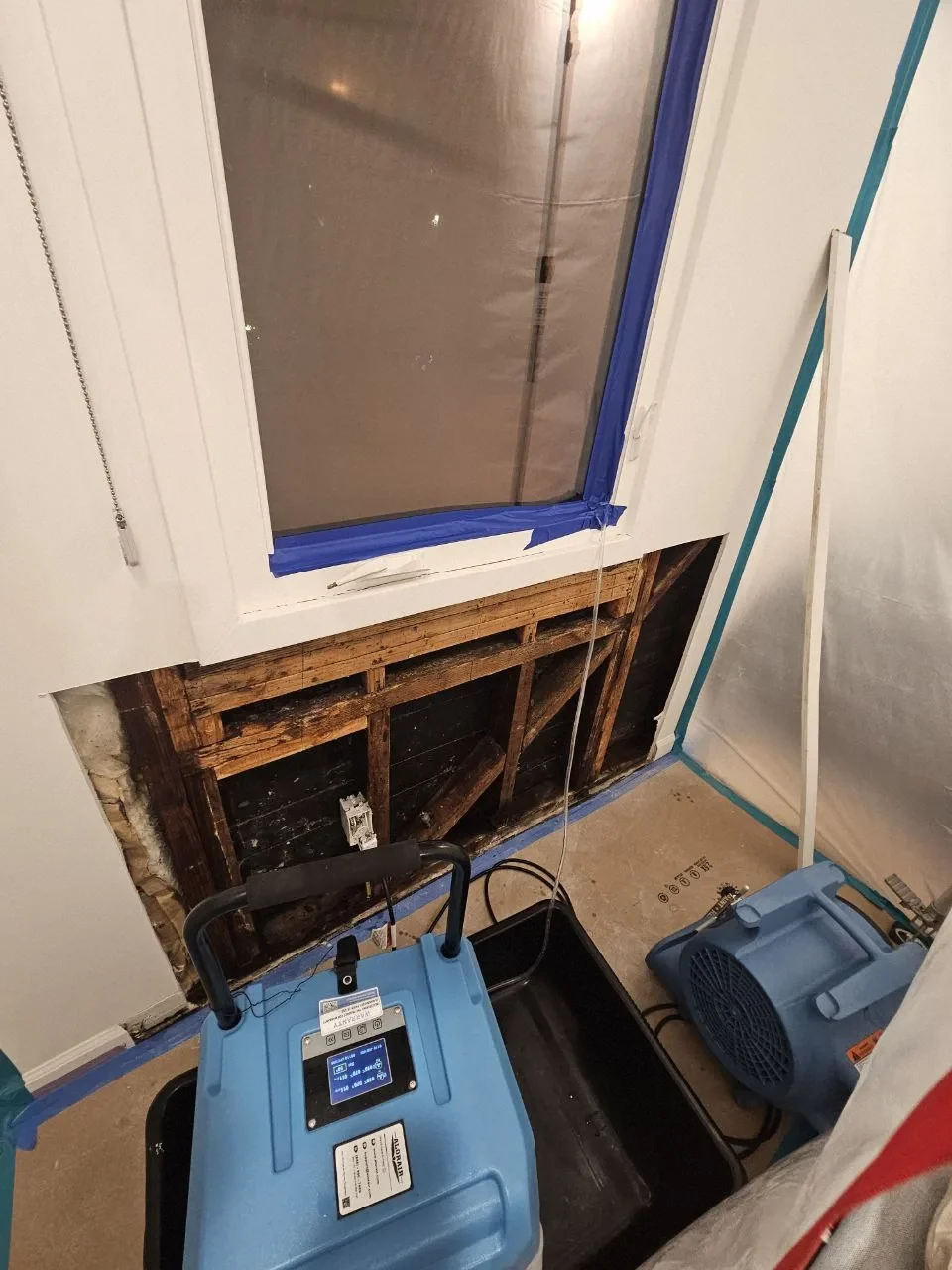
Water can move under a floor covering or behind a cabinet before a visible mark appears. Ask the restoration professional which rooms and materials were checked and which remain concealed. Measurements need to be interpreted with the material, source and exposure rather than treated as a complete answer on their own.
A sanitary backup, outdoor floodwater and a supply leak require different handling. Do not judge safety from the appearance of water. Discuss how affected contents will be separated from clean belongings and how work routes will be protected before moving items through common spaces.
If opening an assembly reveals more damage, ask for an updated scope. Source repair, cleaning or removal, drying and reconstruction should be coordinated so that a new finish is not installed over continuing water entry.
Permits and the sequence of repair
Explain the proposed plumbing, electrical, structural and finish work to the building authority. An emergency response and later reconstruction may involve different requirements. Ask which permits and inspections apply and when work may be covered; the answer depends on the actual scope.
If a source repair is performed by one trade and restoration by another, identify who will arrange access and document the handoff. Keep permit records, inspection results and changes in scope with the property file. An old record is useful context but does not prove the present condition of a concealed system.
For a shared building, the association or manager may also have procedures for access and common components. Provide accurate information to the people responsible for the property so that they can coordinate the necessary decisions.
Before disturbing painted surfaces in a pre-1978 home, ask about applicable lead-safe work practices. EPA explains that paid renovation in covered older housing can be subject to its lead renovation rule, with stated exemptions. The date of construction does not by itself prove that a particular surface contains lead.
Belongings, records and return to use
When access is safe, photograph affected rooms and list belongings that may have been exposed. Ask an insurer what records it needs before disposal if conditions allow. Electronics, documents and upholstered furniture may need different handling. Coverage depends on the policy and facts rather than a restoration request alone.
Keep a timeline of notifications, source repair, inspections and changes to the scope. Separate what you observed from a cause that remains under investigation. Follow any restrictions issued by a responder or the building authority and do not restart damaged equipment merely because a floor looks dry.
For water damage restoration in Emeryville, call Water Damage Guard at (650) 550-0619. The company is based in San Carlos and accepts calls 24/7. Explain the current condition, safe access and any instructions from the property manager or agency.
Ask the people involved to identify any areas they could not reach and the follow-up needed before the repair is considered complete. If the condition changes during work, keep both the initial observations and the revised scope. A clear record can help coordinate the manager, owner and trades without deciding an insurance claim or assigning responsibility prematurely.
When a room cannot be used, discuss safe storage and access to essential belongings with the person responsible for the building. Keep common exits and routes clear during the work, and follow any instructions issued by the authority controlling access.
Related guides and services
- Tenant Rights Water Leaklifornia
- Mold In Rentallifornia
- Repair And Deductlifornia
- Condo Leak Responsibilitylifornia
- Berkeley
- Alameda County
- Water Under Washing Machine
- Rental Water Leak Responsibilities
- Condo Upstairs Leak Hoa Insurance
- Sewermera Inspection
- Additional Living Expenses Water Damage
- Water Heater Leaking What To Do
- Neighbor Water Damage Evidence
- Hoa Responsibility For Foundation Cracks
- Water Damage Restoration
- Water Damage Repair
- Emergency Water Removal
- Structural Drying
- Flood Cleanup
- Burst Pipe Leak Cleanup
- Ceiling Wall Floor Water Damage
- Crawl Space Basement Drying
- Mold Remediation
- Mold Inspection Testing
- Fire Damage Restoration
- Smoke Soot Odor Removal
- Commercial Water Damage
- Oakland
Common questions
Who should I tell about a leak from another unit?
Notify the owner, association or manager and describe the observed location. An investigation is needed before assigning a cause.
Does Emeryville have a sewer lateral permit?
Yes. Its application distinguishes replacement, spot repair, verification testing and abandonment.
Are condominium lateral rules identical to an individual house?
EBMUD publishes separate guidelines for condominiums and common-interest developments. The property documents and actual system matter.
Does most of Emeryville being described as Zone X settle my parcel’s status?
No. The city plan describes the 2009-effective map; consult the current official map and the appropriate agency for the parcel.
Are sandbags available?
The City’s storm notice lists a self-service station and a household limit. Check current availability and instructions.
Does a city sewer response dry the affected room?
No. Investigation or repair of a sewer and assessment of water-affected materials are separate tasks.
Sources
- EBMUD condominium lateral guidelines Checked
- Emeryville private sewer lateral permit application Checked
- EBMUD April 2026 private lateral newsletter Checked
- Emeryville storm and sewer reporting Checked
- Alameda County Flood Control Zone 12 Checked
- Emeryville 2025–2030 hazard mitigation plan Checked
- Emeryville General Plan district map Checked
- EPA lead renovation and repair program Checked