Start with safe access
Water entering a building may come from a supply pipe, wastewater line or outdoor storm. Move occupants and pets away from the affected area. Close a fixture shutoff only if it is safely accessible; do not enter standing water to reach electrical equipment or stand beneath a sagging ceiling. Call 911 for an immediate threat to life.
Note where water first appeared, whether it is continuing and which rooms are affected. A visible stain or clear-looking water does not identify the source or establish that the water is clean. Take photographs only when safe and follow any restrictions from responders or the building authority.
Water Damage Guard provides restoration from its San Carlos base. Call (650) 550-0619, 24/7, to discuss an Oakland property and its access conditions. A source repair and an assessment of wet materials are related tasks, but one does not automatically complete the other.
Water supply and the private lateral
Oakland’s 2026 hazard mitigation plan identifies East Bay Municipal Utility District, or EBMUD, as the city’s primary water supplier. The district lists 1-866-403-2683 for emergencies. Give the address and the observed condition; do not assume a leak is in the public system solely because it appears near a street.
Oakland properties are included in EBMUD’s Regional Private Sewer Lateral Program. A lateral connects a property to the public sewer. The district’s certification process addresses specified transactions and work; it is separate from the immediate response to sewage inside a building.
If wastewater backs up, avoid using connected fixtures while the source is being located. Notify the appropriate utility or plumber and keep people away from affected spaces. Preserve inspection footage and reports, and ask which party is responsible for the identified portion before authorizing excavation.
Creeks, drains and site-specific risk
Alameda County Flood Control Zone 12 serves Oakland and includes the Lake Merritt pump station as well as Temescal and Arroyo Viejo creeks. Those facilities provide local context; their presence does not establish the flood risk or drainage condition of a particular parcel.
If water enters from outside, record the observed route from a safe position and ask the responsible agency about public drainage. A private downspout, slope or drain may need a separate professional evaluation. A flood map describes mapped conditions, not the condition of a door, retaining wall or private pipe.
Do not walk or drive through floodwater. After officials allow safe access, consider contamination as well as moisture. Water crossing the ground can carry sediment or other material, and it may reach areas hidden beneath floor finishes or behind cabinets.
Rental housing and repair requests
Oakland says a tenant may qualify for relocation benefits when substantial code-related repairs cannot be performed while a unit is occupied. The details depend on the property, the order and the circumstances. A visible leak does not by itself establish eligibility or a need to vacate.
The city directs tenants with unresolved reduced housing services to its Rent Adjustment Program and says code violations may be reported to Code Compliance. Tell the owner or manager about the observed condition and retain a dated copy. A report or petition is not an automatic finding or award.
If a room or essential facility cannot be used safely, discuss access and temporary arrangements with the responsible party. Preserve notices and follow official directions. A restoration provider can document affected materials but does not determine every party’s housing rights.
Oakland fire history and hazard zones
Oakland reports that the 1991 Tunnel Fire killed 25 people and destroyed 3,469 houses and apartments. This historical event helps explain the importance of local fire planning; it does not predict the outcome of a future fire or establish the hazard at a specific address.
The city says its June 2025 ordinance expanded the Very High Fire Hazard Severity Zone to cover Oakland’s Wildland-Urban Interface Fire Area. Check the current designation for the parcel and ask the city which rules apply to a proposed repair. A neighborhood name is not a property-specific determination.
After a fire, follow the responsible officials’ instructions before entering. Smoke, heat and suppression water can affect different materials. If reconstruction is needed, explain the scope to the building and fire authorities and ask about required plans, permits and inspections.
Names on an Oakland planning map
An Oakland General Plan analytical map labels areas including Rockridge, Temescal, Fruitvale, Glenview and Elmhurst. It is a planning reference, not a precise legal boundary map. A mapped area name does not establish sewer responsibility, pipe material or the fire designation of an individual property.
Use the address when asking the city or a utility for an official determination. Buildings in the same area can have different repair histories and drainage paths. A qualified professional can use records and inspection to evaluate the actual source rather than assuming a problem from neighborhood or building age.
Where water affects more than one unit, coordinate access with the owner, manager or association. Record the observed locations and avoid assigning responsibility to a neighbor until the relevant systems have been investigated.
Trace the water path
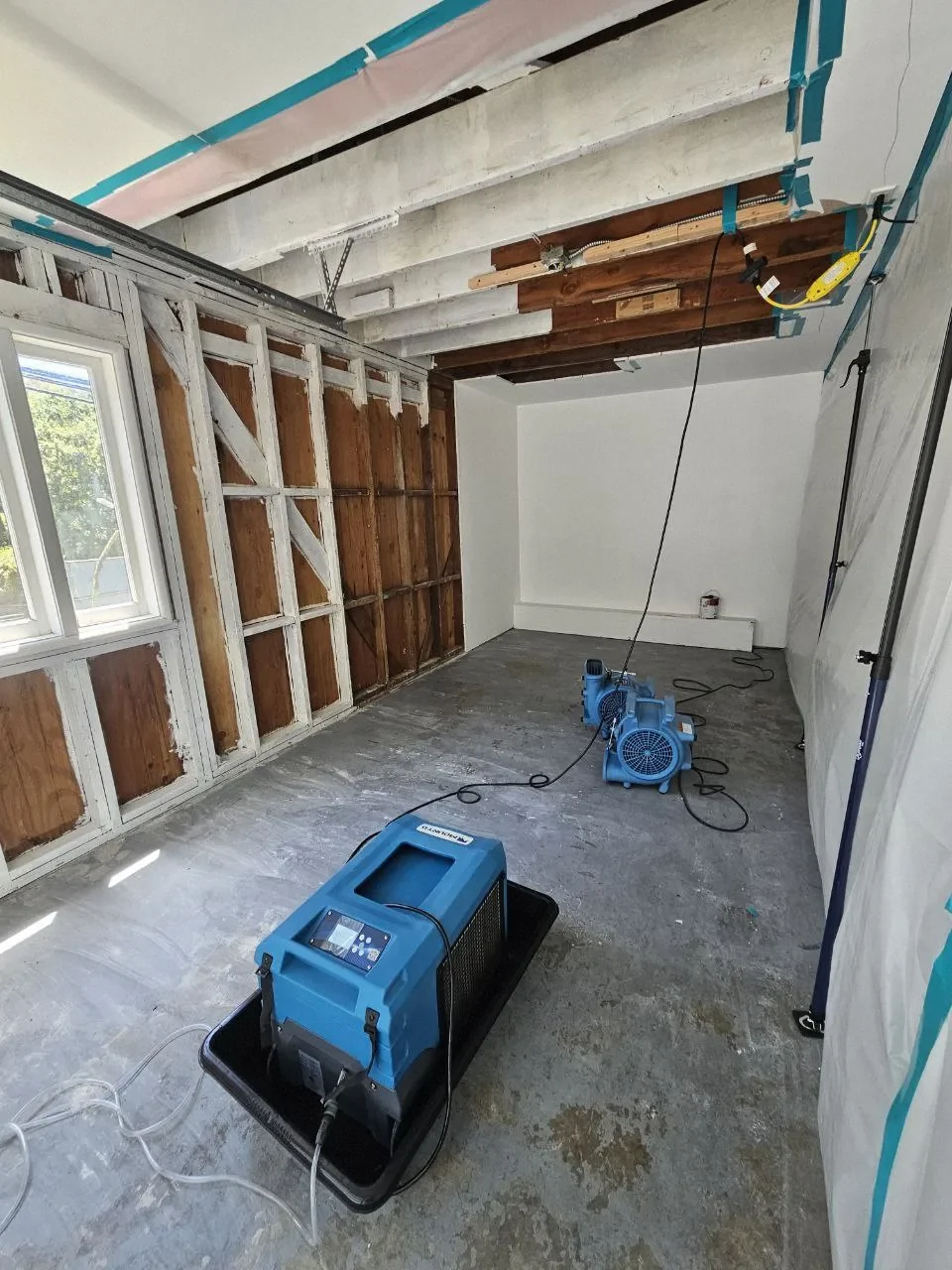
A wet floor may adjoin a cabinet, baseboard or wall cavity that remains damp after a visible surface looks dry. Ask what was examined and which areas remain inaccessible. A reading at one location is evidence about that spot, not a complete description of every concealed component.
The source changes the response. A supply leak, sewage overflow and outdoor flood bring different contamination and repair questions. Ask the team how it will protect unaffected areas, handle contents and decide whether material can be cleaned or needs removal.
If opening an assembly reveals additional damage, request an updated description before the scope changes. The source must be controlled as well as the wet materials. Closing a wall while a leak continues can conceal rather than resolve the problem.
Mold and moisture decisions
Visible growth or a persistent damp odor calls for investigation of moisture. Color alone cannot identify a species or establish the hidden extent. Do not disturb suspect material until the work area and occupants’ needs have been considered.
A plumber, roofer or other trade may need to stop the water source. An assessment should explain the observed condition, what remains uncertain and how affected materials will be handled. A surface coating or fragrance is not a substitute for identifying continuing water entry.
Health questions belong with a qualified health professional. A property assessment describes the building and potential work; it is not a medical diagnosis. If testing is proposed, ask what decision the result will inform.
Belongings and insurance
When safe, list affected contents by room and photograph their condition. Ask the insurer what documentation is needed before disposal if circumstances allow time. Electronics, papers, furnishings and textiles may need different evaluations, and wet electrical equipment should not be energized.
Keep source-repair reports, written scopes, notices, invoices and any permits together. Tenants should preserve repair requests to the owner or manager. These records can explain the sequence, but coverage and reimbursement depend on the policy and insurer’s review.
If an essential room is unavailable, discuss access and temporary arrangements with the responsible party. In a shared property, agree on a route for equipment and removed material that protects unaffected spaces.
From assessment to reconstruction
Once the source is controlled, ask how moisture and affected materials will be checked before finishes are replaced. Plumbing, electrical, structural and finish work can involve different trades. Explain the actual scope to the city and ask which permits and inspections apply.
If opening a wall reveals more damage, request a written change to the scope and clarify who will coordinate the additional work. A fixed schedule cannot reliably be established from a description before the building is examined. Official restrictions and required inspections take precedence.
After completion, retain the source repair, restoration and inspection records. If dampness returns, report the new observation. Earlier documents can help an investigator, but a later event may have a different cause.
Questions to ask before work begins
Who will establish whether water is still entering? What areas were examined and what remains unknown? Ask how clean rooms will be protected and how belongings will be evaluated. A clear description helps occupants understand the next decision.
For a drain problem, distinguish the public sewer, private lateral and affected room. For outdoor water, distinguish an agency’s public drainage facility from a private entry point. The relevant city or district can explain its jurisdiction for the address.
Before authorizing reconstruction, ask who schedules permits and inspections and how changes will be communicated. The practical goal is a repair matched to the conditions found, without an unsupported promise about a specific response time or insurance payment.
If the building is occupied, discuss how essential rooms and shared routes will be protected while work is underway. Ask the owner or manager who will notify residents if the scope changes or access must be limited. Where a source repair is performed by a separate contractor, identify the person who will share its findings with the restoration team. Keep the dates of those communications with the photographs and permit records. The record should distinguish observations from assumptions and identify any area that could not be inspected safely. If a professional recommends further opening, ask what question the opening is intended to answer.
Before any additional work begins, confirm who is authorized to approve it and how its scope will be documented.
Common questions
Who is Oakland’s primary water supplier?
The city’s 2026 hazard mitigation plan identifies EBMUD as its primary water supplier.
Does Oakland participate in a regional sewer lateral program?
Yes. Oakland properties are included in EBMUD’s Regional Private Sewer Lateral Program.
Can a tenant report unresolved housing conditions?
The city directs tenants to the Rent Adjustment Program for reduced services and to Code Compliance for violations.
Does the 1991 fire establish my property’s current hazard?
No. Check the present official designation for the actual parcel.
Does a neighborhood name establish a pipe material?
No. The installation must be checked using records and an appropriate inspection.
Sources
- Oakland 2026–2031 hazard mitigation plan Checked
- EBMUD April 2026 Equalizer newsletter Checked
- Alameda County Flood Control Zone 12 Checked
- Oakland code compliance relocation for tenants Checked
- Oakland rent adjustment for loss of service Checked
- Oakland wildfire district inspections Checked
- Oakland environmental justice communities map Checked
- EBMUD emergency contact Checked