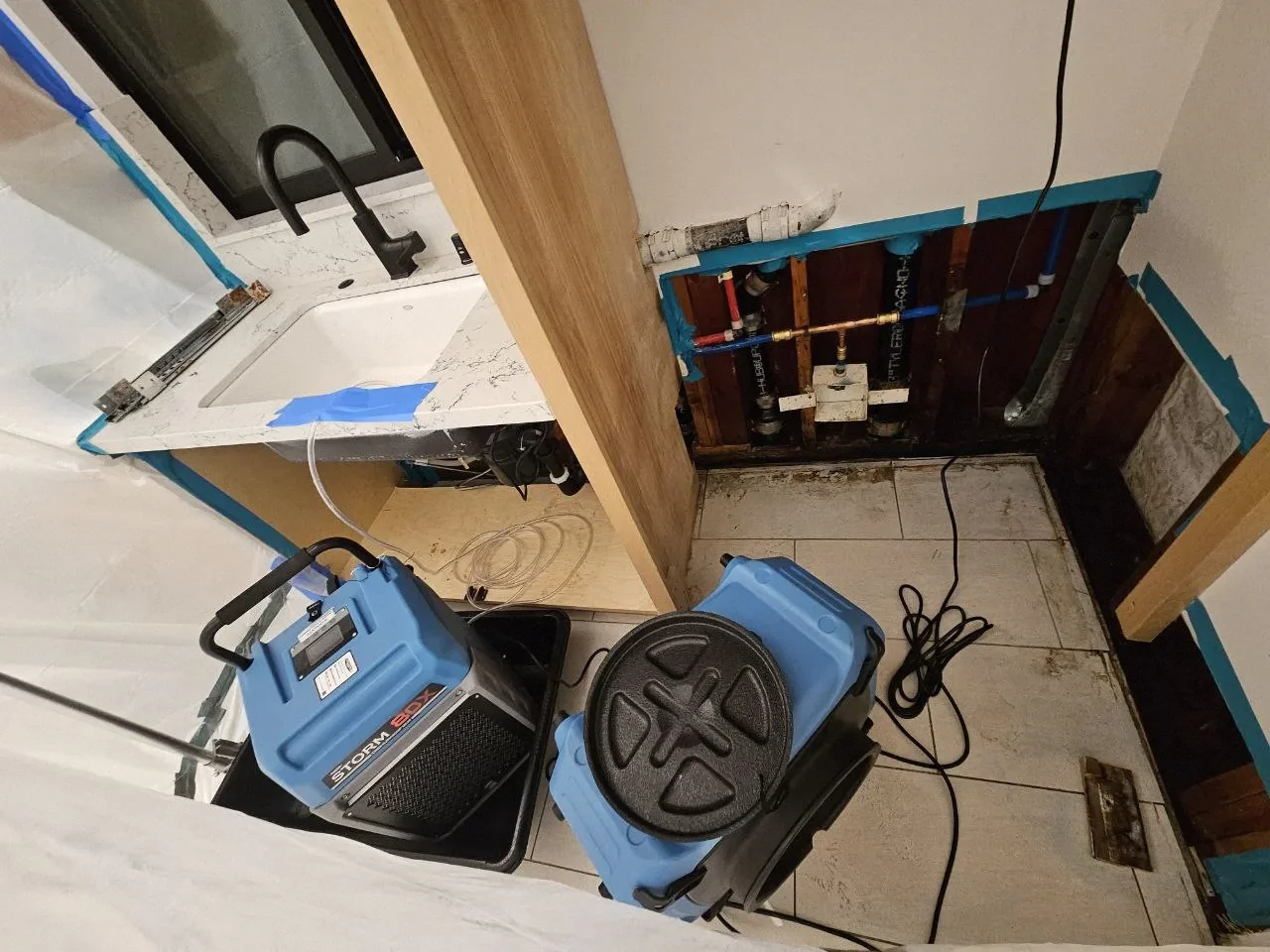
Water damage in Alameda: first steps
Put distance between people and the affected area, especially when the water may reach electrical equipment, a sagging ceiling or an unstable floor. Do not step into standing water to reach a switch or touch wet equipment. If the source is a fixture and its shutoff is safely accessible from a dry location, closing it can limit continued flow. If it is not safe, leave the area and ask the appropriate utility or emergency responder for help.
The first visible wet spot is not always the point where the leak began. Water can travel behind a wall, underneath a floor covering or between rooms before it becomes apparent. Note when the water was noticed, where it appeared and whether it continues to spread. Take photographs only from a safe position and tell the property manager about access restrictions or shared areas.
Water Damage Guard is based in San Carlos and takes calls at (650) 550-0619, 24/7. Describe the suspected source, affected rooms, any standing water and the safe way to reach the property. An assessment can then identify what is visible, what needs further investigation and how cleanup may be coordinated with a source repair.
Separate a water main problem from a building leak
EBMUD reported a water main leak near Webster Street and Buena Vista Avenue on August 24, 2025, and subsequently repaired the main. That documented event is a reminder to distinguish a utility-side problem from a leak in a particular building; it does not establish the cause of another property’s water damage. Report a suspected utility emergency to EBMUD and follow its instructions about the location and conditions.
The utility emergency number is 1-866-403-2683, with the prompts for an emergency. Explain whether water is coming from a street, a meter area or inside the building, and whether service is interrupted. A utility response addresses its own system; a property owner still needs to understand any water that entered the structure and arrange the necessary assessment of private components.
When the cause is uncertain, avoid opening concealed assemblies yourself. Keep a record of what changed after water was shut off and whether adjacent occupants observed a similar issue. This information can help the utility, a plumber and the restoration team distinguish concurrent damage from assumptions based on location alone.
Rain, flood maps and the Bay Farm shoreline
The City of Alameda says portions of Bay Farm Island are within the mapped Special Flood Hazard Area and that the northern shoreline can flood during major coastal storms and king tides. A mapped area describes a geographic hazard, not proof that a specific room flooded or that every property on the island has the same exposure. Check the individual address before making decisions that depend on a flood designation.
Public Works assists owners in determining whether a parcel or structure is in a mapped Special Flood Hazard Area. Contact its engineering division at (510) 747-7930 with the address and the question you need answered. A lender, insurer or design professional may need a different document for a particular decision, so ask which map or certificate will be accepted.
The city’s Bay Farm Island northern shoreline adaptation project is being designed for up to two feet of sea-level rise; further funding is needed for construction. Treat it as a planning project rather than a completed barrier or a guarantee of protection. A property-specific plan still needs to consider the actual entry point, safe access and current local requirements.
Stormwater and the path into a building
Alameda Public Works describes maintaining storm drain inlets and pump stations and lowering lagoons to receive stormwater. These are parts of the public drainage system; they do not establish the condition of a drain or pipe on a private parcel. During heavy rain, describe an observed obstruction or flooding location to the appropriate public agency instead of assuming that a single blocked inlet explains every wet room.
Inside a building, trace the water path only when it is safe. Rain can reach a room through an opening above grade, while water on a floor can also come from a plumbing failure. The repair decision depends on the actual source and on what lies behind the affected finish. Ask the person investigating to distinguish an observed condition from a suspected route.
Keep loose belongings away from the wet area if you can do so without crossing water or approaching electricity. A photograph taken after conditions are safe can show the extent at that moment, but it does not replace an inspection of concealed material. Record whether additional rain changes the pattern and share that information with the person assessing the property.
Permits and the repair scope
Alameda’s permit guidance says replacement of defective drain, waste or vent piping is treated as new commercial plumbing work requiring a permit. The exact work matters: stopping a leak and replacing a defective pipe are different descriptions. Tell the Permit Center what is being removed or replaced and whether the project includes electrical, structural or other work, rather than assuming that every activity falls under one permit. The city page cites the 2013 code in this section, so confirm the current requirements for the project with the Permit Center.
The Permit Center accepts building applications online and provides ways to search permit history by address. Existing records can help identify earlier authorized work, but a record search does not prove the current condition of a concealed pipe. Ask (510) 747-6800 how to describe a changed scope if opening a wall reveals damage that was not apparent at the start.
Coordinate the order of work with the professionals involved. Source repair, material removal, drying and reconstruction can require different skills. Ask when inspections must occur before a wall or floor is closed, and keep the permit, inspection results and photographs with the property records. An emergency response should not obscure the later decisions needed to restore the assembly.
If you rent or share a building
Tell the owner or manager promptly about the location and visible extent of water. A concise written report can include when it began, whether a fixture is still leaking, and whether an adjacent room or common area is affected. Save a copy and arrange access for inspection. In a condominium, the association and the owner may need to identify which components and spaces are involved before responsibilities are assigned.
Alameda Ordinance 3398 provides temporary relocation payments in qualifying circumstances that include certain orders, qualifying health or safety conditions and approved capital improvement plans. The ordinance defines qualifying health or safety conditions with a determination by a government agency or court, along with causation conditions. A tenant’s concern or voluntary departure alone does not establish payment eligibility. Coverage, exceptions and the actual facts must be checked with the Rent Program.
If a room cannot be used, ask in writing how access, belongings, notice and any temporary arrangements will be handled. Do not assume that every water event triggers relocation benefits or that an insurance decision settles a tenant’s rights. The city’s current ordinance and individual advice are more useful than treating an old notice as a complete statement of current law.
Neighborhood names and property conditions
A city building decarbonization survey uses West End, East End, Central, Southshore, Bay Farm and Alameda Point as neighborhood choices. These are useful ways to describe a location, not precise boundaries or a diagnosis of a building. Give the street address to a utility, the Permit Center or Public Works when asking about the records or rules for a particular parcel.
Properties in the same neighborhood can have different layouts, maintenance histories and sources of moisture. A building’s age alone does not reveal the material of a hidden pipe, the condition of a floor assembly or whether a particular basement is affected by groundwater. Review records and inspect the actual installation before selecting a repair method.
For a shared structure, an apparent mark on one ceiling may reflect water from a different space. Ask the manager to coordinate access to both sides of the affected area where appropriate. Avoid assigning responsibility solely from the first visible stain; identifying the source and documenting the extent can make the next conversation more productive.
Assessing moisture and materials
A restoration assessment should follow the path of water through the affected rooms. The visible surface can be smaller than the wet area underneath, particularly where a cabinet, baseboard or floor covering limits access. Ask which areas were examined, which were inaccessible and what signs or measurements support the proposed next steps.
The source and the material matter when deciding whether an item can be cleaned, dried or needs further evaluation. Water from a sewage backup is not equivalent to a supply leak, and an outdoor flood can carry sediment and other contaminants. Do not treat the appearance of standing water as proof that it is safe. Keep unaffected belongings apart from items that may have been contaminated.
Drying does not repair a pipe or prevent water from returning. Before finishes are replaced, discuss how the source was controlled and how the affected assembly will be checked. If the condition changes during the work, ask for the updated findings and scope rather than assuming the first view showed everything.
Belongings, documents and insurance
When safe access is permitted, make a list of affected belongings and photograph the rooms from several positions. Keep damaged documents, electronics and upholstered items separate until their condition can be evaluated. If you intend to make an insurance claim, ask the insurer what records it needs and whether it has instructions for documenting or disposing of items.
Save communications with the owner, utility, contractor and insurer in one place. Dates of the first observation, source repair, inspections and changes to the scope can explain the sequence without deciding fault or coverage. A claim outcome depends on the policy and the facts; neither a permit nor a restoration assessment guarantees payment.
If a room remains unavailable, agree on a safe route for access and removal of belongings. In a multi-unit property, designate a contact for shared hallways and discuss any restrictions on equipment or work hours with the manager. Clear coordination helps avoid a second entry into a hazardous area while work is underway.
From response to recovery
Ask the restoration team to explain the proposed sequence: source control, evaluation, removal or cleaning where appropriate, drying, checking the affected materials and planning repairs. The sequence may change when a concealed area is opened or when the source is found elsewhere. Keep the initial observations and any revised scope together so that each party can see why the work changed.
Before reconstruction, confirm that the relevant repair and inspection questions have been resolved. The person responsible for a property can ask which materials were assessed, which spaces were not accessible and what remains to be done. The goal is to make decisions based on the actual building, not on a neighborhood-wide assumption.
For water damage restoration in Alameda, call Water Damage Guard at (650) 550-0619. Calls are accepted 24/7 from its San Carlos base. Share the location, the current condition and any safety instructions already given by a responder or the utility.
Related guides and services
- King Tides Alameda County
- Tenant Rights Water Leaklifornia
- Mold In Rentallifornia
- Repair And Deductlifornia
- Alameda Sewer Lateral
- Alameda County
- Rental Water Leak Responsibilities
- Additional Living Expenses Water Damage
- Sewermera Inspection
- Flood Facts Measurement And Risk
- Water In Basement First Steps
- Neighbor Water Damage Evidence
- Clogged Sewer Line Signs And Response
- Exterior Flood Resilience Upgrades Choose For The Actual Hazard
- Water Damage Restoration
- Water Damage Repair
- Emergency Water Removal
- Structural Drying
- Alameda
- Alameda
- Burst Pipe Leak Cleanup
- Ceiling Wall Floor Water Damage
- Crawl Space Basement Drying
- Alameda
- Mold Inspection Testing
- Alameda
- Smoke Soot Odor Removal
- Commercial Water Damage
- Oakland
Common questions
Who should I call about a suspected water main leak in Alameda?
EBMUD lists 1-866-403-2683 for utility emergencies. Report the location and follow its instructions; separate assessment may be needed for water inside the property.
Is every Bay Farm Island property in a flood hazard area?
No. The city identifies portions of Bay Farm Island in the mapped Special Flood Hazard Area. Alameda Public Works can help check an individual parcel or structure.
Does a wet room automatically qualify a tenant for relocation payments?
No. Alameda Ordinance 3398 has specific qualifying triggers, coverage rules and exceptions. Health or safety conditions require a governmental or court determination under its definition.
Does replacing a defective drain pipe require a permit?
Alameda describes replacement of defective drain, waste or vent piping as new commercial plumbing work requiring a permit. Ask the Permit Center about the actual proposed scope. The city page cites the 2013 code; confirm current requirements with the Permit Center.
Can I check an Alameda building’s permit history?
The Permit Center provides online permit history searches by address. Records can help identify prior work but do not establish the present condition of concealed materials.
Does a neighborhood name identify the source of a leak?
No. The city survey names several neighborhoods, but the source and condition of a particular building require property-specific investigation.
Sources
- EBMUD emergency contact Checked
- EBMUD Alameda main repair announcement Checked
- Alameda Bay Farm Island adaptation project Checked
- Alameda flood maps and property assistance Checked
- Alameda storm preparation Checked
- Alameda permit requirements Checked
- Alameda Permit Center Checked
- Alameda Ordinance 3398 Checked
- Alameda building decarbonization survey Checked