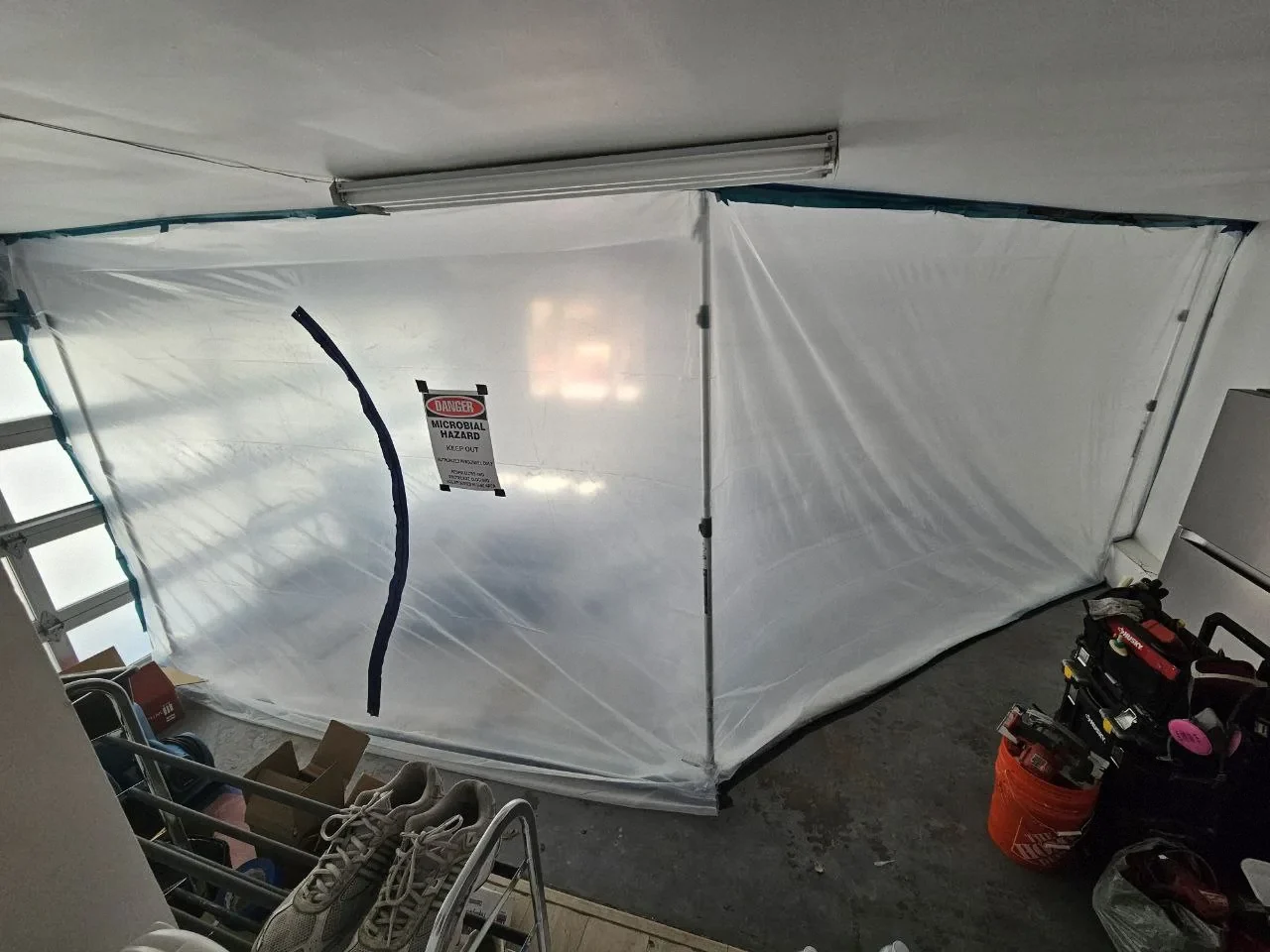
Keep people away from the affected area
A sewer backup can spread water and waste into a room through a floor drain, toilet or other opening. Keep people and pets away from the affected area. Stop using connected sinks, toilets, laundry equipment and other fixtures if you can do so safely; additional water may increase the overflow. Do not walk through standing water to operate an electrical switch or touch wet equipment.
If water continues to rise or the source is unknown, leave the immediate area and contact the responsible utility or emergency service as appropriate. A safe response depends on the actual location of the obstruction. In a shared building, notify the manager promptly so that other occupants can be told about affected fixtures and access can be coordinated.
Water Damage Guard takes calls at (650) 550-0619, 24/7, from its San Carlos base. Explain where wastewater appeared, whether it is still flowing, and whether the affected area can be reached without crossing standing water. The cleanup scope follows an assessment of the affected materials and access conditions.
Which part of the lateral needs attention?
Alameda describes a sewer lateral as the connection between building plumbing and the city sewer. The owner handles maintenance and replacement of the upper lateral on private property, while the City handles the lower lateral from the property line to the sewer main. Condominium and homeowners association arrangements may differ. These maintenance descriptions should not be turned into an assumption about legal ownership of the lower segment.
An overflowing fixture does not establish where a blockage is located. A person investigating may need to distinguish the building drain, upper lateral, lower segment and main. Describe the symptoms and the sequence rather than selecting a location in advance. If several fixtures or units are affected, tell the manager or the investigating professional so that access and use of the system can be coordinated.
After the cause is located, ask who will arrange the repair and which portions of the property can be used while work proceeds. Sewer repair and restoration of the affected rooms are related but separate tasks. Fixing a blockage does not remove contaminated material already present inside the building.
Cleanout and permit decisions
The City requires an owner to install a cleanout at the property line if one does not already exist. A cleanout provides access to the lateral. The City says the property-line setback varies by block and that Public Works can help identify the correct location; deviations require advance approval. A professional should inspect the actual site before assuming where a cleanout belongs.
Alameda describes a building permit for ground plumbing repair or replacement, with an encroachment permit also needed under the specified public-area or sewer-easement conditions. Identify whether the proposed work stays on private property or reaches an area controlled by a public agency. Ask the City which documents and inspections are needed for the proposed scope.
Keep the location and findings of a camera inspection or other investigation with repair records, if one was performed. If the proposed work changes after the line is exposed, ask whether the permit scope must be updated. Avoid closing a trench or covering an assembly before required inspections have been completed.
Compliance certificates and Alameda Point
Alameda lists buying or selling a property, construction or remodeling exceeding $100,000, and changing a water meter size as triggers for an EBMUD private sewer lateral compliance certificate. Check the district’s current program and any applicable exceptions for the transaction. A backup alone should not be described as one of those listed triggers.
For a property at Alameda Point, the City says a city-signed Alameda Point form is required before EBMUD schedules its special certification appointment. The property owner or project representative should ask about the form and the appointment in advance. The location-specific procedure is a certification step, not evidence that every lateral at Alameda Point has the same defect.
Keep certification and repair questions separate. A certificate addresses the program’s requirements, while the restoration scope depends on where wastewater traveled and what it contacted. Ask for a clear record of both the pipe work and the cleanup so the owner can follow the sequence without assuming that one document answers every question.
Assess contamination and affected materials
The visible edge of the spill may not show the entire affected area. Wastewater can reach the underside of a floor covering, a wall base, a cabinet or an adjacent room. Ask the restoration team what it can inspect and what remains concealed. The type of material, the exposure and the condition observed at the site guide decisions about cleaning, removal and replacement.
Do not assume water is safe because it has become clear or stopped moving. Separate unaffected belongings from items exposed to the spill when this can be done without entering the contaminated area. Upholstery, paper, electronics and hard surfaces need different evaluation; avoid moving a contaminated item through clean rooms without a plan to protect those spaces.
Before work begins, discuss access, containment and the route for removing damaged material. In a shared property, identify the person who can authorize access to common areas. A documented scope should distinguish what was observed from areas that could not be inspected and should be updated if opening a surface reveals additional impact.
From source repair to rebuilding
The system must stop releasing wastewater before the affected area can be returned to use. Coordinate with the person investigating the pipe, but do not assume the same party handles every part of the work. The property may need plumbing repair, contaminated-material handling, drying and later reconstruction in a particular sequence.
Ask how the remaining moisture and condition of the assembly will be evaluated before finishes are replaced. If there is damage behind a wall or below flooring, discuss access and any applicable inspections with the people responsible for the project. Replacing a surface before resolving the source can leave the same pathway for another release.
For insurance, keep photographs and a timeline when it is safe to collect them. Ask the insurer what documentation it requires before disposing of affected belongings, if conditions allow. Coverage depends on the policy and the actual cause; a cleanup request or a city certificate does not guarantee a claim outcome.
Coordinating access in a rental or condominium
Tenants should alert the owner or manager about wastewater promptly and record which rooms and fixtures are affected. Ask how safe access will be arranged and what to do about belongings in the affected space. The person managing the building may need to coordinate multiple units, a common drain or a shared access route.
Condominium documents can assign responsibilities differently from the standard single-property description. Ask the association and the appropriate agency about the particular component instead of assuming that a unit boundary and a sewer maintenance boundary are identical. Written findings from the investigation help the parties ask a focused question.
If the spill affects a common hallway or a neighboring unit, do not infer that the visible location identifies the source. Keep occupants away and share observations with the manager. Any return to the affected space should follow the instructions of the responsible authority and the condition of the area.
Related guides and services
Common questions
Who maintains the lower sewer lateral in Alameda?
The City says it handles the lower lateral from the property line to the main. Maintenance responsibility should not be presented as proof of ownership.
Is a cleanout required?
Alameda requires a property-line cleanout if one does not already exist. Public Works can help identify its location.
Does a sewer backup always trigger a lateral certificate?
The City lists specific triggers including sale or purchase, construction or remodeling above the stated threshold, and a change of meter size. Check the program for the particular circumstances.
What is different at Alameda Point?
The City says EBMUD needs a city-signed Alameda Point form before its special certification appointment is scheduled.
Can a certificate replace cleanup after wastewater enters a room?
No. Certification and the assessment and handling of affected building materials are different parts of the response.