Keep wastewater from spreading
When a drain backs up, keep people and pets away and stop using connected sinks, toilets, showers and appliances until the cause is understood. Additional flow can make an overflow worse. Do not enter standing water to operate a switch or handle wet electrical equipment.
Note which fixtures are affected, when water rose and whether it is still entering. A low drain can show the first symptom while the obstruction lies elsewhere. A plumber or responsible agency can investigate the system; affected rooms and belongings need a separate cleanup assessment.
Water Damage Guard provides sewage cleanup from San Carlos. Call (650) 550-0619, 24/7, to discuss the Oakland property and any access restrictions. A call helps organize an assessment but cannot identify a hidden pipe defect.
EBMUD certification triggers
For covered Oakland properties, EBMUD lists title transfer, finalizing a permit for building or remodeling worth more than $100,000 and a change in water meter size as triggers for a lateral certificate. Check the district’s current rules and exceptions for the property; a certificate trigger is not the same as an active emergency.
EBMUD offers an eligible owner a time-extension certificate for lateral compliance after a title transfer. The extension has conditions and should be confirmed with the district. It is not a reason to ignore sewage entering a building or to assume repairs are unnecessary.
A qualified contractor can explain the inspection or test and document any defect. Keep the video, findings, certificate and written approvals together. Ask which section was examined and what remains unknown rather than treating a single image as proof of the whole system.
Verification and shared laterals
For a covered lateral, EBMUD requires a verification inspection demonstrating that the line is leak-free before issuing a compliance certificate. The district’s test is a specific program step; it does not automatically assess wet flooring or contents inside a home.
For covered common-interest developments, EBMUD requires an association statement of responsibility and distinguishes owner-maintained and association-maintained laterals. Identify the authorized contact before arranging work on a shared line, and coordinate access to affected units and common areas.
If the line fails or a defect is found, ask the contractor and district what repairs and approvals are required. Preserve the inspection result and any changes to the proposed work. A lateral repair, building restoration and certificate are related but distinct decisions.
Investigate the backup
Describe the symptoms to the appropriate sewer agency and plumber without assuming that the public main or private line is responsible. If multiple fixtures are affected, say which ones and when. This history can guide an investigation but does not replace examination of the pipe.
A camera can show accessible internal conditions and help locate a blockage or damaged segment. Ask for an explanation of what the recording shows, where it was taken and whether additional testing is needed. A line can have conditions outside the camera’s view.
If the problem affects an occupied shared building, tell the manager and identify any affected common space. Do not attribute fault to a neighboring unit based only on the room where water appeared. The configuration and actual defect must be established.
Protect clean areas and contents
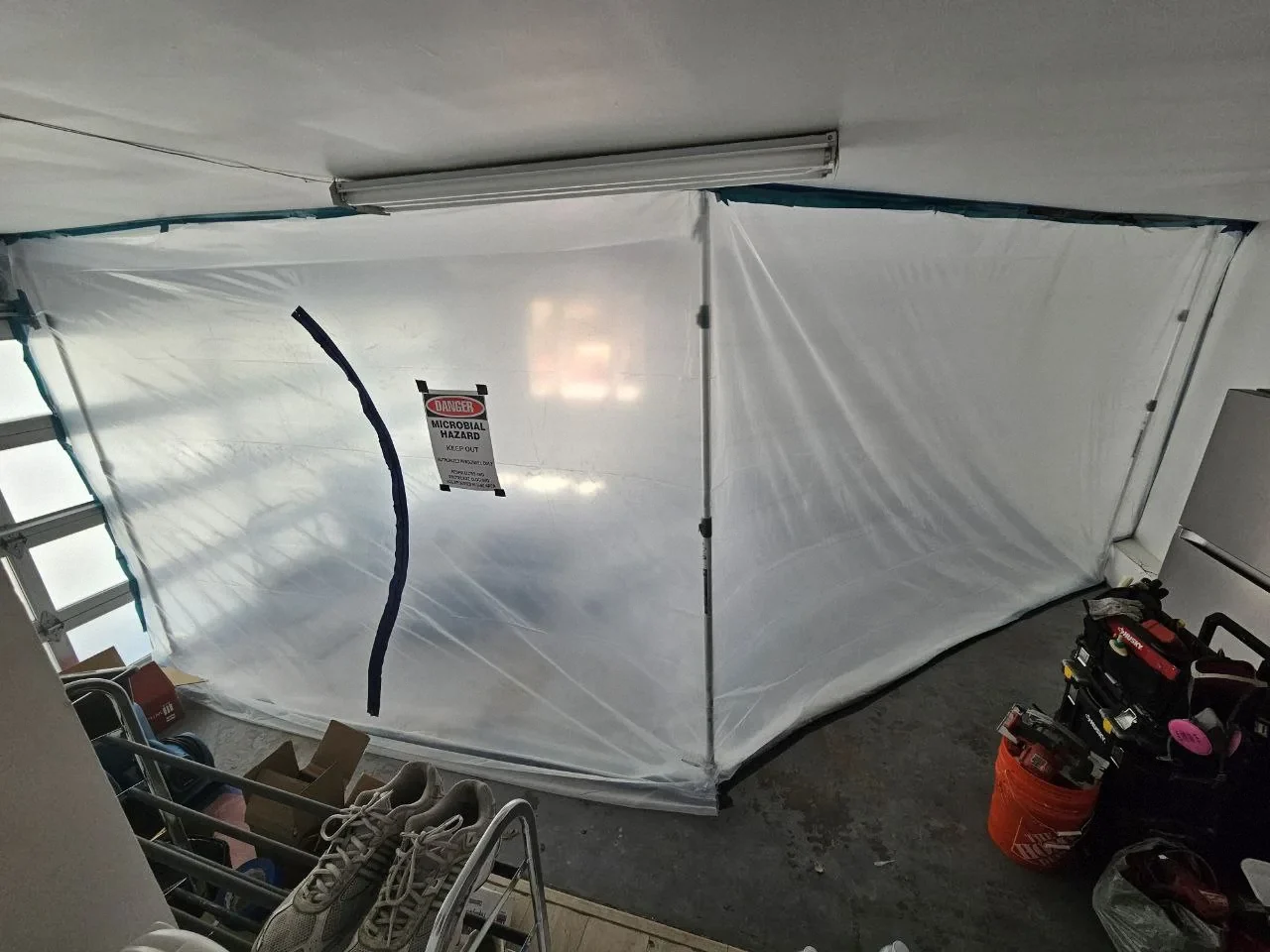
Sewage may carry contaminants onto floors, furnishings and footwear. Agree on a boundary around the affected area and a route for workers and removed material. A shared hallway may require coordination so that the response does not unnecessarily affect other occupants.
Hard, cleanable surfaces and porous contents may require different handling. Ask why an item is proposed for cleaning, removal or specialist evaluation. A clean-looking exterior does not establish the condition of a seam, underside or enclosed material.
When safe, photograph affected belongings and ask the insurer what documentation it needs before disposal if circumstances allow. Coverage depends on the policy and the insurer’s review. A district certificate does not determine the insurance payment.
Inspect moisture beyond the visible water
Wastewater can travel beneath flooring and behind baseboards or cabinets. Ask which spaces were examined and whether opening an assembly is necessary to determine the extent. A single reading helps describe one location but does not identify all contamination or hidden moisture.
After the source is controlled, cleaning or removal and drying should be coordinated. If a wall or floor is opened and the scope changes, request a written explanation. Required trade or building inspections should be scheduled before work is concealed.
If odor persists, ask for an investigation. Remaining residue, damp material and an unresolved drain problem are different possibilities. A fragrance cannot identify the source, and an earlier repair cannot prove what caused a later recurrence.
Coordinate responsibilities
A plumber may repair a pipe while a restoration team addresses affected materials. The owner or manager should know who is responsible for each portion and how findings will be shared. If electrical or structural repairs are needed, another qualified trade and additional approvals may be involved.
Tenants should report the condition promptly and retain written communications. Discuss access and essential facilities with the owner or manager. An official occupancy restriction takes precedence over a contractor’s estimated schedule.
If the property belongs to an association, confirm who can authorize work in common areas and who will communicate with affected residents. Keep the district’s responsibility statement, where applicable, with the project record.
Planning a lateral project
An owner preparing a sale or renovation should distinguish the district’s compliance process from the scope proposed by the contractor. Ask which lateral is covered, whether an existing certificate is on file and what documentation is needed for the transaction. The district can explain whether a particular extension or exemption applies.
For an association, obtain the governing documents and the statement identifying the responsible party before arranging work on a shared line. A contractor’s report should identify the location inspected and any recommended next step. If the line serves multiple units, agree on access and notification before testing or repair.
If repairs extend into a public area, ask the city and contractor which additional authorizations are required. Confirm who will arrange inspections and how the surface will be restored afterward. A lateral certificate addresses the district’s compliance program; it does not replace all other permits or resolve every ownership question.
After the immediate response
Before reconstruction, review the source-repair record and the condition of the affected assembly. Ask whether a further inspection is needed and who will approve closing the floor or wall. If work changes because a concealed area is opened, request a revised scope.
An occupant should know which facilities remain unavailable, the route for updates and who will coordinate access. Preserve written notices and avoid treating an estimated schedule as an official clearance. If the problem returns, report the new symptoms and provide the previous documentation to the investigator.
Before authorizing repair
Ask who will stop additional wastewater, what was inspected and which areas remain uncertain. Request a description of containment, contents handling and the proposed source repair. If an excavation is proposed, ask about the required permits and inspections.
For a certificate question, give EBMUD the address and the event triggering the application. Ask whether an extension is available and what evidence is required. A program process does not guarantee that a particular repair is covered by insurance.
After work, retain the pipe diagnosis, test or certificate, restoration scope and any permit records. If sewage returns, provide that history to the next investigator without assuming the cause is identical.
Common questions
Should fixtures be used during a backup?
Avoid adding flow to the affected drain until the cause is understood.
What can trigger an EBMUD lateral certificate?
For covered properties, EBMUD lists title transfer, finalizing a permit for building or remodeling worth more than $100,000 and a change in meter size.
Can an owner request more time after a transfer?
EBMUD offers a time-extension certificate to eligible owners, subject to its conditions.
Do shared developments have additional documentation?
For covered common-interest developments, EBMUD requires an association statement of responsibility.
Does a lateral certificate clean the building?
No. Certification of the line and cleanup of affected materials are separate processes.