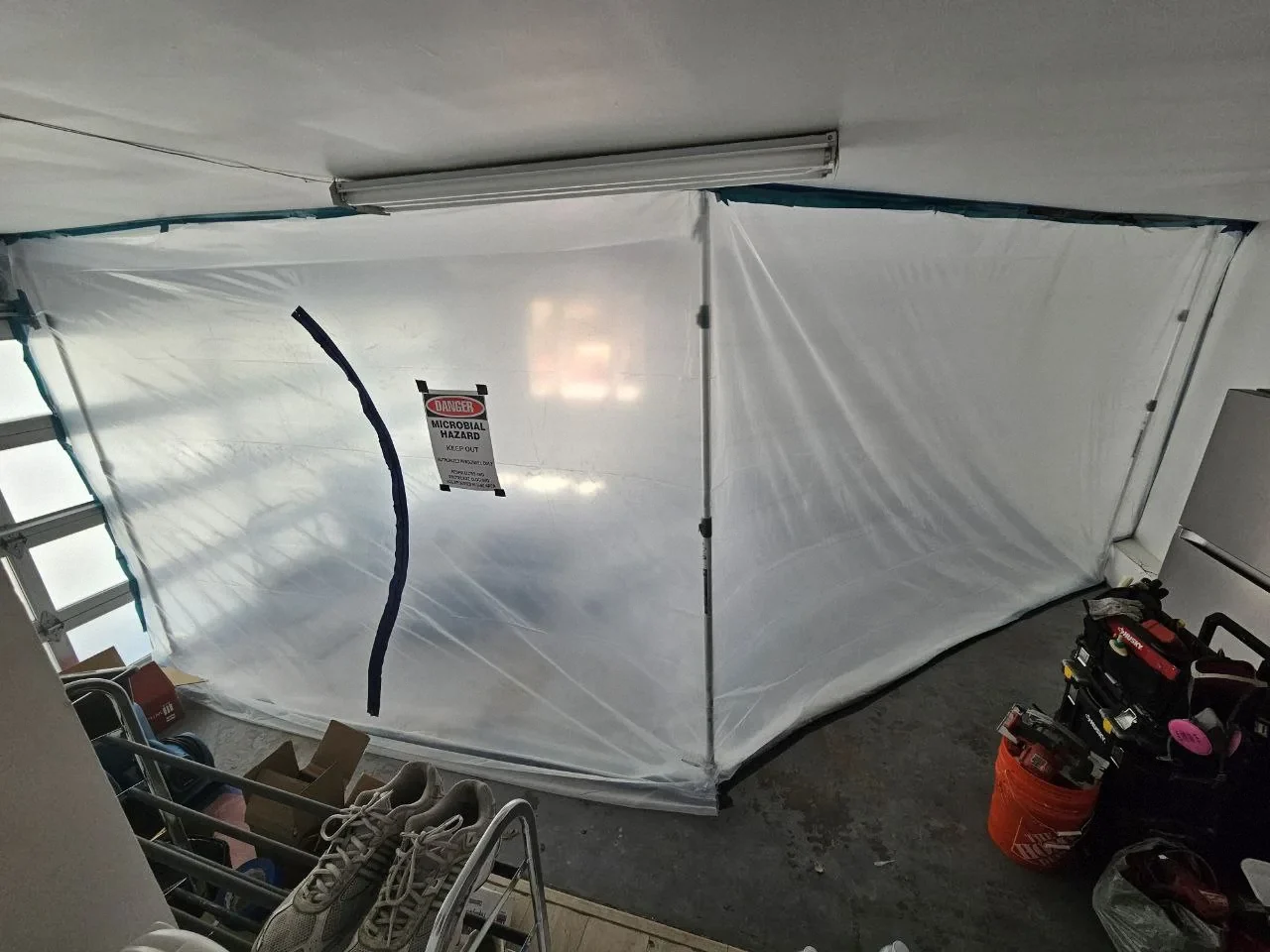
Limit exposure and stop adding wastewater
When sewage backs up, keep occupants and animals out of affected areas. Avoid using toilets, sinks, showers and appliances connected to the drain while the cause is being investigated. Additional flow can enlarge the affected area. Do not step into water to operate an electrical switch, and do not handle wet electrical equipment.
Record which fixtures are affected, whether water is rising and whether the problem occurs during use. These observations help a plumber or the responsible sewer agency decide where to investigate, but they do not prove whether a defect is inside the building, on private property or in a public line. If there is immediate danger, leave the area and call 911.
Water Damage Guard is based in San Carlos. Call (650) 550-0619, 24/7, to discuss sewage cleanup in Berkeley. Explain the affected spaces, access conditions and any instructions already given by the utility or property manager. The plumbing source and contaminated building materials require coordinated but distinct work.
Certification in shared properties
Berkeley says its sewer lateral certificate requirements apply to condominiums and developments with shared laterals. The owner or association should establish which pipe serves the affected units and who is authorized to arrange inspection and repairs. A shared line can cross private and common areas, so a single unit’s visible symptoms do not determine the location of a defect.
For some property transfers the city may grant a six-month certificate extension. An extension is subject to the city’s conditions; it is not a general permission to leave an active overflow unresolved. Ask the city about the actual transaction and preserve any written approval, inspection result and agreement among the parties.
If a camera inspection is performed, request the recording and a description of the location and condition identified. An image of one section is not proof of every pipe’s condition. The appropriate contractor and agency can explain whether additional testing or repair is needed.
Repair permits and possible assistance
Berkeley requires a sewer and storm drain permit for lateral or storm drain work in the public right of way, and a private sewer lateral permit for lateral work on private property. Work that crosses the property boundary can involve both questions. Ask the city and the contractor which approvals apply before excavation or replacement.
The city offers interest-free lateral repair loans to eligible low-income owners when the city finds a public nuisance. The city says the loan is not available for property-sale or major-remodel triggers. Eligibility and funding must be confirmed directly; do not assume that a cleanup invoice, emergency response or every lateral repair qualifies.
Provide the city with the property address and the proposed work. If an initial investigation reveals a different location or a larger defect, update the scope and determine whether the permit or inspection plan changes. Keep the approval with the contractor’s report and final record.
Assess affected rooms and contents
Sewage may carry contaminants onto finishes, furnishings and footwear. Establish an affected boundary and a route for moving people and materials without tracking residue through the rest of the property. A shared entrance or an occupied neighboring unit can complicate access; agree on the plan with the person responsible for the building.
Ask the restoration team how it will assess hard surfaces, porous materials and contents. An item that looks undamaged can have exposure in a seam or underside. The appropriate decision depends on the material, extent and condition; a single method cannot be assumed for every object.
If insurance may apply, ask what evidence is needed before disposal when it is safe to wait. Take photographs from a safe location and list items by room. Coverage is determined by the policy and the insurer, not by the existence of a sewer lateral certificate.
Find concealed moisture
Wastewater can move beneath flooring and behind baseboards or cabinets. A proper scope should follow the path of the water and identify areas that cannot be seen without opening an assembly. An isolated surface reading is useful information but does not by itself describe contamination behind the surface.
Once the source has been stopped, cleaning or removal and drying need to be coordinated. Replacing finishes before the affected assembly has been evaluated can conceal continuing moisture. Ask what measurements or inspections will be performed before closing the work and how discoveries will be reported.
Odor that continues after the visible water is removed should be investigated. Remaining residue, damp material or an unresolved drain condition are different possibilities. A scent-masking product cannot identify which condition is present, and no one should promise a result before the cause is understood.
Coordinate the pipe and the building work
A plumber’s assessment may identify a blockage or damaged pipe. A separate restoration assessment concerns the water and materials inside the property. Both teams need accurate information about the source and the area affected. Ask who is responsible for isolating the drain, completing repairs and confirming that the source is controlled.
Where work affects a common line or multiple homes, agree on a single contact for scheduling access and communicating findings. Preserve the inspection video, scope and written changes. Do not assign responsibility solely from the room in which wastewater first appeared; the pipe configuration and agency rules matter.
If the job includes electrical, structural or other reconstruction, ask the appropriate trades and the city about their requirements. Required inspections should occur before work is concealed. Separate permits and approvals may apply to different portions of a project.
Record the decisions
For each affected area, ask what was observed, what is proposed for removal or cleaning, and what remains uncertain. If an assembly is opened and the extent changes, request a revised description before the work proceeds. A useful record connects each decision to the condition found rather than treating an estimate as proof of a hidden defect.
Tenants should tell the owner or manager promptly and retain their written notice. Owners and associations should keep access arrangements and communications with the utility, plumber and insurer together. If a room or essential facility is unavailable, discuss safe alternatives and any applicable housing process with the responsible party.
After repairs, retain the source diagnosis, permit and final inspection records as well as the restoration documents. If wastewater returns, report the new event and provide the history to the investigator. A prior repair does not establish the cause of a later backup.
Questions to ask before authorizing work
Who will establish whether the source is still active? What has been inspected, and which parts remain inaccessible? How will contaminated material be contained and moved? Ask for answers specific to the property and for a way to review changes when hidden conditions are discovered.
For a proposed lateral repair, ask whether it is on private property, in the public right of way or both, and which permits are required. If assistance is relevant, ask the city about eligibility before relying on a loan. A possible program should not be presented as guaranteed payment.
For contents and reconstruction, clarify who inventories items, how the insurer will be informed and who schedules inspections. The objective is to coordinate the source repair and safe restoration without implying a fixed outcome or timeline before the conditions are known.
Common questions
Should fixtures be used during a backup?
Avoid adding flow to the affected drain until the source is understood.
Do shared laterals have certificate requirements?
Berkeley says the program applies to condominiums and developments with shared laterals; check the property-specific details.
Can a seller obtain more time?
The city may grant a six-month extension for some transfers, subject to its conditions.
Is the lateral repair loan available for every sale?
No. The city limits its interest-free loan to eligible owners where it finds a public nuisance, not sale or major-remodel triggers.
Does cleaning repair the sewer pipe?
No. A plumber or responsible agency must address the source separately from cleanup of affected materials.