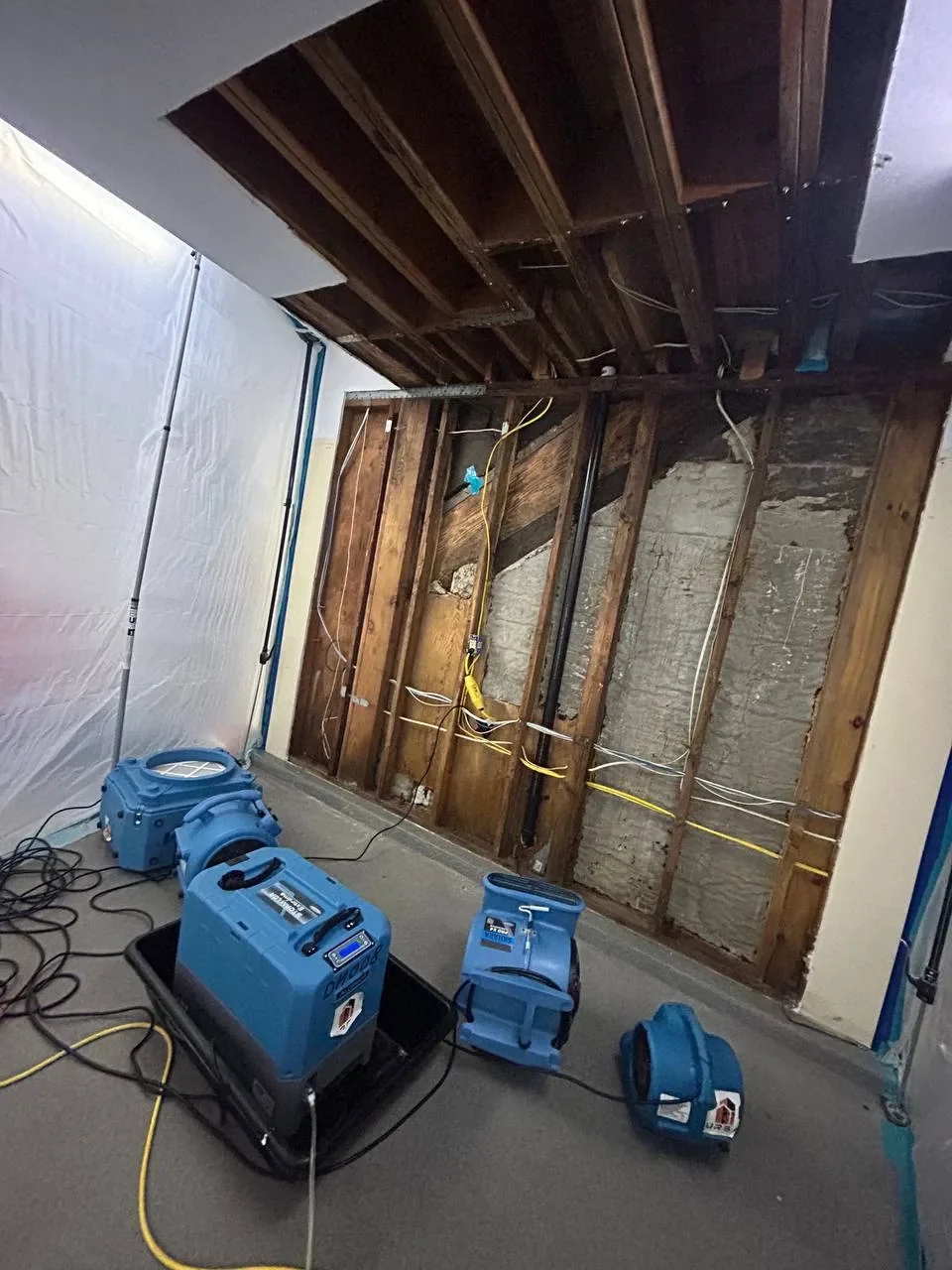
Water damage in Berkeley: protect people and find the source
When water enters a property, first move occupants and pets away from the affected area. If a fixture shutoff is safely accessible, close it. Do not step into standing water to reach a switch or touch wet electrical equipment, and stay clear of a sagging ceiling. An active leak needs a source repair as well as attention to the materials it has already wet.
Note the first place water appeared and whether it is still flowing. A supply line leak, sewage backup and water entering from outdoors require different assessments. The appearance of the water cannot establish that it is clean. Photograph the area only when safe, and follow any access restrictions imposed by responders or the building authority.
Water Damage Guard is based in San Carlos and accepts calls at (650) 550-0619, 24/7. Describe the affected rooms, the suspected source and any limits on access. The initial conversation helps identify a useful next step; an on-site assessment determines what can be inspected and what work is appropriate.
Berkeley sewer laterals
Berkeley requires a private sewer lateral certificate for certain events, including a property transfer, major construction permits, a potential public nuisance or an owner’s voluntary lateral repair or replacement. The city lists the conditions and exceptions; a homeowner should check the rules for the actual project rather than assume that a water emergency and a sale trigger are interchangeable.
The city generally maintains the lower lateral from the curb to the main, while the owner maintains the upper lateral. Exceptions can depend on the property and the city’s rules. A plumber can help identify where a blockage or defect is located, and Public Works can explain its program. Keep camera footage, test results and correspondence with the repair records.
If wastewater enters the building, stop using connected fixtures until the cause is understood and keep occupants away from the affected space. Finding a pipe defect and cleaning contaminated materials are separate parts of recovery. A lateral certificate alone does not describe what happened inside a room.
When a plumbing repair needs a permit
Berkeley lists clearing a stoppage and stopping a leak among permit-exempt work. Its exemption does not extend to replacing a concealed trap or drain, water, soil, waste or vent pipe. This distinction is useful after an emergency: the action that stops immediate leakage and the later work to replace concealed piping may be treated differently.
Explain the actual work to the Permit Service Center, including any proposed plumbing, framing, electrical or finish work. If opening a wall reveals additional damage, the planned scope may change. Ask which permits and inspections apply before work is covered, and retain the approved documents. An exemption from one permit does not automatically settle every other applicable requirement.
Keep the source repair separate in the record from restoration of nearby materials. A plumber may repair a pipe while another trade evaluates wet cabinets or wall finishes. A clear description of who is performing each task helps the owner coordinate inspections and communicate with the insurer.
Rentals and habitability
Tenants in units fully covered by Berkeley’s Rent Ordinance may petition the Rent Board for a reduction for inadequate services, code violations, a breach of habitability or substantial deterioration. Eligibility and the outcome depend on the circumstances. A tenant should report the leak or moisture concern to the owner or manager and keep a dated copy of the request.
Berkeley’s Rental Housing Safety Program combines annual owner self-certification, tenant complaint responses and proactive inspections. The program is a route for raising housing conditions; it is not a promise that every complaint will produce a particular result. Describe the observed water, affected room, previous communications and access needs when making a request.
If repairs require temporary relocation, ask the city which process applies. An owner-planned repair and an emergency displacement have different notice procedures. Tenants and owners should preserve the written notices and discuss temporary housing and the return process with the responsible agency.
Rain, drains and preparation
Berkeley offers free sandbags to residents and businesses during storm season at the Corporation Yard on weekdays, with identification or a business card. Check current hours and supplies before going. A preparation resource is not a reason to remain in a dangerous place during an evacuation or to cross water covering a road.
A street drain and the drainage features on private property perform different functions. If water is entering a building, record the entry point when it is safe and ask the relevant agency or professional about the source. A city maintenance report does not itself dry a wet floor or repair a private leak.
After the storm, be careful around water, electrical equipment and unstable finishes. Contents and building materials need assessment based on what reached them. Outdoor water may contain sediment or contaminants; it should not be treated as a clean supply leak merely because the surface appears clear.
Wildfire hazard and repair planning
Berkeley identifies a Very High Fire Hazard Severity Zone just west of Grizzly Peak Boulevard and distinguishes additional mitigation requirements in the upper hills. A zone boundary is not a diagnosis of an individual property. Check the city’s map and consult the responsible agency for the address and proposed work.
The local distinction matters if fire damage repair includes exterior work or reconstruction. Ask the city which building and fire requirements apply to the scope and whether separate permits or inspections are necessary. A plan for smoke cleanup is not automatically the same as a plan for rebuilding an exterior assembly.
After a fire, enter only when the responsible authority permits access. Smoke, heat and water used during suppression can affect different areas. Have the condition of utilities and damaged equipment assessed before operating them, and document affected belongings safely for the insurer.
Neighborhoods and address-specific decisions
The city’s neighborhood map labels places including North Berkeley, Elmwood District, Claremont, Northbrae, South Berkeley and Cragmont. These names help orient a reader; they do not determine the condition of a particular sewer lateral, the permit needed for a repair or the property’s fire-zone designation. Use the address when requesting an agency determination.
An older building can have several generations of plumbing and repairs. Do not infer the material or remaining life of a hidden pipe from the age of the neighborhood. An owner can combine permit records, an inspection and utility information to ask a more specific question about the actual installation.
In a multi-unit building, water may move between floors or into a shared wall. Notify the manager promptly and explain which areas are visibly affected. Coordinate access and avoid attributing fault to another unit before the source is established.
Inspect the affected materials
A restoration assessment follows the path of moisture. A wet floor can meet a baseboard, cabinet or wall cavity, so the visible mark may not show every affected component. Ask what was inspected, what is inaccessible and whether the source has been controlled. Measurements are useful evidence, but they need to be interpreted alongside the construction and exposure.
Cleaning and drying decisions depend on the type of water and the condition of the material. A sewer overflow introduces a different concern from a supply leak. Explain any known source to the team and ask how clean areas will be protected while contents and damaged material are handled.
If more damage becomes visible after work begins, ask for the revised findings and scope. Drying should be coordinated with source repair; replacing a finish while water is still entering can leave the underlying problem unresolved.
Belongings, records and insurance
Make a list of affected items and take photographs when access is safe. Ask the insurer what documentation it needs before disposal if the condition allows time to do so. Electronics, documents and porous furnishings may need different handling. A restoration professional can explain what can be evaluated; coverage remains a decision under the policy.
Keep a timeline of the source repair, notifications and inspections. Save estimates, invoices, permit records and relevant written instructions. A tenant may also want copies of communications with the owner or manager. These documents can help the people involved understand the sequence without guaranteeing an insurance payment or a legal outcome.
When a room is unavailable, discuss access, belongings and any temporary arrangements with the person responsible for the property. In a shared building, identify a contact for common spaces and coordinate the route for equipment or removed materials.
From cleanup to reconstruction
Before finishes are replaced, ask how remaining moisture will be checked and which trades are responsible for the next stage. A damaged drain, wet insulation and an electrical component may require different expertise. If permits apply, schedule required inspections before the work is concealed.
Agree on a written description of the work, including the areas to be protected, the materials proposed for removal and how changes will be communicated. Do not assume a dry-looking surface proves that the underlying assembly is ready to close. A current assessment is needed when conditions are uncertain.
After work, retain the description of the source repair and the restoration records. If moisture returns, report the new observation promptly. The prior documents can help guide the investigation, but a new event may have a different cause.
Useful local contacts
Berkeley lists its private sewer lateral program at (510) 981-6423 and its Permit Service Center at (510) 981-7500. The Rent Board lists housing counseling at (510) 981-7368, extension 1. These contacts address different questions; explain the property, the observed problem and the kind of help requested.
If a building is unsafe or an immediate threat exists, follow emergency instructions and call 911. For a non-emergency question, confirm the current agency contact and hours. A utility, code official, plumber and restoration provider do not all have the same role in a property loss.
Common questions
Who maintains a Berkeley sewer lateral?
The city generally maintains the lower lateral from curb to main; the owner maintains the upper lateral. Check the property and any exceptions with the city.
Does clearing a plumbing stoppage need a permit?
Berkeley lists clearing a stoppage as exempt, but replacing concealed pipe or a concealed trap is different work and requires a permit.
Can a tenant report a housing concern?
Berkeley’s Rental Housing Safety Program includes tenant complaint responses. Describe the observed condition and preserve prior communications.
Where are seasonal sandbags available?
The city lists the Corporation Yard for residents and businesses during storm season; check current hours and supplies.
Does a neighborhood name determine fire-zone status?
No. Check the specific address against the city’s applicable map and consult the responsible authority.
Sources
- Berkeley private sewer lateral certification Checked
- Berkeley sewer maintenance Checked
- Berkeley Ordinance 7988-N.S., building permit exemptions Checked
- Berkeley Rent Board habitability and repairs Checked
- Berkeley Planning and Development 2026 program overview Checked
- Berkeley winter storm preparedness Checked
- Berkeley wildfire risk in the hills Checked
- Berkeley environmental justice existing conditions report Checked
- Berkeley Permit Service Center Checked
- Berkeley Rent Board housing counseling Checked