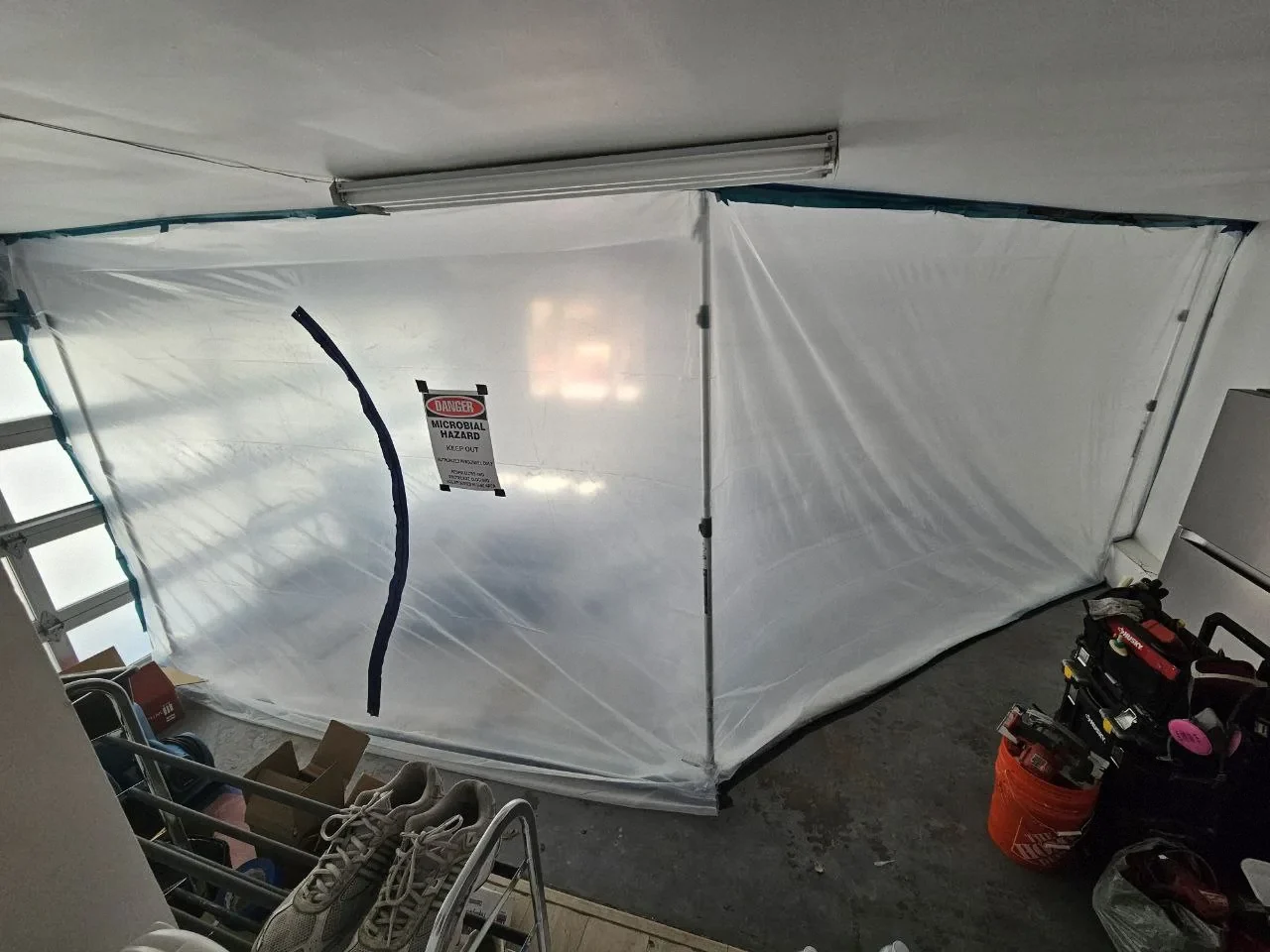
Identify the water problem
A damp odor or visible growth should prompt an investigation of moisture, not a conclusion about a species from its color. Note the location, recent leaks, repairs and any continuing water entry. Do not disturb affected surfaces while deciding how to assess them; dust can move into other areas when materials are opened without appropriate controls.
If a pipe, roof or appliance is leaking, arrange a safe source repair. Keep occupants and pets away from the affected space. Do not enter water to reach an electrical switch or operate equipment that has become wet. Where there is an immediate threat, leave the hazardous area and contact emergency services.
Water Damage Guard provides mold remediation from San Carlos. Call (650) 550-0619 at any hour to discuss a Berkeley property. Explain what is visible, when it became wet and whether the source is still active. The appropriate work depends on the conditions found during an assessment.
Berkeley rental housing requests
The city’s residential rental inspection request form lists visible mold or mildew, plumbing leaks and roof leaks as separate conditions to identify. It asks a tenant submitting the form to certify that the owner or representative was notified. Provide an accurate description of the affected area and preserve a dated copy of your communication.
Berkeley says tenant-requested housing inspections receive priority. When inspectors identify violations, the city provides a written report and a timeline for correction. A request and an inspection outcome are distinct steps; do not assume a particular response time, finding or repair scope. Follow the city’s current instructions and provide access information as requested.
A housing inspection addresses compliance with applicable housing standards. A restoration scope addresses the affected materials and the moisture source. They can inform each other, but one should not be represented as automatically deciding insurance coverage or the exact work another professional must perform.
When planned repairs require a move
For planned temporary relocations to make repairs, Berkeley says the owner must deliver the relocation notice 30 days in advance. The city provides different instructions when relocation is required by fire or code enforcement. Eligibility and the actual notice depend on the circumstances; consult the city’s current relocation guidance before relying on a generic timeline.
Occupants should keep copies of the notice, repair communications and any temporary housing documents. Discuss access to the affected room, belongings and expected work with the owner or manager. If the proposed work changes, ask how the change affects the schedule and the arrangements already made.
An emergency may require immediate action under the direction of the responsible authority. The planned-repair notice is not a reason to remain in an unsafe unit. When uncertain about obligations or benefits, the city and appropriate housing advisers can explain the applicable process.
Owner-occupant repair assistance
Berkeley offers an interest-free rehabilitation loan for qualifying low-income senior and/or disabled owner-occupants, including non-emergency roof or defective plumbing repairs. The city reports a waitlist. The program is a possible resource for eligible source repairs; it is not a promise of immediate funding or coverage for all mold work.
Ask the city about current eligibility, timing, application requirements and the repairs it can fund before relying on the program. Keep a separate description of the leak, assessment and any proposed remediation. Program rules, insurance coverage and a private contractor’s scope are separate questions.
If the source is active, make decisions based on safety and urgency while understanding any program conditions. An old leak record can help identify a pattern, but a current inspection is needed to determine whether water is still entering.
Define what needs to be assessed
Moisture can travel from a window or pipe into adjacent finishes, cabinets or flooring. Ask the assessor to identify the visible boundary, likely source and areas that cannot yet be examined. A single moisture reading is not a species test or a complete map of a concealed cavity. Opening an assembly may be necessary, but the decision should be explained and coordinated.
Visible growth and recurring moisture are useful observations to report. A smell, stain or image alone cannot establish a health diagnosis. People with symptoms or health concerns should consult a qualified health professional. If testing is proposed, ask what decision the test will inform and how results would affect the scope.
EPA guidance emphasizes correcting the moisture problem along with cleaning affected material. That is general technical guidance, not a Berkeley-specific fact or a guarantee that one method fits every property. The assessment should account for the construction, the extent of exposure and the occupants.
Protect unaffected rooms
Before work begins, discuss the route workers and materials will take, the work boundary and how nearby contents will be protected. Disturbing a damaged wall can release dust. The method and protective measures should match the actual scope and conditions rather than a generic room count.
Porous furnishings, wall materials and hard surfaces may need different handling. Ask why an item is proposed for cleaning or removal and what will happen if the extent is larger than expected. Do not mix cleaning chemicals, and do not rely on a fragrance or a coat of paint to fix a moisture source.
For a shared building, give the manager information about adjacent rooms that have visible damage. Avoid assigning blame to another unit without evidence. Coordination may be needed for safe access or repair of a shared system.
Drying and restoring the assembly
When the source has been repaired, the remaining structure may still contain moisture. Flooring, insulation and framing can dry at different rates, and trapped water may remain out of sight. A plan should explain what will be monitored and what needs further inspection before finishes are replaced.
If plumbing, electrical or structural repairs are proposed, identify who will arrange the applicable permits and inspections. Ask the city about the specific work rather than treating every cleanup as identical. If concealed damage changes the project, document the change and revisit the scope.
At completion, request records of the source repair, the affected areas and the completed work. If dampness returns, report the new observation promptly. Earlier records can help an investigator, but they cannot establish the cause of a later event on their own.
Questions before choosing a scope
Ask what conditions support the proposed work, what remains unknown and how the source will be controlled. Request a description of the areas included, protection of the rest of the property and the handling of belongings. If additional damage is discovered, agree on how the team will communicate before expanding the work.
For a tenant, retain the repair request and any notices. For an owner, keep trade reports, invoices and insurance correspondence. A clear timeline helps distinguish a source repair from cleaning and reconstruction; it does not guarantee reimbursement or a particular housing decision.
Ask who will verify the work before a wall or floor is closed and who will respond to a recurrence. An appropriate answer is tied to the property, the material and the repair, rather than a promise that a surface can never become wet again.
Common questions
Should I notify the owner?
Berkeley’s rental housing inspection request form asks tenant applicants to certify that they notified the owner or representative of the reported problem.
Does color identify a mold species?
No. Color alone is not a reliable identification or a measure of the hidden extent.
Does a planned move use the same notice as an emergency?
Berkeley describes separate procedures. For planned repair relocations, it lists 30 days’ advance notice.
Is a rehabilitation loan guaranteed?
No. The city lists eligibility conditions and a waitlist; ask about current availability and eligible repairs.
Does cleanup replace a pipe or roof repair?
No. The moisture source must be addressed as well as the affected materials.