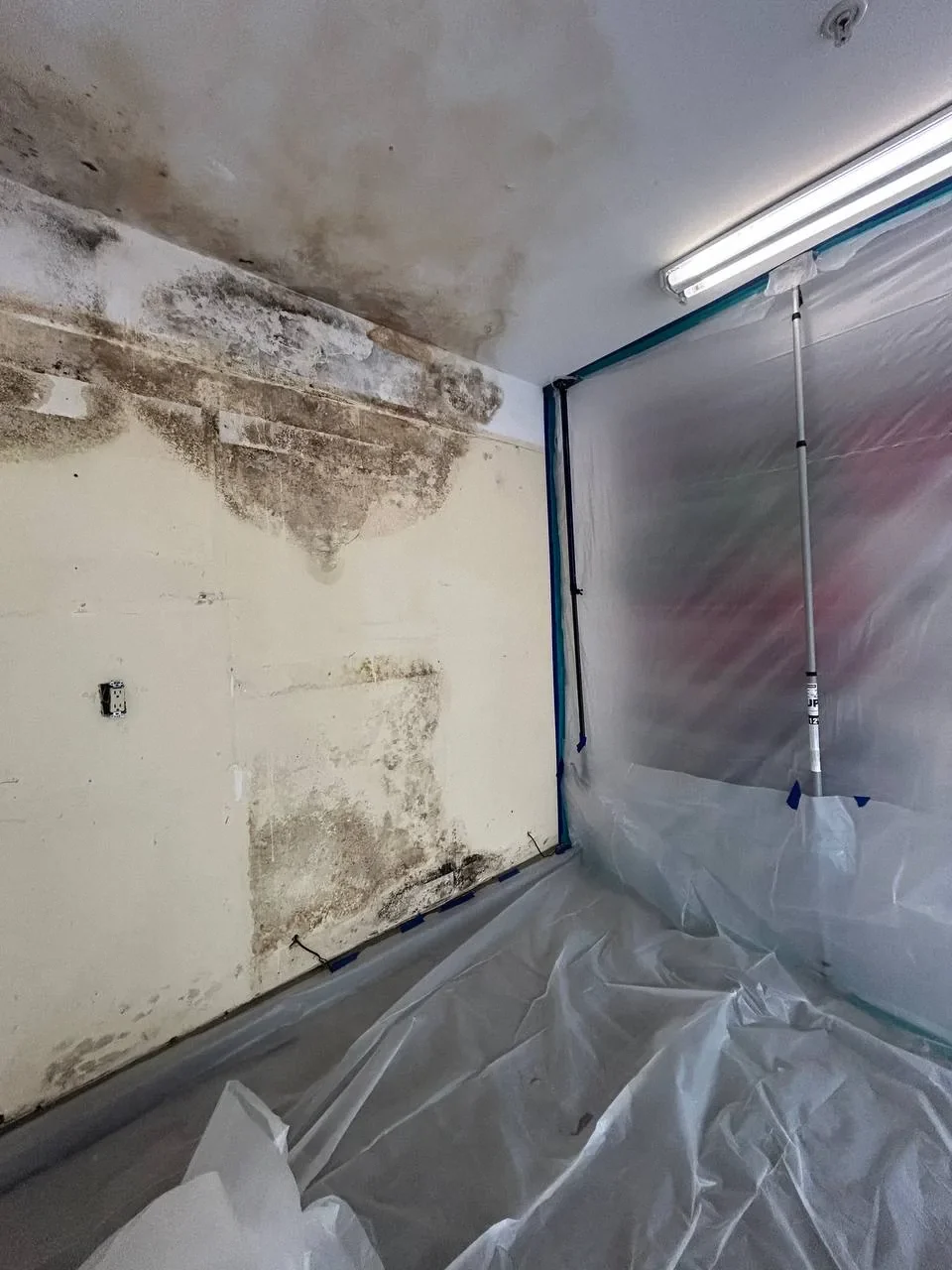
Start with the moisture
Visible growth, a damp surface or a persistent musty smell is a reason to examine the water source and affected material. The first visible mark does not necessarily show the full area behind a wall or under flooring. Avoid disturbing an inaccessible area before it can be evaluated, and keep people away from unsafe conditions.
If an active fixture leak can be stopped from a dry, safe location, closing its shutoff may limit further water. Do not step into standing water to reach a switch or touch wet electrical equipment. If the source cannot be safely reached, leave the area and arrange appropriate help.
Water Damage Guard provides mold remediation in Albany from San Carlos and takes calls at (650) 550-0619, 24/7. Describe the affected room, the suspected source, whether water is continuing and any access restrictions. The actual condition determines what can be inspected and which work is appropriate.
Reporting an unsafe building condition
Albany Code Enforcement says it responds to concerns about deterioration and identifies potentially unsafe or unhealthy buildings among matters it investigates. Describe the observed dampness, location and timing when reporting a concern. The agency’s review is a process for evaluating the actual condition; a report is not by itself a finding that a violation exists.
A tenant should notify the owner or manager and retain a dated copy of the request. In a multi-unit building, water may cross a shared wall or floor, so the manager may need to coordinate access on both sides. Avoid assigning responsibility solely because the first mark appeared in one room.
If an official restricts access, follow that instruction and discuss how to retrieve necessary belongings safely. Keep agency notices and repair communications together. A complaint, an insurance claim and a restoration assessment serve different purposes and may require different information.
A narrowly scoped ADU assessment
Albany’s ADU amnesty housing assessment lists damp habitable rooms and qualifying visible mold among conditions that can prevent a permit under that program when the specified health and safety threshold is met. The document calls for a health or code enforcement officer’s determination of visible mold and excludes minor growth on surfaces that naturally collect moisture during their proper use.
This is an assessment for the City’s ADU or junior ADU amnesty process, not a declaration that every spot in every home is substandard. If an owner is pursuing that process, provide the City with the actual conditions and ask which corrections and approvals are needed. The program’s use does not settle another property’s case.
For any affected room, distinguish the source of moisture from the visible growth. A plumbing leak, a weather opening and condensation can call for different investigations. A building’s age alone does not reveal a concealed material, the condition of a pipe or the cause of a stain.
Correction notices and immediate hazards
Albany’s administrative citation ordinance provides a reasonable time to correct certain continuing building, plumbing or similar violations that do not create an immediate danger to health or safety before fines or penalties. The citation specifies a correction date. The rule has a stated upper limit and should not be treated as permission to delay response to an immediate danger.
A recipient should read the actual notice and ask the City about the cited condition, correction and appeal process. A tenant who reported dampness should not assume that an administrative citation has been issued or that the citation alone resolves the affected materials. Keep the official decision separate from a professional’s repair scope.
If a leak is still introducing water, an assessment should identify who will repair the source and how access will be arranged. The responsible party can discuss any permit or inspection required for the proposed work with the City before an assembly is covered.
Conditional assistance for a plumbing repair
In March 2026 Albany announced a county-administered Minor Home Repair grant for eligible low-income owner-occupied households, with urgent plumbing among the possible repairs. Income, ownership, program scope and funding matter. The notice does not promise a mold remediation rebate or automatic payment for every leak.
An owner considering assistance can ask the administering agency whether the proposed source repair is eligible and what approvals are required before work. A grant decision is different from a code determination or insurance coverage. Check current availability because program funding and terms may change.
Keep a description of the observed source and any professional findings. If an affected assembly also needs cleaning or drying, ask which portion of the work, if any, is eligible rather than assuming a plumbing grant covers the whole restoration project.
Evaluate affected materials
Moisture may travel underneath floor coverings, behind cabinets or into wall cavities. Ask the restoration professional what can be inspected, which areas remain inaccessible and what observations support the proposed scope. A surface that looks dry may conceal material that needs further assessment.
Cleaning, removal and replacement decisions depend on the material and exposure. A hard surface, porous furnishings and concealed insulation do not necessarily call for the same treatment. Discuss how the work area will be separated from unaffected spaces and how items will be moved without spreading residue.
If an assembly is opened and the findings differ from the original assessment, request a revised description. Preserve both sets of observations. The record should make clear which conditions were seen, which were inferred and what further access is needed.
Before moving belongings, ask how they will be separated from unaffected items and whether a specialist needs to assess delicate materials. The condition of each item matters. If the work area is occupied or shared, agree on a safe access route and a contact who can coordinate entry. Do not move material out of a restricted space without following the responsible authority’s instructions.
Source repair, drying and records
Addressing visible growth without correcting continued moisture can leave the underlying condition unresolved. Coordinate the source repair with assessment of materials and drying. Before finishes are installed, ask how remaining moisture will be evaluated and which inspection requirements apply to the actual repair.
Take photographs only when access is safe and keep a timeline of repair requests, professional findings and any notices. If an insurance claim is being considered, ask the insurer what documentation it needs before disposal when circumstances allow. Coverage depends on the policy and facts, not the existence of a city complaint.
For mold remediation in Albany, call Water Damage Guard at (650) 550-0619. The San Carlos-based company accepts calls 24/7. Explain which rooms are affected, any known water source and any directions from the owner, manager or authority.
A record should also identify the rooms that were not accessible. If the owner later opens a closed area, compare those findings with the earlier assessment and discuss any change in scope. This helps the people performing source repairs and restoration coordinate their work without assuming that the first inspection revealed every affected component.
When a repair is complete, ask for a description of what was addressed and any remaining follow-up. Keep communications with the manager and any city notices alongside that description so the sequence is clear to everyone responsible for the property.
Related guides and services
Common questions
Can Albany inspect a potentially unhealthy building?
The City lists inspection of potentially unsafe or unhealthy buildings among code enforcement matters. A complaint is not itself a finding of a violation.
Does the ADU amnesty mold assessment apply to every home?
No. It is a city assessment for the ADU or junior ADU amnesty process, with specified conditions and an officer determination.
Does Albany offer automatic payment for mold remediation?
No. Its 2026 notice describes a conditional county minor home repair grant that can include plumbing; it does not promise payment for mold remediation.
Can I assume a repair deadline from a general citation rule?
No. The City’s correction-period rule has conditions and excludes immediate dangers. Review the actual notice with the City.
Should visible growth be cleaned before a leak is fixed?
The water source and affected materials both need assessment. Continued moisture can undermine a cleanup.