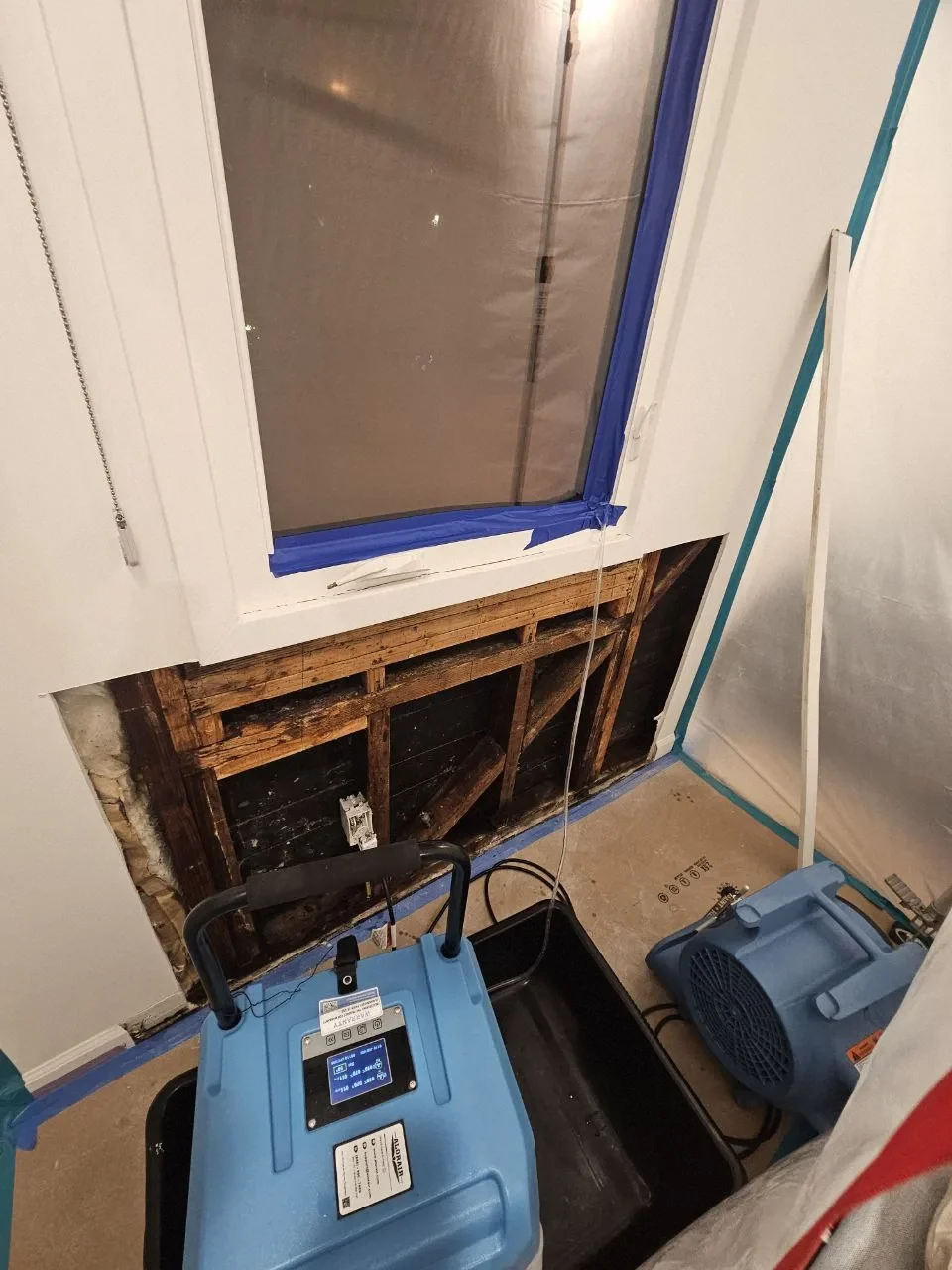
Water below the living space
Water in a crawl space or basement can affect structural materials, stored belongings, insulation, utilities, and indoor conditions. Water Damage Guard provides crawl space and basement drying; call (650) 550-0619, 24/7, to describe the water, the access point, and any known source. The work begins with a safe assessment and a plan suited to the space, the water, and the building.
A basement and a crawl space are not interchangeable. A basement may contain finished rooms, appliances, and stored property. A crawl space may offer limited access beneath the floor and contain ducts, piping, wiring, soil, and supports. The way water enters and the ability to reach affected materials shape the response in each setting.
Do not enter a flooded or unsafe space
Stay out of standing water, especially where electrical equipment or wiring may be involved. Do not go into a flooded crawl space to reach a valve, pump, or stored item. A low space can also contain unstable materials, sharp debris, contaminated water, and other hazards that are hard to see. If there is a possible shock hazard, contact the utility or a qualified electrician from a safe location.
If outside flooding has affected the building, follow emergency instructions and wait until professionals say reentry is safe. CDC warns that floodwater may contain sewage, chemicals, and other harmful substances. Do not judge its safety by appearance. Tell the person arranging an assessment if the source could be a sewer backup, an overflowing fixture, outside water, or something unknown.
From a safe place, note where you saw water, whether it is rising, and whether an appliance or pipe is still leaking. If an accessible water shutoff can be reached without entering the affected area, it may limit a plumbing leak; do not take risks to reach it. Notify the owner or building manager in a rental or shared property so access and source repair can be coordinated.
Finding the route of water
Water below a home can come from a plumbing leak, a failed appliance, surface runoff, drainage problems, groundwater, or sewer backup. The visible pool does not identify the cause. A plumber, drainage specialist, wastewater agency, or other qualified party may need to investigate. Provide details about rainfall, fixture use, a pump alarm, or earlier incidents without assuming that any one observation proves the source.
A basement can receive water through an opening, a drain, a wall-floor joint, or a plumbing failure. In a crawl space, water may accumulate on the ground or reach framing and insulation from above. The assessment should distinguish active entry from water left by a past event and identify what must be repaired or monitored to prevent continued intrusion.
If a sump pump is present, do not handle its electrical connections while they are wet or while standing in water. A qualified professional can evaluate its condition and the discharge route when access is safe. Pump operation alone does not establish why water entered or whether surrounding materials are dry. Discuss the need for a separate source repair before assuming the problem is resolved.
Assessing the affected materials
When entry is safe, the assessment considers the water level, path, source, accessible materials, and condition of the space. Basement flooring, wall finishes, insulation, appliances, and stored items may be affected. In a crawl space, relevant components may include subflooring, framing, insulation, ground covering, pipes, and ductwork. The actual scope depends on what water contacted and what can be reached.
Water may travel beyond the visible pool. A damp joist, wet insulation, or moisture beneath a basement floor covering may not be obvious from an access door. Moisture measurements can help evaluate accessible materials and monitor changes, but one reading does not describe an entire concealed assembly. Ask which areas were inspected and which remained inaccessible.
If the proposed work requires opening a wall, floor, or other assembly, discuss why, who can authorize it, and how the opening will be repaired. Older materials may contain asbestos or lead; seek appropriate professional guidance before disturbing suspected materials. A limited space can make protection and removal more complex, so ask how adjoining areas will be kept separate.
Removing water and addressing contamination
Accessible water can be removed once hazards, power, and the source have been evaluated. The method depends on depth, access, contamination, and the configuration of the space. Removing the visible pool does not necessarily address moisture in wood, concrete, insulation, or stored contents. Further evaluation is needed to determine what remains wet and whether materials can be cleaned and dried.
A sewage backup or outside flood requires a contamination-conscious plan. Avoid moving affected items into clean rooms without discussing how they will be handled. Some porous materials and belongings may not be possible to clean adequately after exposure. Ask what is proposed for cleaning or removal, how items will be documented, and where material will go.
EPA warns against mixing cleaning products or adding bleach to other chemicals. Applying a product is not a substitute for correcting the source, removing soil, and addressing damaged material. If chemicals, fuel, or an unknown substance may have entered with the water, disclose that before work starts so the appropriate specialist can be involved.
Drying the structure
Drying addresses moisture remaining in affected building materials after accessible water has been removed. The plan depends on access, air conditions, the materials, and safe power. A crawl space with limited clearance or a basement with several floor layers presents different challenges from an open room. Equipment placement should reflect the actual space rather than a fixed arrangement.
Repeated observations and readings in accessible materials can help evaluate progress. Results need interpretation in the context of each material and instrument. A dry-looking surface does not prove that every layer behind it is dry. Ask how the work will be monitored, what remains inaccessible, and what conditions must be met before insulation or finishes are replaced.
If visible mold is present, do not disturb it or direct fans at it. EPA cautions that fans can spread mold; the growth and underlying moisture must be addressed. Water-affected heating or cooling components should be evaluated before operation. A qualified specialist may need to assess ducts, wiring, or equipment separately from the drying work.
Basement contents and finished rooms
A finished basement can contain carpet, wall finishes, cabinets, furniture, and personal records. Each may respond differently to water and contamination. Identify valuable or sentimental items before they are moved, and photograph them from a safe position if possible. Ask whether contents need a separate evaluation and how items proposed for disposal will be inventoried.
A floor covering can conceal moisture in its backing or the surface below it. A wall finish can hide wet insulation or framing. If an opening or removal is proposed, ask how the decision was made and what repair will follow. Replacing a finish over a wet layer can hide an unresolved issue rather than restoring the room.
Appliances exposed to floodwater or sewage should not be operated until appropriately evaluated. Do not reconnect or test wet electrical equipment yourself. The cleanup plan should identify who is responsible for assessing the affected systems and what must happen before the basement can return to normal use.
Crawl space considerations
Access, clearance, ground conditions, and ventilation affect how a crawl space can be inspected and dried. Standing water may be visible at one access point while other areas remain unreachable. Ask the team to describe the limits of the inspection and whether additional access is needed. Do not enter yourself to verify a finding if the space has not been assessed as safe.
Wet insulation or a damaged ground covering may require a decision about removal and replacement. The presence of water does not establish that a particular encapsulation system, drainage installation, or other improvement is automatically needed. Ask what problem each proposed measure addresses, whether a different specialist is required, and how the source of water will be corrected.
A crawl space may contain ducts, plumbing, and wiring that cross the affected area. Those systems can require separate evaluation by appropriate trades. If water entered from above, the source may be in a living space or utility line rather than below the house. Coordinate repairs so the drying work is not undermined by continued leakage.
Timing and the return to use
The time required depends on water depth, source repair, access, contamination, materials, and drying conditions. A confined space with limited access may take a different course from an accessible basement floor. EPA recommends prompt drying to help prevent mold, but its general 24-to-48-hour prevention guidance is not a completion guarantee for a particular property.
Ask for updates as the work progresses and for a description of any newly discovered conditions. Before replacing insulation, a floor, or wall finishes, discuss how the underlying materials were evaluated and whether the source is controlled. If the scope changes, understand the proposed work and authorization before it proceeds.
Use of the area depends on safety and the work remaining. Ask the appropriate professionals when access, utilities, and affected rooms are ready for normal use. If a stain, odor, or water returns, report it and investigate the cause rather than assuming that another round of surface drying will solve it.
Insurance and documentation
Photograph damage only when safe, and keep a record of the source, the affected rooms, and necessary emergency work. If you plan to report a claim, contact the insurer promptly and ask how it wants damaged materials and belongings documented. Keep the plumber's or drainage specialist's findings, invoices, drying records, and correspondence together.
Coverage depends on the policy and the cause. California Department of Insurance guidance identifies flood and seepage among common homeowners policy exclusions, while sudden accidental water damage is generally covered under many policies. A separate flood policy or endorsement may affect the result. Ask your insurer about the specific event; a drying assessment does not determine coverage.
If additional damage is revealed after access is obtained, document it and notify the insurer as appropriate. Ask for the changed scope and any required authorization before additional work. A clear record helps distinguish the source repair, water removal, drying, and later reconstruction.
Common questions
Can I enter a flooded crawl space?
Stay out until it has been assessed as safe. Standing water can conceal electrical, structural, contamination and access hazards.
What causes basement water?
Possible sources include plumbing, drainage, outside water and sewer backup. The actual route and cause require investigation.
Does pumping remove all moisture?
No. Water may remain in flooring, framing, insulation and other materials after the visible pool is removed.
Should I turn on a wet sump pump?
Do not handle wet electrical equipment or stand in water to reach it. Ask a qualified professional to assess the system.
How long will drying take?
It depends on the source, access, water depth, materials and conditions. Progress should be reviewed as the work proceeds.
Does homeowners insurance cover basement flooding?
Coverage depends on the cause and the policy. Flood and seepage are often excluded, while separate coverage or an endorsement may apply.
Sources
- CDC: Floodwater safety Checked
- EPA: Flooded home Checked
- EPA: Flood cleanup and indoor air Checked
- California Department of Insurance: Residential insurance Checked