Water damage restoration in Sunnyvale: a safe response
Keep people away from standing water, electrical equipment that may be wet and any ceiling or floor that looks unstable. Do not cross a flooded area to reach a breaker. Leave if conditions are unsafe, and call 911 for an immediate threat. If a fixture valve is accessible without entering danger, turning it off may stop that source; otherwise wait for qualified help.
Sunnyvale’s sewer system management plan lists 408-730-7400 for dispatch. Cal Water says portions of Sunnyvale are within its Los Altos Suburban service district. The correct utility depends on the address and the problem, so check the provider before reporting a water service issue. Explain whether the water is continuing to enter and where it first appeared.
If you occupy a rented or shared building, notify the owner or manager promptly. Note the time, the affected rooms and any visible route of water. Photographs from a safe position can be useful to the people assessing the building and to an insurer. A suspected source helps direct the investigation, but it should not be treated as a confirmed diagnosis before inspection.
Finding the source before rebuilding
Water can travel away from a failed fitting, an appliance or an exterior opening before a stain becomes visible. A ceiling mark below a bathroom, moisture at a cabinet base or a damp garage floor each needs a closer look. Ask which spaces can be inspected, where readings suggest additional moisture and whether an opening is necessary to understand the concealed condition.
Sunnyvale’s recommended 2026/27 projects budget describes about 330 miles of city water mains and says many are more than 50 years old. This is a description of public infrastructure in a budget document. It does not identify the material, age or condition of a private supply line, and it does not prove the cause of a leak in a home.
Provide any available history of repairs or recent water use, but avoid assuming that all buildings of the same age have the same plumbing. A plumber can investigate the line, while a restoration assessment considers the materials affected by water. If either trade discovers a different condition after access is opened, update the scope and explain what remains uncertain.
When water may be coming from beneath a slab, ask the appropriate repair professional to locate and stop the leak before affected flooring is dried.
Rainfall and local drainage context
Valley Water describes upgrades covering about 6.4 miles of the East Channel and 3 miles of the West Channel. Its stated East Channel objective includes protection for 1,618 parcels from a flood with a 1% annual chance. That is a project objective, not proof that the work is complete or that a particular parcel cannot flood. Ask the district or review current maps for the address.
Sunnyvale’s summer 2025 publication reported more than 200 localized flooding calls and over 600 sandbags distributed in its referenced reporting period. Those numbers describe that period and the city response; they do not predict conditions at an individual property or establish a current sandbag supply. For present operations, consult the responsible agency.
After a storm, document whether water came through a doorway, around a roof opening or upward from a drain. Do not enter flowing water or approach a damaged utility. An interior cleanup can address water already present while an owner arranges a separate investigation of exterior drainage. Both must be coordinated so that new finishes do not hide an unresolved entry path.
Assessing the affected materials
An assessment considers the type and amount of water, the duration of wetting and the materials involved. Water below a floor covering, behind a baseboard or inside insulation can remain after the visible surface has dried. Measurements can guide the examination when interpreted with the material and surrounding conditions, but a reading alone does not prove a source or describe an inaccessible cavity.
Ask what will be inspected and what may need to be opened. In a shared building, another unit or a common utility space can be involved; the owner or manager may need to arrange access. A plan should explain which materials may be cleaned or dried, what may require removal and how the team will communicate if concealed damage changes the work.
Keep a record of what was found, where equipment was used and which rooms were inaccessible. That information helps coordinate source repair and later reconstruction. A property-specific assessment is more useful than a fixed assumption that the same material must always be removed or can always remain in place.
Extraction, drying and contents
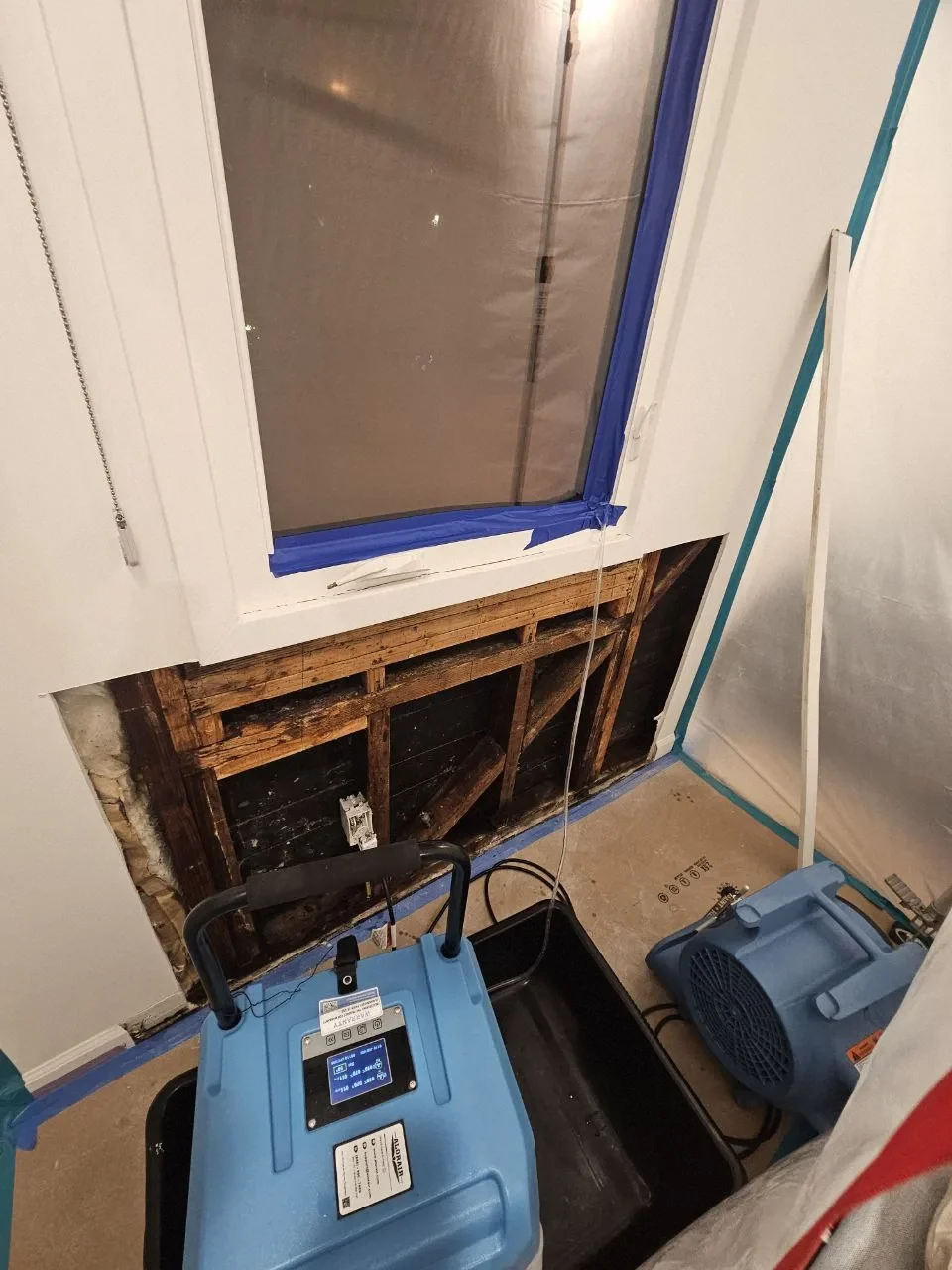
When the source is controlled and the space is safe, extraction can remove accessible standing water. Drying may then address wet structural and finish materials. The approach depends on the condition and composition of those materials, the source of water and whether an assembly can be accessed. Wastewater or outdoor runoff requires a different handling decision from an ordinary clean supply leak.
Agree on an unobstructed route for equipment and affected contents. Protect areas that were not wet, and discuss occupied rooms, pets, noise and safe power before equipment is placed. The owner should know which belongings are being moved, cleaned or discarded and have a chance to document them when it is safe.
Check progress over time. A dry-looking surface may cover an undried layer. Before closing an opening or replacing finishes, confirm that the source has been addressed and that applicable repairs and inspections have been coordinated. If water returns during the work, the drying plan may need to change.
Where repair permits fit
For applications on or after January 1, 2026, Sunnyvale’s residential water-heater handout says a plumbing permit is required before replacement. This is one specific example. A wall opening, a pipe replacement and a cosmetic finish repair can involve different scopes, and the Building Safety Division should determine which approvals apply to the actual project.
When speaking with the city or a contractor, describe what is being replaced and whether the location or system is changing. Clarify who will obtain the necessary permit and schedule inspections. If hidden conditions require work beyond the original description, ask whether the application or inspection sequence needs to be updated.
An emergency response, source repair and reconstruction should be planned together. Drying a room does not replace a plumbing repair, and a new fixture does not prove that adjacent wet materials have dried. Records of the work and inspections give the owner a clearer basis for the next stage.
Rental and shared-building coordination
The U.S. Census Bureau reports that 43.8% of occupied Sunnyvale housing units were owner-occupied in its 2020–2024 ACS estimate. This is a citywide tenure estimate, not a statement about the condition of any property. For a resident in a shared building, identifying the person who can authorize access and repair is an important early step.
Notify the responsible owner or manager about the active condition and retain a dated record. If water crosses from a neighboring unit or a common pipe, access may require coordination among several parties. A restoration team can document the affected materials, while the owner and appropriate trade determine how the source will be repaired.
If a room is temporarily unavailable, discuss how occupants will use the rest of the property and who receives updates. The presence of a leak does not itself determine insurance coverage or a tenancy remedy. Ask the insurer or appropriate housing resource about those questions, and keep relevant records together.
Handling construction debris responsibly
The SMaRT Station’s December 2025 rate schedule lists wallboard with mixed construction and demolition debris. It also excludes hazardous waste and notes that loads are subject to inspection. This is a description of the schedule and facility acceptance conditions, not a promise that any particular wet or contaminated load will be accepted.
Before disposal, identify the material and ask the facility or hauler about current rules. A restoration scope should explain what is being removed and how it will be handled. If hazardous material is suspected, the appropriate specialist and disposal requirements need separate attention. Do not mix unknown materials into an ordinary debris load on the assumption that all wallboard is alike.
Keep photographs and invoices when useful for the owner or insurer, and follow their instructions where safe. The source repair remains important even after damaged finishes are removed; replacing them while water is still entering can repeat the damage.
When a contractor prepares a debris load, ask what types of materials are included and where they are intended to go. A facility’s published schedule can change, and the presence of insulation, coatings or other materials may affect acceptance. Confirm the current conditions before arranging transport.
Sunnyvale service area and next steps
City neighborhood resources identify Cherry Chase, Lakewood Village, Ortega Park and Raynor Park, while the city’s consolidated plan identifies the Heritage District. These names help describe the service area; they do not establish a specific building’s construction, water supplier or flood risk. Each address should be assessed on its own conditions.
Water Damage Guard is based in San Carlos, CA 94070 and serves Sunnyvale. Call (650) 550-0619, 24/7, to discuss water damage restoration. Explain which rooms are affected, whether the source has stopped and whether wastewater or electrical hazards may be involved. An assessment determines the appropriate scope.
- Sunnyvale neighborhood association map
- Sunnyvale 2025–2030 consolidated plan
- Mold remediation in Sunnyvale
- Sewage cleanup in Sunnyvale
- Rental water leak responsibilities
- Condo upstairs leak hoa insurance
- Slab leak repair options
- Flood damage restoration process
- Additional living expenses water damage
- Neighbor water damage evidence
- What is a slab foundation
- Flash flood facts and safety
Common questions
Does Sunnyvale have one water provider for every address?
No. Cal Water identifies portions of Sunnyvale within its Los Altos Suburban district. Check the provider for the specific address.
What is the city sewer dispatch contact in Sunnyvale’s plan?
Sunnyvale’s sewer system management plan lists 408-730-7400 for dispatch.
Does the East Channel project guarantee a home cannot flood?
No. Valley Water describes a project objective for a defined set of parcels; it is not a guarantee for an individual property.
Did the reported 2025 sandbags establish current availability?
No. The figures describe the period reported in the city’s summer 2025 publication. Check current availability with the responsible agency.
Is a Sunnyvale water-heater replacement permitted work?
The city’s 2026 handout says a plumbing permit is required before replacement for applications on or after January 1, 2026.
Can any wet wallboard go to the SMaRT Station?
Do not assume that. Its December 2025 schedule lists wallboard as mixed construction debris but excludes hazardous waste and makes loads subject to inspection. Check current acceptance.
Sources
- Sunnyvale sewer system management plan Checked
- Cal Water Los Altos Suburban District Checked
- Sunnyvale recommended 2026/27 projects budget Checked
- Valley Water East and West Channels project Checked
- Sunnyvale summer 2025 city publication Checked
- Sunnyvale 2026 residential water-heater handout Checked
- U.S. Census Bureau QuickFacts, Sunnyvale Checked
- SMaRT Station December 2025 construction debris rate schedule Checked
- Sunnyvale neighborhood association map Checked