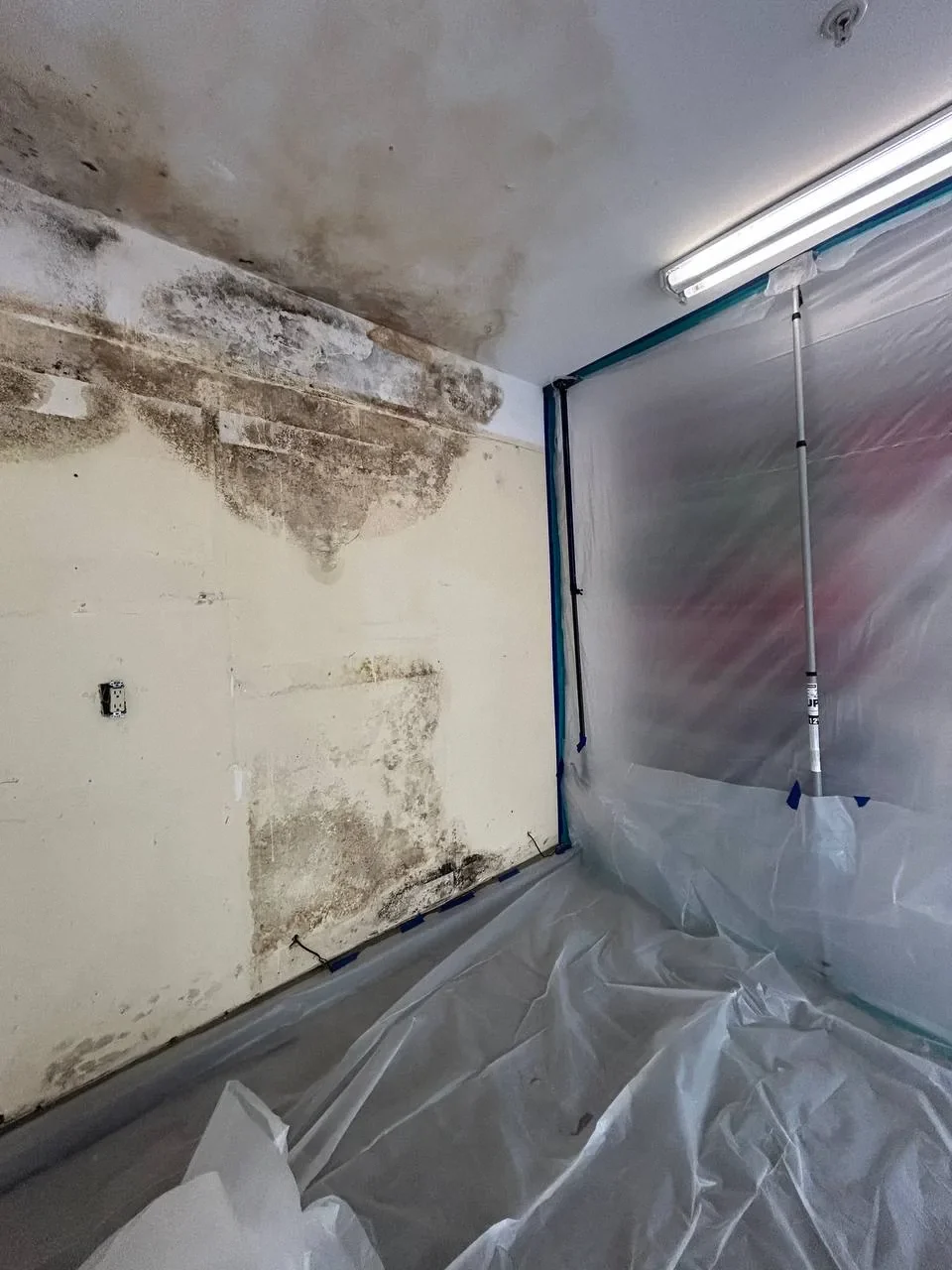
A moisture problem needs a source investigation
A musty smell, recurring stain or visible growth can indicate that a material has been wet. The observation alone does not show the cause, the size of an affected area or a particular species. A roof opening, a plumbing leak and condensation need different corrections. Identify any active source and arrange for it to be addressed as part of the cleanup plan.
Keep occupants away from unsafe conditions and avoid disturbing suspect material while the area is evaluated. Blowing air at a dusty patch can move particles into other rooms. If a person has a health concern, discuss it with a qualified health professional. Take photographs from a safe position and note when moisture was first observed.
For a shared or rented property, report the condition to the owner or manager and identify who can authorize access. A leak may involve a common roof, a neighboring unit or a concealed line. The information available at the first visit may change once the assembly is opened.
A documented local housing concern
Sunnyvale’s 2025–2030 consolidated plan reports that rehabilitation stakeholders described water damage from leaking roofs and rot affecting floors or stairs in some local mobile homes. This is a report of conditions identified by stakeholders, not a statistic about all mobile homes or an assertion that a particular property contains mold.
When moisture appears near a roof or wall, document the actual path and arrange a qualified evaluation of the source. A ceiling stain can have more than one cause. Cleaning an interior surface without correcting the entry point can leave material exposed to another wetting. The scope must reflect what is observed at the individual home.
Repair assistance and program eligibility
The city’s consolidated plan describes its Home Improvement Program as helping eligible lower-income homeowners address deferred roof maintenance and roof repair or replacement. The description is a planning-period source, not a guarantee of current enrollment, payment or eligibility for a specific remediation project. Ask the city about present availability and the work it covers before relying on assistance.
The source repair and cleanup may be separate scopes. If a roof is allowing water in, the owner should understand who will evaluate and repair it, how access will be coordinated and when the affected interior can be dried. A program application does not stop an active leak or establish that every proposed expense will be covered.
Local housing and dispute resources
Sunnyvale’s consolidated plan identifies Project Sentinel as a provider of fair-housing counseling and tenant-landlord dispute resolution, and Bay Area Legal Aid as a resource for eligible low-income residents with habitability issues. These organizations have their own eligibility rules and do not replace a physical assessment of moisture damage.
For a rental, keep a dated description of the problem and copies of communications about access and repairs. Ask the relevant resource how its services apply to the tenancy. If work will affect the use of a room, discuss the proposed schedule and who can make decisions about belongings or common areas.
Sunnyvale’s municipal code provides relocation assistance in circumstances covered by its no-fault just-cause protections; a city staff report lists substantial remodel and a government order to vacate among possible no-fault circumstances. The actual tenancy, eligibility and reason for displacement matter. Mold cleanup alone does not automatically establish a right to payment.
Assessment of materials and hidden spaces
The first inspection looks at the visible condition and the accessible adjacent surfaces. Moisture may be behind baseboards, below flooring or inside a cabinet that has been wet. Readings can help determine where further examination is appropriate, but their meaning depends on the material and surrounding conditions. A meter does not identify all hidden growth.
Ask the team to explain which areas it could reach and why any opening is proposed. An owner or manager should authorize access before a wall or floor is opened. If the work reveals additional wet material, a damaged pipe or structural deterioration, pause and discuss the changed scope with the responsible person.
Independent inspection or sampling can be appropriate in some circumstances. Clarify the question a test is intended to answer and how the result will affect the work. No sample repairs a leak or dries a concealed assembly. The physical condition and moisture source still need attention.
Containing and cleaning the work area
The plan should identify which materials can be cleaned and which may need removal because of their condition or the ability to clean them effectively. A hard surface is different from wet insulation or a deteriorated porous finish. Decisions should reflect the observed material and source rather than a universal promise that everything can be saved or must be discarded.
Containment and a planned route for moving debris can limit disturbance to unaffected areas. Discuss how occupants, pets and belongings will be protected, where equipment will be placed and which areas must remain clear. If a common corridor is involved, coordinate with building management before moving material through it.
Keep a record of removed items and photographs where safe. Ask how unexpected conditions will be handled and who will authorize changes. If a separate trade must repair a roof, pipe or wall, the cleanup team and that trade should agree on the sequence before new finishes are installed.
Drying and follow-up
After the water source has been corrected, affected materials may need drying and further checks. A surface that looks dry can conceal moisture below it. The assessment should explain what was measured, which areas remain inaccessible and how the condition will be evaluated before the space is closed.
If the symptom returns after rain or plumbing use, record the timing and location. A recurrence warrants another investigation; it should not be hidden beneath fresh paint. Keep invoices and photographs so that the next person can understand what was repaired and what was not accessible during the earlier work.
Before finishes are restored, ask the person responsible for the project whether the source repair has been completed and whether any inspection is needed. The room may appear improved while an unexamined area remains behind a cabinet or in an adjacent space. A clear record of those limitations helps the owner decide what further access is appropriate.
Store the project records somewhere accessible to both the person authorizing the work and the building manager if applicable. Note the date the source was repaired and the locations where materials were opened. This information helps distinguish a new leak from the earlier condition and gives a later contractor a more useful history than a photograph of a finished wall alone.
For a household using the property during work, identify an appropriate path around the work area and agree who will communicate any change. A shared building may require coordination with a manager for corridors or a neighboring unit. The goal is to let each trade inspect and repair its portion without exposing occupants to an unsafe area or closing a wall before the next step is complete.
Water Damage Guard serves Sunnyvale from San Carlos. Call (650) 550-0619, 24/7, to discuss the affected area and whether moisture is still present. The appropriate work depends on the condition found at the property.
Common questions
Does a stain identify mold species?
No. A stain can indicate a moisture concern, but it does not identify the material or the full extent of the condition.
Will a roof repair alone dry the interior?
Not necessarily. The source and the affected materials should be assessed as separate parts of the work.
Is city home improvement assistance guaranteed?
No. The city’s plan describes assistance for eligible homeowners; confirm current funding and eligibility.
Should I paint over a damp patch?
First investigate and correct the moisture source and assess the affected material.
When can I call Water Damage Guard?
Call (650) 550-0619, 24/7, to discuss the observed condition.