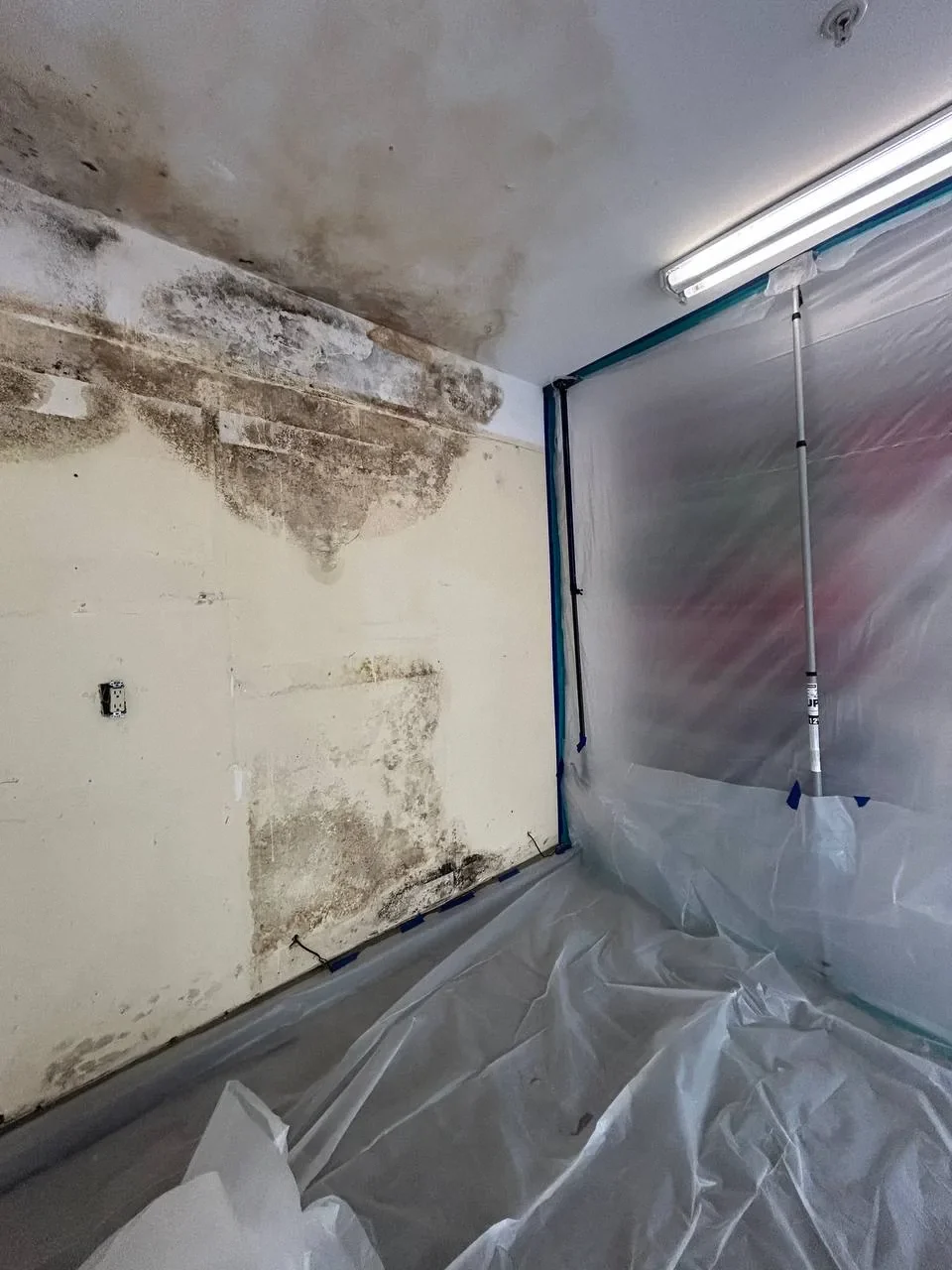
Start with the source of dampness
A stain, musty odor or visible growth warrants investigation of moisture and affected materials. It does not identify the cause or show the complete extent of a problem. A roof opening, a leaking fixture and condensation require different corrections. Ask the person assessing the property what is known, what remains uncertain and how the water source will be addressed.
Keep occupants away from unsafe material and avoid disturbing a dusty or damaged surface while arranging an assessment. A fan directed at suspect material can move particles through a room. If there are health concerns, consult an appropriate health professional. Photograph the condition from a safe place and note when it appeared.
In a rental or shared building, notify the owner or manager promptly and keep a dated record. Access to a roof, common pipe or neighboring unit may require coordination. An assessment should identify the spaces actually examined and any area that could not be reached.
The city housing service request
Santa Clara’s Building Division service request form, revised February 19, 2026, includes water damage or mold concerns associated with plumbing or roof leaks in substandard rental housing. The form is a way to describe a housing concern to the city; it is not a promise that every complaint will result in the same inspection or finding.
Provide the property address and specific observations, including the location of the leak and when it occurs. Keep copies of communications with the owner or manager. Ask the Building Division about the applicable procedure and who should arrange access. A city housing review and a restoration assessment have different purposes.
The same form refers mold, asbestos and lead inquiries to Santa Clara County Environmental Health. This is a separate environmental-health referral. It should not be understood as a statement that the county inspects every city rental or that a referral guarantees cleanup.
Help with a tenant-landlord dispute
Project Sentinel lists the City of Santa Clara among the jurisdictions it serves and describes free tenant-landlord counseling and voluntary dispute resolution for issues including repairs and maintenance. Its services are neutral and do not promise a particular agreement. Ask the provider about the tenancy and available process.
Written records help the parties understand what was reported and when. Describe the observed leak rather than assuming its cause, and explain whether access to another unit or a common area is needed. If the parties agree on repairs, clarify who authorizes the work and how the condition will be checked afterward.
A city rehabilitation planning resource
Santa Clara’s summer 2022 city publication described NCIP assistance for eligible homeowners’ health and safety repairs including roofing and plumbing. Its 2026–2027 Annual Action Plan identifies planned citywide homeowner rehabilitation funding through NCIP and a minor-repair program. These documents do not establish current enrollment or that a particular repair qualifies. Ask the city about present status and eligibility before relying on assistance.
For an owner considering repairs, separate the correction of the moisture source from restoration of affected materials. A program application does not stop a leak. The owner should know who will inspect the source, what access is needed and whether any work must be completed before a finish can be restored.
What the assessment should explain
A visible patch is a starting point. Adjacent baseboards, the back of a cabinet or the space above a ceiling may need examination if the water path points there. Moisture measurements can guide the assessment when interpreted with the material and conditions. A reading is not a complete diagnosis of an inaccessible cavity.
Ask why an opening is proposed and who is authorized to approve it. If additional wet insulation, deteriorated framing or a failed pipe appears after access is made, the responsible trade should evaluate it and the owner should receive an updated scope. Record spaces that could not be inspected rather than assuming they are dry.
Independent testing or specialist review may be useful in some circumstances. Clarify the question the test is intended to answer and how results will affect the work. Testing does not remove damaged material or correct a continuing source of water.
Handling affected material
The cleanup plan should distinguish a surface that can be effectively cleaned from porous material that is deteriorated or cannot be cleaned adequately. The source and duration of moisture, the material and the size of the affected area influence that decision. Avoid promising that all contents can be saved or that every item must be discarded.
Plan containment and a route for moving debris. Protect rooms that are not part of the work and discuss occupants, pets, equipment and access before work begins. A shared corridor may require management coordination. When it is safe, photograph items and ask the owner or insurer how the inventory and disposal decisions should be documented.
If a separate plumber, roofer or other trade must repair the source, establish how that work fits the cleanup sequence. A visible surface can be cleaned while moisture continues behind it. The people responsible for the project should know what is being repaired and who will check the result.
Organize access and decisions
Before work begins, agree who will receive updates and who can approve changes if the affected area is larger than first observed. A tenant may report a condition while an owner authorizes access to a common wall or roof. A property manager can help coordinate those roles without assuming that the moisture source lies in any one unit.
Ask which belongings need to be moved and which can remain protected in place. A paper record, upholstered item and appliance each present different handling questions after water exposure. The team should explain the proposed approach and identify items it has not examined. Keep a list of material moved to another location so that occupants can find essential belongings.
If the work area is occupied, identify a safe path to the rest of the property and discuss any interruption to normal use. The appropriate arrangement depends on the area and work, not simply on the presence of a stain. Contact the appropriate housing resource for tenancy questions, and ask the restoration team about practical access and scheduling.
When another trade must inspect a pipe or roof, share the observations and the location of any openings. Record whether the source was repaired and when the area can be checked again. This coordination helps avoid replacing a finish before the person responsible for the underlying repair has had access.
Drying, inspection and follow-up
After the source is corrected, wet materials need time and a method suited to their condition. A surface that looks dry may cover a wet layer. Measurements over time can help, but the assessment should state which spaces were not accessible. Before finishes return, confirm that the source repair and any required inspections have been completed.
If staining reappears after rain or use of a fixture, record the timing and arrange another investigation. Keep the repair documents and photographs so the next contractor can see what was opened and what was left in place. A recurrence can have a different cause from the original problem.
Water Damage Guard serves Santa Clara from San Carlos. Call (650) 550-0619, 24/7, to discuss the observed condition and any active water. The appropriate scope depends on the property assessment.
Common questions
Does visible staining prove the full extent of mold?
No. The source and affected materials need assessment, including any concealed area suggested by the water path.
Can a renter report a water or mold concern?
Santa Clara’s 2026 Building Division request form includes water damage or mold concerns in substandard rental housing.
Does a referral guarantee repairs?
No. The city form and Project Sentinel describe separate assistance routes; the outcome depends on the circumstances.
Is planned rehabilitation funding guaranteed for a particular owner?
No. The city action plan describes funding, while current enrollment and eligibility require confirmation.
Can I call after hours?
Yes. Water Damage Guard accepts calls at (650) 550-0619, 24/7.