Begin with the moisture source
A musty smell or visible discoloration can indicate a condition that deserves investigation, but neither establishes the full extent of growth or identifies its source. Describe where the condition appeared and whether a leak, overflow or other wetting is known. If water is still entering, explain that when arranging an assessment so the source can be addressed.
The U.S. Environmental Protection Agency advises correcting the moisture problem as well as cleaning mold. A surface treatment alone cannot repair a leaking supply line or an opening that admits rain. A plumber, roofer or building-envelope professional may be needed for the source; the choice depends on what is found at the property.
Avoid disturbing a large or concealed suspect area just to see its boundaries. If the affected room contains wet electrical equipment or unstable materials, keep clear until it can be assessed safely. People with health questions should consult a qualified health professional about their own circumstances rather than treating the appearance of a surface as a diagnosis.
Plan access before materials are opened
Explain who occupies the space and who can authorize work. In a rental, a resident may be the first person to notice a damp wall while a housing provider controls the repair. Ask how the owner or manager will arrange access and put the location and timing of the concern in writing. A shared wall or ceiling may require coordination with another occupant.
Photographs from a safe place and records of previous repairs help establish what was visible before work began. Note whether the condition follows rain, appliance use or an identified plumbing leak. Do not assume that a particular pipe material is present because of the building’s age. The investigation must follow evidence at the site.
Before a finish is removed, ask what area will be opened, how nearby contents will be protected and how discoveries that change the scope will be communicated. An initial assessment may leave concealed material unexamined. The owner should understand that limitation and the process for deciding whether additional work is warranted.
Assess the material and the cause together
Water can reach a wall, cabinet or floor by a route that is not obvious from the surface. The person inspecting the property should explain the observed moisture, affected materials and any areas that could not be accessed. A stain beside a fixture is a starting point for an investigation, not proof that the fixture caused all the damage.
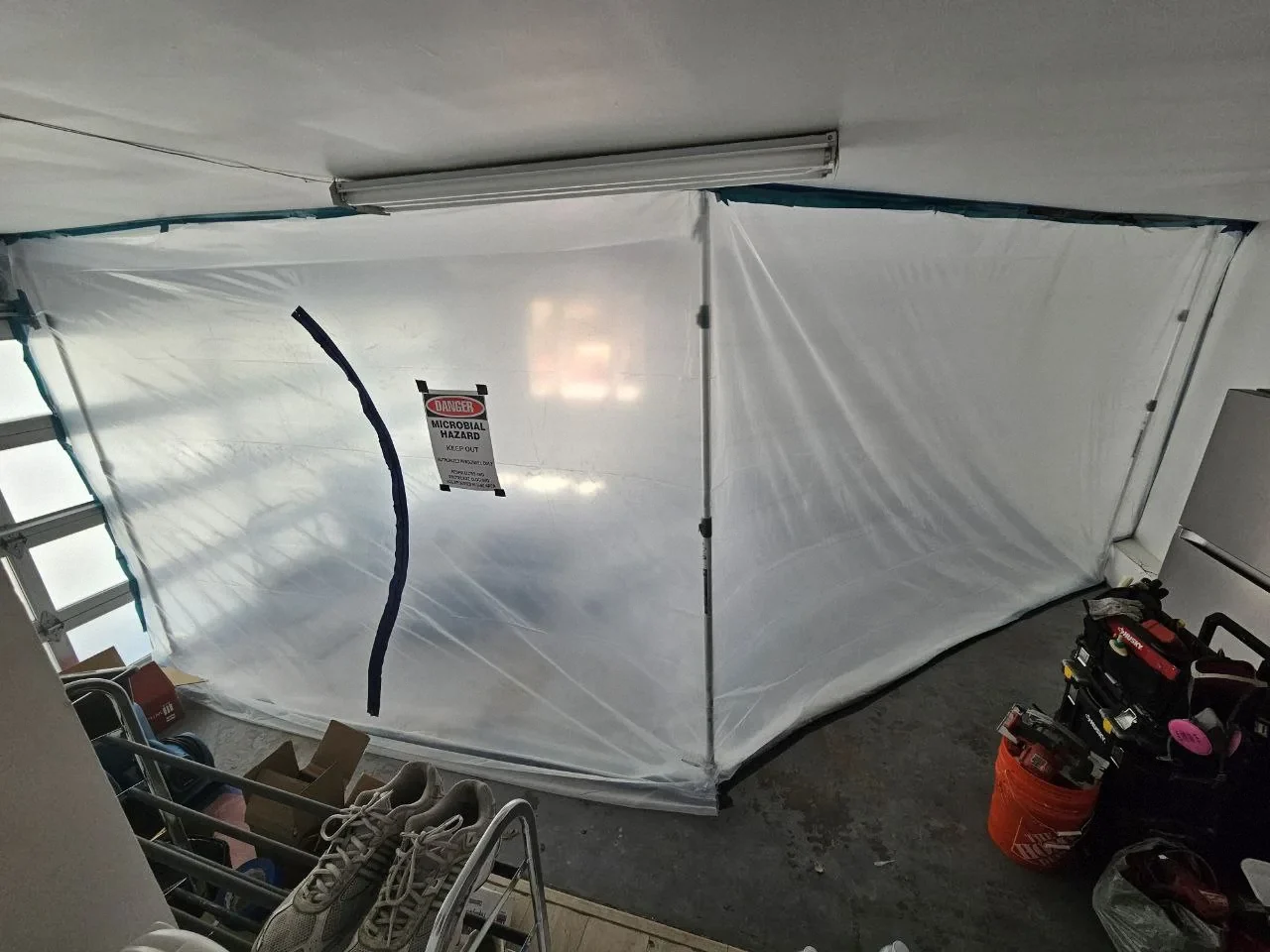
Treatment decisions depend on the material and its condition. Discuss which surfaces can be addressed in place, which may need removal and how the work area will be kept separate from unaffected rooms. If another trade must repair a source, make that responsibility explicit in the scope rather than assuming it is included in every cleanup.
Once the source is addressed, keep the repair and assessment records together. If moisture returns, document where and when it reappears and arrange a follow-up investigation. A recently replaced finish can become wet again if the source has not been corrected or a different water path was overlooked.
When source repair needs a trade permit
Campbell’s general trade permit guide lists water-line repair or replacement, water-heater installation and reroofing among typical work types. These examples can matter if the investigation identifies a failed line or roof as the source. They are not a claim that every mold assessment or cleaning project requires one of those permits.
The guide says plans are required for certain work, including utility or plumbing trenching and new plumbing fixtures, while distinguishing new fixtures from replacements. A replacement may still need a permit even when a plan is not required. Give the Building Division the actual work description and ask which application and inspections apply.
Coordinate the trade repair with any restoration or reconstruction so that required inspections can occur before work is concealed. If opening the area reveals a different scope from the original application, ask the permit holder how the change will be reviewed. The project record should reflect what was actually repaired, not merely the symptoms first reported.
Using the local complaint process
Campbell’s city reporting page lists housing code enforcement among its services and says enforcement follows a received complaint. The page states that complaint information is kept confidential. Ask the city whether a particular condition and address fall within its authority; a complaint is not itself a mold test or a substitute for investigating the moisture source.
When submitting a concern, give a clear location and factual description. Include a safe photograph if available and keep a copy of the information provided. If water continues to enter, tell the responsible housing provider as well. A complaint process, a repair request and a professional assessment can each address a different part of the problem.
For a shared building, coordinate access to the affected unit and any common area needed to investigate the source. Do not infer liability from the location of a stain. An owner, tenant or manager can seek advice about a dispute separately from taking reasonable steps to prevent an active leak from causing further damage.
Ask about repair resources where relevant
Campbell’s 2024 housing-element progress report describes ongoing efforts to inform residents about countywide rehabilitation resources and referral of eligible households. That is a historical report about a housing program, not a promise that a particular project or mold treatment qualifies. Availability, property type and household eligibility need to be confirmed with the administering organization.
If cost or access affects a needed source repair, ask the city or the relevant housing organization what current options exist and what documentation they require. A program referral does not authorize a contractor to begin work or determine insurance coverage. Keep the decision about the property’s immediate safety separate from any later application.
Where insurance is involved, ask the insurer how to document damaged materials, belongings and source repairs. Coverage depends on the policy and claim. Preserve photographs and correspondence, and discuss any questions with the insurer or a qualified adviser instead of assuming a housing assistance program and an insurance claim are interchangeable.
The handoff after remediation
Before returning a room to normal use, ask for a summary of the areas addressed and any work still assigned to another trade. Identify areas that could not be inspected and repairs that remain open. If plumbing or building work requires inspection, follow the project-specific permit process before closing the relevant assembly.
Retain the description of the moisture source, its repair and the work performed on affected materials. These records can help if water reappears or the property changes hands. A written handoff should distinguish observed results from assumptions about areas that were never opened.
Water Damage Guard accepts calls at (650) 550-0619, 24/7. Explain the affected space, known moisture source and any access restrictions. The next step depends on conditions at the property and the parties who can authorize work.
Common questions
Does a stain identify the cause of moisture?
No. The visible mark can guide the investigation, but the source and extent need to be assessed at the property.
Does every mold cleanup require a trade permit?
The work determines the permit question. Campbell lists certain water-line repairs and reroofing in its trade guide; ask the Building Division about the actual scope.
What should a tenant report?
Tell the housing provider where and when moisture appeared and whether water is still entering. Keep a record and arrange access for the investigation.
Can Campbell review a housing concern?
The city lists housing code enforcement as complaint-driven. Ask whether the address and reported condition fall within the city’s authority.
Can a rehabilitation program pay for this work?
Eligibility, covered work and available funding vary. Campbell’s 2024 report describes referrals to countywide resources; verify current terms before relying on assistance.