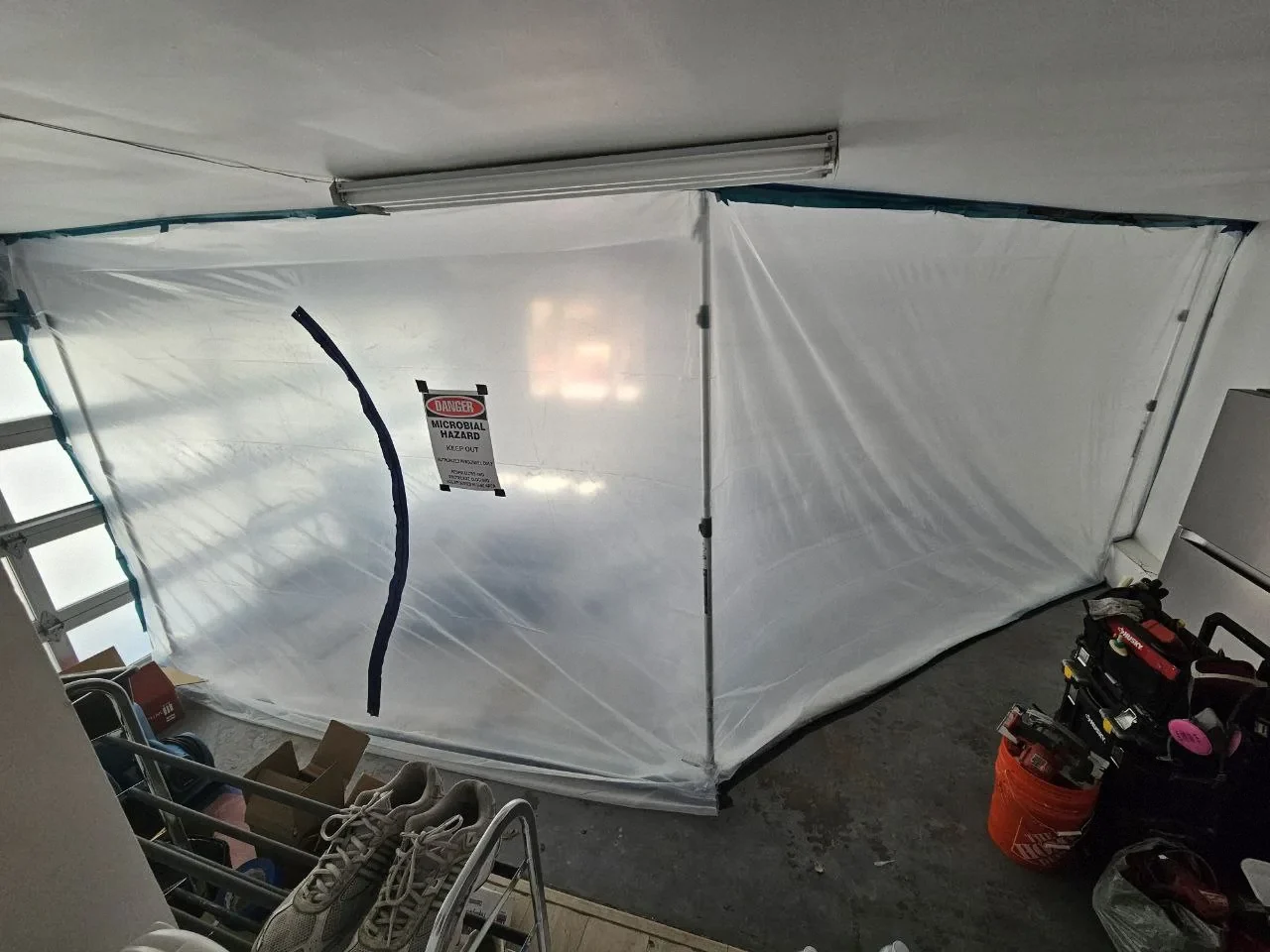
Start with the water problem
Mold remediation begins with understanding the moisture that allowed growth. A dark mark near a window, a smell inside a cabinet or a damp patch after a leak is a reason to investigate, not a reliable way to identify a species or the full extent of damage. Tell the person assessing the property when the condition first appeared and whether a leak or wetting event is still occurring.
The U.S. Environmental Protection Agency advises addressing both mold and the water problem. Cleaning a visible surface without correcting an active leak can leave the conditions that allowed growth in place. A plumbing, roof or building-envelope professional may be needed to locate and repair the source; the appropriate trade depends on the actual finding.
Do not disturb a large or concealed suspect area merely to see how far it extends. If material is unstable or access would expose occupants to an electrical hazard, keep clear and explain the situation when requesting an assessment. People with health concerns should consult a qualified health professional about their circumstances rather than relying on a photograph to determine exposure or a diagnosis.
Explain what happened before the assessment
An accurate history can change where a specialist looks. Describe a recent supply leak, an appliance overflow or rain entering through an opening if you know that occurred. Note whether the water was stopped, whether the area has been opened before and whether a musty odor is confined to one place or appears in more than one room. Say when a detail is uncertain.
Occupancy matters too. Tell the team about children, pets, workspaces and rooms that need to remain accessible. If a tenant, manager or another owner controls the area, coordinate permission for the inspection and any opening of finishes. A shared wall or ceiling can require access to more than one unit, but the presence of neighboring units does not establish that they have been affected.
Photographs made from a safe position can document the visible condition before anything is moved. Keep records of prior repairs and relevant communications. The assessment should distinguish visible observations from areas that remain inaccessible; a written scope can then describe what will be examined and what may need another decision after access is obtained.
Findings guide the scope of work
Different materials respond differently to wetting and contamination. An assessment should identify the affected surfaces and the moisture source, consider whether water has reached concealed assemblies, and explain the basis for proposed cleaning or removal. If a surface must be opened, agree on the access area and how nearby belongings and occupied rooms will be protected.
A room can need both moisture control and repair work. For example, a failed connection may be repaired by a plumber while affected wall material is addressed separately. The right sequence depends on the damage and safe access. Do not assume that a fresh coat of paint will correct a damp condition, and do not assume that every visible mark requires the same removal method.
Ask how the team will communicate discoveries that change the scope. If a wall opening exposes additional wet material, the original plan may need revision. Record who is responsible for the source repair and for returning the affected area to use. Work should be assessed on the materials and conditions actually found, not on the age of the building or a presumed pipe material.
If the source repair involves repiping
Saratoga describes a rough inspection for a house water-line repipe after the new piping is installed, fixtures are connected and the lines are under working pressure, but before sheetrock is installed. This is a local inspection sequence for that type of permitted work, not a statement that mold cleanup itself always requires a plumbing permit.
The distinction matters when a moisture investigation leads to a larger plumbing repair. Ask the plumber and the city which inspections apply before the affected wall is closed. Coordinate any inspection with the person responsible for the plumbing permit so that the correct portion of the work remains available for review.
The city also describes a frame inspection for most projects after framing, fireblocking, bracing and rough building services are in place. It does not follow that every mold project needs framing work. If a repair changes framing or other regulated assemblies, explain the specific work to the Building Division and use its direction for the project.
Replacing a wall finish
Saratoga says its Building Department does not inspect non-fire-rated sheetrock installations, including moisture-resistant applications. That statement concerns a particular inspection item. It does not remove other obligations for electrical, plumbing, structural or fire-rated work, and it does not determine the appropriate method of mold remediation.
Before a wall is finished, check that the source has been addressed and that any required trade inspections have occurred. Discuss the material that will replace what was removed, particularly where the wall forms part of a rated separation or serves a wet location. A building official or qualified trade professional can answer questions about the applicable assembly.
Keep the work record even when a particular finish does not receive its own city inspection. Photographs of conditions before closing the wall, a description of the source repair and the relevant permit record can help the owner understand what was done. They should document actual work rather than suggest a city has approved something it did not inspect.
For a rental or unresolved property concern
A tenant should tell the housing provider about an active leak or suspected mold and keep a copy of the notice. State what is visible, where it is located and whether water is still entering. The owner or manager may need to arrange access for the people investigating the moisture source and the affected materials.
Saratoga says its Code Compliance program generally investigates after receiving a complaint and does not accept anonymous complaints. It also says it cannot assure that a complainant’s identity will remain confidential. Ask the city whether the particular property concern is within its authority; the existence of a complaint process does not mean a city inspection is a substitute for restoration.
Keep the repair conversation focused on observable conditions and access. If the concern is in a shared building, ask how the affected units and common spaces will be addressed. A dispute about responsibility is separate from the need to control an active water source and evaluate affected materials. Do not infer the cause from which unit first noticed the problem.
Before the room is returned to use
Ask what was done to address the moisture source, which materials were cleaned or removed and whether any repairs remain outstanding. A useful handoff identifies inaccessible areas and any observations that warrant follow-up. The scope of a completed cleaning job is not necessarily the same as the scope of a separate plumbing or reconstruction project.
If the source was intermittent, agree on how it will be checked after repair. Rain-driven entry, for example, may require a different evaluation from a plumbing leak. Continue to report new wetting rather than concealing it with finishes. Keep the records of repairs, permits and any inspection results with the photographs of the original condition.
Call Water Damage Guard at (650) 550-0619, 24/7, to discuss the affected space. Describe the known moisture source and the limits of safe access. An assessment can then establish the next appropriate step for this property without a blanket promise about the extent of the work.
Common questions
Does visible mold identify the moisture source?
No. Visible growth can identify a place to investigate, but the source must be determined from conditions at the property.
Does all mold remediation require a plumbing permit?
Not necessarily. Saratoga’s repiping inspection sequence applies when that type of plumbing work is undertaken. Ask the city about the actual repair scope.
Should a renter report a leak?
Notify the housing provider and document the location and timing. Saratoga also describes a complaint-based code-compliance process for concerns within its jurisdiction.
Can an inspection find material behind every wall?
Concealed material may not be accessible without opening finishes. Ask what areas were inspected and what remains unknown before agreeing on the next step.
Can moisture return after cleanup?
It can if the moisture source is not resolved. Document the source repair and report any later wetting so the cause can be reassessed.
Sources
- Saratoga building inspection process Checked
- Saratoga code compliance Checked
- EPA mold and moisture guide Checked