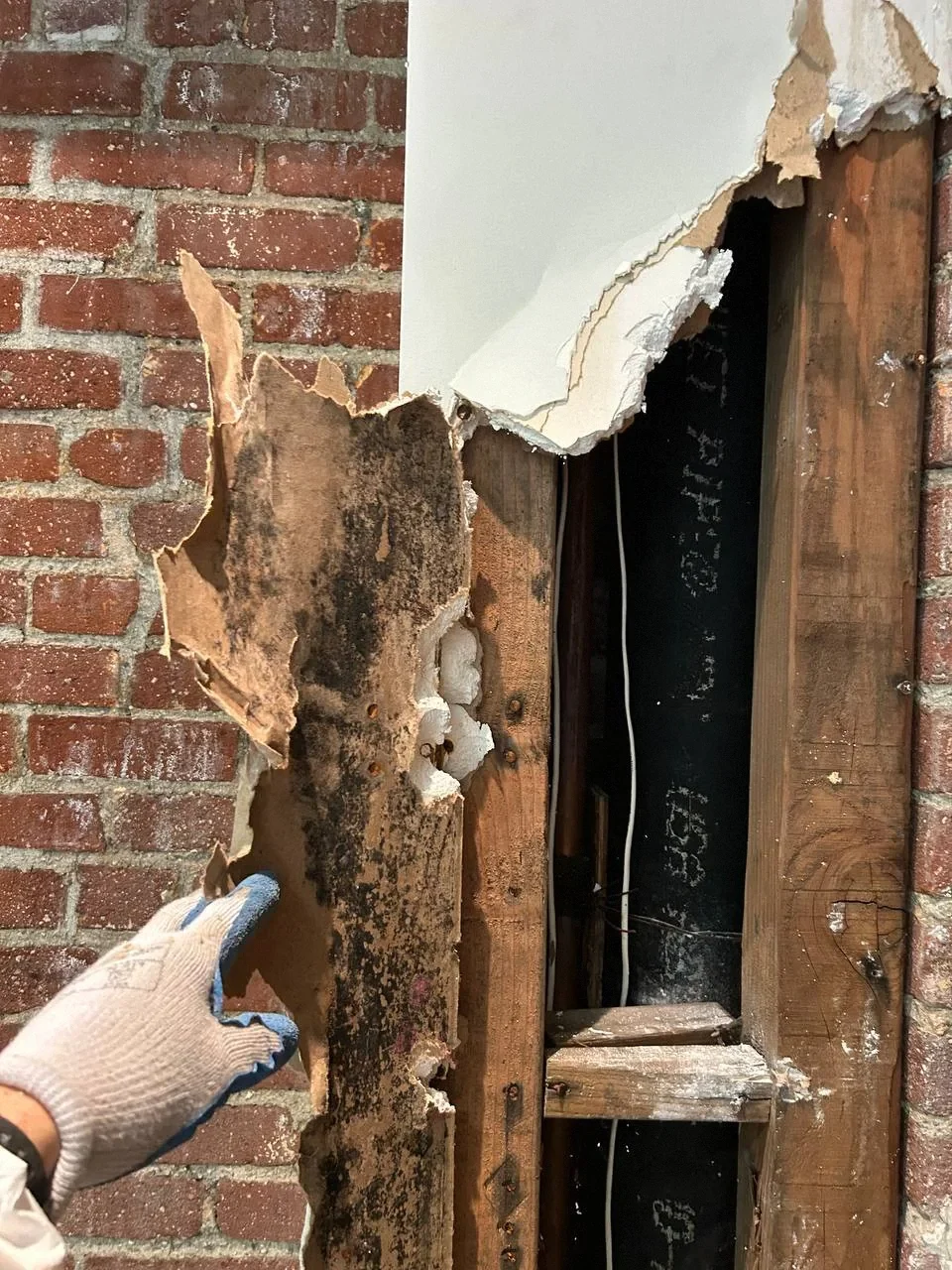
Describe the moisture problem
Explain where the damp area or visible growth is located, whether the source has been repaired and whether access is restricted. Note when the moisture was discovered and any earlier work. The source and affected materials need to be assessed at the property before treatment is planned.
Keep people and pets away from visible growth and avoid disturbing it. A stain or odor may indicate where to investigate, but neither identifies a species or establishes how far a condition extends. If water is still entering, arrange safe source control. Do not approach wet electrical equipment or enter an area restricted by an official.
A useful first record can include when the area became damp, whether the condition changes after rain or fixture use, and what has already been opened or repaired. Take photographs only where safe. A professional may need to look beyond the visible mark because water can move through a floor or wall before it appears on the surface.
Inspection of a rental
Santa Cruz’s residential rental inspection program identifies applicable building, housing and sanitation violations, sets a correction period and returns to re-inspect. The process applies to covered rentals and the conditions found during an actual inspection; it does not establish that any particular home contains a violation.
The City’s rental checklist asks inspectors to consider roof openings that admit rain and sagging or buckling ceilings that suggest leaks. These observations can guide a source investigation. A roof or ceiling issue is not a mold diagnosis, and its absence from a visible area does not prove there is no hidden moisture.
Notify the owner or manager promptly and retain a copy of your report. Describe what you observed and when. If several units may be affected, identify the person responsible for coordinating access to shared space. An owner, inspector and remediation provider may each have a different role in resolving the problem.
Housing conditions and repair timing
Santa Cruz Code Compliance includes mold among examples of substandard structures in its enforcement prioritization. The listing is not a finding about a specific property or a guarantee of inspection timing. Ask the City which office handles the condition and provide accurate information about its location and urgency.
The City’s 2026 tenant relocation guide says the inspector determines how quickly required repairs must be made based on the condition of the unit. Some work can be done with the tenant in place; other work requires vacancy. Owner-paid relocation has conditions and exceptions, including certain disasters beyond the owner’s control. Ask the City or a qualified housing adviser about the actual tenancy.
An immediate safety concern calls for the appropriate emergency response rather than waiting for a routine complaint. A housing decision also does not substitute for controlling the moisture source. Document both the communications about occupancy and the steps taken to investigate and repair the physical problem.
Assess the affected assembly
A room may contain a finish, backing, insulation and structural material. Each layer can respond differently to moisture, so an assessment should identify what is accessible, what was observed and whether further examination is necessary. A space that could not be opened should be identified as a limitation rather than described as unaffected.
Ask for a written explanation of proposed containment, treatment, removal and disposal. The water source, material and condition affect the decision. A hard surface and porous insulation do not necessarily call for the same treatment. The plan should also describe how nearby rooms and belongings will be protected during work.
If a hidden leak is discovered behind a cabinet or wall, the scope may change. Request an explanation of the new finding and who will correct it. The source repair and remediation can involve separate trades; the handoff should be clear before replacement material is installed.
If an insurer is involved, ask what photographs, estimates and receipts it needs and whether items should be inspected before disposal. An assessment of material condition and a coverage decision are separate questions. Do not enter an unsafe area merely to collect documentation.
The timing of a discovery can help distinguish an active source from material that remained wet after an earlier event. Ask the person assessing the area what additional observations would clarify that question and whether another specialist should inspect the building opening or plumbing. A single surface reading is not a complete account of a concealed assembly. Keep the assessment and any follow-up findings together so that subsequent work addresses the condition actually found.
Plan moisture control and reconstruction
A fan or new surface cannot resolve water continuing to enter from a damaged pipe, roof or opening. Ask how the source repair will be verified and which affected areas will be checked before reconstruction. If drying equipment is appropriate, discuss access, monitoring and the conditions for removing it.
Air movement should be planned around the affected material so that dust is not spread into unaffected spaces. If a heating or cooling system may have been exposed, arrange a suitable evaluation before operating it. The appropriate action depends on the condition of the equipment and the materials involved.
Before a wall or floor is closed, confirm that the people coordinating the work have addressed the source and any applicable inspection. If an opening must remain accessible, agree on temporary protection and the person responsible for it. Record changes to the schedule and any areas that still need assessment.
For an occupied building, discuss a safe route around the work and how occupants will receive updates. A shared entrance or service interruption can affect people beyond the room being treated. Coordinate those details with whoever has authority over the property and common areas.
When belongings are stored against an affected wall, discuss whether they can be moved safely and where they can be held during the work. Separating potentially affected items from clean belongings helps the team assess each group without assuming that everything in the room needs the same treatment. Ask how items will be labeled and who will authorize disposal or return. For valuable or sensitive contents, the owner and insurer may need to discuss a separate evaluation before a decision is made.
Discuss the next step
Provide the safest contact for the property and describe any restriction on access. A previous plumbing report, written notice or photographs can help explain what has already happened. If the source remains unknown, say so: the next decision should follow investigation rather than an assumption based on age or appearance.
Call Water Damage Guard at (650) 550-0619, 24/7, to discuss mold remediation in Santa Cruz. The response and scope depend on the observed conditions and the work authorized for the property.
Keep a record of decisions as work progresses, including anything that could not be examined and the person responsible for each follow-up. This makes the transition from source correction to treatment and repair easier to coordinate.
If the work crosses from one apartment or business into another, ask the person managing the property how notices and access will be arranged. Record any unanswered question about the next visit and the affected area. A clear description of the remaining work helps each party understand which decisions have been made and which still depend on inspection.
Common questions
Does a stain prove mold is present?
No. A stain can indicate an area to investigate; it does not identify growth or establish its extent.
What roof conditions does the rental checklist address?
The City checklist identifies openings admitting rain and ceilings that sag or buckle in a way suggesting leaks, in the rental inspection context.
Can remediation proceed while a leak continues?
The source needs correction as well as evaluation of affected materials. Ask how source repair and treatment will be coordinated.
Does every rental repair require a tenant to move?
No. The City guide says some work can be done while a tenant remains and other work requires vacancy, depending on the condition and repair.
What should I provide when calling?
Describe the affected spaces, any known source, whether water is still entering and any access restriction.
Sources
- Santa Cruz rental inspection program Checked
- Santa Cruz rental inspection checklist Checked
- Santa Cruz Code Compliance Checked
- Santa Cruz tenant relocation guide Checked