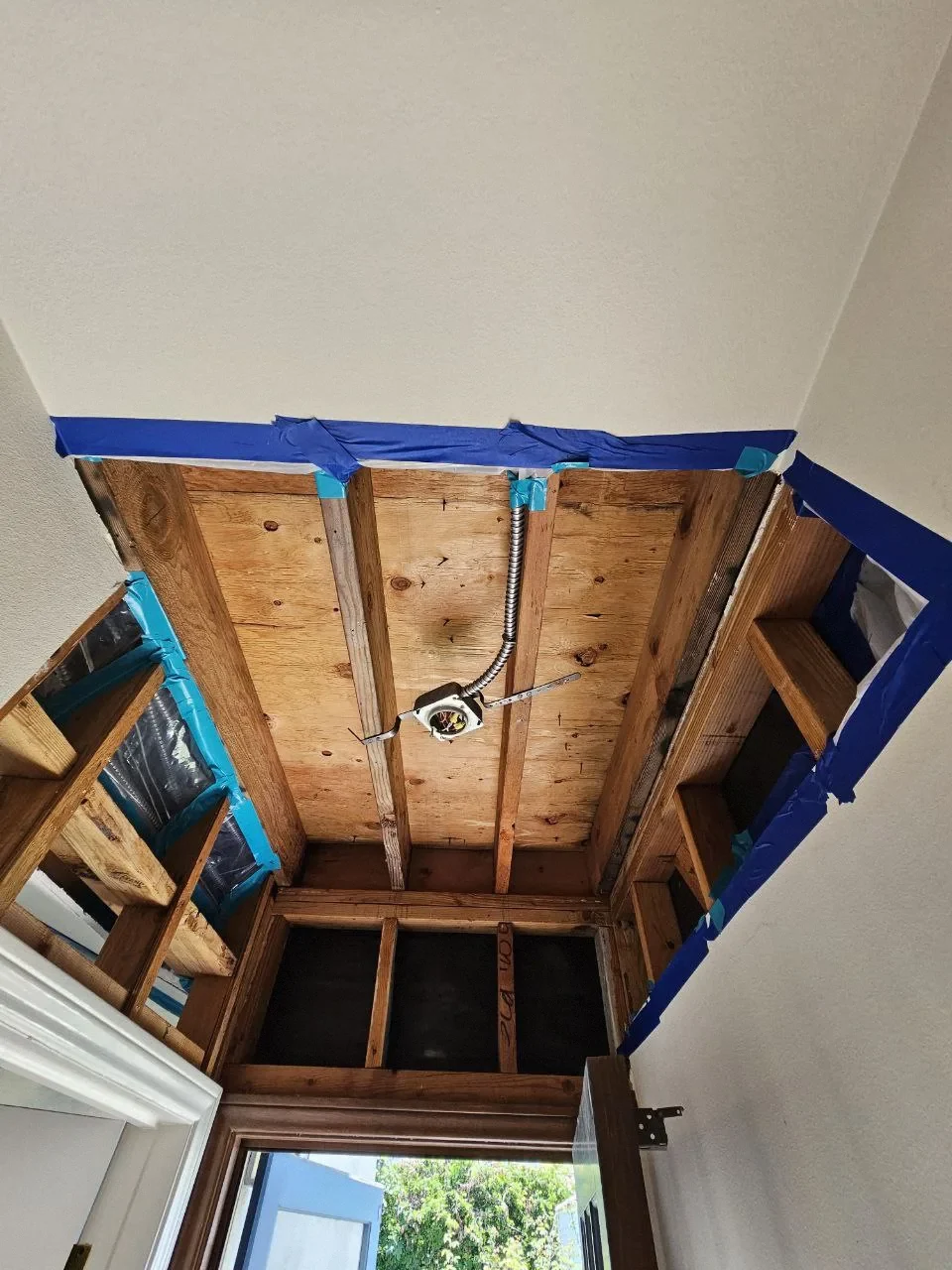
Water damage in ceilings, walls and floors
Water can stain a ceiling, soften a wall, or distort flooring, but the visible change is only a starting point for understanding the damage. Water Damage Guard provides cleanup and repair for water-affected ceilings, walls and floors. Call (650) 550-0619, 24/7, to describe the affected surface and any known source.
The route water takes through a building can be different from the place it first appears. A ceiling stain may be below a bathroom, pipe, or roof opening; a floor may be wet beneath a cabinet; a wall can absorb water from a leak or an adjacent room. The source, construction layers, and condition of each material determine the next step.
Stay clear of unstable or energized areas
A sagging or bulging ceiling may contain water or weakened material. Keep people and pets away and do not puncture it or stand beneath it to inspect. A floor that moves or appears damaged also warrants caution. If water is near lights, outlets, appliances, or electrical equipment, stay clear and contact the utility or a qualified electrician. Do not enter standing water to reach a panel or touch a wet switch.
Stop a plumbing source only if the shutoff can be reached safely. Otherwise call the appropriate professional. If outside floodwater or sewage may be involved, avoid contact and describe the source when requesting help. CDC warns that floodwater can contain harmful substances. Follow emergency officials' instructions if the building has been flooded or access is restricted.
In a shared property, inform the owner or manager and coordinate access to affected units. Water can travel through a ceiling from another space, but the location of the stain does not establish responsibility. A plumber, roofer, or another qualified specialist may need to investigate the source before the affected finish can be repaired.
How a ceiling is assessed
A ceiling mark can appear long after water entered or while the source remains active. Provide the history you know: when the mark appeared, whether it changes during rain or fixture use, and whether a previous leak was repaired. Photographs taken from a safe position can show changes over time. Do not assume an old-looking stain is dry or that a new stain identifies the exact location of the leak.
The assessment may include accessible surfaces above and around the mark, depending on safe access. Insulation, framing, electrical fixtures, and other components can be present above the finish. Moisture readings can help evaluate accessible materials, but one measurement does not show the condition of the entire cavity. If an opening is proposed, ask why, where, and who will repair it.
Before disturbed material is removed in an older building, address suspected asbestos or lead with an appropriately qualified professional. Ask how the area below will be protected and how electrical components will be handled. A ceiling should not be closed simply because the visible stain is covered; the source and affected layers need attention.
How a wall is assessed
Water can enter a wall from a pipe, window, roof, floor, or neighboring space. It may collect at the baseboard or affect insulation behind a finish. A painted surface can look intact while the material behind it remains wet. The assessment should consider adjacent surfaces and explain which areas were accessible and which were not.
Moisture instruments can help trace the pattern in accessible material. Results depend on the instrument and construction, so comparisons and repeated readings need context. A reading does not identify mold or establish the condition of every concealed component. When evidence suggests a hidden problem, discuss the purpose and limits of any proposed opening before authorizing it.
If visible mold is present, avoid disturbing it or directing fans at it. EPA advises addressing both growth and the underlying moisture problem. Painting over the mark does not correct a continuing leak. Depending on the extent and material, a separate remediation scope may be appropriate before the wall is repaired.
How a floor is assessed
Water on a floor can travel beneath a covering or through seams to the surface below. Different assemblies contain different layers: a visible finish may cover a subfloor, underlayment, adhesive, or concrete. Swelling, movement, discoloration, and odor can indicate a concern, but the condition of concealed material needs assessment rather than an assumption based on appearance.
Ask what the inspection can determine without removing the finish and what remains uncertain. If lifting or removing a section is proposed, discuss the reason, the area involved, and how the floor will be restored. A water-damaged component may be suitable to retain or may require replacement depending on its material, condition, contamination, and ability to dry.
A floor that is unstable, affected by sewage, or near wet electrical equipment should not be entered to retrieve belongings. Identify valuable items from a safe location and discuss how they will be handled. Moving a contaminated rug or furniture through an unaffected room can spread material, so agree on a plan before items are moved.
Water removal and drying
Once the source is controlled and the space is safe, accessible water can be removed. That is separate from drying the moisture held in building materials. The drying approach depends on the assembly, the extent of wetting, available access, and safe power. A visible surface may dry before the material beneath it, and some layers may need further access or removal.
Repeated observations and measurements can help track progress in accessible areas. Ask which locations are being monitored and what conditions will be used to decide whether repair can begin. A single dry-looking patch is not proof that an entire wall or floor assembly is ready to be covered.
EPA recommends prompt drying of water-damaged materials to help prevent mold. Its general 24-to-48-hour guidance is a prevention goal where feasible, not a promise that a particular ceiling or floor will be completely restored in that time. The schedule depends on the materials, water source, access, and drying conditions.
Cleaning and material decisions
The source of water affects cleaning. A supply leak, sewage backup, and outside flood are not interchangeable. Floodwater may carry sewage and other hazards, and porous material may not be possible to clean adequately after contamination. Ask what can be cleaned, what is proposed for removal, and how the work area will be protected.
EPA warns against mixing cleaning products or adding bleach to other chemicals. A product does not replace the need to remove soil, evaluate damaged materials, and correct the water source. If visible growth or suspected hazardous material is present, discuss the appropriate specialist and scope before disturbing it.
Belongings near the damaged surface may also need assessment. Photograph them only when safe and identify items of particular importance. A contents decision depends on the material and exposure, and an insurer may request documentation before disposal. Ask how the inventory and handling of items will be coordinated.
Repairing and replacing finishes
Repairs may include replacing removed drywall, insulation, trim, flooring, or other components and restoring the visible finish. The scope depends on what was damaged or removed. Before approving work, ask how the source repair and dryness of the underlying material have been confirmed, what will be replaced, and where the boundary between new and existing material will be.
Matching an existing surface may depend on its age, condition, and the availability of materials. Discuss the expected appearance and any limitations before ordering or installation. If additional damage is found after opening an assembly, request a description of the change and the authorization required before work proceeds.
Some tasks require separate trades. Plumbing, electrical, structural, or roofing work should be handled by the appropriate qualified professional. Check with the local building department about permits for the actual proposed work; requirements vary by jurisdiction and scope. Keep relevant repair and inspection records with the project documents.
Coordinating a leak between rooms or units
A stain on one side of an assembly does not necessarily show where the water started. A bathroom above a ceiling, a pipe within a wall, or an exterior opening can require investigation from more than one location. Provide access information and any known history, but allow the appropriate professionals to identify the source.
For condominiums and other shared buildings, the manager or association may need to coordinate access and common systems. Ask who is authorized to approve openings and repairs, and retain communications. Responsibility depends on the property documents and the facts; a general guide cannot decide who must pay for a particular loss.
In a rental, notify the owner or manager promptly and keep a record of the report. Discuss how work will affect access to essential rooms and how residents will be informed of changes. If occupants have health concerns, consult a healthcare professional rather than treating the appearance of a stain as a medical diagnosis.
Insurance and documentation
Photograph the affected surfaces and belongings from a safe location, record the date and any source repair, and keep receipts. If you intend to make a claim, contact your insurer promptly and ask how to document damaged material before it is removed. Keep the plumbing or roofing findings and any drying records alongside the repair scope.
California Department of Insurance guidance describes sudden accidental water damage as generally covered by many homeowners policies, while flood, seepage, and maintenance-related conditions are often excluded. Your actual policy, endorsements, limits, and the cause of loss control the determination. Ask the insurer about your specific claim rather than assuming all surface repair is covered.
If opening a floor or wall reveals additional damage, document it and notify the insurer as appropriate. Ask for a revised description of the work before authorizing a change. A contractor can describe the physical conditions and proposed repair, but the insurer determines coverage under the policy.
Timing and follow-up
The schedule depends on source repair, access, materials, drying, and the repair scope. A small accessible mark and a wet multi-layer floor may need very different sequences. Request updates as conditions become known, including any spaces that could not be inspected. Avoid a fixed completion promise before the underlying assembly has been evaluated.
Before returning the area to normal use, ask which work is complete, what remains, and whether a specialist needs to clear affected utilities or structural components. Keep the final records. If a stain, odor, or moisture returns, investigate the source rather than repeatedly covering the visible sign.
Common questions
Is a bulging ceiling safe to inspect?
Stay clear and do not puncture it. Water or weakened material may be above the finish; arrange a qualified assessment.
Can a wall be wet behind dry paint?
Yes. A surface can appear dry while a concealed layer remains wet. Accessible materials need assessment and some areas may require an opening.
Does a floor always need replacement after a leak?
No single answer fits every floor. The material, condition, water source and ability to clean and dry the layers matter.
Can a stain identify the leak source?
Not reliably. Water can travel before it becomes visible. The source and path should be investigated.
How long do repairs take?
The schedule depends on source repair, access, drying, the affected materials and any other trade work needed.
Does insurance cover damaged finishes?
Coverage depends on the cause, policy wording, limits and exclusions. Ask your insurer about the specific claim.