Protect people and stop the source
Move away from active water and keep children and pets out of the affected space. If a fixture shutoff can be reached safely, close it. Do not walk through standing water to reach an electrical panel or handle a wet appliance. A sagging ceiling can fall; stay clear and ask a qualified person to assess it. For an immediate threat to life, call 911.
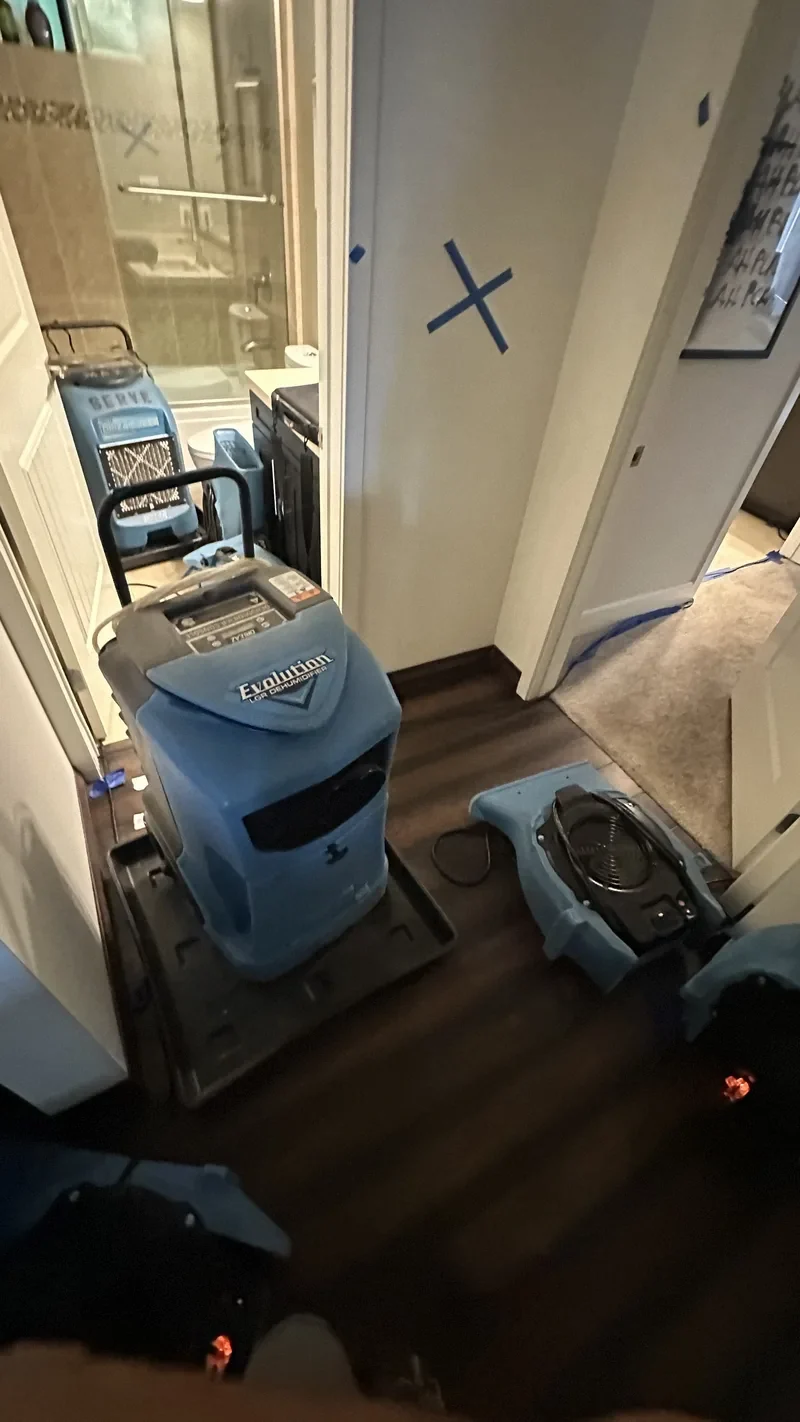
Water Damage Guard provides water damage restoration in East Palo Alto from its San Carlos base. Call (650) 550-0619, 24/7, to discuss the affected property. Tell us where water appeared, whether the source continues and whether the building is safe to enter. A water supply leak, sewer backup and outdoor floodwater require different decisions about source control and the materials they contacted.
Take photographs from a safe place if doing so does not delay urgent action. Record the time, the rooms affected and any notice from a utility or public official. The first wet surface may be some distance from the entry point. Avoid opening a wall or moving through contaminated water simply to find proof of the source.
Water and sewer services are not the same agency
East Palo Alto says most of its water connections are served by the city water system operated by Veolia at (650) 322-2083. Palo Alto Park Mutual Water Company and the O’Connor Tract Co-op serve other connections. Check the provider for the address before reporting a supply problem; do not assume that one water utility serves every parcel in the city.
The East Palo Alto Sanitary District became a subsidiary district of the city on October 1, 2024. The city has contracted with West Bay Sanitary District for its day-to-day operation. The city's sanitary page directs all sewer emergencies and issues to West Bay, available 24 hours a day at (650) 321-0384. For sanitary district permits, applications and routine service, it lists (650) 325-9021.
If sewage backs up, stop using connected fixtures and appliances while the blockage is investigated and keep people away from the wastewater. The agency or a plumbing professional can help locate the obstruction. The cleanup of contaminated materials inside a property is a separate task; clearing a line does not by itself clean or dry the affected room.
Creek, tides and storm drainage
East Palo Alto's March 2025 draft safety element background report identifies high water tables, high tides, creek overflow during rain and limitations in storm drainage into the creek as contributors to local flooding. The report is a planning assessment, not a prediction that a particular property will flood. Check the current official map for the address and ask city staff about its designation.
The city's Public Works Maintenance Division says it clears blocked storm drains, removes debris from structures and cleans and repairs drainpipes. To report creek or tidal flooding and blocked storm drains, the city storm page lists (650) 853-3100. A public drainage report and an interior cleanup request are different: reporting a flooded street does not automatically arrange work inside a building.
Do not walk or drive through floodwater. It can conceal hazards and may contain sewage. If public officials have restricted access, wait for clearance before entering. Record where water appeared and when, but do so only from a safe location. Whether water entered through an exterior opening or rose at a drain can change the investigation, yet the visible path does not by itself establish the ultimate cause.
Flood preparation and insurance
The city describes a self-fill sandbag station outside its Public Works Corporation Yard at 150 Tara Road, with a limit of ten bags per household or business. The notice specifies a season beginning October 15, 2025. Check current availability, hours and supplies before traveling because a seasonal notice does not guarantee that the station is stocked now.
East Palo Alto participates in the National Flood Insurance Program and says federally backed coverage is available for structures inside and outside mapped floodplains. Ask an insurer or qualified adviser what coverage and waiting periods apply to the specific policy. A property outside a mapped high-risk area can still experience water entry, and a map does not determine whether a claim will be covered.
For future storms, keep emergency contacts and any evacuation plan available to occupants. Prepare before water is approaching, and follow public instructions when conditions change. Sandbags are one preparation measure; they do not justify remaining in an unsafe building or bypassing a road closure. After a storm, record the observed entry path once access is safe.
Renters and the city petition process
Notify the owner or manager promptly about a leak, water damage or suspected mold. Describe the location and continuing source if known, and retain a written notice where practical. If the source may be a shared pipe or a neighboring unit, management may need to arrange access. The location of a stain does not settle private responsibility.
The city's Rent Stabilization Program describes Petition B as a way to seek a rent reduction and rebate for maintenance or service problems, including habitability issues, that have not been corrected within a reasonable time. The city says a landlord should be given a reasonable opportunity to correct the problem before a tenant files. Coverage and any remedy depend on the ordinance and the facts of the tenancy.
A petition does not replace emergency source control or a building inspection. Ask the city about the complaint and petition options for the particular property, keep notices and inspection findings, and seek qualified advice about any relocation issue. If the building is unsafe, follow the instructions of the responsible authority rather than staying to document additional damage.
Assess wet materials before rebuilding
Water can move under flooring, behind a cabinet or into a wall cavity. A visible stain does not show every affected surface. Once the source has been controlled and access is safe, ask which materials have been assessed, what remains concealed and how any proposed opening will be handled. A wet carpet pad, hard floor and wallboard may need different decisions.
Tell the restoration provider if water came from a sewer or outdoors. Such water may be contaminated, and contents should not be carried through unaffected rooms without a plan. A written inventory and safe photographs can help explain what was found. Ask the insurer what records it needs and whether it must inspect an item before it is discarded.
Cleaning and drying do not replace a plumbing repair, and a repaired pipe does not establish that the surrounding material is dry. Coordinate the tasks and any required inspections before installing new finishes. If older coatings or insulation will be disturbed, ask whether lead or asbestos evaluation is appropriate; building age alone does not establish what a specific material contains.
Permits and the repair scope
Contact the East Palo Alto Building Division at (650) 853-3189 with a description of the proposed repair. Requirements depend on the actual work. Before a wall or floor is closed, ask which inspections and approvals are needed for the specific project.
A project can involve a plumbing repair, the treatment of wet material and replacement of finishes. Those activities answer different questions and may involve different people. Describe each part to the responsible professional and the city rather than assuming the first repair automatically resolves every issue.
Keep the source repair invoice, permit information and restoration description together. If opening a wall reveals additional damage, discuss the revised work and inspection sequence with the responsible people. The aim is to avoid closing over an unresolved leak or work that required inspection while also avoiding unnecessary assumptions about the extent of damage.
Before a repair begins, make sure the people involved understand what remains unknown. If a ceiling stain could be related to a roof, a plumbing fixture or another opening, a source investigation should precede a permanent patch. Ask for a written description of accessible areas and keep the results with the project records. The Building Division can help identify which steps require its review.
Local areas and practical records
The city's 2025 draft safety background report names the Woodland, University Village, Weeks, Garden and Palo Alto Park neighborhoods. It also discusses the Ravenswood Employment District as an employment area. The report is a planning source, not a property-level assessment; use the actual address for utility, flood-map and permit questions.
If you rent or share a building, ask who can authorize entry and coordinate repairs to common systems. Record the date you reported the problem, who inspected it and what was found. A neighbor's room can be affected by the same source without the first visible stain establishing fault. Avoid moving potentially contaminated belongings into common areas without a plan.
For a claim, ask the insurer about documentation, coverage and any temporary living expense provisions that apply to the policy. Save receipts and correspondence. Water Damage Guard can discuss the restoration scope, while a utility, plumbing professional, city department and insurer make their own determinations.
- City draft safety background report
- Menlo Park
- Palo Alto
- Temporary housing expenses
- San Mateo County king tides and bay flooding: protecting a shoreline home
- San Mateo County flood zones and creek flooding: check your address
- Preparing a San Mateo County home for the rainy season
- San Mateo County sandbags: where to get them and how to place them
- Asbestos and lead before demolition in San Mateo County
- Tenant rights water leak california
- Mold in rental california
- Repair and deduct california
- Atmospheric river damage
- Old house plumbing pipe replacement
- Rental water leak responsibilities
- Flood damage restoration process
- What to do after storm damage
- Neighbor water damage evidence
Common questions
Who handles a sewer emergency in East Palo Alto?
The city directs sewer emergencies to West Bay Sanitary District at (650) 321-0384, available 24 hours a day.
Does Veolia supply every East Palo Alto address?
No. The city says Veolia operates its water system for most connections; two other water providers serve remaining connections.
What is Petition B?
The city describes it as a process for seeking a rent reduction and rebate for qualifying uncorrected maintenance, service or habitability problems.
Can I buy flood insurance outside a mapped floodplain?
The city says its participation in the National Flood Insurance Program makes federally backed coverage available inside and outside the floodplain. Ask an insurer about the actual policy.
Where can I report a blocked storm drain?
The city storm page lists (650) 853-3100 for creek or tidal flooding and blocked drains. Call 911 for a critical emergency.
Are the Tara Road sandbags always available?
The city notice describes a station for the season beginning October 15, 2025. Confirm current stock and hours before visiting.
Sources
- City of East Palo Alto Checked
- City of East Palo Alto Checked
- City of East Palo Alto Checked
- City of East Palo Alto Checked
- City of East Palo Alto Checked
- City of East Palo Alto Checked
- City of East Palo Alto Checked