Keep away from rising water
Do not walk or drive through floodwater. It can conceal debris and electrical hazards and may contain sewage. Follow evacuation instructions and road closures. If the building may be damaged or officials have restricted access, wait for the appropriate clearance. Do not step into standing water to reach an electrical panel, and do not handle an appliance that may be wet.
Water Damage Guard provides flood cleanup in East Palo Alto. Call (650) 550-0619, 24/7, when it is safe to discuss the property. Describe the affected rooms, whether water remains, and whether the water came from outside or rose at a drain. If a situation threatens life, call 911. The city lists (650) 853-3100 to report creek or tidal flooding and blocked storm drains.
A report to the city about a public drain and an assessment of the inside of a property are separate actions. Record the location and approximate time of the flooding from a safe position. Do not assume that the first place where water appeared identifies the original entry point or the person responsible for the repair.
What the city’s planning report identifies
The city's March 2025 draft safety background report identifies the Weeks and Garden neighborhoods east of Pulgas Avenue and the Woodland neighborhood between San Francisquito Creek and the Bayshore Freeway as particularly vulnerable to flooding. It also identifies University Village north of Notre Dame Avenue. These are planning-area observations, not individual property predictions or a substitute for the current flood map.
The same draft report records losses of belongings, including cars, for residents near San Francisquito Creek during the December 31, 2022 storm. This is a historical account. It does not establish damage at a particular address, the insurance status of an occupant or the likely outcome of a future storm.
Use the actual address when asking the city or an insurer about mapped flood hazards. A map or neighborhood label cannot tell you whether a private doorway, wall or floor has been damaged. Once access is safe, an assessment should identify the water path and the materials actually contacted.
Public drainage and private property
The city is a useful contact for blocked public storm drains and creek or tidal flooding. Describe the exact location, what can be seen safely and whether water is still rising. Do not open a storm drain or enter a flooded street to investigate it. Public Works can address its facilities; a private owner may need a separate investigation of water entry at the building.
A wet interior wall might be associated with water entering at an exterior opening, a drainage condition, a roof or a separate plumbing problem. Ask the person investigating to state what was actually observed and what remains uncertain. A citywide flood plan gives context but cannot establish the cause of a stain in one apartment.
If a permanent drainage or grading change is proposed, ask the city about the relevant approvals before construction. The proposed route and discharge point matter, including any effect on neighboring property. Temporary removal of water from the room is not the same as correcting a continuing path into the building.
Reentry and documentation
CDC advises that a damaged home be examined for safety and the electrical system checked before power is restored. A building can remain hazardous after the visible water recedes. Follow the fire department, building official or other responsible authority's instructions and keep away from damaged equipment.
When entry is permitted, document the high-water line, affected rooms and belongings if that can be done safely. Write down the dates, the water's apparent route and any action already taken. Tell the restoration provider about inaccessible spaces or a possible sewage source. Photographs are useful records but cannot reveal the moisture condition inside every assembly.
If an insurer is involved, ask what it needs before disposing of damaged contents. Save communications and receipts. The actual policy and event determine coverage; a location on a map or a description of the cleanup is not itself an insurance decision. Request a clear scope from the people who inspect the property.
Assess materials exposed to floodwater
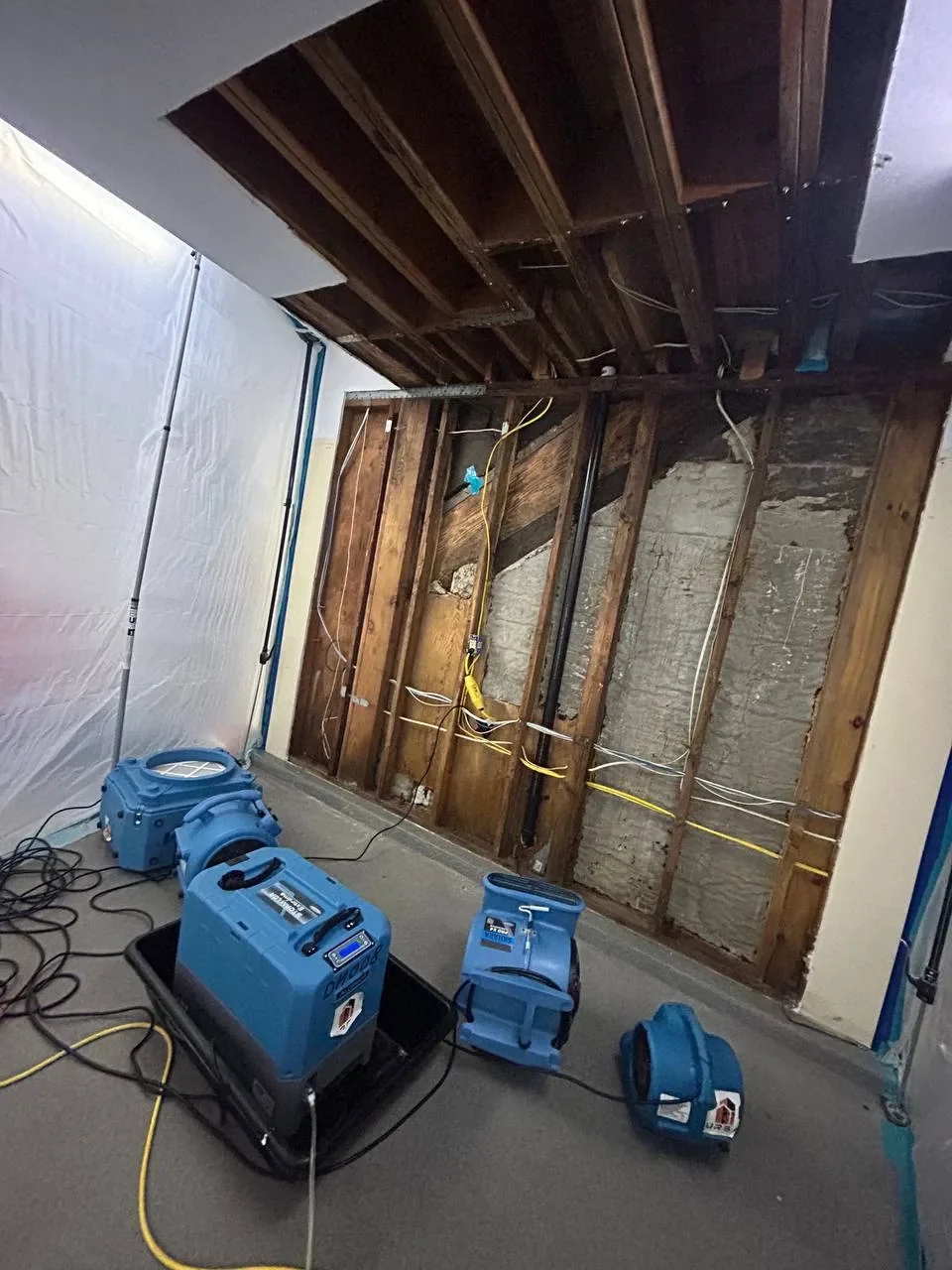
Floodwater can move underneath flooring and through openings at the base of walls. A visible line on a wall is an observation, not a full inventory of affected material. A cleanup assessment should identify the water source, the spaces contacted, the condition of the materials and what remains concealed.
Different contents require different decisions. An upholstered item or carpet pad can retain contamination differently from a hard surface. Ask what can be assessed, what may require removal and how affected items will be moved without spreading contamination into unaffected rooms. Keep children and pets out of the work area.
If older paint, insulation or other building material will be disturbed, discuss whether lead or asbestos evaluation is appropriate before demolition. The age of a home does not establish the contents of a particular surface. Keep the assessment and any findings with the repair records so subsequent work is based on observed conditions.
Drying, systems and repair work
Pumping or removing visible water does not necessarily dry the materials beneath it. Ask how the remaining structure will be assessed before new flooring, trim or wall finishes are installed. If water is still entering, identify who will repair the source and when the work can be checked.
A flooded heating or ventilation system should be evaluated before use. CDC warns that operating a mold-contaminated system can spread mold through a building. Electrical equipment also needs qualified assessment before service is restored. Do not use an appliance or switch merely to see whether it still works.
Repair of a pipe, replacement of a structural component and cleanup of contaminated materials are separate scopes. Ask the city's Building Division which permits and inspections apply to the actual repair, and coordinate any required inspection before work is covered. Retain permits, source-repair findings and the restoration description together.
Shared housing and the next storm
A renter should notify the owner or manager promptly and ask who can authorize access and repairs. In a shared building, water may affect adjoining units or common systems. Management may need to coordinate access and notices; the first visible stain does not decide responsibility for the source. Keep written reports and dates.
Ask the insurer or a qualified adviser about coverage for the actual policy and circumstances. If a unit cannot be occupied, ask the responsible owner, city or adviser about the applicable options. Preserve receipts and communications rather than assuming that any particular expense will be reimbursed.
Before another storm, review the observed entry path with the appropriate professional and check current city warnings and sandbag availability. A preparation measure does not override an evacuation order. Water Damage Guard can discuss the cleanup scope, while the city, utility, property owner and insurer each address their own part of the response.
If the building has shared hallways or a common utility room, ask management how those spaces will be protected while the affected unit is assessed. Confirm who can provide access for the city, the plumbing professional and the restoration provider. Keep an updated list of questions about areas that were not accessible at the first visit, so they can be checked when the responsible person permits entry.
Common questions
Does the city report predict flooding at my address?
No. The March 2025 draft report identifies vulnerable areas for planning. Check the current official map and ask the city about the actual property.
Who can report a blocked city storm drain?
The city lists (650) 853-3100 for creek or tidal flooding and blocked storm drains; call 911 for a critical emergency.
Can floodwater contain sewage?
Yes. Outdoor floodwater may be contaminated; tell the cleanup provider where it came from and avoid contact.
Can a wet appliance be tested by turning it on?
No. Leave wet electrical equipment alone and arrange appropriate evaluation before it is returned to service.
Does a flood map determine whether a claim is covered?
No. Ask the insurer about the actual policy, event and applicable requirements.
Sources
- East Palo Alto draft safety background report Checked
- City storm and flood information Checked
- CDC flood reentry Checked
- City home protection Checked