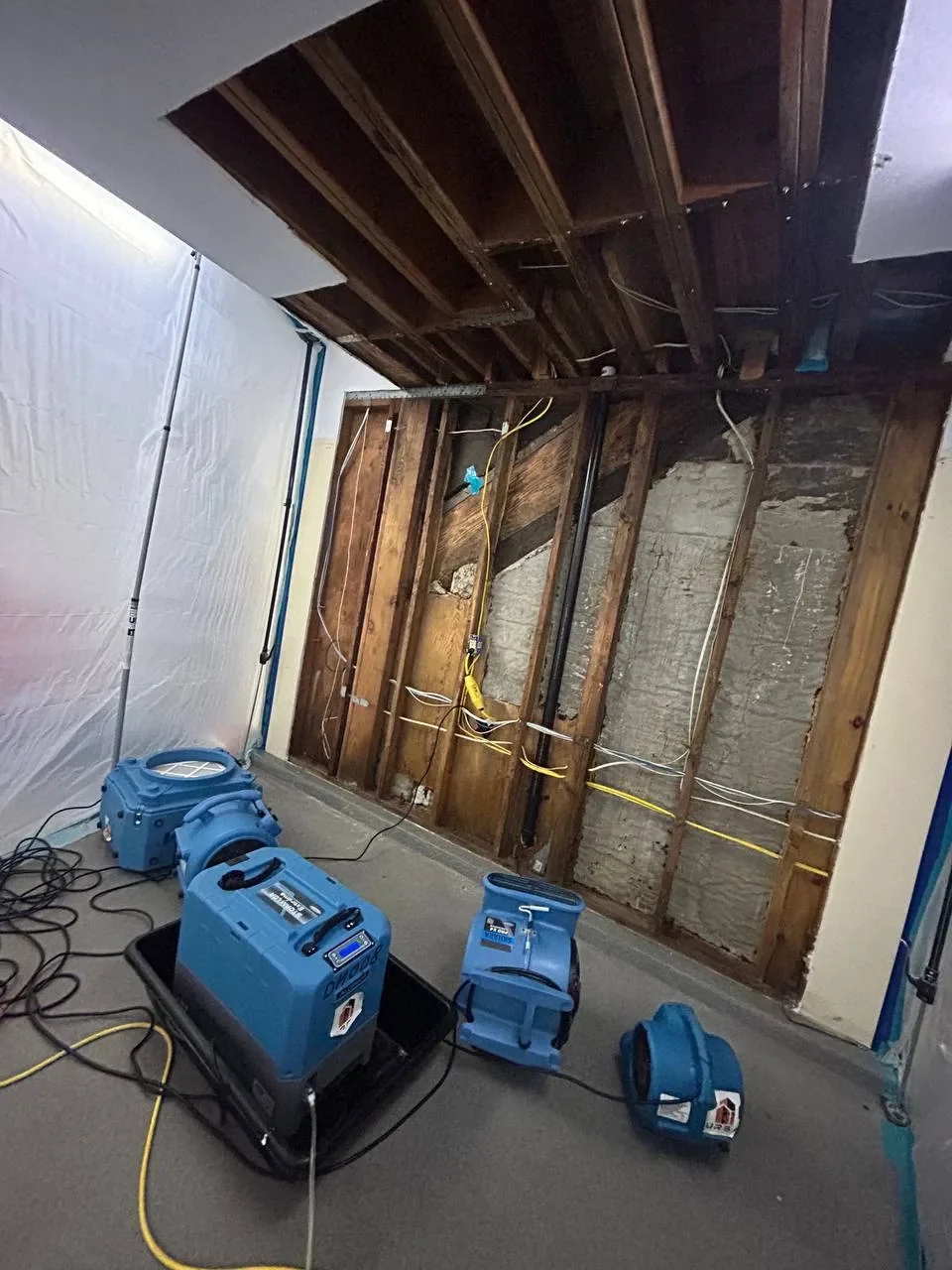
Water damage in Santa Cruz: conditions at the property
Explain where water appeared, whether it is still entering and whether an official has restricted access. Mention any known pipe damage or storm exposure and repairs already attempted. The source and affected materials need evaluation at the property before a repair sequence can be established.
Keep people and animals away from standing water, an unstable ceiling and wet electrical equipment. If a supply shutoff is safely accessible, use it only when doing so does not require entry into a dangerous area. Do not walk through water to operate a breaker. Call 911 for an immediate threat and follow directions from emergency responders.
When it is safe, note when the problem began and which rooms were affected first. A mark on a ceiling or wall can be useful information, but water may have traveled from another location. A photograph and a brief timeline help the people evaluating the loss without establishing a diagnosis by themselves.
If the building is occupied by more than one household or business, identify the person who can authorize access to shared spaces. A wet wall may border another unit or conceal a common pipe. Coordinate the investigation with the property owner or manager instead of opening a neighboring space without permission.
Find and control the source
A supply leak, roof opening, wastewater backup and water entering from outside require different responses. A person qualified to investigate the suspected system can identify the actual source and discuss how it will be corrected. Drying a room without addressing the water pathway leaves open the possibility of further damage.
The Santa Cruz Water Department says its supply depends on local rainfall and its system includes more than 300 miles of pipelines. That describes the water system serving the area; it does not identify the cause of water inside an individual building. The location of a leak and responsibility for its repair depend on the specific connection and conditions.
If a fixture or pipe has failed, tell the person evaluating it when it was last used and whether turning off a local valve changed the flow. Avoid repeatedly operating a suspect fixture to reproduce the problem. A controlled examination is safer and can prevent additional water from reaching unaffected material.
Keep the repair record together with photographs of affected rooms and any notes about access. If the source cannot yet be reached, ask what temporary measures are appropriate and who will maintain them until the permanent repair. An unresolved entry point should remain visible in the plan for subsequent visits.
Sewer laterals and an overflow
The City says an owner must stop a sewer spill, determine its cause and take remedial action to prevent future spills. Treat wastewater as potentially contaminated, keep people away and seek assistance appropriate to the situation. The source may involve a private lateral or another part of the system; its location must be determined before a repair is selected.
Subject to applicable exemptions, Santa Cruz requires an authorized lateral inspection and compliance steps in connection with a property sale. The code also allows a seller and buyer to transfer responsibility for needed repairs under specified conditions. Ask the City which inspection, repair and documentation requirements apply to the particular transaction. A sale does not itself establish that a lateral has failed.
For private sewer collection systems, the municipal code separately provides a ten-year camera inspection interval and pump inspection intervals: annually when a lift station or ejector pump serves five or more units, or every five years when it serves fewer than five, subject to the relevant exceptions. These intervals address different equipment. Ask the City about the actual system and records.
A sewage event may affect floor coverings, wall material and contents beyond the visible water. Avoid using household cleaning methods that spread contamination into an unaffected area. Ask the restoration provider how affected spaces will be isolated and how materials will be evaluated before they are removed or retained.
Rain, river water and preparation
The City’s 2012 hazard plan records that the San Lorenzo River flooded downtown in December 1955. It is a historical event, not a prediction about a particular parcel today. Water can reach a property through different routes, so the location and cause of a present event need to be established separately.
Santa Cruz offers free seasonal sand and sandbags for residents and businesses. Check the City’s current information before making a trip, including availability and any instructions. Sandbags are a temporary preparation measure; they do not make it safe to remain in a threatened building or guarantee that water will stay out.
Follow official evacuation or road-closure instructions during a storm. Stay away from moving water, downed wires and unstable ground. When access is permitted, a high-water mark or photographs taken from a safe position may help document what happened. Do not return to a restricted property merely to collect belongings.
After outside water enters, tell the evaluator whether sediment, wastewater or other contamination may be involved. The source affects handling decisions. An assembly can appear dry at the surface while the material beneath it remains wet, so the inspection should include accessible layers and identify any areas that cannot yet be examined.
Arrange building repairs and inspections
Santa Cruz Building and Safety issues construction permits, reviews plans and conducts associated inspections. Whether a particular repair needs a permit depends on its scope. A cleanup, a replacement pipe and structural reconstruction are different activities; ask the City about the actual proposed work before closing a wall or floor.
Identify who will coordinate the source repair, moisture assessment and reconstruction. When separate trades are involved, the handoff matters: the person replacing finishes needs to know whether the source is controlled and whether any required inspection has occurred. Keep the approved scope and records in one place.
If opening an assembly reveals additional deterioration, request an explanation of what was found and how the work will change. A written revision can identify the affected material, the proposed treatment and any additional decisions. Ask whether a revised plan or permit is needed rather than assuming an earlier approval covers all newly discovered work.
If structural members, electrical equipment or a gas system may have been affected, ask the appropriate qualified professional to assess them. A restoration plan should identify limitations as well as completed observations. An inaccessible space should not be represented as unaffected simply because the visible room looks dry.
Rental housing and communication
Santa Cruz Code Compliance accepts complaints about suspected code violations on private property, subject to its jurisdiction. A tenant or owner can describe the location and condition and ask which office handles the concern. An official complaint, an insurance decision and the physical work of drying a building are separate processes.
For a rental, notify the owner or manager of water intrusion promptly and keep a copy of the communication. Explain what is visible, when it appeared and whether the problem is ongoing. Avoid diagnosing the cause or the type of any growth without an assessment. If the situation presents an immediate danger, use the appropriate emergency channel.
When repairs affect access to a room, ask who will coordinate entry, temporary protection of belongings and updates to occupants. If a person cannot safely use a space, a property-specific discussion of housing arrangements may be needed. The rights and responsibilities involved depend on the tenancy and circumstances, not just the presence of water.
Retain notices, photographs taken safely and any written scope or change. A record of when the source was reported and how it was addressed can help the people responsible for the property coordinate the next steps. Ask a qualified housing adviser about rules that may apply to the particular rental.
Drying and material decisions
The assessment should distinguish standing water removal from drying and reconstruction. Water can move through a finish into backing, insulation or framing. Ask which accessible areas were examined, how moisture conditions will be monitored and what remains inaccessible. The appropriate decision depends on the material and the water source.
Porous contents and hard surfaces may require different handling. If an insurer is involved, ask what documentation is needed and whether an adjuster wants to examine items before disposal. Coverage and reimbursement depend on the policy and circumstances; an estimate of damage does not establish an insurance outcome.
Before a new finish is installed, ask what has been checked and whether the source has been corrected. A newly closed wall can conceal a continuing leak. Where an official inspection is required, agree on who requests it and how the opening will be protected until the relevant work can proceed.
If the work cannot be completed in one visit, agree on a contact and a practical update schedule. Record any room that must remain closed, equipment that needs access and decisions still awaiting a property owner or another contractor. Clear handoffs help keep a change in scope from being lost between visits.
Discuss your Santa Cruz property
Water Damage Guard can discuss water damage restoration in Santa Cruz from San Carlos. Describe the affected spaces, the suspected source if known and any access restrictions. Call (650) 550-0619, 24/7. The response and scope depend on the observed conditions and the work authorized for the property.
If you have a plumber’s findings, a City notice or a previous repair record, share the relevant information with the person evaluating the damage. If no source has been confirmed, say that clearly. An assessment can then focus on the questions that remain open instead of treating a first guess as a completed diagnosis.
The City’s planning materials identify neighborhoods and planning areas including Downtown and Upper Westside. A service discussion begins with the particular property and access conditions; a neighborhood name alone does not establish its flood zone, sewer arrangement or building condition.
Common questions
What should I do if water is still entering?
Keep away from electrical hazards and unstable areas. If a shutoff is safely accessible, use it without entering danger, and arrange a qualified source assessment. Call 911 for an immediate threat.
Does the City require a sewer lateral inspection before sale?
Santa Cruz requires an authorized inspection and necessary compliance steps before sale, subject to applicable exemptions. Ask the City about the particular property and transaction.
Are private collection systems and pumps inspected on the same schedule?
The City code specifies a ten-year CCTV interval for private collection systems, with separate pump intervals based on units served, subject to relevant exceptions.
Does Santa Cruz provide sandbags?
The City offers free seasonal sand and sandbags for residents and businesses. Check current availability and instructions before visiting.
Who handles building permits for a water-damage repair?
Santa Cruz Building and Safety issues construction permits, reviews plans and conducts associated inspections. Ask about the actual repair scope.
Sources
- Santa Cruz Water Department Checked
- Santa Cruz sewer lateral ordinance Checked
- Santa Cruz private collection system code Checked
- Santa Cruz sandbag information Checked
- Santa Cruz historical flood plan Checked
- Santa Cruz Building and Safety Checked
- Santa Cruz Code Compliance Checked
- Santa Cruz General Plan neighborhood map Checked
- Santa Cruz sewer transfer and exemptions code Checked