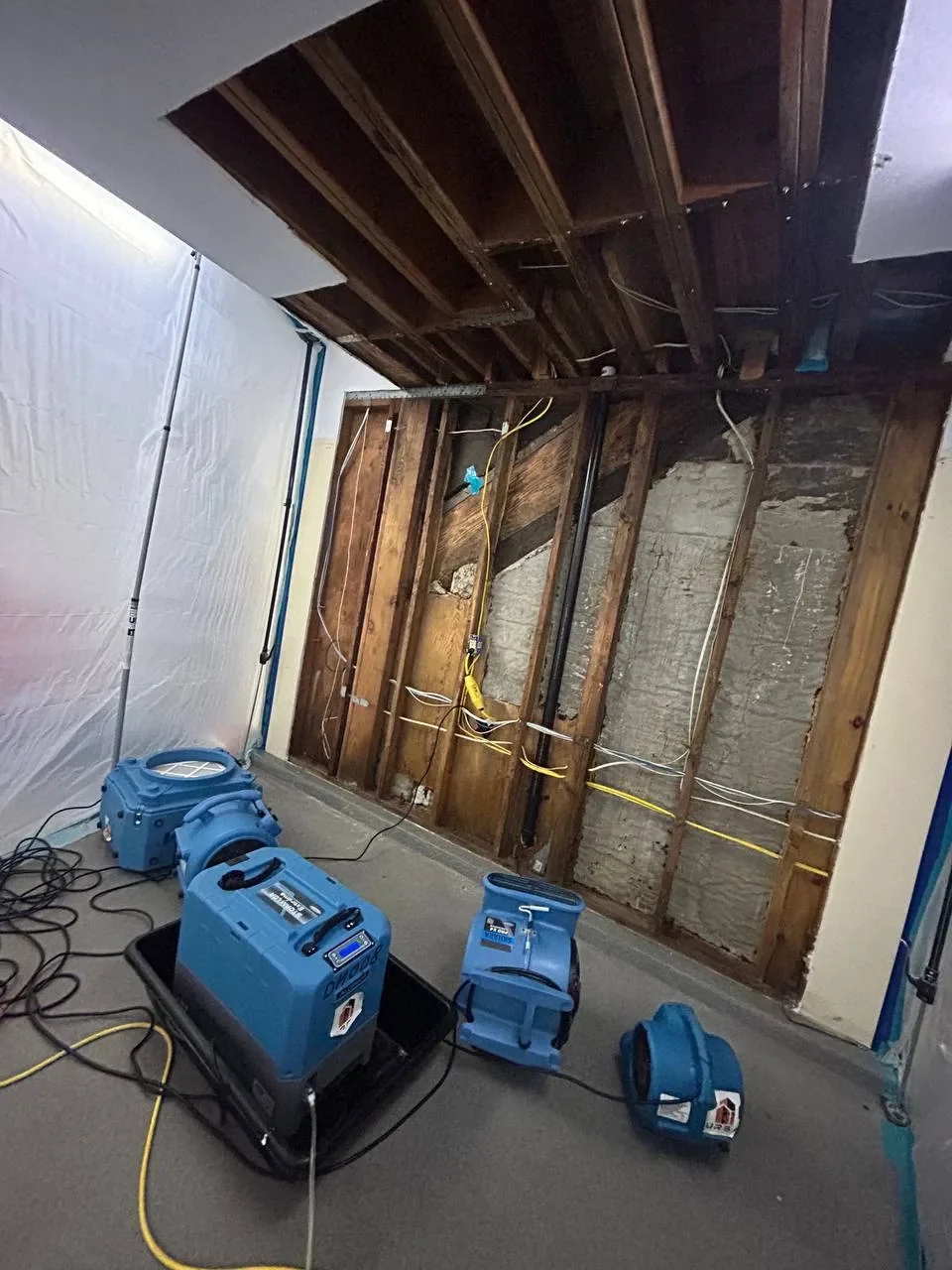
Keep the affected area safe
If water is entering a building, move people and pets away from the affected space. Close an accessible fixture shutoff only if it can be reached without crossing standing water or touching wet electrical equipment. Do not stand beneath a sagging ceiling or enter an area restricted by responders. Call 911 when there is an immediate threat to life.
Explain what is known when arranging an assessment: where water appeared, when it began, whether it is continuing and which rooms cannot be entered. A supply-line leak, sewage backup and rainwater at a doorway require different investigations. The place where a stain appears does not by itself identify the source behind a wall or above a ceiling.
Photographs and notes taken safely can help document the loss. Preserve any information from the utility, plumber or property manager who first responded. Water Damage Guard accepts calls at (650) 550-0619, 24/7. A telephone description helps establish the next questions but cannot determine the complete scope of damage.
Local areas and the address that matters
The Los Gatos–Monte Sereno emergency response map labels areas including Almond Grove/Downtown, Blossom Hill/Shannon, Vasona and Belwood. These are useful ways to describe an area; they are emergency planning labels rather than proof that every property sharing a mailing address is within the town or a particular hazard zone.
For any local rule or utility decision, check the actual property and the responsible jurisdiction. A home, apartment and business can have different access needs. Tell the assessor who occupies the space, which areas are shared and who can authorize work. If water appears below another unit, document what is visible without deciding liability from the location of the stain.
If a room cannot be entered, identify that limit at the start. An assessment should state which surfaces were observed and which remain concealed. Once safe access is established, additional work may be needed to trace the water path and evaluate the affected materials.
A sewer backup has more than one scope
West Valley Sanitation District identifies Los Gatos within its service area and asks customers to contact it first for a sewer backup. Check the property’s connection before assuming the same provider serves every nearby address. Avoid using connected fixtures while the blockage is being investigated, and keep people away from sewage entering the building.
The district says it checks the main and clears the portion between an existing property-line cleanout and the main. If the cleanout is absent or its location is unknown, its guidance places clearing responsibility through to the main on the property owner. That description is conditional; a particular backup still needs to be located and assessed.
Once the line is flowing, the affected room and contents may need a separate restoration assessment. Record where sewage appeared, which areas were contacted and what the district or plumber found. The blockage investigation, any line repair and cleanup of building materials should have clear responsibilities rather than being treated as a single automatic task.
Drainage, retaining walls and hillside work
Los Gatos says excavating, grading, installing on-site storm drainage and constructing retaining walls may require a grading permit. The question depends on the proposed work and site. A water stain inside the house does not automatically mean a new retaining wall or grading project is needed.
The town also says its hillside development standards apply to new hillside homes and major additions or remodels of hillside homes. That is a development rule for the stated scope, not a finding that every slope has failed or that every drying job is a remodel. Ask the appropriate division about the parcel and proposed construction before making a permanent drainage change.
Keep away from an unstable slope or damaged wall. If it is safe to observe, record where water and sediment appeared and whether water was moving toward an opening. A qualified professional can evaluate the slope, retaining structure and drainage path together. Interior drying addresses affected building materials; it does not certify that the outside condition is stable.
When a wet room adjoins a slope, write down where the water appeared in relation to the outside grade, wall and doorway. That description helps the people evaluating the property distinguish a visible entry point from the larger drainage question. A damp wall does not establish that a retaining wall has failed. The town’s grading and drainage information identifies the kinds of work that may need review; the actual scope and permit decision depend on the site and proposed work. If investigation points toward a change in drainage or a wall, discuss the drawings and review pathway with the town before treating a temporary cleanup measure as the finished repair.
Stormwater work in specific locations
The town reports recurring street flooding in the Loma Street area and has commissioned a drainage study. Its stated work includes examining storm drains, surface drainage and the connection to Ross Creek, then developing alternatives. The study is a local investigation; the page does not establish that every hillside property has the same water path or that a proposed remedy has already been built.
In October 2026 the town also described increased storm-drain inlet cleaning and a year-round public works standby program for clogged drains and other issues. These are municipal maintenance activities, separate from identifying an entry point on private property. Report the location and what you observed if a public facility appears affected.
Do not enter flowing water, remove a drain cover or attempt to inspect a public system yourself. A drainage professional and the appropriate agency can determine what is relevant to the site. Photographs taken from a safe position and a note of the timing can be useful, especially if conditions change before the site is inspected.
Repairs and a water-heater permit
Los Gatos offers an online application for replacing a water heater or water softener with the same type in the same location. The town directs applicants to its building permit application if the water heater’s type or location changes. This describes a particular replacement process, not a rule that all water damage cleanup is the same work.
If a failed appliance or connection caused the loss, ask the responsible trade to identify the source repair and the applicable permit. The restoration scope may include assessing wet finishes and contents in addition to that repair. When new conditions are discovered after material is opened, check whether the proposed work or inspection plan must change.
Keep the source-repair record with photographs and any permit information. A building may be ready for one trade before another can complete its portion. Coordinating access and inspections before finishes are closed can prevent a repair from needing to be reopened.
A reconstruction estimate should identify who will perform any trade work and who will arrange the applicable town inspection. Keep the replacement model, its proposed location and any permit records with the damage photographs. Those records help connect the cleanup to later work without implying that every drying job needs a building permit. If a heater remains in service while an area dries, follow the equipment professional’s directions and keep access clear. Ask the town about the actual work when the proposed replacement changes from a straightforward same-location installation to a different arrangement.
Wildfire, smoke and a property’s location
Los Gatos adopted Ordinance 2374 on June 17, 2025, approving the town’s fire hazard severity zones map. A map is evaluated at the individual address: the town’s adoption does not put every property in the same class, and a mailing address alone does not establish the applicable jurisdiction.
After a fire or smoke event, follow official access restrictions and avoid wet electrical equipment or unstable building elements. Smoke deposits, direct heat damage and water used in suppression can affect different rooms and materials. Describe each observation and ask what can be assessed safely before deciding on a scope of work.
If reconstruction is contemplated, ask the Building Division and fire authority how current requirements apply to the specific parcel and project. A preparedness or defensible-space question is related to future exposure but is separate from cleaning affected surfaces and repairing the immediate loss.
Coordinating the work and the record
Contact the insurer or property manager and ask what information is needed. Keep the photographs, source-repair record, correspondence and description of affected belongings together. Coverage depends on the policy and the claim; a local map or restoration assessment does not decide it. Follow any instructions about preserving damaged property when it is safe to do so.
Before work starts, ask who will stop the source, who will address affected materials and who will coordinate any permit or inspection. If the scope changes, record the newly observed condition and the decision. An electrician, plumber, building professional and restoration provider can have distinct roles on the same loss.
Before returning a room to normal use, identify unresolved repairs or occupancy restrictions. Ask which areas were assessed and what remained inaccessible. Water Damage Guard can discuss the property at (650) 550-0619, 24/7, from San Carlos. The appropriate sequence depends on the conditions found and the work authorized.
Common questions
Who serves the Los Gatos sewer system?
West Valley Sanitation District identifies Los Gatos within its service area. Check the individual property’s connection before relying on a district-specific process.
Can a drainage or retaining-wall project need town review?
Yes. Los Gatos says excavating, grading, on-site storm drainage and retaining walls may require a grading permit, depending on the work.
What is the Loma Street drainage study?
The town says the study examines recurring street flooding, drainage patterns and the Ross Creek connection, with alternatives to be developed. It is not a completed remedy.
How does Los Gatos handle a same-location water-heater replacement?
The town offers an online application for a replacement of the same type in the same location; changing type or location uses its building permit application.
Did Los Gatos adopt a fire hazard severity zones map?
Yes. The town says Ordinance 2374 approved the map on June 17, 2025. Check the individual parcel rather than assuming one class for the whole town.
Sources
- Los Gatos–Monte Sereno CERT neighborhood map Checked
- West Valley Sanitation District service area Checked
- West Valley Sanitation backup guidance Checked
- Los Gatos grading and drainage Checked
- Los Gatos engineering development guidelines Checked
- Los Gatos Loma Street drainage study Checked
- Los Gatos October 2026 public works update Checked
- Los Gatos water-heater replacement application Checked
- Los Gatos adopted fire hazard severity map Checked