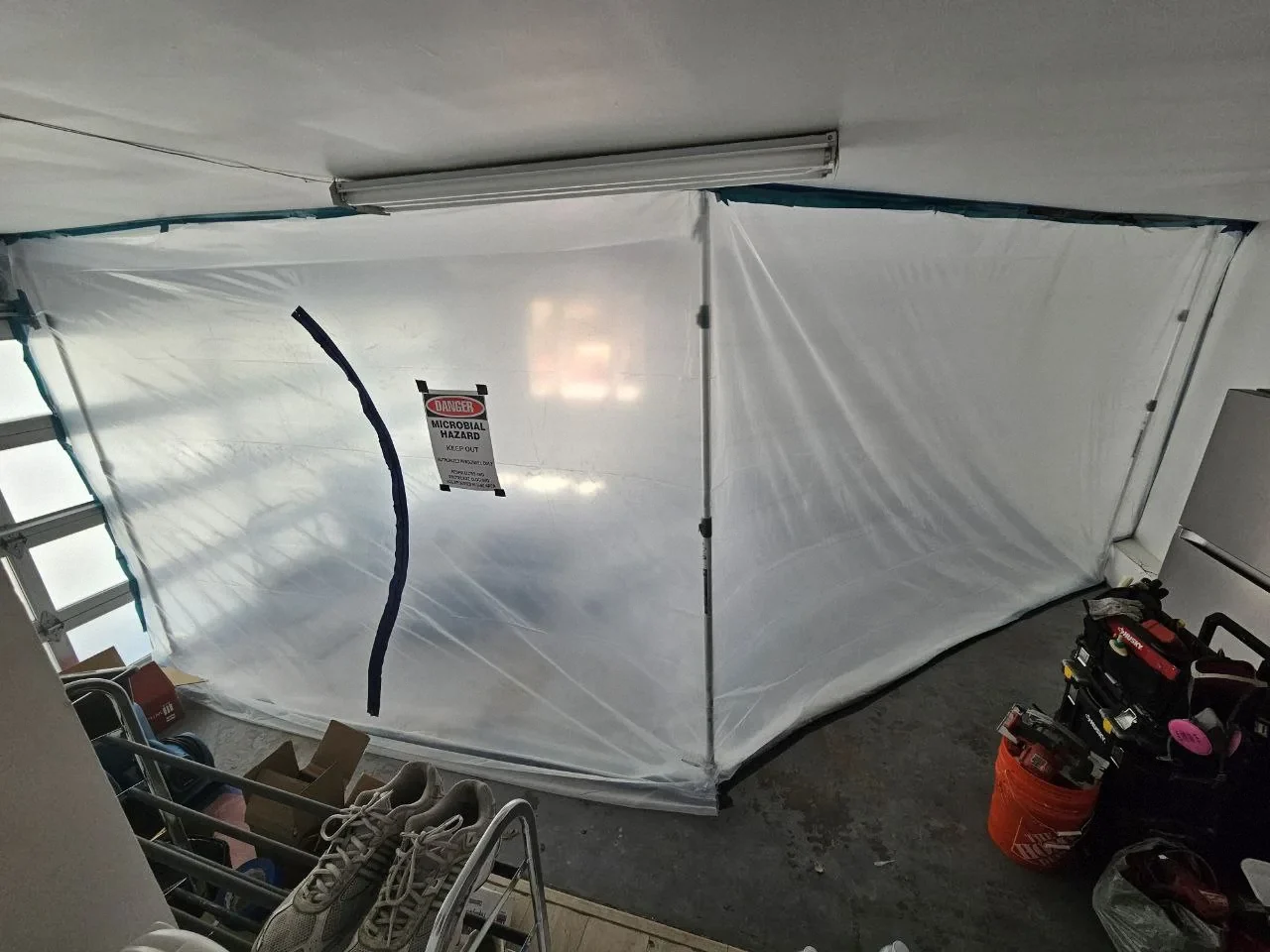
Limit contact with the affected area
A sewage backup can carry contaminants into rooms and materials. Keep people and pets away from standing water and affected belongings, and avoid contact with wet electrical equipment. Do not enter a space with an electrical hazard or unstable material. If there is immediate danger, call 911 and follow official directions.
Reduce water use while a backup is active and arrange for the blockage or source to be investigated. A restoration assessment and sewer repair are separate tasks: cleaning a room does not clear a blocked line. Describe where water appeared, whether it is still rising and whether several fixtures are affected.
If you rent or share a building, notify the owner or manager promptly so the parties responsible for access and repair can coordinate. A stain or overflow location does not, by itself, establish where a blockage lies or who is responsible for it.
Trace the source and scope
Explain what happened before the overflow: a fixture stopped draining, water appeared at a floor drain, or the problem followed another observed event. That sequence gives the plumber or district useful information without claiming a diagnosis. Record the time and photograph from a safe position if possible.
A property may have a private lateral as well as a connection to a public sewer system. West Valley Sanitation District includes Los Gatos in its service area; confirm that the specific property is connected before applying district procedures. The agency and a qualified plumbing professional can help determine the appropriate response to the observed problem.
After the source is controlled, assess the rooms, finishes and contents exposed to sewage. The scope should identify what was inspected and where access was limited. Concealed conditions may change the work required; agree how additional discoveries will be reported before they are addressed.
Understand an existing backflow device
West Valley Sanitation District explains that a backflow protection device, when installed, has a flap designed to close when sewage backs up from a downstream blockage. The district also cautions that a flap stuck closed can lead to a backup of the building’s own wastewater. Not every property has such a device.
Tell the person investigating if a device is known to be present and where it can be accessed. Do not assume that its presence identifies the cause of the current overflow or guarantees protection in every circumstance. A qualified professional can assess the equipment and the specific line condition.
The district recommends checking an existing device according to the manufacturer’s interval, typically every three to six months, for sediment and free movement of the flap. The correct maintenance procedure depends on the device and its installation. Ask the manufacturer or qualified professional if access or maintenance is uncertain.
The district and work in its right-of-way
West Valley Sanitation District says sewer construction on its sanitary system in the public right-of-way or an easement requires a district-registered contractor. This condition concerns that defined work and location. It does not make a cleanup company the permit holder or establish that every indoor cleanup involves the public right-of-way.
If the investigation identifies a line repair, ask which portion is involved, who will perform it, what permits are needed and how inspections will be arranged. A plumber, district-registered sewer contractor and restoration provider may have different roles. Verify the property connection and location of the proposed work before relying on a district-specific rule.
Coordinate the repair with the interior cleanup so that a recurring discharge does not affect newly restored material. The owner should understand whether excavation, a cleanout or another inspection is proposed and who will communicate changes. Do not cover work that needs an inspection before the responsible authority has reviewed it.
A limited lateral replacement program
The district describes a Private Lateral Replacement Program for eligible applicants. For approved participants, it reviews video inspection information, conducts a field check and specifies whether a cleanout or backflow device is required. Those steps are part of the described program, not a promise that every property qualifies.
If lateral replacement is being considered, ask the district about current eligibility, application steps and timing before authorizing program-dependent work. A program decision is separate from the immediate need to contain a backup and determine what is safe. Conditions may depend on the specific portion of lateral and the district’s approval.
Keep the line inspection, application, permit and repair records with the cleanup documentation. That record helps the property owner understand which problem was addressed and what remains. A video inspection of a pipe does not independently establish that all affected building materials have been cleaned or dried.
Plan cleaning and return to use
Discuss how affected materials and belongings will be handled, how the work area will be separated and how waste will be removed. The appropriate approach depends on material, exposure and condition. Do not assume a surface is clean merely because the visible water is gone. Ask about areas that could not be opened or examined.
Before finishes are replaced, make sure the source repair and any required inspection have been coordinated. Ask for a written handoff identifying work performed, remaining repairs and limitations. If another overflow occurs, stop using the affected fixtures and arrange another investigation rather than assuming the original problem has the same cause.
If an insurance claim is involved, ask the insurer about documentation and disposal procedures. Coverage depends on the policy and the facts of the claim. Preserve records and safe photographs, and distinguish the plumber’s line repair from the restoration scope when discussing costs.
To discuss a Los Gatos sewage loss, call (650) 550-0619. Explain the location, whether water remains active, access limitations and who can authorize service. The proposed work follows the conditions observed.
A shared property adds practical access questions. Identify where the water appeared, which units or common spaces may be affected, and who can authorize work in each area. A manager may need to coordinate a plumber’s visit and access for the cleanup assessment with residents. Keep communications factual: a backup in one unit does not establish the condition of an adjoining unit or assign responsibility for the line. Ask how occupants will be informed if the work area changes and how essential access will be maintained. When belongings are moved, record their location and condition as part of the project documentation. If an area cannot yet be entered safely, note that limitation and arrange an assessment when access is authorized.
Before the final handoff, ask who is responsible for any remaining source repair, rebuilding and inspection. A property owner may engage different providers for each scope. Preserve the invoice and completion information from each so that a later question can be directed to the appropriate party. The presence of a receipt for line clearing does not by itself document cleanup of every affected surface. Equally, a cleanup record does not establish that the lateral is free of defects. If the source remains uncertain, discuss further investigation with the responsible professional.
Common questions
Should I keep using fixtures during a backup?
Reduce water use and arrange for the source to be investigated. Keep people and pets away from affected water and materials.
Does every property have a backflow device?
No. If a device exists, the district explains its operation and recommends maintenance at the manufacturer’s interval.
Who repairs a sewer line in the district right-of-way?
WVSD says sewer construction on its sanitary system in a public right-of-way or easement requires a district-registered contractor.
Does the lateral replacement program cover every home?
No. The district describes eligibility and approval conditions; contact it about the specific property and current terms.
Is clearing a line the same as cleaning the room?
No. Source repair and cleanup of exposed materials are separate tasks that need coordination.