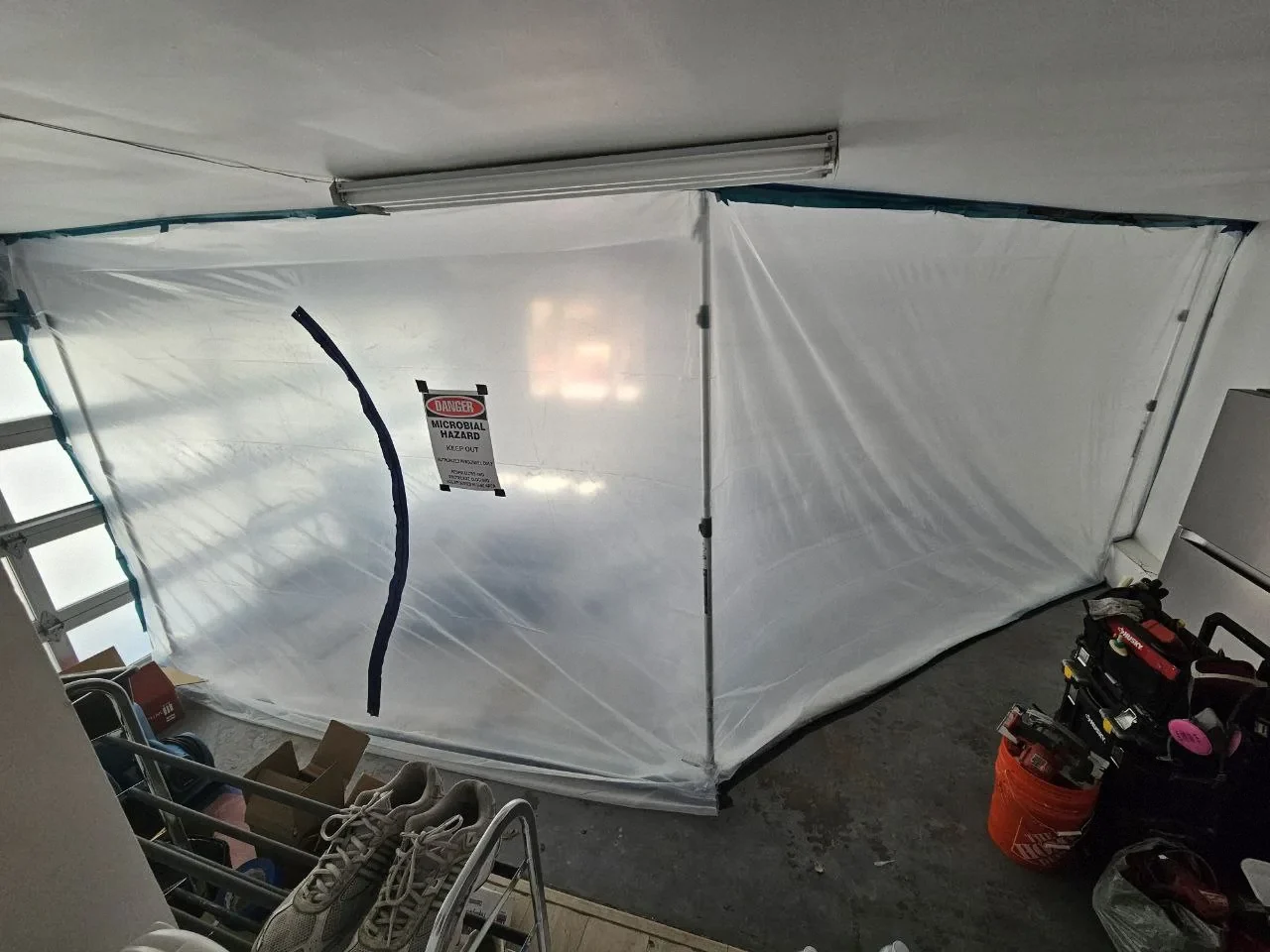
Protect people and stop adding water
Keep people and pets away from sewage and affected materials. If a backup is active, avoid using connected toilets, sinks, showers or appliances while the blockage is being investigated. Do not use a household vacuum for sewage or enter water to reach an electrical switch. Call 911 if there is an immediate threat to life.
Note where sewage first appeared and whether it is still rising or flowing. A backup at a floor drain, an overflowing exterior cleanout and a problem observed in another unit may require different investigations. A visible point of entry does not establish whether the blockage is in a private building line or a public main.
If you can do so safely, photograph affected areas and record when the backup began. Tell the property manager, owner or other party who can authorize access. The information can help responders plan their assessment, but it should not delay urgent action or put anyone in contact with the sewage.
Find and clear the blockage
The first response must address the cause of the continuing backup. Check which sewer agency serves the address and contact it as appropriate; a plumbing professional may be needed for private plumbing. Give a clear description of the symptoms, including whether several fixtures are affected and whether water remains in use elsewhere in the building.
Once the blockage has been located, ask which part of the line was checked and what remains uncertain. A cleared obstruction and a clean room are separate outcomes. Sewage can affect flooring, wall materials and contents after the line is flowing again, and those materials need their own evaluation.
If work on the line is recommended, ask for the proposed scope and the responsible permit holder. Record the findings and any inspection results. Avoid deciding in advance that a particular line material, tree root or neighbor caused the backup; those conclusions require evidence from the actual system.
An existing backflow device needs attention
For a district-connected property with a wastewater backflow protection device, WVSD describes a flap that closes against a backup originating downstream. The district also notes that a closed flap can prevent wastewater from the building from flowing out, potentially causing a backup from the building’s own plumbing. Not every property has this device.
WVSD recommends checking a device that is present at the manufacturer’s recommended intervals, typically every three to six months, to confirm that the flap moves freely and is clear of sediment. This is maintenance guidance for an installed device, not an instruction to handle sewage during an active overflow.
If the device may be involved, tell the district or a qualified plumbing professional what was observed and ask for an assessment. Do not assume that a closed flap proves the location of the original obstruction. The response should consider both the outside sewer condition and the building’s own plumbing before normal use resumes.
After sewage enters a room
Explain which floors, walls, furnishings and stored items were contacted. The assessment should consider the source and the materials involved rather than treating sewage like a clean supply-water leak. Keep access limited until a safe work plan is in place, especially where occupants must pass through the affected room.
Ask how unaffected contents will be protected and which materials may need to be removed for evaluation. Some areas may be inaccessible until work starts. If a wall or floor is opened and additional damage is found, agree on how the finding and any change in scope will be documented.
Avoid moving contaminated items into clean rooms without a plan. If the property is a rental or a shared business building, coordinate the work with the people who control the affected areas. A written description of the affected space and the date the line was cleared helps separate the source repair from restoration of the building.
For items that must be evaluated separately, ask the responsible provider how they will be identified and documented before removal. A property manager may also need to coordinate access with neighbors or commercial tenants. These practical arrangements should be agreed before work begins, while keeping anyone who is not involved away from the contaminated area.
A cleanout installation has its own inspections
WVSD describes a process for installing a property-line cleanout on a district-connected line. It says the district performs a camera inspection during its second inspection of that installation and that the local building or plumbing inspector also needs to inspect the cleanout. This applies when such an installation is part of the permitted work, not to every sewage cleanup.
If a cleanout is required, ask the responsible plumber how district and local inspections will be coordinated. The district warns that missing a local inspection can require the installation to be exposed again. Keep the permit and inspection records with the scope so the owner can tell which steps were completed.
An inspection of a new cleanout does not certify that all interior damage has been restored. Conversely, cleaning affected rooms does not repair a deficient sewer line. Each task has a separate purpose and may involve a different professional or agency.
If work extends into the public right-of-way
WVSD says sewer construction on its sanitary system in the public right-of-way or a district easement requires a district-registered contractor. This condition concerns work on the district system in those locations; it is not a claim that Water Damage Guard performs that sewer construction or that every interior cleanup needs it.
Before authorizing line construction, establish the location and the scope with the district and the professional doing the work. Private property, a public right-of-way and an easement are different jurisdictions. A cleanout lid or a wet area in a yard does not by itself identify the legal property line.
Ask who will obtain the required authorizations and coordinate inspections. If a separate trade performs the line repair, arrange the timing with restoration of the affected interior. Avoid covering or rebuilding an area before the applicable inspections and source repair have been completed.
Document the handoff
Keep the information provided by the district, plumber and restoration provider together. A useful record identifies the reported symptoms, the work performed on the line, the rooms and materials addressed, and any areas that could not be accessed. If the scope changes during the work, record the reason and who approved the change.
Contact your insurer or property manager and ask what documentation they need. Coverage depends on the policy and claim, not merely on the word used to describe the water. If the building is subject to an occupancy restriction, follow the authority’s direction about return and any required approvals.
Water Damage Guard accepts calls at (650) 550-0619, 24/7, from San Carlos. Describe the affected area, whether the backup is still active and any access limitations. The next steps depend on the conditions at the property and the source investigation.
Common questions
Should I keep using fixtures during a backup?
Avoid using connected fixtures while the blockage is being investigated; adding water can worsen an active backup.
Does every Campbell property have a backflow device?
Do not assume one is installed. WVSD describes how an existing device works and recommends maintenance at the manufacturer’s interval.
Does cleanup clear the sewer blockage?
The blockage investigation and line repair are separate from assessing and cleaning affected building materials. Coordinate each scope with the responsible agency or trade.
When does WVSD require a registered contractor?
The district says work on its sanitary system in a public right-of-way or district easement requires a district-registered contractor.
Is a cleanout installation inspected?
WVSD describes district inspections, including a camera inspection, and a local building or plumbing inspection for a property-line cleanout installation.