Stop using affected fixtures
Wastewater appearing at a drain or toilet requires a different response from a clean supply-line leak. Keep people and animals away from the contacted area. Stop adding water through affected fixtures when safe, and tell the owner or building manager immediately. If there is an electrical hazard or another immediate threat, leave and contact emergency responders.
In a shared building, use of another fixture may add water to the same line. Coordinate with management before cleanup begins. A plumber can investigate the blockage while a restoration team evaluates the rooms and materials contacted by sewage.
When the city checks the main
San José’s sewer bulletin says city staff can check the main sewer line. If it is clear and the blockage is in the lateral, the property owner needs a plumber to clear that line. The route of the blockage must be established for the actual incident; a backup in one room does not identify the location by itself.
Tell the responding parties when the backup occurred, whether it continues and which fixtures are involved. Ask for an explanation of the finding and the next step. A pipe-clearing visit and cleaning contaminated materials are separate activities.
Does the building need backwater protection?
The city bulletin describes a backwater valve requirement when the floor level of the lowest plumbing fixture is less than one foot above the next upstream manhole cover. A qualified plumber can measure the relevant elevations and determine how the condition applies. A basement alone does not automatically establish the requirement.
The bulletin also notes that a valve should not be installed where backflow protection is unnecessary. Ask the plumber to explain the measurement and the proposed arrangement rather than choosing a device from the appearance of a drain.
Permit and inspection for a valve
San José’s bulletin states that installation of a backwater valve requires a plumbing permit and inspections. Before work starts, identify who will apply and arrange access for the inspector. If the pipe is exposed in a trench or beneath a floor, the schedule matters before that area is covered.
Valve installation is a plumbing project. It does not replace removal of sewage or evaluation of materials already contacted by the backup. Discuss the separate scopes, responsible parties and any limits of the initial assessment.
Maintaining an existing valve
The city’s bulletin recommends inspecting existing backwater valves twice a year. Ask the plumber where the device is located and how it should be maintained. A valve that is inaccessible or obstructed may not be simple to inspect; the appropriate work depends on the installation.
Keep a record of maintenance and the professional who performed it. If a backup occurs despite a valve, have the system examined rather than assuming the device alone explains the cause.
How far did wastewater travel?
Water may move along a floor, under cabinets or through a penetration to the level below. Make a list of rooms reached and tell the team which spaces are inaccessible. Visible staining can guide an assessment but is not a reliable map of everything inside a wall or floor assembly.
The condition of the water and the materials contacted affect the cleanup method. Porous furnishings, insulation and unfinished materials may need different decisions from hard sealed surfaces. Ask what is proposed for each type of material and who can authorize removal.
If an opening is necessary to examine a cavity, discuss its location and the reason before work begins. New findings may change the scope. Keep a record of what was opened and what remains unexamined so reconstruction is based on the available evidence.
Containment and material handling
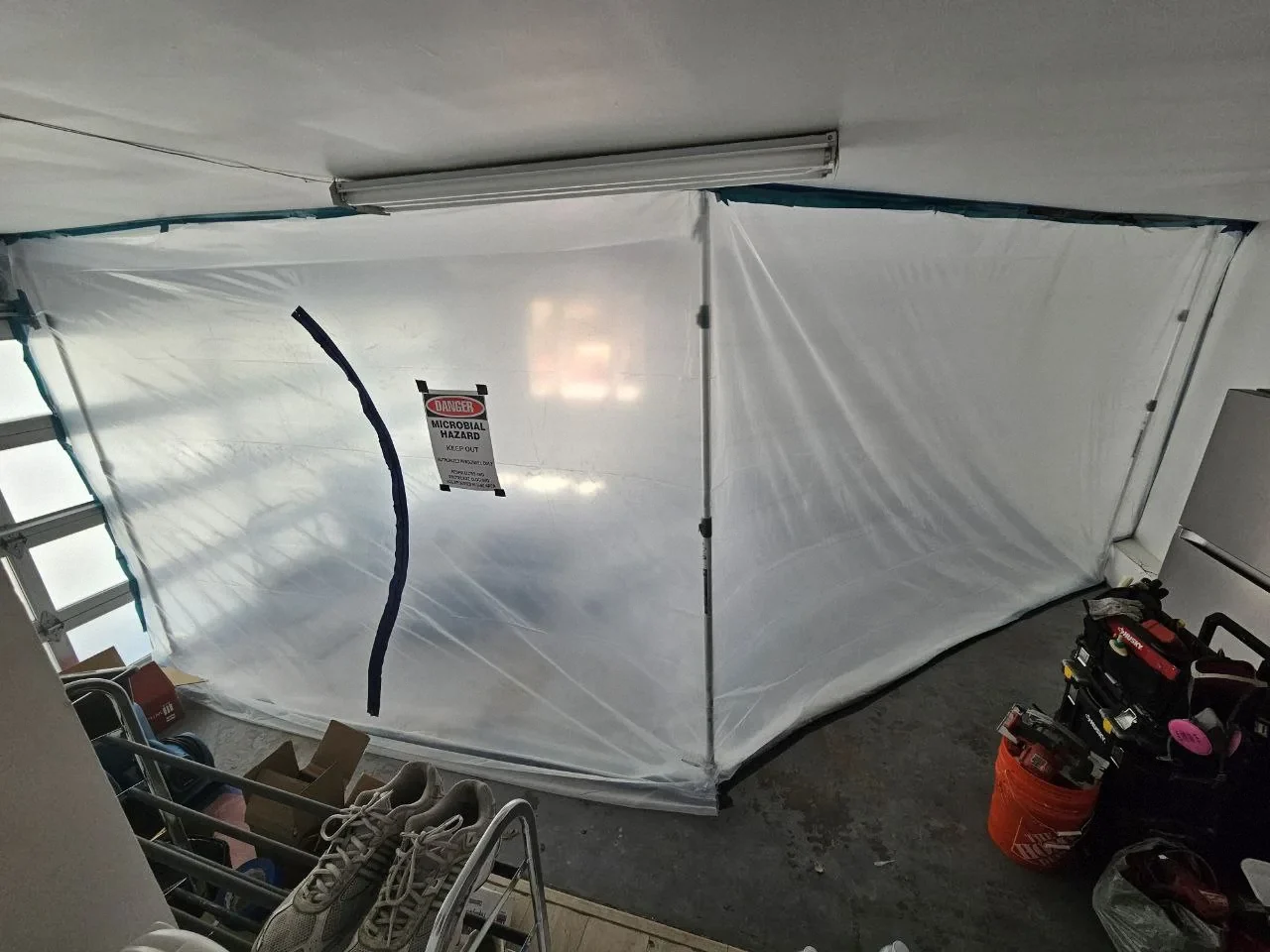
A work area may need to be separated from rooms that remain in use. Discuss access paths, temporary barriers and how workers will move equipment or debris. In a business, the plan may also need to account for staff, inventory and deliveries. In an apartment building, a manager may need to coordinate common areas.
Create an inventory of belongings before moving them when conditions allow. Identify the person responsible for decisions about cleaning, storage and disposal. An insurer may request documentation; ask what it needs before discarding items. The policy and circumstances govern coverage.
Do not treat a clean appearance as proof that all contacted materials have been addressed. Ask which surfaces were evaluated, which were cleaned or removed and whether a further inspection is recommended for a concealed area.
Drying after source control
Accessible liquid can be removed once work can proceed safely and the active source is controlled. Continued use of a blocked line may cause another overflow, so the plumbing and cleanup schedules need to be coordinated. Confirm with the responsible plumber when normal use can resume.
An affected structure may need monitoring during drying. Readings are interpreted according to the material and site conditions; one reading cannot establish the condition of every hidden cavity. Ask where measurements will be taken and how progress or a change in the plan will be communicated.
If a failed component or wet electrical equipment is discovered, pause the affected work and involve the appropriate professional. A contractor should explain the boundary between the restoration scope and the work that another trade must complete.
Preparing for reconstruction
Before putting a floor or wall back together, review the source repair, material assessment and applicable inspection steps. A building owner may need to coordinate several contractors. If a permit is involved, make sure the person responsible for scheduling knows when access will be available.
Photographs, invoices and a dated account of the incident help explain what happened. Keep a copy of any plumbing findings and note when fixtures were returned to service. The restoration record should identify areas that could not be examined as well as the work performed.
A temporary cover or barrier can help manage access while repairs proceed, but it is not the finished repair. Discuss who maintains the temporary measure and what happens if conditions change or work is delayed.
Make the first call useful
The order of work can be different for a small isolated overflow and a backup that reaches several rooms. Ask which areas the team can inspect during the first visit and whether furniture or built-in cabinets prevent access. If a manager controls the space, obtain permission before moving shared property. Explain any recurring pattern, such as a problem observed after a particular fixture was used, but do not treat the pattern as a diagnosis. A plumber can test the line and distinguish an obstruction from another defect. Keep the resulting observations with the cleanup record so subsequent trades know what has already been checked. If the source changes or another fixture backs up, notify the people working on the property and revise the plan as needed.
Provide the property address, a description of the affected fixtures and whether sewage is still appearing. Tell the team about access restrictions, shared spaces and the person who can authorize the assessment. Those details help organize the visit without substituting for inspection of the site.
Water Damage Guard serves San José from San Carlos. Call (650) 550-0619, 24/7, to discuss sewage cleanup and the observed conditions. The scope will depend on the assessment.
Common questions
Should I keep using the plumbing during a backup?
Stop adding water to affected fixtures when safe and coordinate with the plumber and building manager.
Who clears a blockage in the lateral?
The city bulletin says an owner needs a plumber if the main is clear and the blockage is in the lateral.
Does every basement require a backwater valve?
No. The city bulletin describes an elevation test and notes that a basement does not automatically trigger the requirement.
Does valve installation require a permit?
San José’s bulletin says a plumbing permit and inspections are required.
How do I discuss cleanup?
Call Water Damage Guard at (650) 550-0619, 24/7.