Limit contact with wastewater
Keep people and pets away from sewage and avoid touching wet electrical equipment. If it is safe, stop using fixtures connected to the affected line and tell the owner or manager. A flooded floor may conceal debris or electrical hazards. Leave and seek qualified help when the area is unsafe; call 911 for an immediate threat.
Note which fixtures are backing up and whether water rises while other plumbing is used. These details help the utility or plumber investigate, but they do not establish whether the obstruction is in a private lateral or the city main. Take photographs from a safe location and explain if water is continuing to enter.
The lateral and the city main
Santa Clara Municipal Code §13.10.040 requires users to keep sewer connections and laterals in good order at their own expense, and owners to maintain laterals free from listed defects and obstructions. The city’s property-development code defines a lateral as piping from the building or facility to the city-owned sewer main and identifies the served property owner as its owner.
The location and cause of an individual backup still need to be established. Ask the utility and plumber what they found and what work is proposed. A lateral can cross a property line or public area, so confirm the permits and access applicable to the actual repair. Do not infer a cost allocation for an unseen defect from the location of a floor drain.
A separate decision about a cleanout contractor
The city’s cleanout request form says it cannot reimburse fees paid to a private sewer service hired to install a cleanout. This concerns the cleanout installation described by the form; it is not a statement about coverage for every sewer repair. Ask the city about the current options and terms before authorizing work.
A cleanout provides access to a lateral but does not itself repair a blockage or structural defect. The person responsible for the property should understand who is locating the problem, who is performing the work and what the proposed charge covers. Keep the written scope and findings with the property records.
When a developer installs a lateral
Santa Clara’s property-development code says that when a developer installs a sewer service lateral from the main to the property line, the city makes the tap at the main and inspects the entire lateral installation. This is a specific installation scenario, not a claim that every sewer backup requires a new lateral.
If an incident leads to replacement or development work, ask the city and the responsible contractor which permits and inspections apply to the project. Coordinate that work with restoration inside the building. A repaired line and a cleaned room are different results, and both may need attention before normal use resumes.
Commercial grease interceptors
Santa Clara’s March 2026 Water and Sewer Utilities handout calls for a grease interceptor to be pumped when the final chamber is 25% full or within 90 days, whichever comes first. This is a requirement for properties with the relevant interceptor, such as covered food-service operations. It should not be presented as a residential maintenance schedule or proof of the cause of a specific blockage.
A business experiencing a backup should tell the plumber and utility which systems are affected and follow its applicable maintenance requirements. Keep the service records and determine whether the interceptor, lateral or another part of the system requires attention. A professional evaluation is needed before assigning the cause.
Assessing contaminated rooms and contents
Once the source is controlled and the area is safe, inspect the surfaces and belongings reached by wastewater. Liquid can move under flooring, behind baseboards and into cabinets. The source, duration of wetting and material condition influence whether a surface can be cleaned or material needs removal.
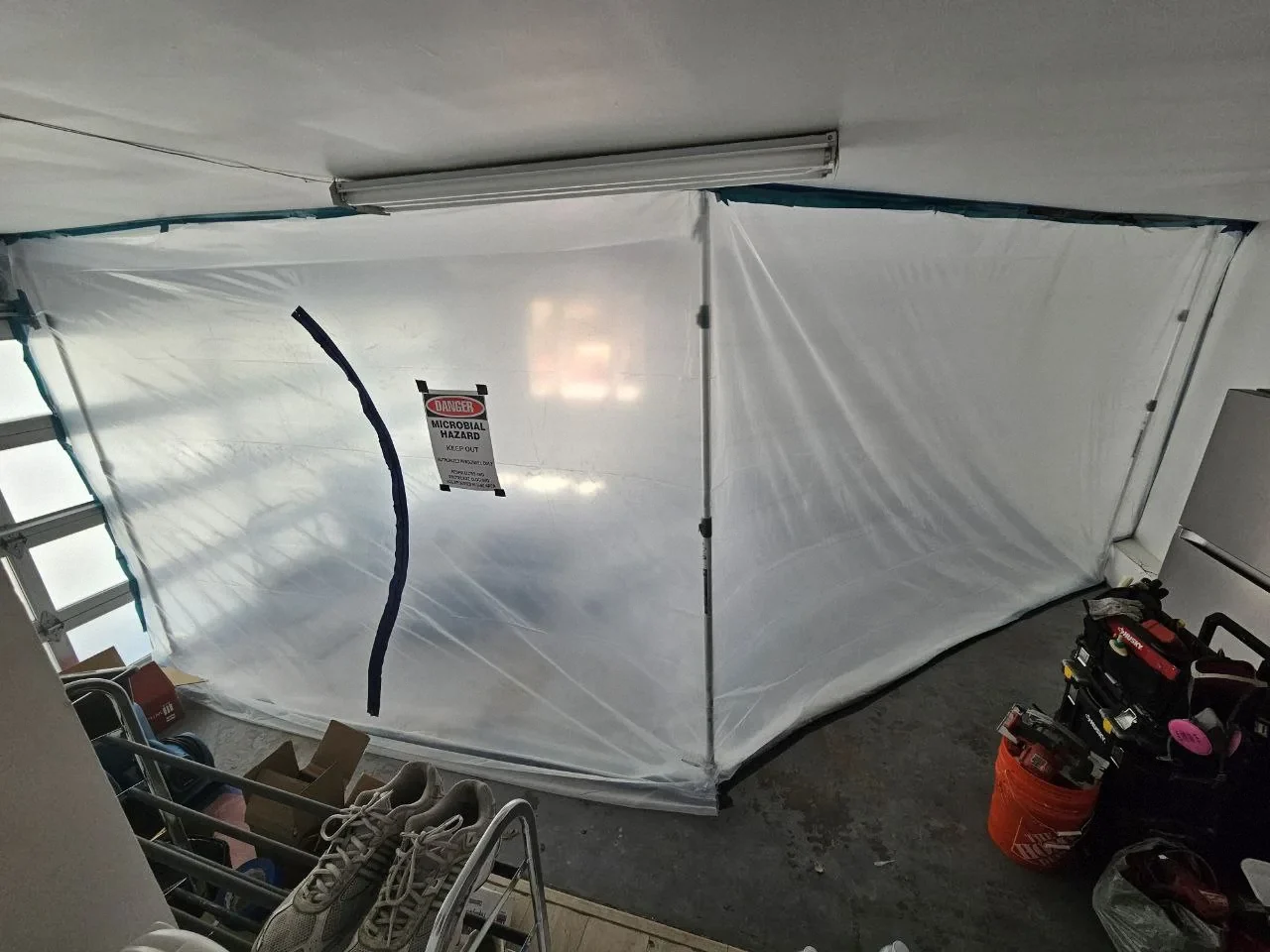
Agree on a route for equipment and debris so that affected material is not carried through unaffected spaces unnecessarily. In an apartment or business, a shared corridor may require coordination with management. Ask what is proposed for contents, and document items when it is safe and practical before deciding on disposal.
An initial inspection may be limited by a closed wall or a heavy cabinet. The team should identify those limits and explain what further access would reveal. If the scope changes after opening the area, the owner should receive an updated description and authorize the next stage.
Drying and reconstruction
Extraction removes liquid that can be reached, but moisture may remain within an assembly. A surface that looks dry is not proof that insulation or material below a finish is dry. Measurements over time are useful when considered with the physical condition and access to the affected space.
Coordinate the plumber, restoration team and any trade rebuilding the wall or floor. Ask who will arrange required permits and inspections before a concealed line or framing is covered. If the source continues to leak, drying may need to be revised. The people responsible for the project should know which work is complete and what remains open.
Keep a dated record of repairs, photographs and invoices. If another backup occurs, record whether the same fixtures are involved and contact the responsible utility or contractor. The new event needs its own investigation; a previous repair does not prove its cause.
Questions before authorizing the work
Ask the plumber to describe the location of the obstruction and whether the line can be evaluated after flow is restored. A blockage can be cleared without resolving a separate defect in a pipe. The appropriate next step depends on the findings, the condition of the lateral and the city’s requirements for the proposed repair.
Ask the restoration team which rooms and materials were directly affected, which were protected and which could not be inspected. A cabinet base or floor assembly can hide material below the visible water line. Agree on who may authorize further access and how the scope will be updated if additional damage appears.
Clarify how the work relates to the insurer’s documentation requirements. Keep photographs, invoices and a timeline, and ask before discarding items where it is safe to retain them. An insurance determination is separate from the physical assessment, and coverage depends on the policy and circumstances.
After the source repair, coordinate a check of the affected plumbing and the drying work before replacing finishes. If the work involves a new connection or a change in the public right-of-way, ask the city what approvals are needed. A clear record of each trade’s responsibility helps the owner understand what remains to be done.
Coordinating an occupied property
For a rental or multi-unit building, identify the person who can approve work and communicate with occupants. The affected fixtures may share a line with another unit, and a service interruption can extend beyond the room where wastewater appeared. Agree how residents will be told when plumbing can be used again.
For a business, discuss access for staff, deliveries and customers while the affected area is unavailable. Establish a safe work route and a contact for changes in scope. Do not reopen a space that remains unsafe simply because visible water has been removed.
Water Damage Guard serves Santa Clara from San Carlos. Call (650) 550-0619, 24/7, to discuss sewage cleanup, the known source and access restrictions. The appropriate work depends on assessment of the property.
Common questions
Does a backup show that the city main is blocked?
No. The utility or plumber needs to investigate the location of the obstruction.
Who maintains a Santa Clara lateral?
The city code assigns maintenance duties to users and owners. Ask the city about the actual line and proposed work.
Does the city reimburse a privately installed cleanout?
The city request form says it cannot reimburse fees for a private sewer service hired to install a cleanout.
Does clearing a line clean the wet room?
No. Plumbing repair and cleanup of affected materials are separate tasks.
How can I reach Water Damage Guard?
Call (650) 550-0619, 24/7, to discuss the affected area.