Limit exposure and additional flow
Wastewater entering a home or business can contaminate flooring, walls and belongings. Stop using connected fixtures while the backup is active. Keep people and pets away from the affected area, and avoid walking through the water to retrieve items. Additional flushing or laundry can add water to a blocked system and worsen the overflow.
If water has reached an electrical outlet, appliance or panel, leave it alone and have a qualified person address the hazard. Call 911 for an immediate threat. Do not remove a manhole cover, open a pressurized cleanout or enter a confined space to find the obstruction.
Water Damage Guard provides sewage cleanup in Cupertino from San Carlos. Call (650) 550-0619, 24/7, to explain where the backup appeared, whether it is continuing and who is investigating the line. The cleanup scope can be determined after safe access and an assessment of the materials reached.
Start with the correct sewer district
Cupertino has more than one sewer provider, so check the property’s service area before relying on a district-specific rule. The information below comes from Cupertino Sanitary District and applies to properties it serves. The City’s utility map can help identify the provider for an address.
Cupertino Sanitary District describes the homeowner’s responsibility for the private house lateral, cleanout and point of connection to the street lateral. It says the District maintains and repairs street laterals when there is an accessible, serviceable property-line cleanout. Confirm the location and the specific responsibility with the District rather than assuming all work has the same owner.
If the cleanout is inaccessible or its location is unknown, tell the District and the plumber. Do not try to open it yourself while sewage is overflowing. An agency or plumbing investigation can establish where the blockage is; cleaning the interior is a separate task once contamination has entered the building.
Backflow and lower fixtures
The District says a sewage backflow prevention device is a condition of connection for properties with plumbing lower than the public sewer system. Whether this condition applies requires information about the actual plumbing and sewer elevations. A qualified plumber or the District can advise when the device cannot be located or its condition is uncertain.
The District describes a separate private pump condition for new construction or major remodeling when the lowest floor with plumbing is less than one foot above the nearest upstream manhole rim. This depends on both the project type and elevation; it does not mean every backup requires a pump or that every existing home needs one.
A backflow device or pump is part of the wastewater system. Neither cleans contaminated flooring or belongings after an overflow. If a device needs repair, coordinate the plumbing work with the cleanup so that the continuing source and the affected rooms are addressed in the appropriate order.
Video inspections for defined projects
Cupertino Sanitary District says new structure construction and major remodeling require video inspection of the lateral. For a project connecting to an existing lateral, its FAQ describes an inspection at the beginning and another after connection to verify compliance. Ask the District about the specific project; this is not a general rule that every sewer backup needs two videos.
An inspection can inform the plumbing contractor about the line, but its findings do not automatically define which surfaces inside a building need removal. Keep the report and ask the responsible parties to explain their separate scopes. If work in a public street is proposed, confirm required approvals before it begins.
When construction follows cleanup, identify which areas must remain open for inspection and which can be dried or repaired. A schedule should leave time for the responsible agency and trades to complete their work before finishes conceal the affected system.
Assess the contamination path
Wastewater may travel below a floor finish, through a wall opening or into an adjacent room. The visible edge of the water is a starting point for investigation. The team should consider the source, time of exposure and material type, and identify areas that cannot be examined until access is arranged.
From a safe position, record the time and location of visible water and photograph affected belongings. Share prior repairs and any recurring problems with the people investigating the source. Observations can help focus the assessment, but they do not by themselves establish the precise failure or responsibility for payment.
Where a wall or floor must be opened, determine whether separate hazardous-material evaluation is appropriate before disturbing it. Age alone is not evidence of a particular material. Explain the proposed opening and the expected impact on occupied areas to the person authorizing the work.
Cleaning and drying have distinct roles
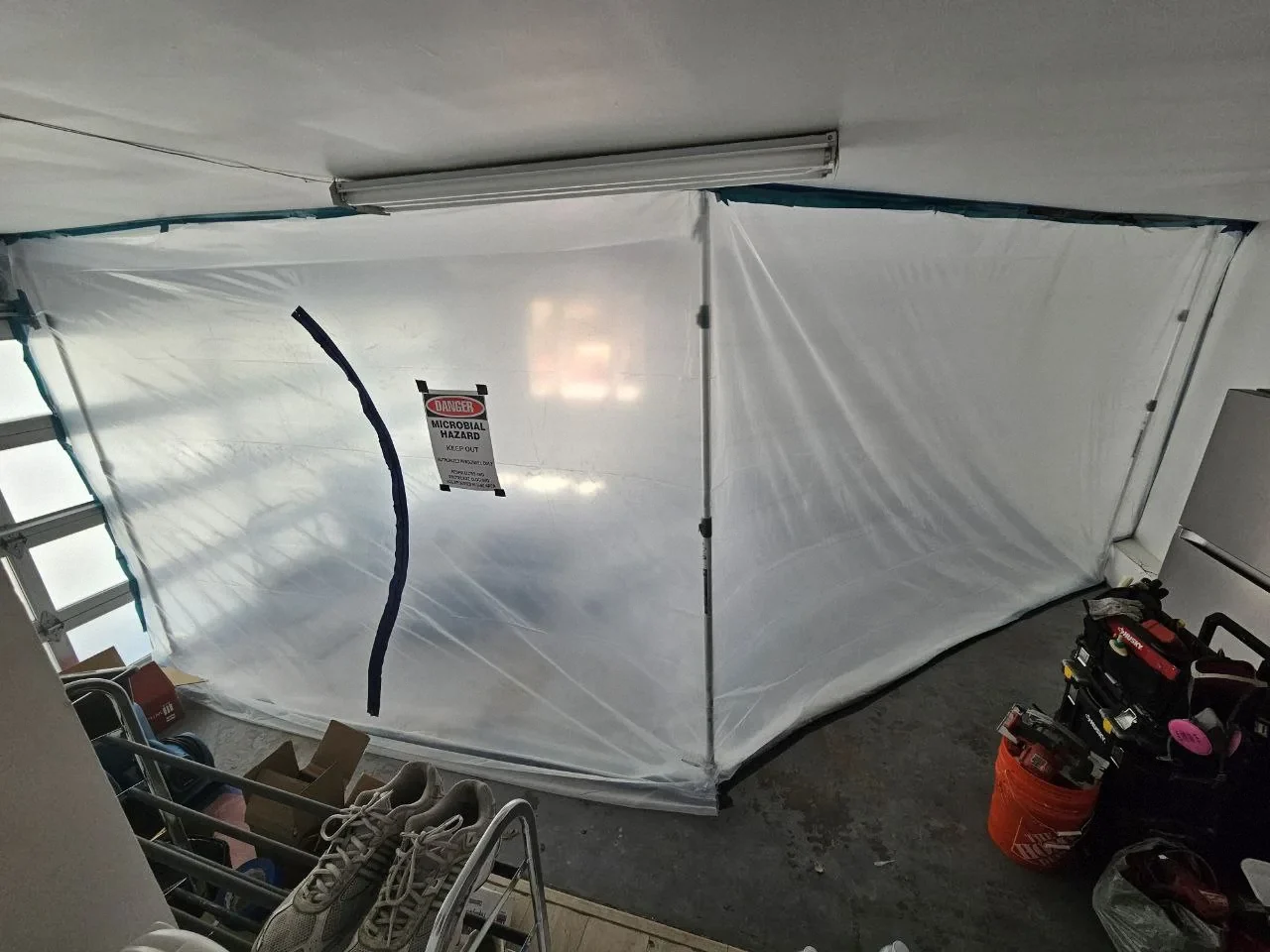
Contaminated water and unsuitable materials may need to be removed before drying can proceed. The plan should describe how the work area is separated from clean rooms, how debris is taken out and which materials are candidates for cleaning. Porous items that cannot be adequately cleaned may require removal.
After source control and appropriate cleaning, drying equipment can be placed for the actual space and a safe power supply. Follow-up observations and measurements help evaluate progress. A dry-looking finish does not prove that an enclosed assembly is dry, and drying alone does not remove sewage contamination.
Contents may need specialist treatment or disposal. Coordinate documentation with the owner and insurer when feasible and safe. A damaged furnishing, the sewer line and a wall assembly can each require a different decision, even when all were affected by the same event.
Discuss how progress will be reported and what remains inaccessible. Equipment placement can change as water is removed and concealed materials are examined. If a new affected area is found, record its location and ask how it changes the scope. A clear record of the actual observations helps the owner and repair trades plan the next phase without assuming that every adjacent room was affected.
Coordinate repair and return to use
Before replacing finishes, confirm that the blockage or other source is controlled and any applicable inspections are complete. Give the repair contractor the record of opened areas, removed material and remaining concerns. A separate plumber, electrician or other trade may be needed depending on the loss.
For a shared or occupied property, establish who authorizes work and how occupants will be informed of restricted areas. Discuss a route for equipment and debris that avoids unaffected rooms where practical. If the scope changes as concealed conditions are examined, ask for an updated explanation.
Call Water Damage Guard at (650) 550-0619 any time to discuss a Cupertino sewage cleanup. Identify the sewer provider if known, explain current access and describe what the District or plumber has already done. The team can plan an assessment without treating a phone description as a completed diagnosis.
Keep the District’s response and any plumber’s findings with the cleanup records. A blocked house lateral, a defective component and contamination inside a room are distinct findings, and the appropriate next steps may differ. Ask each party to identify what it inspected, what remains uncertain and who should be contacted about any outstanding system repair.
Related sewage cleanup guides
Read more about wastewater cleanup decisions and the factors that affect a work scope.
Common questions
Should I flush a toilet during a backup?
Stop using connected fixtures while the source is being investigated and controlled.
Does Cupertino Sanitary District serve every address in Cupertino?
No. Check the City’s service map to identify the provider for the property.
Who maintains a private house lateral in the District?
The District says the owner maintains and repairs the private house lateral, cleanout and connection point; its street lateral service depends on an accessible cleanout.
Does every backup require two video inspections?
No. The District describes two inspections for specified new construction or major remodeling connecting to an existing lateral.
Can drying equipment replace sewage cleaning?
No. Contamination must be addressed appropriately; drying is a separate part of recovery.