First, limit contact and additional flow
Keep people and pets out of the affected rooms. Stop using toilets, sinks, showers and appliances connected to the affected drain while the source is being investigated. Additional wastewater can make an overflow worse. Do not step into contaminated water to operate electrical equipment or reach a shutoff. If there is an immediate threat to life, call 911.
A backup may originate in a building drain, the private lateral or a public sewer, and the visible location alone does not establish the cause. Note which fixtures backed up and whether water rose during use or while no one was using them. A plumber and the responsible sewer agency can use that information to determine what to investigate. Avoid opening a cleanout or moving contaminated belongings through unaffected rooms without a plan.
Water Damage Guard is based in San Carlos. Call (650) 550-0619, 24/7, to discuss sewage cleanup in Morgan Hill. Describe the affected rooms, approximate extent and access restrictions. A cleanup assessment and a plumbing repair address related but different problems: removing contamination does not repair a broken pipe, and clearing a blockage does not by itself clean the building.
Arrange a source investigation
If several low fixtures are affected, provide that detail to the plumber or utility; it can help them decide where to begin. If only one fixture is overflowing, a local obstruction is possible, but that observation is not a diagnosis. Report repeated incidents, unusual drain sounds or a cleanout overflow as observations. Do not promise a cause to an insurer before the pipe has been evaluated.
A camera can show the inside of an accessible pipe and help locate visible damage or obstructions. It does not automatically establish the condition of every joint or prove who is responsible for work outside the field of view. Ask for the inspection record, the location of any defect and the recommended repair. If testing or excavation is proposed, clarify who will obtain permits and who will restore the disturbed area.
If a public system is suspected, report the location to the responsible agency. A private contractor may still be needed for the building and its private connection. Record the time of each call and any instructions without assuming an agency will perform private work. Explain whether a cleanout is overflowing, where water has appeared, and whether the problem is continuing.
The sale inspection is a separate process
Morgan Hill distinguishes the city-qualified contractor who inspects a private sewer lateral from the licensed plumber who can inspect plumbing fixtures. Ask which inspection is needed for the transaction and whether an exemption applies to the property. A seller should not assume that a person qualified for one part of the utility inspection is automatically authorized for the other.
If a lateral inspection has failed, the city describes an option for a buyer to accept responsibility by agreement. Where that arrangement applies, the city gives the buyer 180 days after water service begins to complete repairs. This is a transaction-specific procedure, not a general deadline for responding to an active overflow. Read the city’s current instructions and make the agreement and repair obligations clear before closing.
The city’s grant program also matters when a qualifying owner plans lateral work. It requires written city approval before construction, and work started before approval is ineligible. The city describes fiscal year 2026–27 applications as first come, first served until funds are exhausted. A published program is not a guarantee of an award; check the current terms and funding before relying on it.
Contain the affected area
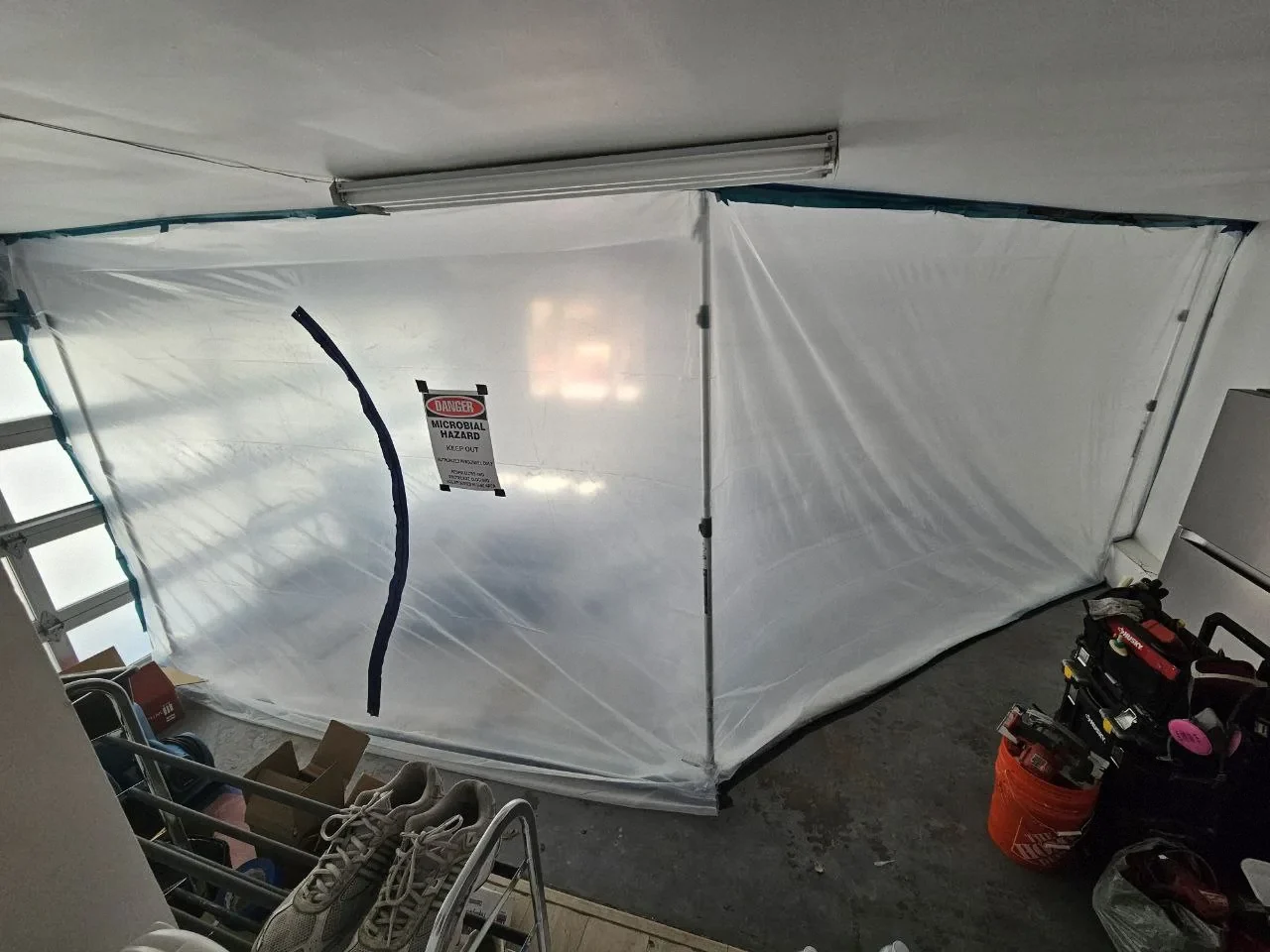
Sewage can carry contaminants onto flooring, walls, stored items and shoes. Limiting traffic helps avoid transferring residue from a wet room to a dry hallway. Identify where water traveled, including beneath door thresholds or behind cabinets. If the flow has reached a shared hallway or neighboring unit, notify the responsible property manager promptly so that access and affected spaces can be assessed.
A restoration professional can identify which materials are readily cleanable and which porous items may need removal. The decision depends on the contamination, material and condition, not simply on whether an item looks undamaged. Discuss photographs and documentation with the insurer before discarding contents when it is safe to wait. Keep a list of items and avoid transporting wet material through clean rooms unnecessarily.
Protective equipment and containment should match the situation. Fans pointed across contaminated surfaces can spread material into other areas; a drying plan should account for cleaning and containment rather than merely moving air. Do not mix cleaning chemicals or use a fragrance to conceal an unresolved odor. The goal is to address both the wastewater and any remaining moisture.
Drying and checking hidden materials
Water can move beneath resilient flooring, into baseboards and behind drywall even when the surface has begun to dry. The investigation should follow the actual path of the water and examine adjacent materials where accessible. A moisture reading is one piece of information; the source, construction and contamination also affect the plan. An affected assembly may need to be opened to understand its condition.
Once the source is stopped and the affected area has been cleaned or materials removed as appropriate, drying can be planned for the exposed structure. Record what was inspected and ask what will be checked before cabinets, baseboards or other finishes are reinstalled. If the source remains active, drying equipment cannot resolve the continuing intrusion.
Odor after a backup deserves investigation rather than a promise that it can be eliminated by one treatment. Remaining residue, trapped moisture, a damaged drain or another source may require different action. Ask the people handling the pipe and the affected building materials to coordinate, and keep their findings together so that the next decision is based on evidence.
Coordinate repairs and property access
Before reconstruction starts, agree on the proposed work, access route and whether other trades are involved. A plumber may need to repair a damaged drain, while electrical or building work may require a different professional. If the work expands after a wall or floor is opened, get the revised scope in writing and ask the city which permits or inspections apply.
For a rental, inform the owner or manager of the conditions and preserve the written request. Discuss access, the availability of essential facilities and any temporary arrangements. Tenants should avoid assuming that a cleanup company decides legal responsibility or insurance coverage. Those questions depend on the agreement, the cause and the applicable rules.
If the damage affects a shared building, identify the contact for common areas and document which units are affected. Communicate the finding without speculating about a neighbor’s responsibility. Keep copies of the plumber’s diagnosis, the restoration scope, receipts, permits and inspection results so that the owner and insurer can review the same information.
Questions to ask before work begins
Ask how the source will be isolated and whether more wastewater could enter while the pipe is being evaluated. Request a description of the affected rooms, material handling, protection of unaffected areas and the basis for any proposed removal. If an item cannot be evaluated immediately, record the uncertainty instead of treating it as either salvageable or lost.
Ask who is responsible for disposal, repairs and any final inspections. If a lateral grant might be relevant, contact the city before authorizing construction and confirm eligibility and available funds. A grant can help with qualifying pipe work but should not be represented as payment for all cleanup, contents or emergency costs.
After the immediate work, retain a copy of the completed scope and the source-repair record. If a recurring blockage or a new wet area appears, report it promptly. The earlier record can help distinguish a continuing source from a new event, although it cannot substitute for a current inspection.
Common questions
Should I keep using the fixtures?
Avoid using fixtures connected to the affected drain until the source is understood; additional wastewater can worsen a backup.
Does cleanup fix a damaged sewer pipe?
No. Cleanup addresses affected materials and contamination. A plumber or responsible agency must evaluate and repair the pipe as appropriate.
Does the city pay for all lateral repairs?
Do not assume that. Morgan Hill has a grant for qualifying work, with written approval required before construction and funding subject to availability.
What happens if a buyer accepts a failed inspection?
The city describes a 180-day period after water service begins for repairs under its buyer agreement. Confirm the transaction-specific conditions with the city.
Can a camera inspection identify every problem?
It can document accessible visible pipe conditions, but the scope and findings should be reviewed with the qualified professional and the applicable agency.