Water damage restoration in Palo Alto: safety and source control
A pipe leak, sewer backup and storm flood can affect the same room in different ways. When you call, explain where water appeared, whether it is still arriving and what it may have contacted. That helps coordinate restoration with any separate plumbing, utility or building work.
If a fixture valve is safely accessible, shut it to stop an active leak. Do not walk through standing water to reach a switch, appliance or electrical panel, and leave wet equipment alone. Ask the utility or a qualified electrician to make it safe. Stay clear of sagging ceilings and damaged structures. If there is an immediate threat to life, call emergency responders from a safe location.
Photograph damage and belongings when conditions permit, and note when the loss was discovered. Notify the insurer and ask what records it needs. A temporary shutoff can limit additional damage, but it does not repair the source. Coordinate the permanent correction and the assessment of materials that became wet.
Creek risk and floodplain decisions
Palo Alto identifies San Francisquito Creek as its primary source of flooding risk and provides maps for different storm scenarios. Risk varies by property, and a map or a neighborhood name does not predict the depth of water at an individual home. Monitor current official alerts and follow evacuation instructions during a storm.
The city’s floodplain FAQ describes substantial damage in terms of the cost of restoring a structure to its pre-damage condition compared with its pre-damage market value. It uses the threshold of 50% or more. The city also says required permits for damaged structures are not suspended after a flood. Ask the city how its rules apply to the actual structure and work before relying on a rough calculation.
Floodwater can carry sewage, soil and chemicals. Never drive or walk through it, and return only when officials allow access. An assessment after the water recedes should consider the route of entry, the materials contacted and any concealed moisture. Avoid opening wet electrical equipment or entering water to reach a disconnect.
Who to call for utilities and drains
City of Palo Alto Utilities lists (650) 329-2579 as its 24-hour emergency number for water, gas, wastewater and Public Works. Its electric emergency dispatch is (650) 496-6914. Describe the location and whether the concern is a gas or water leak, sewer spill or electrical problem. Call 911 for an immediate threat to life.
For a backup, avoid contact with wastewater and stop using connected fixtures until the source is assessed. A blocked fixture, a private lateral and a public main are different possible locations. The visible point of overflow does not establish which is responsible. A utility assessment and any plumbing work should be coordinated with cleaning and drying inside the building.
If a street drain is blocked, report the public problem to the city rather than entering traffic or floodwater to clear it. For damage inside the home, record what happened and share any utility or plumber findings with the restoration team. Source control is necessary before an affected area can remain clean and dry.
Sewer laterals and public right of way
The city’s residential sewer replacement inspection guide says that work in the public right of way, including underground lateral work, needs a Public Works street-work permit. The guide is dated 2020, so confirm the current process with the city before construction. A permit for private building work should not be assumed to authorize excavation in the street or sidewalk.
Ask the utility and plumber how the particular lateral is configured and where the city and customer responsibilities meet. A cleanout, shared connection or easement can change the practical investigation. Do not open a cleanout or operate clearing equipment without an assessment; utilities may be close to or intersect with other underground lines.
Keep a copy of the findings and any permit or inspection information. Once the source is controlled, the interior cleanup plan can address the surfaces and materials exposed to wastewater. Separate the question of who owns a line from the question of what must be cleaned after a backup.
Slab homes and hidden leaks
A city electrification guide says Eichler homes typically use hydronic radiant heating, with loops of piping in the floor. That describes a building type, not every Palo Alto home, and does not establish the material or condition of a particular pipe. An inspection is needed before attributing water on a slab to a heating loop or supply line.
If water appears at the floor, describe whether it changes when fixtures or heating operate and whether a recent repair occurred. A qualified plumber can evaluate possible sources and discuss detection options. Avoid breaking into a slab based on an odor, stain or general description of the home alone; the equipment and the source need to be identified first.
After a leak is stopped, the restoration assessment considers the flooring and adjacent materials that became wet. Water can move under a finish or into a wall. Ask how the affected area will be checked and when it is ready for replacement materials.
Assessment, cleanup and drying
When entry is safe and the source is controlled, the team assesses how water moved through the building. A measurement helps describe a condition at a point in time; the material, water source and access all affect its interpretation. A visible stain may not show moisture below flooring or behind cabinetry.
Cleaning and removal decisions depend on the exposure. Wastewater or outside floodwater can introduce contaminants, and porous materials that cannot be adequately cleaned and dried may require removal. Discuss the affected rooms and belongings, the reasons for any proposed opening or removal and how unaffected areas will be protected.
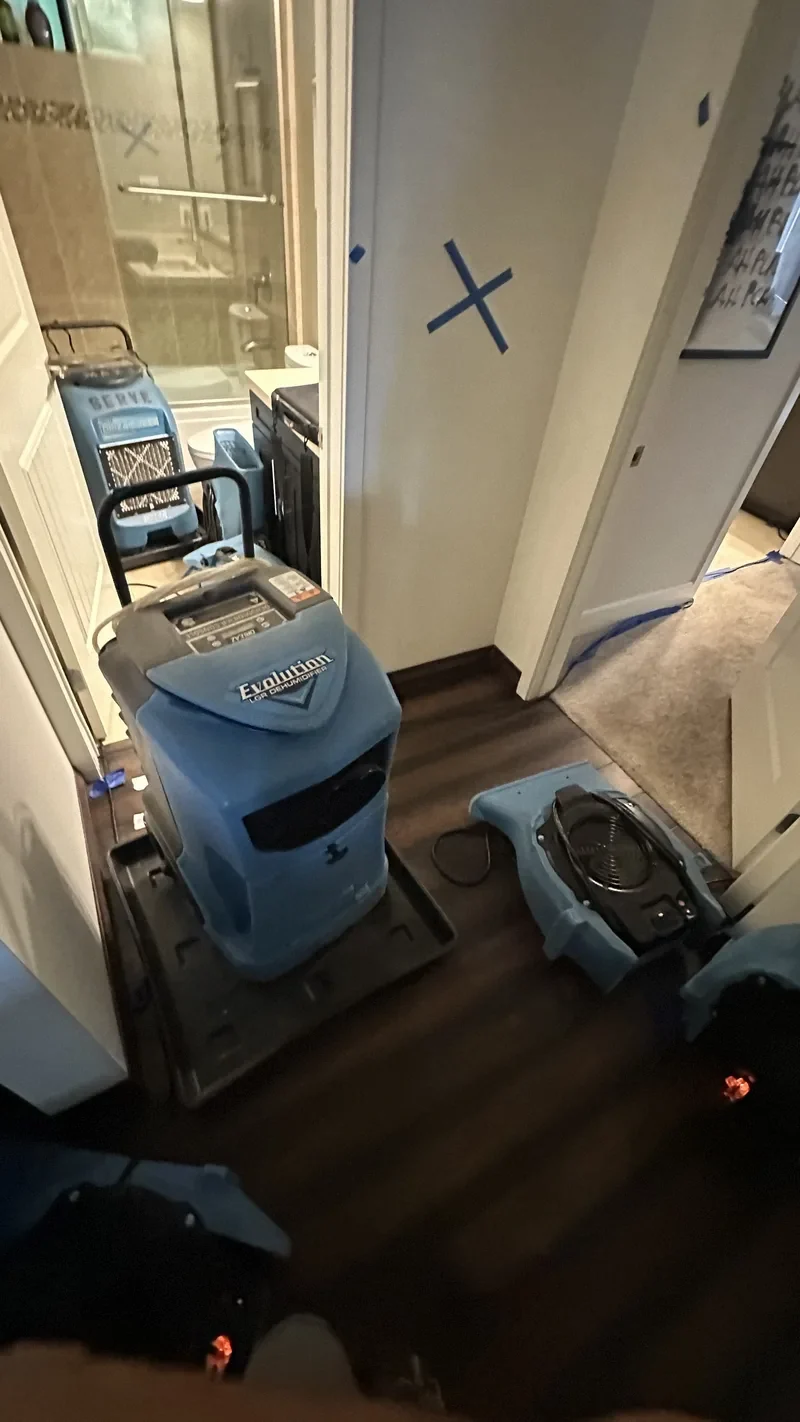
Drying equipment should be connected to a safe power supply and arranged for the actual materials. Ask how progress is monitored and how a change in scope will be communicated if hidden damage is found. Before reconstruction, coordinate with the person who repaired the source so that new finishes do not cover an active leak.
If a room cannot be used during the work, agree on a safe route to the rest of the home and discuss access for occupants, adjusters and repair trades. Keep children and pets away from the affected area. If the team discovers water behind a finish that could not be inspected initially, ask for an explanation of the finding and any change to the proposed work. Record what was removed and what remains to be repaired so that the next contractor has a clear handoff.
Permits for repairs
Palo Alto says projects including home remodels and plumbing, electrical and mechanical work require building permits. The city uses digital submissions and plan review for its Building Division. The actual work and any applicable exceptions matter; ask the city about the scope before assuming that a restoration proposal authorizes reconstruction.
Identify who will prepare the application, arrange separate utility or trade work and schedule required inspections. A wall may need to remain open until the relevant work has been inspected. Keep permits, findings and photographs with the restoration record for the owner, contractors and insurer.
If older materials may be disturbed, have qualified professionals evaluate suspect paint, insulation or other components before demolition. The age of the building alone does not prove that a particular material or pipe is present. A careful assessment can inform both safe handling and the repair plan.
Renters and shared buildings
Tell the landlord or manager promptly about a leak, the rooms affected and any condition that prevents normal use. Follow up in writing and keep photographs when safe. If the source could be in a neighboring unit or common system, ask management to coordinate access rather than opening a shared wall yourself.
Palo Alto says financial relocation assistance is required for eligible no-fault just-cause evictions, subject to its municipal-code eligibility provisions. Water damage alone does not establish that a household qualifies. Ask the city or an appropriate adviser about the particular tenancy and any notice before making a decision about relocation.
Condominium owners should contact the association where a common component may be involved. Insurance coverage, the duty to maintain a building system and responsibility for belongings are separate questions. Keep a record of notices, reports and temporary expenses and ask the relevant adviser how they apply to the actual loss.
Neighborhoods and nearby communities
The city’s neighborhood map identifies Crescent Park, Duveneck/St. Francis, Greenmeadow, Midtown, Barron Park and College Terrace among its neighborhoods. A neighborhood name does not establish the flood zone, pipe material or utility configuration at a particular address. Provide the property location when seeking an agency or service response.
Water Damage Guard serves Palo Alto from San Carlos. Call (650) 550-0619, 24/7, to discuss a water loss. We also serve nearby communities; their water, sewer and permit agencies may differ, so confirm the office responsible for the actual address.
Common questions
Who handles water and wastewater emergencies in Palo Alto?
The city lists (650) 329-2579 for 24-hour water, gas, wastewater and Public Works emergencies.
Does a creek flood map predict water depth at my home?
A map describes modeled or mapped risk. Check the particular address and current official information; do not treat a neighborhood name as a property determination.
Are permits suspended after a flood?
The city says required permits for repair of damaged structures are not suspended. Ask the Building Division about the proposed work.
Do all Palo Alto homes have slab heating?
No such assumption is supported. The city guide describes typical Eichler hydronic floor heating; a particular property needs inspection.
Does water damage automatically qualify a renter for relocation assistance?
No. The city’s assistance requirement applies to eligible no-fault just-cause evictions under its municipal code.
What if sewer work reaches the street?
The city’s residential sewer guide identifies a Public Works street-work permit for work in the public right of way. Confirm current requirements for the project.
Sources
- Palo Alto city source Checked
- Palo Alto city source Checked
- Palo Alto city source Checked
- Palo Alto city source Checked
- Palo Alto city source Checked
- Palo Alto city source Checked
- Palo Alto city source Checked
- Palo Alto city source Checked
- Palo Alto city source Checked