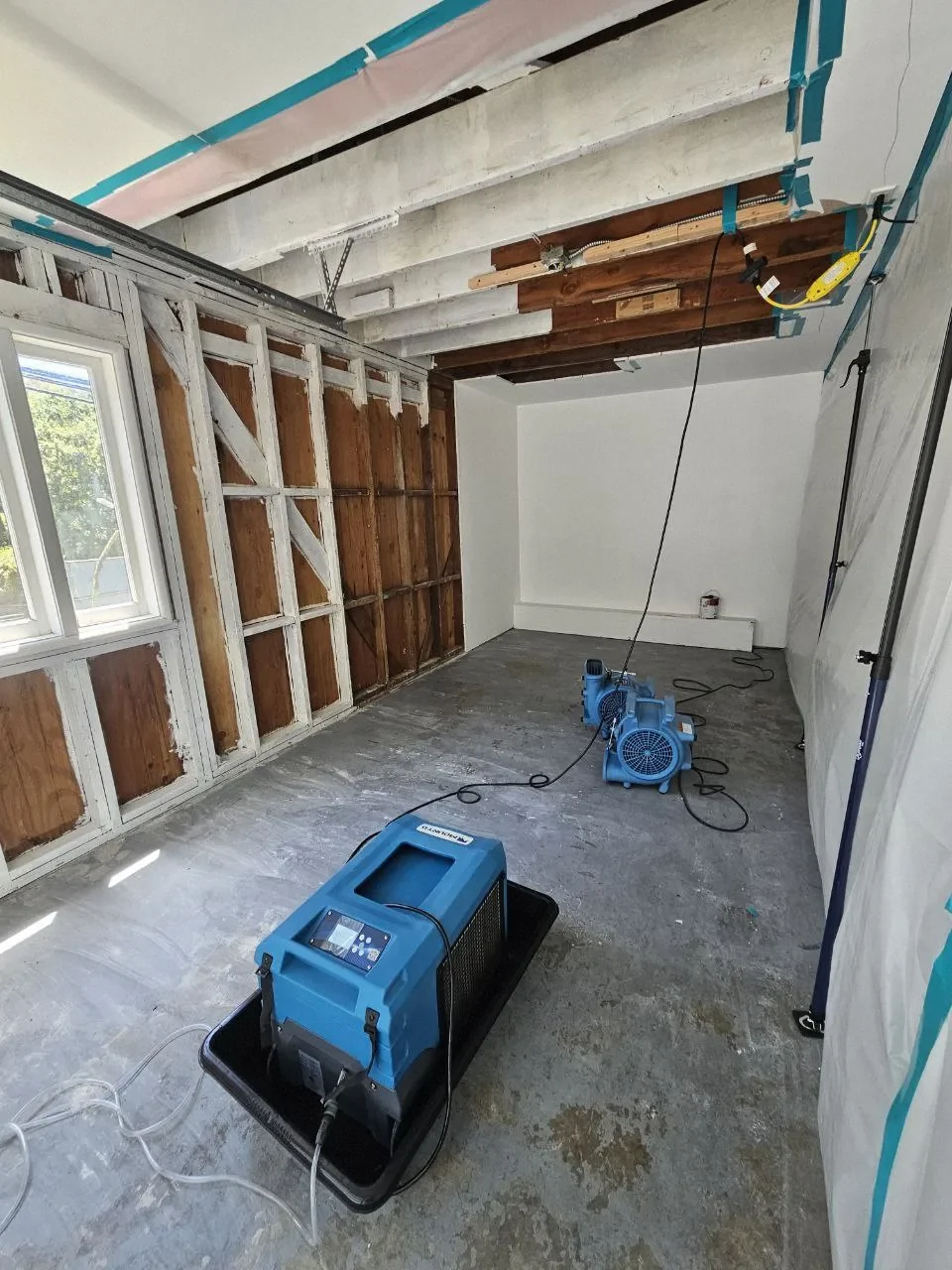
Make the affected area safe
A leaking supply line, an overflowing fixture or water entering after rain may produce a similar wet floor, but each requires a different source-control decision. Move people and animals away from the affected space. If a fixture valve can be reached without crossing water or approaching wet electrical equipment, close it. If not, leave the area and obtain qualified help.
Do not use a wet appliance or touch an outlet surrounded by water. A ceiling that is sagging can fall; stay out from underneath it. Call 911 for an immediate threat to life. If it can be done safely, note when the water appeared and take photographs before materials are moved. That record may help the owner, the person stopping the source and the insurer understand the sequence.
Water Damage Guard provides water damage restoration in Los Altos from San Carlos. Call (650) 550-0619, 24/7, to discuss the affected property. Describe the rooms involved, the apparent source, whether water is still entering and whether the building can be reached safely. You do not need to diagnose a concealed pipe or drain before calling.
A Los Altos sewer lateral has distinct responsibilities
The City says residents maintain the sewer lateral from the house to the main, usually located in the street. Reconstruction is divided at the first joint after the property line: the owner is responsible on the house side and the City on the main side. Maintenance and reconstruction are different questions. Ask the City about the actual location and the proposed work rather than assuming every cost belongs to one party.
For a sewer backup, Los Altos directs residents to Maintenance during office hours and to the police non-emergency line after hours. Staff can check the main. If the main is clear and the blockage lies in the lateral, a plumber may be needed. Stop using connected fixtures while the source is investigated and keep people away from wastewater in the building.
The City describes approximately 140 miles of public collection pipes, mostly six- and eight-inch vitrified clay mains. That statement concerns the public collection system, not the material or condition of a particular private lateral. A camera or other investigation of the specific line is needed before making a repair decision.
Creeks and flood information are address-specific
Los Altos identifies Adobe, Hale, Permanente and Stevens creeks as places where nearby properties may be more susceptible to flooding. Its guidance also explains that the list is not exhaustive and that properties elsewhere can be in a mapped flood zone. A street or neighborhood name alone cannot establish the risk at an address.
Check current official flood information for the property and listen for local warnings during a storm. Do not walk or drive through floodwater. It can hide changes in depth, debris and contamination. If officials have restricted entry, wait for their instructions. Photograph only from a safe place, and do not approach wet electrical equipment.
The City advises owners to check with its Building Division about permits for repairs after damage. If water entered from outside, record where it first became visible, the time and any continuing flow. A stain at the base of a wall is useful evidence, but it does not prove whether the source was a drain, surface runoff or another path.
What water contacted matters
A supply leak and a sewage backup can both wet a cabinet, floor or wall. The source changes how a team assesses contamination and which materials may be suitable for cleaning. Explain whether the water came from a fixture, a supply line, an exterior opening or an unknown source. Avoid moving affected items through clean rooms until a handling route has been considered.
The assessment should identify visible water and areas that may be wet behind finishes or under flooring. The first observation is a starting point, not a complete boundary. Tell the team about adjoining rooms, a lower floor or a space that cannot be reached safely. It may be necessary to coordinate with a plumber or another professional to confirm that the source has stopped.
If the property is a rental or shared building, notify the owner or manager promptly and identify who can authorize access to common spaces. Keep a copy of the notice and any response. A shared wall or line may require coordination without establishing that a neighbor caused the water. Follow official safety instructions if occupancy is restricted.
Extraction, drying and documentation
Extraction removes water that can be reached. Drying addresses moisture remaining in materials and indoor air. Ask which areas will be measured, what will be monitored and whether any material needs to be opened for evaluation. A surface that feels dry can still cover a wet assembly. A documented assessment helps the repair team understand the conditions before a finish is replaced.
Preserve a record of the source repair, the rooms affected, any removal and the findings during drying. For a claim, ask the insurer how it wants damaged belongings documented and whether particular items should be retained. Avoid delaying a necessary safety response merely to complete an inventory in an unsafe area.
If water reappears after work starts, report it promptly. The drying scope may need to change if the source continues or a second path is found. Agree on how new findings will be communicated and who is responsible for the next source-control decision. The visible stain does not by itself show that the source is resolved.
Inspections and work in the public right of way
Los Altos says inspections are required for issued permits and that building inspections are scheduled online through eTrakit. Its Engineering Division reviews utility excavation permits and encroachment permits for work in the public right of way. A building repair inside the house, a private lateral repair and excavation in a street can therefore involve different reviews.
Before closing an opened wall or backfilling a trench, ask the person responsible for the work and the relevant City department whether an inspection is required. Describe the proposed scope rather than assuming that all water cleanup is permit work or that all repairs are exempt. Keep the inspection result with the project records.
The City also directs pool and spa water to a sanitary sewer cleanout rather than a storm drain. That is a specific local disposal instruction, not permission to discharge other contaminated material. Ask the responsible agency about any unusual water or waste before disposing of it.
Local communities and access
A City districting report discusses Loyola Corners as a community and expressly says Los Altos has not formally defined neighborhood boundaries. The name can help describe an area, but it should not be used in place of an address when checking a service provider, municipal boundary or flood designation.
At a multi-residence property, explain whether the affected space is private or shared and who can provide access. A team may need to reach a lower room, garage, utility area or other space to assess water movement. Do not carry contaminated material through an unaffected route without a plan, and keep the ordinary means of exit clear.
Access can change during a storm or utility response. If an entrance becomes unsafe, a public street is closed or a resident receives a new instruction from an authority, relay that information before the visit. A safe inspection is more useful than an incomplete one performed while the source continues or the property cannot be reached.
Choose the next repair from evidence
A useful written scope distinguishes source control, cleaning, material removal, drying and reconstruction. Ask who will perform each task and how an unexpected condition will be reported. If a cabinet or finish must be removed, identify what lies behind it as far as the assessment can safely establish and document the reason for any change to the work.
Water Damage Guard can discuss an affected Los Altos property at (650) 550-0619, 24/7. Explain which professionals or agencies are already involved and whether the source is still active. The assessment should be based on the water and materials actually found, rather than an assumption about a home’s age or the material of a buried line.
Before replacing a damaged floor or wall finish, discuss whether the material beneath it has been inspected and what remains inaccessible. The people carrying out repairs need to know which components were removed, whether the source has been corrected and what measurements or inspections have been completed. Keep that information with any photographs taken when the damage was first discovered.
If the affected building contains valuable documents, sensitive equipment or other materials needing specialist care, identify them before they are moved. Record where items are stored and who has access to them. A practical plan protects the route through the building as well as the damaged room, especially when several people need to enter for utility, plumbing, cleaning and repair work.
Changes to the situation can alter the order of work. If a plumber finds a second leak or a public agency provides new instructions, pass that information to the restoration team. A clear description of the unresolved question is more useful than assuming that one visit established the condition of every component.
Related local information and guides
Explore these resources for the next decision, from local requirements to practical cleanup and repair.
- Santa Clara County flood zones and creek flooding: checking your address
- Santa Clara County sandbags: finding supplies and protecting a home
- Los Altos sewer lateral rules: who pays, when an inspection is required
- Los Altos creek flooding: risk areas and cleanup after a storm
- Building permits for water damage repairs in Los Altos
- Sewer camera inspection
- Flood damage restoration process
- Clogged sewer line signs and response
- Flash flood facts and safety
Common questions
Who maintains a sewer lateral in Los Altos?
The City says the owner maintains the lateral from the house to the main. Reconstruction is split at the first joint after the property line, so ask the City about the specific location and work.
Who checks the Los Altos sewer main during a backup?
The City directs residents to Maintenance during office hours and the police non-emergency line after hours; staff can check the main. A private lateral blockage may require a plumber.
Which creeks does Los Altos identify in its flood guidance?
The City names Adobe, Hale, Permanente and Stevens creeks as areas where nearby properties may be more susceptible. Its list is not exhaustive and individual properties require a map check.
How are building inspections scheduled in Los Altos?
The City says inspections are required for issued permits and that building inspections are scheduled online through eTrakit.
Are Loyola Corners boundaries formally defined by the City?
A Los Altos districting report identifies Loyola Corners as a community but says neighborhood boundaries have not been officially defined by the City.
Sources
- Los Altos sewer lateral responsibility Checked
- Los Altos sanitary sewer system Checked
- Los Altos sewer backup prevention Checked
- Los Altos flood risk guidance Checked
- Los Altos building inspections Checked
- Los Altos land development engineering Checked
- Los Altos stormwater protection Checked
- Los Altos adopted district map report Checked