Wait for a safe way in
After floodwater enters a building, the first task is to establish whether people can safely approach it. Follow evacuation and reentry instructions. Do not cross moving or standing water to inspect a basement or operate electrical equipment. Water can hide holes, debris and energized components. Call 911 for an immediate threat to life.
From a safe location, note when water first appeared, whether the level is rising and which rooms or outside approaches are affected. An entry point may be concealed, and a puddle on one side of a room does not establish the full route of the water. Provide observations to the people assessing the property without entering a restricted or unstable structure.
Water Damage Guard provides flood cleanup in Los Altos from San Carlos. Call (650) 550-0619, 24/7, to discuss the affected property. Tell us about the source if known, public safety restrictions and whether an agency, plumber or other professional is already involved.
Permanente Creek and the updated map
Valley Water reports that its Permanente Creek Flood Protection Project is complete and provides protection for homes and businesses in Los Altos and Mountain View. Its account covers a regional project; it is not a guarantee that a particular building cannot flood. The district also reports that the revised flood insurance rate map for the watershed became effective September 5, 2024.
Use the current official map for the individual address and discuss a designation with the City or floodplain administrator when planning repairs. A lower mapped risk is not the absence of risk. Water can enter a building for reasons unrelated to creek overtopping, including blocked surface drainage or a plumbing failure. The location, source and current conditions all matter.
Keep official notices, photographs taken from safe ground and the time when water was observed. These are different kinds of evidence. A mapped area describes a hazard classification, whereas an inspection addresses what happened inside a particular property. Avoid presenting the map as proof of the cause of a specific loss.
City storm preparation
Los Altos says its crews systematically clean storm drain inlets before the rainy season and clear debris from difficult-to-access stormwater ditches. The City also identifies a self-service sandbag station at the Municipal Services Center on Fremont Avenue. Seasonal availability and instructions can change, so check current information before relying on that resource.
A sandbag can help direct shallow surface water at an entrance, but it does not make a flooded building safe. If local authorities issue an evacuation instruction, follow it. Do not reach into an inlet or work close to moving water. Report a public drainage problem to the City and describe the exact location rather than assuming it will be addressed through an interior cleanup call.
After the event, distinguish the condition of the public drainage system from the condition of building materials. A cleared street inlet may reduce a continuing outside source but does not remove water from a floor assembly. Those tasks must be coordinated by the parties responsible for each part.
Assess the water and the materials it reached
Outside floodwater can carry soil and contaminants. Keep people and pets away from the affected space. Once entry is permitted, the assessment should consider floors, lower walls, cabinets, storage and any openings through which water could have passed. If a crawl space or basement cannot be reached safely, identify that limitation rather than treating it as dry.
Before items are moved, agree on a route that avoids carrying contamination into unaffected rooms. Identify papers, electronics and other fragile contents that need specialist attention. If an insurance claim is involved, ask what should be photographed or retained. Record an item’s location and condition from a safe position; do not handle wet electrical devices.
Material decisions depend on the source, duration and condition. Some surfaces may be suitable for cleaning, while porous material that cannot be adequately cleaned may need removal. Ask the team to explain the reason for its proposed treatment and how it will document unexpected damage discovered behind a finish.
From water removal to a dry assembly
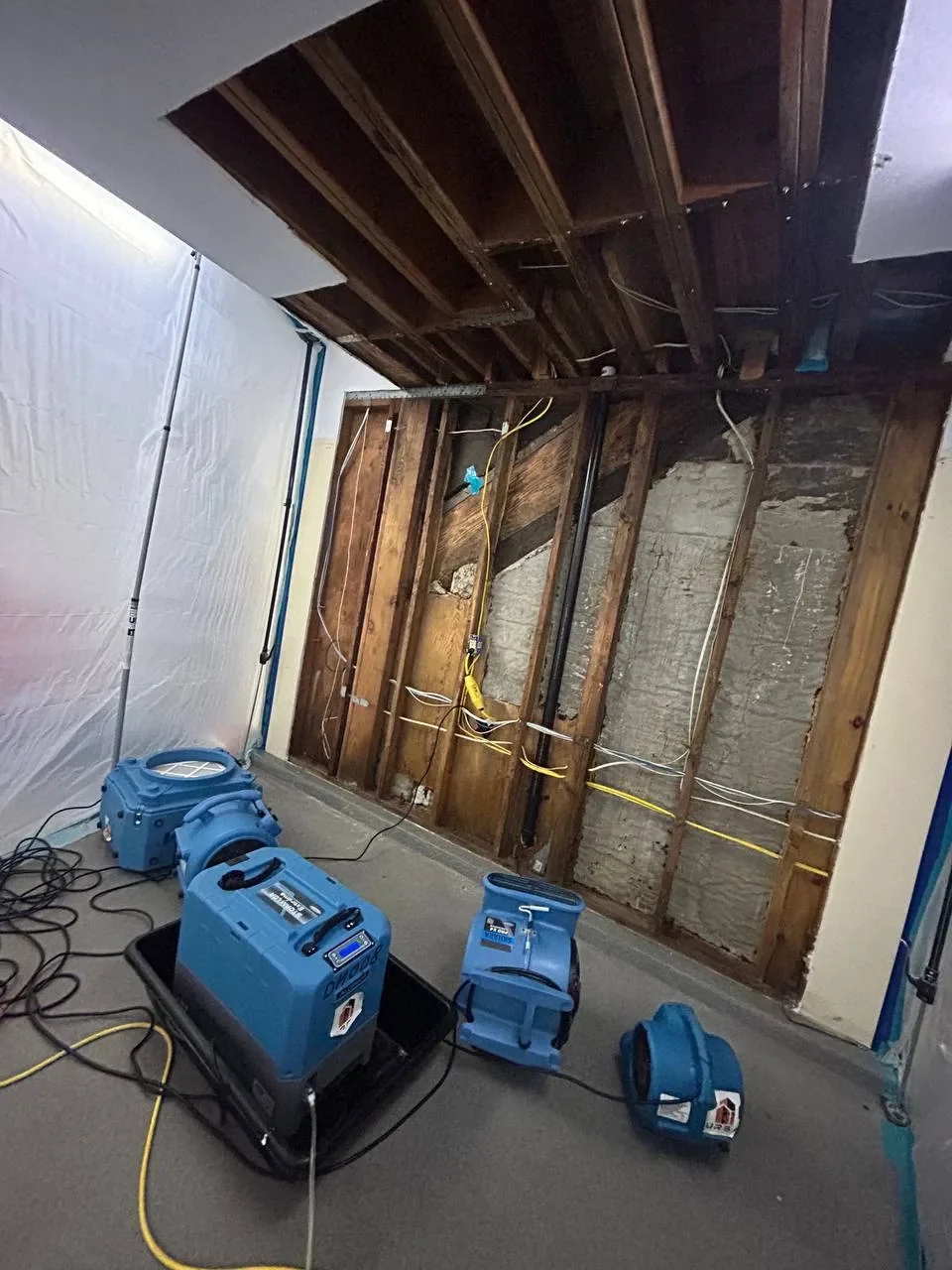
Visible water can be extracted after safety and source control are established. Moisture in a wall or floor needs a separate assessment. Ask which measurements will be taken and how often conditions will be reviewed. A dry surface is not conclusive when water may have travelled behind it or below a floor covering.
If outside water can still enter, coordinate temporary protection or a drainage repair with the drying work. A pump, downspout or drain may need evaluation by the person responsible for it. Do not close a cavity simply because the room is available for reconstruction. The source repair, drying record and any inspection requirements should be handed to the people planning the finish work.
If another storm changes the conditions, report it to the team. Repeated water entry can change both the cleanup scope and the schedule of repair. Preserve notes about the source and any new wet area so decisions are made from the current condition rather than an earlier assumption.
Organize the information for an assessment
An owner can prepare a short timeline: when water was first noticed, whether it rose or receded, which entrances were accessible and when the source stopped. Identify any work already performed by a utility, a plumber or an emergency crew. This helps the people inspecting the property ask focused questions without treating a timeline as a substitute for an examination.
For a business, separate equipment and stock records from the building record where possible. Each may need a different assessment or insurer documentation. Ask who will maintain the inventory and how items will be labelled if they must leave the property for evaluation. The owner should be able to understand what was moved and where it went.
For a home, identify the rooms that must remain accessible and any household needs affecting the work area. A clear exit and a safe route for residents and professionals should be established before equipment is placed. If those routes change, communicate the change to the people coordinating the response.
Coordinate repairs and property access
For a rental or shared building, notify the owner or manager and clarify who can authorize work in a common area. A building may have shared walls, utilities or access routes. Observing water in one unit does not establish that another occupant caused it. Give each professional the information needed to inspect the part of the property for which they are responsible.
Ask the City which approvals apply to the proposed reconstruction, especially if work affects structural, plumbing or electrical components. An emergency safety decision, a private cleanup scope and a permit inspection are distinct. Keep official instructions and the repair record together so no one has to infer which work was completed.
Agree on a point of contact and how the team will report changes in scope. Identify safe routes for equipment and storage while maintaining a clear exit. If a room is restricted by an authority, do not use it simply because the water has receded. The next step is an assessment of the actual structure and materials under safe conditions.
Related local information and guides
Explore these resources for the next decision, from local requirements to practical cleanup and repair.
Common questions
Does completion of the Permanente Creek project eliminate all flood risk?
No. Valley Water describes regional flood protection, but a property’s exposure depends on its location and conditions. Check current official maps for the address.
Can I enter a flooded basement to reach the electrical panel?
Do not enter standing water to operate electrical equipment. Ask qualified responders or electrical professionals to make the area safe.
Does water outside always enter through a creek?
No. Surface runoff, drainage and plumbing can have different paths. Determine the source for the actual property after access is safe.
Why assess behind a dry-looking wall?
Water can remain in concealed materials after the surface dries. The assessment determines whether a cavity needs further evaluation or drying.
Who should arrange reconstruction approvals?
The property owner and the people performing the work should ask the City which permits and inspections apply to the proposed scope.
Sources
- Valley Water flood project Checked
- Los Altos storm preparation Checked