Safe access after water enters
Keep away from standing water that may contact electrical equipment and do not cross a flooded space to reach a breaker. A wet floor may conceal sharp objects, debris or a weakened surface. If the building or surrounding ground appears unstable, leave the area and seek qualified help. Call 911 for an immediate threat to life.
Once you can observe the area safely, note where water appeared, whether it is still entering and how high it reached. A door opening, roof leak, overflowing drain or broken supply line can produce similar damage but requires a different correction. Do not rely on the location of a stain alone to identify the source.
Contact the owner or manager if the property is rented or shared. Photograph from a safe position and keep a simple record of the timing and affected rooms. Tell a restoration team if the water may include sewage or outdoor debris, because the source affects how materials and contents are handled.
Read a flood map for the actual parcel
Valley Water reports that the revised Permanente Creek watershed flood insurance map became effective September 5, 2024. A map is one tool for understanding a designated flood hazard; it does not identify the source of a leak or guarantee that a location outside a mapped zone cannot experience water entry.
Check the current map and address with the relevant agency or insurance professional before making a parcel-specific conclusion. Record what actually happened at the property as well: the direction of flow, the point of entry and whether a drain was involved. Site elevation, building openings and the condition of drainage can matter even when the regional map provides useful context.
What the McKelvey basin does
Valley Water identifies the McKelvey Park detention basin in Mountain View as completed in February 2020. It is designed to collect peak storm flows from Hale and Permanente creeks. This is a named public flood-control facility; its function should not be presented as a promise that every nearby home is protected from every kind of water damage.
A June 2021 Valley Water update on the completed Rancho San Antonio basin describes the wider project as providing flood protection to approximately 2,200 properties across Mountain View and Los Altos. That historical project figure describes the intended protection area, not a determination about a particular building. Verify the present map and the conditions at the address.
If water enters during a storm, the immediate restoration decision depends on the condition of the building. Keep a record of whether water came through an opening, accumulated on the ground or emerged from plumbing. A contractor can assess wet materials while a separate specialist investigates a recurring exterior drainage path.
A flood-zone decision for an ADU
Mountain View’s 2024 accessory dwelling unit checklist states that a site in a FEMA flood zone must comply with city floodplain regulations and include a lot survey. This concerns an ADU project at a qualifying site; it does not mean that all water damage repairs require an ADU application or that every property is in a flood zone.
If a damaged accessory unit is being repaired or rebuilt, describe the actual scope and parcel to the Building Division. Ask about the current survey, permit and inspection requirements before deciding how to reconstruct. A change in use, a new utility service or a structural alteration can raise different questions from drying an existing room.
Extraction and handling affected materials
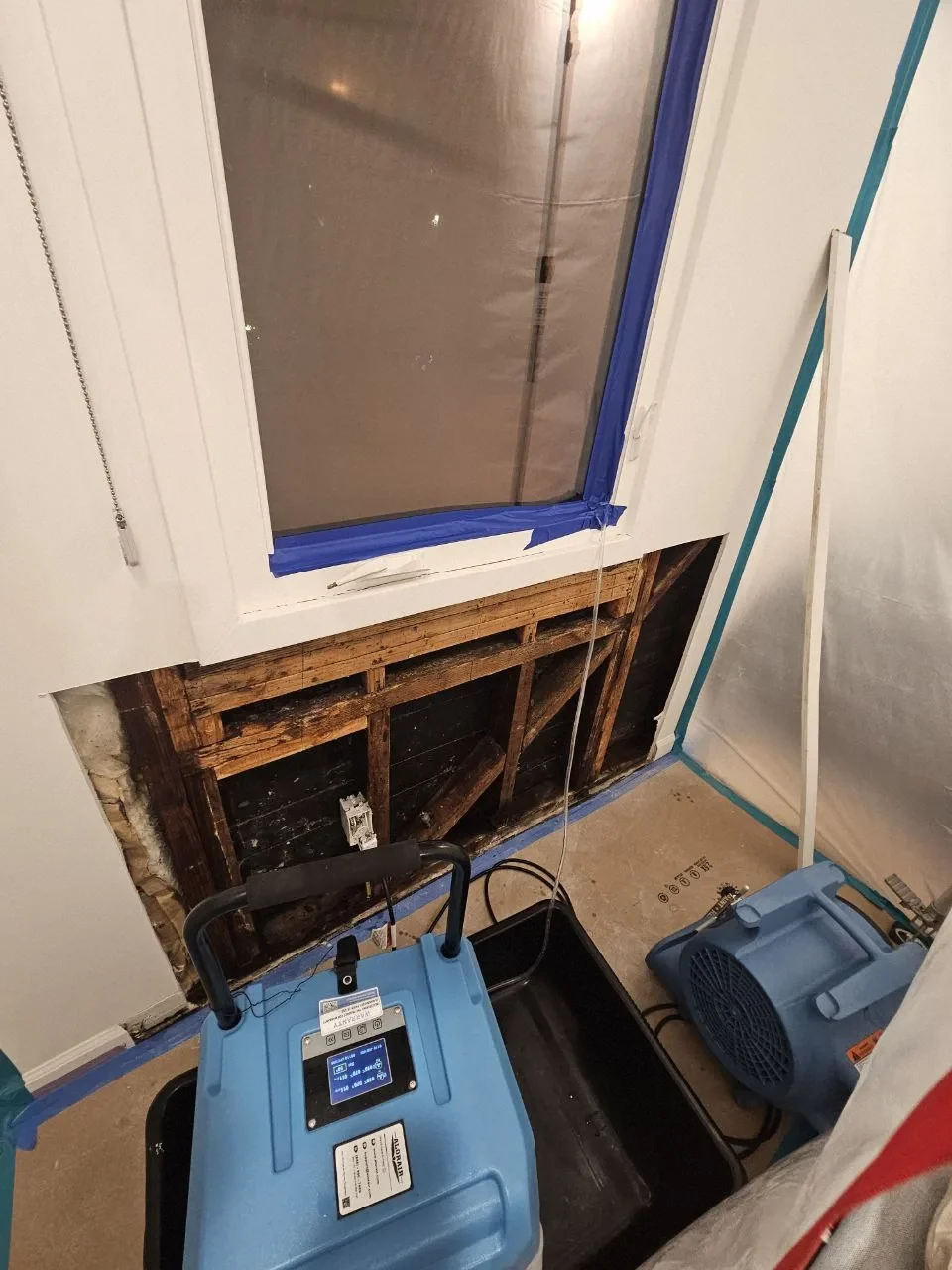
When the source has stopped and access is safe, extraction can remove standing water from reachable surfaces. Moisture may also have traveled below flooring, into insulation or behind cabinets. The assessment should identify those pathways and explain which areas need an opening. A visible water line shows where liquid reached the surface, not necessarily the full extent of moisture inside the assembly.
Floodwater carrying soil or debris should not be treated as identical to a clean supply leak. Material, duration of wetting and the ability to clean a surface all matter when deciding whether to dry, clean or remove it. Discuss the affected contents and agree on documentation and disposal with the owner or insurer when it is safe to retain items.
For a shared building, arrange a route for equipment and removed materials. Protect rooms that were not affected and identify who can approve changes in scope. If a cavity cannot be opened immediately, record the limitation rather than treating it as inspected.
Drying takes more than removing visible water
Different materials hold water differently. A surface can feel dry while an enclosed layer remains wet. Measurements over time can help guide the work when interpreted with the material and conditions, but a meter reading does not replace physical access to a hidden space.
Discuss the equipment location, safe power, access to essential rooms and the plan for checking progress. If rain or an unresolved leak introduces more water during drying, the plan may need to change. The restoration team and the person repairing the source should share those observations.
Before replacing finishes, confirm that affected materials have been assessed, the source has been corrected and any applicable inspection has been completed. Closing a wall too early can conceal a continuing issue. Retain the work record and photographs for the owner and any later repair.
If sewage or a blocked drain is suspected
Keep people out of wastewater and avoid moving contaminated items through unaffected areas. Stop using affected fixtures when that can be done safely and report the issue to the owner or manager. Tell the plumber which fixtures are backing up and whether the level changes when other fixtures are used.
The location of the backup must be investigated. A drain that overflows indoors is not proof that the public main is blocked, and a camera inspection of a pipe does not establish that interior materials have been cleaned. Source repair, cleaning and drying are connected stages with different purposes.
When several units use a shared line, coordinate access and communication before plumbing is returned to use. A property manager can help identify affected occupants and the contractor responsible for the line. Do not assume a repair in one unit resolves every area where wastewater traveled.
Development in a flood hazard area
For development within a flood hazard area, Mountain View Ordinance 6.2025 says the owner or agent “shall first make application” to the floodplain administrator and obtain the required permit. Depending on the proposal, it may be needed alongside a building permit. Ask the city about the actual work; drying a wet room is not automatically the development described in this rule.
Plan for repair and the next storm
Review the route water followed and the proposed source correction before scheduling final finishes. A threshold, roof opening, drain or exterior grade may call for a different trade. Ask what has been inspected, what is still unknown and who will check the correction if the same conditions occur again.
Keep photos, invoices and a short timeline. If water returns, note whether it entered at the same location or followed a new path. A regional flood project and a private drainage repair do not eliminate the need to observe the individual building and maintain its systems.
For a rental, explain the observation to the manager and identify when access is available for the necessary trades. Where a building has shared areas, agree on who will notify neighboring occupants and receive updates. The next inspection should address the observed condition instead of assuming that the previous water entry has the same cause.
Water Damage Guard serves Mountain View from San Carlos. Call (650) 550-0619, 24/7, to discuss flood cleanup and the conditions at the property. The work required depends on the source, affected materials and safe access.
Common questions
Can a flood map identify the source of water inside?
No. The map describes a designated hazard; the actual route of entry must be investigated.
Does the McKelvey basin prevent every local flood?
No. It is designed to detain peak creek flows, but it does not guarantee protection from every source of water damage.
Does every flood repair need an ADU survey?
No. Mountain View’s checklist addresses an ADU project on a site in a FEMA flood zone.
Is the room dry when the floor feels dry?
Not necessarily. Moisture can remain in enclosed materials and should be assessed before finishes are restored.
Can I call Water Damage Guard at night?
Yes. Call (650) 550-0619, 24/7, to discuss the affected area and any active water.