Follow current access instructions
Floodwater can conceal damaged pavement, debris, moving currents and electrical hazards. Follow evacuation and road-closure instructions, and do not enter standing water to reach a building or operate a switch. Call 911 for an immediate emergency. Wait for the responsible authorities to permit access before assessing an unsafe or restricted site.
From a safe location, note the time water appeared, whether it is rising and which approaches are affected. A hillside property may have several paths by which water reaches a building; a deposit of mud at a doorway does not identify the cause. Provide observations to responders and qualified professionals without approaching unstable soil or a damaged retaining wall.
Water Damage Guard provides flood cleanup in Los Altos Hills from San Carlos. Call (650) 550-0619, 24/7, to discuss the location, access and known damage. A telephone description cannot establish structural safety or determine the final scope. The work depends on conditions after the site is safe to assess.
What a past storm shows
In a January 2023 storm update, the Town reported a sinkhole discovered on Page Mill Road on January 6. This is a specific historical event, not evidence that a particular home flooded or that the road is currently damaged. It illustrates why road access can change during a storm and why current official notices matter.
If the only route to a property is closed, do not bypass the closure to inspect it. Let responders know about occupants, medical needs or other urgent circumstances. Once access is restored, communicate constraints such as a steep driveway, a damaged approach or limited room to place equipment.
A road problem, a drainage problem on a parcel and wet materials inside a home are different conditions. They may be related, but the cause and responsible parties need investigation. Record observations and ask each professional to identify the area and task included in the proposed work.
Town resources during the rainy season
In its notice updated October 23, 2026, Los Altos Hills said residents could fill and pick up sandbags at the Corporation Yard, 27400 Purissima Road. Supplies and access can change with weather and demand, so check current Town information before traveling. Sandbags can help redirect shallow water in some situations; they do not make a flooded or unstable building safe.
The same Town notice directs non-emergency public-street and right-of-way maintenance issues to an online request system and urgent issues to Town Hall or after-hours County Communications. Use the route appropriate to the situation and provide the precise location. An online maintenance request is not an emergency response.
If evacuation has been ordered, leave by the route authorities identify. Do not delay departure to obtain sandbags or protect possessions. After the storm, retain notices and photographs taken from a safe position to help the people evaluating the property understand the sequence of events.
Creeks, drainage and jurisdiction
The Town’s October 2026 notice asks owners to check Valley Water’s creek map and contact the district about maintenance needs where a jurisdictional creek is on their property. The map and the actual site help identify who should be contacted. This does not mean every channel or swale is a Valley Water creek.
Keep clear of moving water and do not attempt to remove debris in dangerous conditions. A qualified professional can assess an unstable slope, a blocked feature or a damaged wall. When planning alterations to drainage or grading, describe the exact location and work to the relevant authority before starting.
A property assessment should trace where water came from and where it went. Examine the relationship between outside flow and the building only when access is safe. A drain that needs maintenance and a saturated interior assembly require separate work plans, even when both are part of the same storm response.
Assess water and affected materials
Floodwater from outside can carry soil and contaminants. Avoid mixing affected belongings with clean ones. The assessment considers how high water reached, which materials were exposed, how long moisture remained and whether adjoining rooms or concealed cavities may also be wet.
Photograph visible conditions from a safe position and record the known timeline. Tell the team about prior leaks, recent work, stored chemicals or rooms that must remain accessible. Moisture measurements can help guide the investigation, but a single measurement does not explain every pathway through an assembly.
Where material needs to be opened, determine whether hazardous-material assessment is needed before disturbance. Do not infer the composition of a wall or pipe from the age of the building. Explain any uncertainty to the owner and coordinate access with the people authorized to approve the work.
Cleaning, drying and contents
Standing water and contaminated debris may need removal before a drying plan can be effective. Depending on the condition and material, some porous finishes or contents may not be suitable to retain. A qualified team can explain which surfaces can be cleaned and where removal is recommended after inspecting the actual loss.
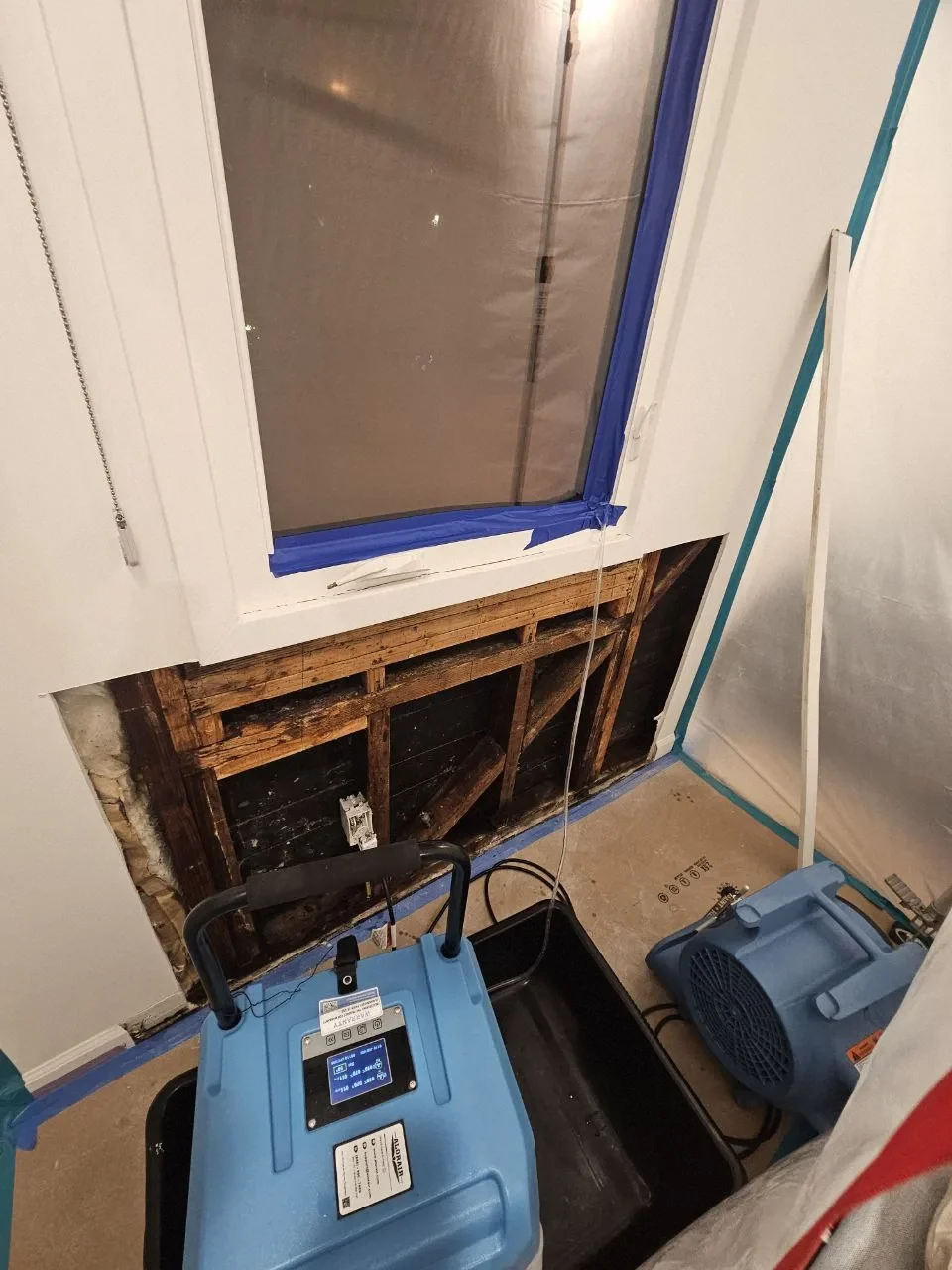
Equipment placement must account for safe power, the rooms in use and the materials that need drying. Follow-up observations and measurements help determine progress. A surface that looks dry may still cover moisture in a floor or wall. Do not close an assembly solely because visible water has disappeared.
Contents may need separate treatment from the building. Document affected items and coordinate handling with the property owner and insurer when feasible. Some objects require specialist evaluation, and decisions about disposal should be recorded without delaying necessary safety measures.
For an occupied property, decide who will receive updates and how equipment access will be arranged. Shared entrances, pets and limited parking can affect the schedule. Keep unaffected spaces separate where practical and communicate any change in the condition of the building. If new moisture appears during drying, the team may need to reassess the continuing source before the repair plan proceeds. These decisions should be documented along with the work that was actually completed.
Plan repairs after the water recedes
A permanent repair can involve drainage, plumbing, electrical, structural or finish work. Identify the appropriate professional for each part and confirm what approvals or inspections apply. An interior cleanup scope does not automatically include excavation, redesign of a hillside drain or reconstruction of a damaged wall.
Before replacing finishes, confirm that the continuing water source has been addressed and the affected materials are ready for repair. Give the reconstruction contractor the cleanup record, areas opened and any outstanding concerns. If the work changes after an inspection reveals concealed damage, ask for an updated scope and schedule.
For help discussing flood cleanup in Los Altos Hills, call Water Damage Guard at (650) 550-0619. Explain the current access status, source if known and whether Town staff, Valley Water or another professional is already involved. A coordinated handoff helps keep outside and inside work aligned.
Ask each party to identify its scope and the conditions that must be met before the next phase starts. For example, a plumber may need to complete a repair while a separate specialist evaluates a slope, and an interior team may need safe access before assessing concealed materials. Record outstanding questions rather than assuming that one contractor’s inspection resolves every part of the loss.
Related flood cleanup guides
These guides explain flood cleanup and decisions about water in lower rooms.
Common questions
Can I cross floodwater to shut off power?
No. Stay out of water near electrical equipment and arrange for a qualified person to make the area safe.
Where did the Town list sandbags in October 2026?
The Town listed the Corporation Yard at 27400 Purissima Road. Check current availability before traveling.
Does the 2023 Page Mill sinkhole mean the road is closed today?
No. It is a dated historical event. Follow current Town and emergency notices for road conditions.
Who should I contact about a Valley Water creek on my parcel?
The Town’s 2026 notice recommends checking the district’s creek map and contacting Valley Water about maintenance needs for a jurisdictional creek.
Can drying alone clean flood contamination?
No. Water and contaminated material may need removal and appropriate cleaning before monitored drying and repair.