First decisions at the property
An overflowing fixture, a pipe leak and water entering through a basement wall have different causes. When you call, describe the location, the apparent source and whether water is still entering. The information helps coordinate assessment and any separate plumbing, electrical or drainage work that may be needed.
If a fixture valve can be reached without entering an unsafe area, shut off the escaping water. Do not step into standing water to reach a breaker, switch or appliance. Leave wet electrical equipment alone and ask a qualified electrician or the utility to make it safe. Stay clear of sagging ceilings, unstable materials and areas blocked by officials.
When conditions permit, photograph the affected rooms and contents and note when you discovered the water. Contact your insurer to ask what records it needs. A leak that has been isolated still needs a permanent source repair; drying materials without correcting the underlying problem can leave them vulnerable to another release.
Water around a basement
A basement can take on water through a failed pipe, surface runoff, seepage or another opening. The first place water appears does not establish which of those paths is responsible. Describe whether the water follows a storm, appears when a fixture is used or returns after it has been removed. Inspection may involve both the inside of the building and the drainage conditions outside it.
Atherton’s drainage criteria say basement construction must not impede seepage or groundwater flow. They also call for basement entrances to be protected against the 100-year water level with at least one foot of freeboard. These are design criteria, not a statement that an existing basement complies or that every basement will flood. A property-specific evaluation is necessary.
The town checklist says roof-drainage collectors and detention should be separated from foundation subdrains so stored roof runoff does not back up into them. If water repeatedly appears near a foundation, ask a qualified drainage professional to review where roof water goes, how the site drains and which system serves the area before deciding on changes.
Groundwater, pumps and construction
The town criteria distinguish groundwater pumping from the handling of seepage, rain and nuisance flows. Under the construction groundwater pumping requirement, a geotechnical engineer certifies the historical high groundwater level using the levels on the town map. This is a condition in the construction pumping section; it should not be described as an automatic certification requirement for every repair.
A sump pump can address certain incidental water, but its presence does not prove that a basement is protected from groundwater or surface flooding. If a pump is not operating, do not reach through water to unplug or inspect it. Arrange for safe electrical isolation and a qualified assessment. Ask where the discharge goes and whether the intended work complies with town and applicable regional requirements.
For projects constructing more than 5,000 square feet of impervious area, Atherton’s drainage criteria call for stormwater detention to be in place before the impervious area is built. The threshold relates to the project described in the town criteria; it is not a rule that every water cleanup needs a detention facility. Discuss any site work with the town engineer.
Atherton Channel and storms
The town advises people near the Atherton Channel system to prepare for flooding. Its proposed Upper Atherton Channel project includes increasing culvert capacity under Alameda de las Pulgas and a detention basin at Las Lomitas School. A proposal is not a completed guarantee of protection, and a location near or away from the channel does not establish the risk for an individual parcel.
Before heavy rain, check private gutters and accessible drains when it is safe, secure loose items and review the route you would use if officials recommend evacuation. Keep medication, important records and a way to receive alerts available. An outside flood, a blocked drain and a pipe failure can require different insurance and cleanup decisions.
After a storm, return only when authorities permit it. Floodwater can hide debris and carry contaminants. Do not drive or walk through it. If a tree, power line or building component is unstable, keep away and report the hazard. Photographs are useful only when they can be taken without entering danger.
Which water or sewer agency to call
Atherton identifies two sewer districts: Fair Oaks Sanitation District and West Bay Sanitary District. The town publishes a street list to help identify the district serving a property. Fair Oaks is listed at (650) 363-4100 and West Bay at (650) 321-0384. Tell the agency which fixtures are affected and whether wastewater is escaping indoors or outside.
Cal Water lists Atherton among communities served by its Bear Gulch district and gives (650) 561-9709 as both its main and after-hours contact. Check the provider for the particular account before reporting a suspected main or service issue. Distinguish water coming from a fixture inside the building from water appearing near a meter or street.
A backup requires a source assessment as well as cleanup. Avoid contact with wastewater and stop using fixtures connected to an affected line until the issue has been assessed. The district can explain whether the public system is involved and what responsibilities apply to a private line. A plumbing repair and drying of the building are separate steps that should be coordinated.
Assess, remove and dry
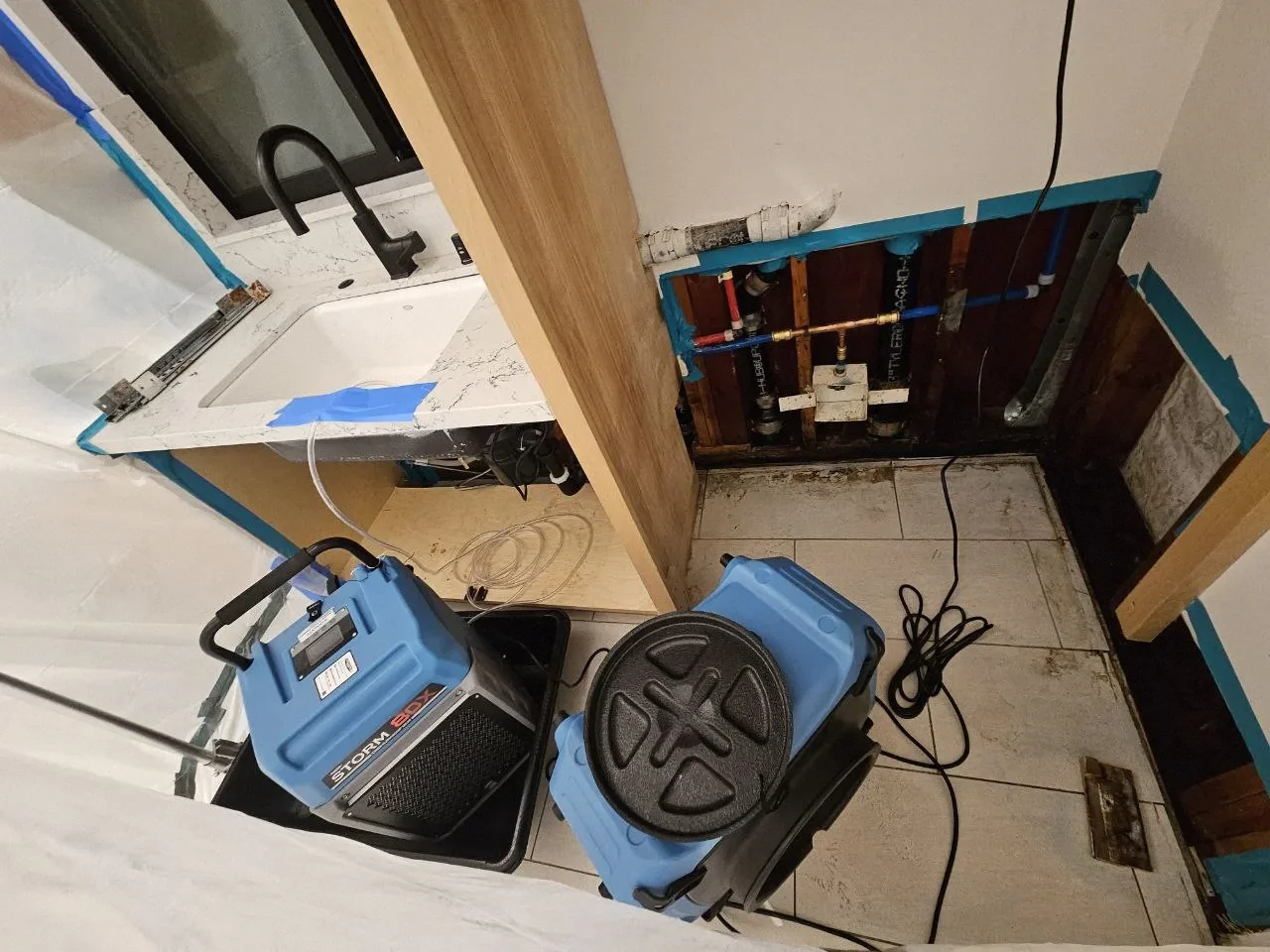
Once access is safe and the source is controlled, the restoration assessment looks at the material affected and the path water took. A stain can extend farther behind a finish than it appears on the surface. Readings, visual inspection and, when justified, opening an assembly help determine what needs attention. The team should explain what is known and where access is still needed.
The water source influences the handling of contents and finishes. Water from an outside flood or sewer can carry contamination; a supply-line leak can also become contaminated as it travels through a building. Some materials can be cleaned and dried, while others may need removal if they cannot be treated effectively. Discuss the proposed decisions for each material before work proceeds.
Drying equipment and monitoring are matched to the affected area and safe power supply. A floor that feels dry may still have moisture underneath. Ask how the condition will be checked, how equipment access will be maintained and what has to happen before finishes are replaced. The timeline depends on the conditions found rather than a fixed number of hours.
Repair permits and older materials
The Atherton Building Department lists (650) 752-0560 for department questions and (650) 752-0542 for inspection requests. Explain whether proposed repairs involve plumbing, electrical equipment, wall assemblies or drainage so staff can identify the appropriate process. A cleanup estimate does not replace a permit decision, and a permit requirement depends on the work.
Before opening older finishes or pipe insulation, identify materials that could require special handling. The age or appearance of a house cannot establish the material of a particular pipe or the presence of lead or asbestos. Ask qualified professionals about assessment and safe handling before disturbing suspect materials.
Keep the source repair, cleanup and reconstruction scopes clear. The plumber may address the leak, while another trade repairs affected framing or finishes. Confirm what inspections are needed before concealing new work. Save photographs, reports, permits and communications in a place accessible to the owner, insurer and contractors.
If the home is shared or rented
Notify the landlord or property manager promptly and identify the rooms affected and whether the water is still active. A written follow-up preserves the date and details of the notice. Where a pipe, wall or drain is shared, the owner or manager may need to coordinate access to another area before a cause can be confirmed.
An owner in a condominium should contact the association about common systems and access. A wet ceiling does not by itself prove which unit contains the source or who must pay. Keep communications and photographs, and ask the insurer or adviser how the policy and governing documents apply to the actual circumstances.
If a room cannot be used, discuss a safe way to protect belongings and any temporary arrangements. Keep receipts and dates if you incur additional expenses, and ask the insurer which records are needed. Avoid moving through a hazardous area merely to retrieve an item; wait for safe access.
Atherton neighborhoods and nearby service
Town outreach materials identify Lindenwood and Lloyden Park among the community areas. Within any area, the sewer district and the conditions of a particular property still need to be checked by address. When requesting help, give the street location and describe the building and source rather than relying only on the neighborhood name.
Water Damage Guard serves Atherton from San Carlos. Call (650) 550-0619, 24/7, to discuss assessment and restoration. We also serve nearby communities, and the city or district serving each address may have a different role in water, sewer and permitting questions.
Common questions
Which sewer district serves my Atherton address?
Atherton is divided between Fair Oaks and West Bay. The town publishes a street list; confirm the district for the actual property.
Does a basement pump solve every groundwater problem?
No. The source and discharge conditions require assessment. Town criteria distinguish groundwater pumping from seepage and rainfall and include specific construction requirements.
Is the Atherton Channel project complete protection?
The town describes a proposed culvert and detention project. Follow current official information and assess flood risk at the individual address.
Who handles building permit questions?
The town lists its Building Department at (650) 752-0560. Explain the actual repair scope before assuming a permit is or is not required.
Can the age of a house identify its pipe material?
No. Existing materials vary by property and may have been altered. A qualified inspection is needed before making a claim about a particular pipe.
Who should I call for a Bear Gulch water issue?
Cal Water lists (650) 561-9709 for the district’s main and after-hours contact. Confirm the provider for the property.
Sources
- Atherton town or utility source Checked
- Atherton town or utility source Checked
- Atherton town or utility source Checked
- Atherton town or utility source Checked
- Atherton town or utility source Checked
- Atherton town or utility source Checked
- Atherton town or utility source Checked
- Atherton town or utility source Checked