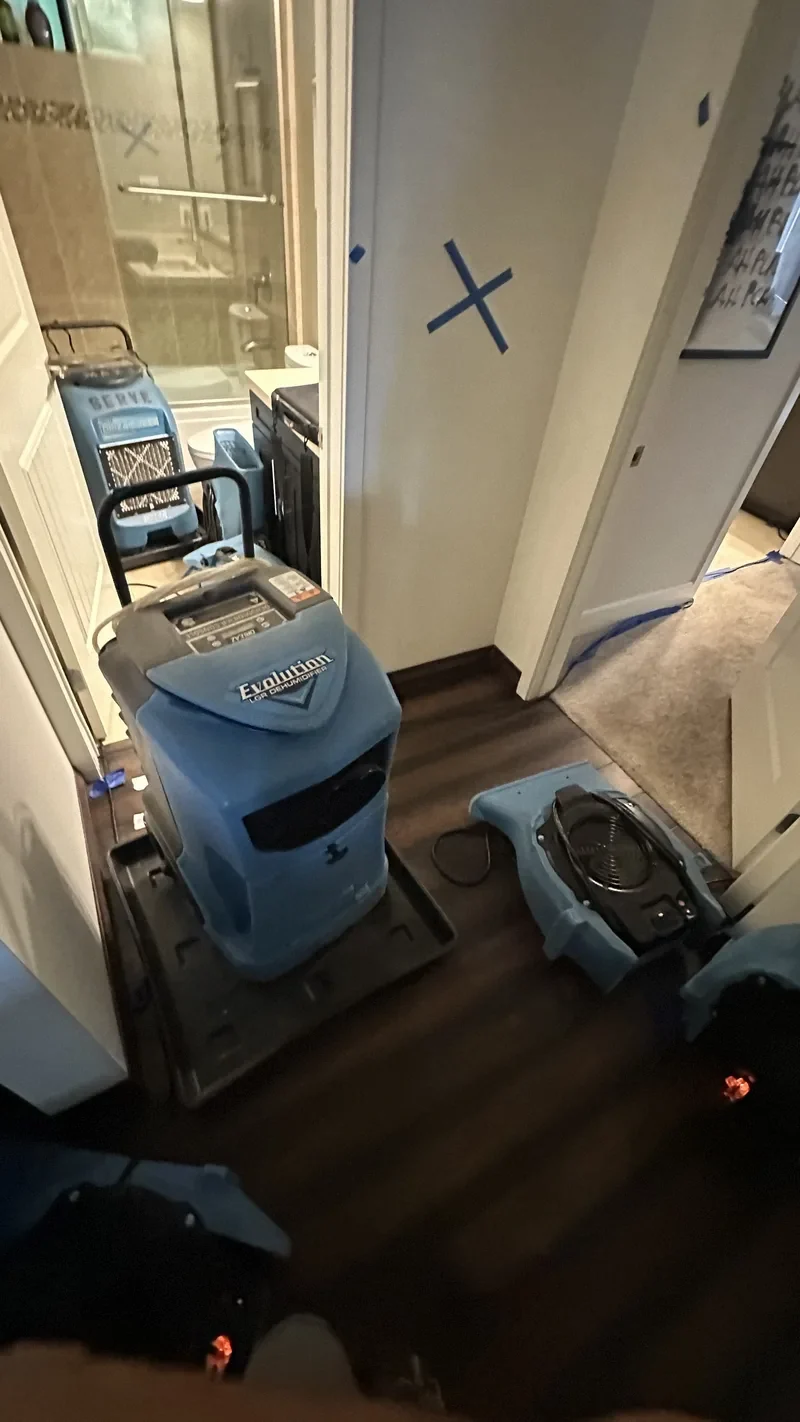
Start with safety and the source
Keep away from standing water near electrical equipment, unstable materials and any area that officials have restricted. Do not touch wet electrical equipment or enter moving floodwater. If danger is immediate, call 911. When it is safe to do so, describe where water appeared and whether it is still entering.
Gilroy Utilities lists (408) 846-0401 for water service during its published Monday through Thursday, 8:30 a.m. to 4:30 p.m. hours. The city lists (408) 846-0350 for after-hours water emergencies and specifies 3:30 p.m. to 7:00 a.m. for extreme leaks. Confirm the current routing with the city if the situation is outside those stated times.
A city water response, a plumber’s source repair and the cleanup of wet building materials are different tasks. Tell the appropriate contact whether the issue involves a supply leak, a fixture backup or water entering from outside. The visible location of water does not by itself establish the cause.
What a property assessment should answer
An assessment should identify the accessible wet rooms and materials, the suspected or observed source, and any spaces that could not be examined. Water can move beneath flooring or behind finishes. A stain can guide the investigation but cannot establish the full affected area or prove the condition of an unopened wall.
Provide the sequence of events and any safe photographs: when water appeared, whether it followed rain or a fixture failure, and what repairs have already been attempted. Do not infer a particular pipe or foundation material from the age of a building. The actual assembly and its condition require observation.
Before work begins, ask how belongings and unaffected areas will be protected, which materials may need to be removed, and how a discovery that changes the scope will be communicated. If another trade must repair the source, identify that responsibility and coordinate the sequence. An owner or authorized manager should understand what is included and what remains separate.
An assessment also helps the people using a building plan around the work. Explain which rooms contain essential equipment or records and whether anyone needs assistance accessing a safe area. For a shared property, identify who controls the affected space and who can authorize a change in scope. A safe photograph is useful documentation, but it cannot show moisture hidden below a finish or establish that a building system is safe to operate. Ask which conditions were measured, which observations remain uncertain and what should be checked again after a source repair. If a separate firm performs the plumbing or reconstruction, make sure the handoff describes the relevant location and any inspection that must happen before materials are covered.
Water and wastewater services
The city says its Water Section maintains municipal wells, booster pumps, reservoirs and the drinking-water distribution system. That describes the public water system; the cause and repair responsibility for an individual leak still depend on its location and the service connection.
Gilroy Utilities also oversees the South County Regional Wastewater Authority treatment plant under a joint powers agreement with Morgan Hill. Treatment-plant oversight does not mean that an indoor plumbing backup is a treatment-plant problem. A plumber or the appropriate city service can help identify where a blockage or failure lies.
If sewage enters a room, limit contact with the affected water and reduce use of the affected fixtures while the source is investigated. Ask who will clear or repair the line and who will handle the exposed rooms and belongings. These scopes must be coordinated so a continuing discharge does not affect newly restored material.
Public storm drains and private water entry
Gilroy assigns public storm-drain maintenance to its streets and storm-water staff and lists Public Works Operations at (408) 846-0424. For emergencies after business hours, the streets page gives the city’s non-emergency number, (408) 846-0350. A public drain report and a private building investigation address different locations and questions.
If rainwater reaches a doorway, wall or crawl space, record the route and timing from a safe place. A qualified drainage professional can assess the actual grade and water path. Avoid assuming that a blocked public drain caused a particular loss without an investigation; several pathways can contribute to water entry.
The city’s stormwater guidance says a permit is required before modifying storm or wastewater piping or connecting to the municipal system. Ask the city about the actual proposed work and applicable approvals. That requirement concerns the stated modification or connection, not a claim that every indoor drying job needs that permit.
What a past Uvas Creek flood shows
Valley Water’s flood report records that on January 8, 2017 Uvas Creek overtopped along Monterey Frontage Road, flooded some properties and contributed to a closure of Highway 101 in Gilroy. The report gave a preliminary peak estimate of 9,000 cubic feet per second at Luchessa Avenue. This was a dated event and estimate, not a current forecast or a parcel-level risk determination.
For a present storm, follow current alerts and official directions. Do not drive through moving water or enter an area under evacuation restrictions. If a property has flooded, wait for safe access before recording conditions or arranging cleanup. Floodwater can conceal debris, holes and electrical hazards.
An address outside a location mentioned in a historic report can still have its own drainage conditions. Ask the responsible agency about the current map and the actual property, and have the physical entry path evaluated. A historical event helps explain the local context without proving what will happen at another site.
Preparing for rain and documenting a loss
Gilroy lists a self-fill sandbag station next to its corporation yard at 613 Old Gilroy Street. The city says sand and bags are supplied and users bring a shovel. Check the city’s current information and availability before going; a sandbag is a preparation measure, not a guarantee against flooding.
If a storm is already creating unsafe conditions, follow official directions instead of trying to place a barrier in moving water. After entry is permitted, photograph the affected area from a safe position and note the time and water level. Keep those records with the repair and cleanup documents.
For an insurance claim, ask the insurer about documentation and disposal before discarding belongings where safe and practical. Coverage depends on the policy and the facts of the loss. A city preparation resource is separate from a claim decision or a professional assessment of damaged material.
When the repair includes permitted work
Gilroy’s Building Division processes renovation permit applications through its GO Permit Portal. If an investigation leads to reconstruction or trade work, describe the actual project to the division and ask which applications, plans and inspections apply. Water extraction alone should not automatically be equated with a permitted renovation.
An owner may need a plumber, electrician, builder or design professional in addition to a cleanup provider. Confirm who holds the permit and who will schedule any required inspections. If opening an assembly reveals a different scope, discuss the change with the permit holder and the city before work is concealed.
Keep the permit and inspection records with the source-repair description, photographs and cleanup scope. The documents serve different purposes: a permit is not a coverage decision, and an insurance estimate does not replace a city inspection when one is required.
Coordinate the handoff
Ask for a written explanation of what was addressed, which materials were removed or treated and which areas were inaccessible. Identify outstanding source repairs and any work assigned to another trade. A handoff should distinguish what was observed from assumptions about spaces that were not opened.
In a rental, notify the housing provider promptly and coordinate entry with the people who occupy the property. In a shared building or business, agree on a contact for schedule changes and decisions. Note any restrictions on access and arrange for essential routes and belongings to be handled safely.
If water returns after the first repair, record when and where it reappears and seek a further investigation. It may have the same cause or a different one; the observed conditions should guide the next decision. Retain the records so the responsible professional can review the earlier work.
To discuss a Gilroy property, call Water Damage Guard at (650) 550-0619, 24/7. Explain whether water is active, which spaces are affected, any access restrictions and who can authorize service. The work proposed depends on the conditions at the property.
For contents that have been exposed to water, ask how each item will be identified if it is moved and whether it needs specialist attention. Keep an inventory and a record of its original room when conditions allow. Electrical equipment that has been wet needs an appropriate safety assessment before it is used again. The correct handling of documents, furnishings and equipment depends on their material and exposure, so discuss the choices before assuming every item can be cleaned or that every item must be discarded.
Common questions
Who handles public storm drains in Gilroy?
The city assigns them to streets and storm-water maintenance. Public Works Operations is listed at (408) 846-0424, and the streets page gives the city’s non-emergency number, (408) 846-0350, for emergencies after business hours.
Where does Gilroy list a self-fill sandbag station?
The city lists a station beside its corporation yard at 613 Old Gilroy Street and asks users to bring a shovel. Check current availability.
What happened at Uvas Creek in January 2017?
Valley Water reported overtopping along Monterey Frontage Road, flooding of some properties and a Highway 101 closure. This is historical information, not a current forecast.
Does modifying a municipal storm or wastewater connection need a permit?
Gilroy’s stormwater page says a permit is required before modifying storm or wastewater piping or connecting to the municipal system. Confirm the actual project with the city.
How are renovation applications handled in Gilroy?
The Building Division processes renovation permit applications through the GO Permit Portal. Ask the city which requirements apply to the proposed work.
Sources
- Gilroy Water Section Checked
- Gilroy Utilities Department Checked
- Gilroy streets, trees and storm drains Checked
- Gilroy storm water management Checked
- Valley Water 2017 flood report Checked
- Gilroy flood management and sandbags Checked
- Gilroy Building Division and GO Permit Portal Checked